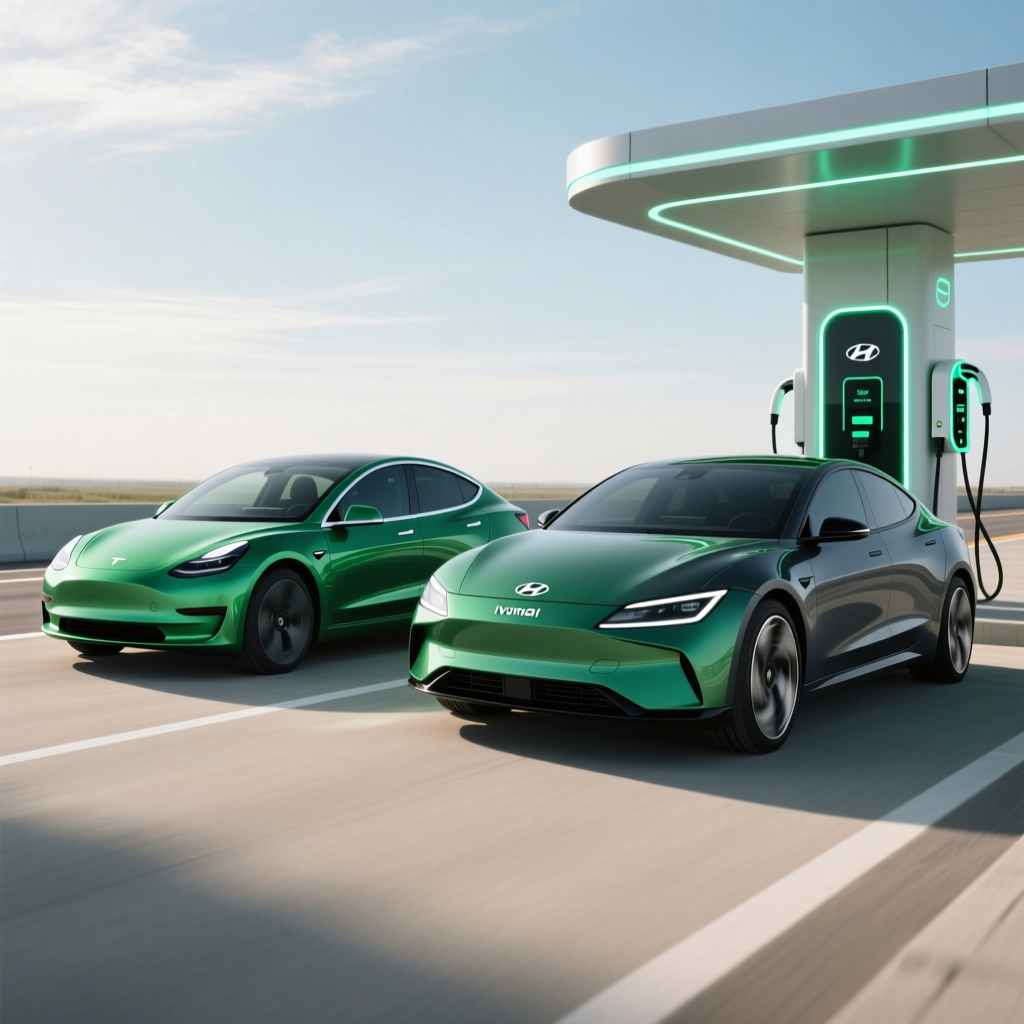
Tesla Model 3 vs. Hyundai Ioniq 6: Comparing the Best Electric Cars
The electric vehicle market has matured rapidly, transitioning from niche compliance cars to highly desirable, everyday transportation. When automotive enthusiasts and daily commuters alike search for the best electric cars, two premium sedans consistently rise to the top of the rankings: the Tesla Model 3 and the Hyundai Ioniq 6. Both vehicles offer exceptional efficiency, cutting-edge technology, and impressive range, but they achieve these goals through vastly different design philosophies and engineering approaches.
If you are cross-shopping the best EV sedans on the market, this head-to-head comparison will break down every critical metric. From real-world range and charging infrastructure to interior ergonomics and long-term warranty coverage, we will help you determine which electric sedan deserves a spot in your driveway.
Overview: The Contenders
The Tesla Model 3 is the vehicle that effectively forced the global automotive industry to take electrification seriously. As the benchmark for the segment, it combines a minimalist, software-centric cabin with class-leading efficiency and access to the most robust charging network in the world. With its latest chassis and interior refinements, the Model 3 has addressed many historical complaints regarding ride quality and cabin noise, cementing its status as a top-tier luxury sport sedan.
The Hyundai Ioniq 6 represents the establishment's most compelling answer to Tesla. Built on Hyundai’s brilliant Electric Global Modular Platform (E-GMP), the Ioniq 6 prioritizes ultra-aerodynamic styling, rapid 800-volt charging capabilities, and a more traditional, driver-focused interior layout. Its sweeping, teardrop silhouette is not just for show; it makes the Ioniq 6 one of the most efficient electric vehicles ever produced.
For a deeper dive into each vehicle individually, be sure to read our comprehensive Tesla Model 3 review and our detailed Hyundai Ioniq 6 review.
Side-by-Side Specification Comparison
Before diving into the nuances of daily ownership, let us look at the raw numbers. The table below compares the Long Range, All-Wheel Drive (AWD) variants of both vehicles, as these represent the most popular configurations for buyers seeking maximum range and all-weather capability.
| Specification | Tesla Model 3 Long Range (AWD) | Hyundai Ioniq 6 SE Long Range (AWD) |
|---|---|---|
| Starting MSRP (Approx.) | $47,000 | $46,000 |
| EPA Estimated Range | 341 miles | 316 miles (up to 361 on RWD SE) |
| Battery Capacity (Usable) | ~75 kWh | 77.4 kWh |
| Horsepower | 346 hp | 320 hp |
| Torque | 389 lb-ft | 446 lb-ft |
| 0-60 MPH Time | 4.2 seconds | 4.5 seconds |
| Drag Coefficient (Cd) | 0.219 | 0.21 |
| Cargo Space (Trunk + Frunk) | 21.0 cu ft | 11.3 cu ft |
| Charging Architecture | 400-Volt | 800-Volt |
Range & Efficiency
Range anxiety remains a primary concern for first-time EV buyers, making this category one of the most critical in our comparison. According to data from fueleconomy.gov, the Tesla Model 3 Long Range AWD achieves an impressive EPA-estimated 341 miles of range. Tesla’s industry-leading thermal management system and highly efficient powertrain allow it to extract maximum mileage from a relatively compact battery pack.
The Hyundai Ioniq 6, however, is an aerodynamic marvel. Its ultra-slippery 0.21 drag coefficient allows the rear-wheel-drive (RWD) SE trim to achieve a staggering EPA-estimated 361 miles of range. If you opt for the AWD version to match the Model 3’s traction, the range drops to 316 miles. In independent real-world highway testing at 70 mph, both vehicles perform exceptionally well, often exceeding their EPA estimates in moderate temperatures thanks to their standard heat pumps, which efficiently manage cabin climate without draining the battery.
Winner: Tie. The Ioniq 6 RWD wins on pure maximum range, while the Model 3 AWD offers a better balance of range and all-weather traction.
Pricing & Value
Pricing in the EV sector fluctuates based on manufacturer incentives, battery material costs, and federal tax credit eligibility. Historically, both the Model 3 and the Ioniq 6 have hovered in the mid-$40,000 range for their Long Range variants. However, value is about more than just the sticker price; it is about what equipment comes standard.
Tesla includes its basic Autopilot suite, a premium audio system, and access to the Supercharger network in the base price. However, adding Enhanced Autopilot or Full Self-Driving (FSD) capability will add thousands to the final bill. Hyundai, on the other hand, includes its comprehensive Highway Driving Assist 2 (HDA2) suite, ventilated front seats, and a panoramic sunroof (on higher trims) without forcing buyers into expensive software subscriptions. Furthermore, Hyundai frequently offers aggressive lease deals and cash-back incentives that can make the Ioniq 6 significantly more affordable out the door.
For a complete breakdown of current incentives, check out our evergreen guide to EV tax credits & rebates.
Charging Speed & Infrastructure
This is where the two vehicles diverge most dramatically, highlighting a battle between raw charging speed and network reliability.
The Hyundai Ioniq 6 utilizes an 800-volt electrical architecture. When connected to a 350-kW DC fast charger, the Ioniq 6 can charge from 10% to 80% in just 18 minutes. This is blisteringly fast and makes highway road trips incredibly efficient, provided you can find functioning, high-speed CCS chargers along your route. If you are curious about the science behind this, our EV charging guide breaks down the differences between 400V and 800V systems.
The Tesla Model 3 operates on a traditional 400-volt architecture, meaning its peak charging speeds are lower, typically taking around 25 to 30 minutes to reach 80% at a V3 Supercharger. However, Tesla’s Supercharger network is universally recognized as the most reliable, ubiquitous, and user-friendly charging ecosystem in existence. The plug-and-charge experience, combined with the vehicle’s native routing software, removes the friction and guesswork from long-distance travel. As the industry transitions toward the North American Charging Standard (NACS), Hyundai is adopting Tesla’s plug, but for now, Ioniq 6 owners must rely on adapters or third-party networks.
Winner: Tesla Model 3 for network convenience; Hyundai Ioniq 6 for raw charging speed.
Performance & Driving Dynamics
Electric motors provide instant torque, meaning both of these sedans are genuinely quick off the line. The Model 3 Long Range hits 60 mph in roughly 4.2 seconds, while the Ioniq 6 AWD does it in about 4.5 seconds. In daily driving, both feel effortlessly rapid and responsive.
Where they differ is in chassis tuning and steering feel. The latest iterations of the Model 3 feature revised suspension dampers, acoustic glass, and improved sound deadening, transforming it from a harsh-riding sports sedan into a refined, comfortable cruiser that still handles corners with brilliant precision. The steering is heavy, direct, and communicative.
The Ioniq 6 prioritizes comfort and isolation. Its suspension soaks up bumps and broken pavement with ease, making it an excellent highway cruiser. However, its steering is notably numb, and the chassis feels less eager to change direction on twisty backroads compared to the Tesla. If you are looking for a more engaging driving experience, the Model 3 is the clear choice. If you prefer a plush, quiet ride for your daily commute, the Ioniq 6 excels.
Interior Space, Comfort & Technology
Stepping inside these two vehicles reveals two completely different interpretations of modern automotive design. The Tesla Model 3 is the epitome of minimalism. There is no instrument cluster, no physical buttons, and no turn signal stalks. Everything—from adjusting the mirrors to checking your speed—is routed through the central 15.4-inch touchscreen. While the latest refresh added premium materials, ambient lighting, and a rear touchscreen for passengers, the stark, screen-reliant interface remains a dealbreaker for some traditionalists.
The Hyundai Ioniq 6 offers a more conventional, yet highly futuristic, cabin. It features a dual-screen setup with a dedicated digital instrument cluster behind the steering wheel, alongside a central infotainment screen. Crucially, Hyundai retains physical buttons for climate control and volume, allowing for easy adjustments without taking your eyes off the road. The Ioniq 6 also features unique ‘cocoon’ seating and customizable 64-color ambient lighting that gives the cabin a distinct, lounge-like atmosphere.
Regarding practicality, the Model 3 wins easily on cargo space. Its traditional trunk design and deep front trunk (frunk) offer 21 cubic feet of storage. The Ioniq 6’s sloping, aerodynamic roofline severely compromises rear headroom for taller passengers and limits the trunk to a small 11.3 cubic feet, and its frunk is practically non-existent on AWD models.
Winner: Tesla Model 3 for cargo & tech innovation; Hyundai Ioniq 6 for traditional ergonomics & passenger comfort.
Warranty & Ownership Costs
Long-term peace of mind is a vital factor when investing in an electric vehicle. Hyundai offers one of the best warranty packages in the automotive industry. The Ioniq 6 comes with a 5-year/60,000-mile limited warranty and an industry-leading 10-year/100,000-mile powertrain warranty. This extensive coverage provides immense confidence regarding battery health and motor longevity.
Tesla offers a 4-year/50,000-mile basic vehicle warranty, which is standard for the luxury segment, alongside an 8-year/120,000-mile battery and drive unit warranty. While Tesla’s battery warranty covers more miles than Hyundai’s powertrain warranty, the overall bumper-to-bumper coverage is shorter. Additionally, Tesla’s out-of-warranty repair costs and insurance premiums tend to be higher than Hyundai’s, a factor that should be calculated into your total cost of ownership.
The Verdict: Which EV is Right for You?
Choosing between the best electric cars in the sedan segment ultimately comes down to your lifestyle, priorities, and tolerance for software-centric design.
Choose the Tesla Model 3 if:
- You frequently take long road trips and want the unmatched convenience of the Supercharger network.
- You prefer a sporty, engaging driving experience with precise handling.
- You need maximum cargo space and appreciate a minimalist, tech-forward cabin.
- You want access to over-the-air updates that continually add new features to the vehicle.
Choose the Hyundai Ioniq 6 if:
- You want the absolute maximum EPA range and record-breaking aerodynamic efficiency.
- You prefer a traditional cabin layout with physical buttons and a dedicated driver display.
- You value a plush, quiet ride quality over sporty cornering dynamics.
- You want the security of an industry-leading 10-year powertrain warranty.
Both vehicles are phenomenal achievements in automotive engineering. If you are also considering a larger vehicle for your family, be sure to explore our rankings of the best electric SUVs for more versatile options.
Frequently Asked Questions
Is home charging sufficient for the Tesla Model 3 and Hyundai Ioniq 6?
Yes, for the vast majority of drivers, home charging is all you will ever need. Installing a Level 2 (240-volt) home charger will add roughly 30 to 45 miles of range per hour of charging. Plugging in overnight ensures you wake up to a ‘full tank’ every morning, which is significantly cheaper and more convenient than visiting a gas station or public fast charger. Both vehicles allow you to schedule charging via their respective apps to take advantage of off-peak electricity rates.
How does battery degradation compare between Tesla and Hyundai?
Both manufacturers utilize advanced liquid-cooled thermal management systems to protect battery health. Independent data suggests that Tesla’ battery chemistry and management software result in minimal degradation, often retaining over 90% of original capacity after 100,000 miles. Hyundai’s E-GMP platform is similarly robust, and the 800-volt system is designed to handle high-heat fast charging safely. Ultimately, battery degradation should not be a major point of anxiety for buyers of either vehicle, especially given their extensive long-term warranties.
Can the Hyundai Ioniq 6 use Tesla Superchargers?
The transition to the North American Charging Standard (NACS) is ongoing. Depending on the current model year and regional infrastructure, Hyundai is providing NACS adapters to owners, allowing them to access Tesla’s Supercharger network. However, because the Ioniq 6 uses an 800-volt architecture and many Superchargers are optimized for 400-volt systems, charging speeds on a Supercharger may not be as fast as they are on a 350-kW CCS Electrify America station. Always check the latest compatibility updates via Hyundai’s official channels.
Which vehicle is better for winter driving and cold weather?
Both vehicles come equipped with highly efficient heat pumps, which are crucial for preserving range in freezing temperatures. The Tesla Model 3 features a sophisticated battery preconditioning system that warms the battery automatically when navigating to a charger, ensuring optimal charging speeds and regenerative braking in the cold. The Ioniq 6 also offers excellent winter features, including heated seats, a heated steering wheel, and battery conditioning. However, the Model 3’s traction control software and Supercharger network reliability in remote winter areas give it a slight edge for those living in harsh, snowy climates.