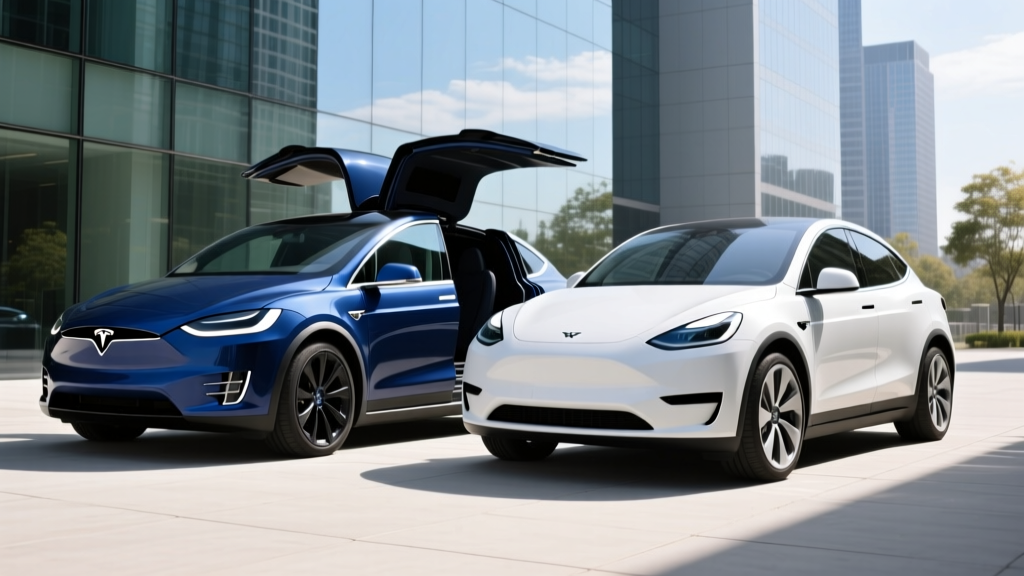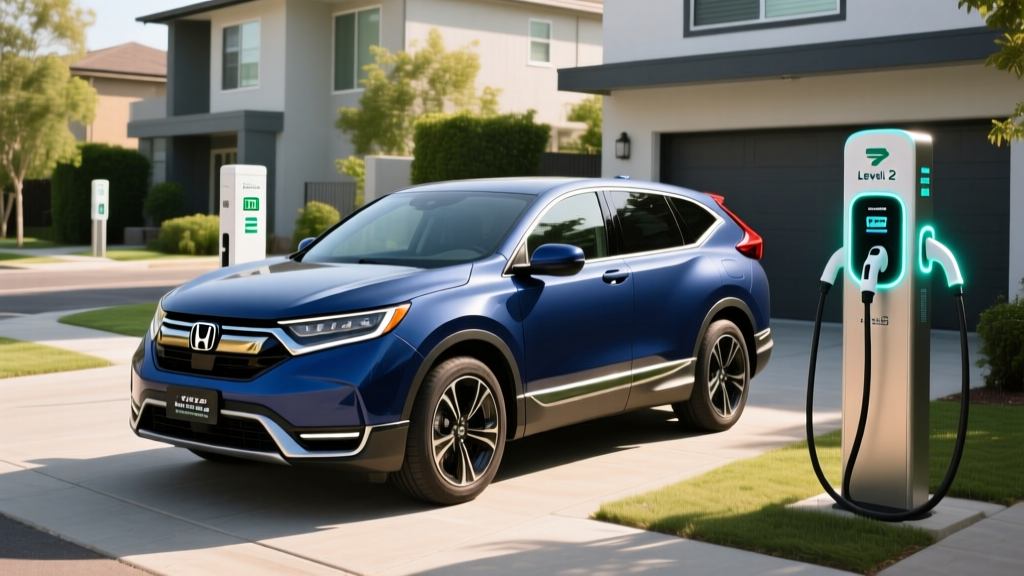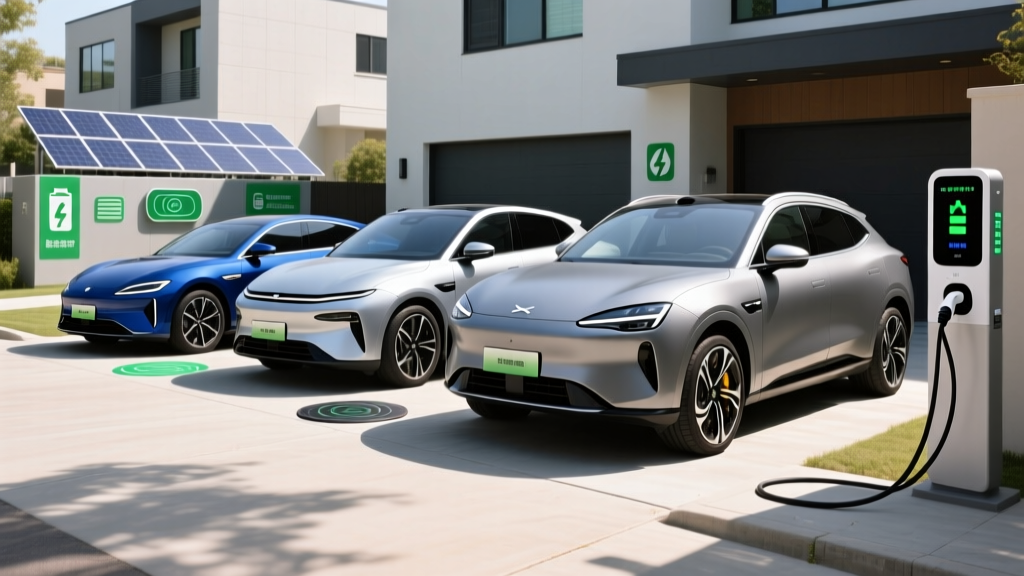
If you've been following EV headlines, you've seen the sticker prices: the BYD Seagull starting under $10,000 in China, the MG4 undercutting European rivals by thousands, and Xiaomi's SU7 sedan launching at roughly half the price of a Tesla Model S. Chinese electric car prices dominate global headlines because they expose a massive gap between what EVs cost to build in Shenzhen versus what they sell for in San Francisco.
But for US buyers, those prices are mostly theoretical. Tariffs, battery-sourcing rules, and dealer networks mean the EVs you can actually buy in America carry very different price tags—and very different ownership costs. Below, we break down what a US buyer actually pays over five years of ownership, how federal and state incentives change the math, and why the "cheap Chinese EV" narrative requires serious context.
Why Chinese Electric Car Prices Dominate the Conversation
China's domestic EV market operates under a completely different cost structure than the US. BYD, NIO, XPeng, Li Auto, and Xiaomi benefit from vertically integrated battery supply chains (BYD makes its own Blade LFP cells), massive government subsidies through 2025, lower labor costs, and hyper-competitive domestic pricing wars that have driven margins to near zero for many brands.
Consider the numbers that make headlines:
- BYD Seagull: Starting ~¥69,800 (~$9,700 USD) in China—a subcompact EV with roughly 190 miles of CLTC range and a 30 kWh LFP battery.
- BYD Dolphin: Starting ~¥99,800 (~$13,900 USD) in China with ~250 miles CLTC range.
- Xiaomi SU7: Starting ~¥215,900 (~$30,000 USD) in China—a performance sedan with 435 miles CLTC range and 0-60 in ~2.78 seconds.
- MG4 (MG Mulan): Starting ~¥139,800 (~$19,400 USD) in China with ~260 miles CLTC range.
For comparison, the cheapest new EVs available in the US for the 2026 model year—the Nissan Leaf S at ~$28,140 and the Chevrolet Equinox EV LT at ~$33,600—cost roughly 3x what comparable Chinese-market EVs sell for domestically.
The reasons for this gap are structural, not just corporate greed:
- Battery cost advantage: Chinese automakers source LFP cells domestically at ~$60-80/kWh (cell-level), while US-assembled packs often run $100-130/kWh due to imported materials and smaller scale.
- Vertical integration: BYD controls mining, refining, cell production, and vehicle assembly. Most Western OEMs still buy cells from third-party suppliers.
- Tariffs: The US imposed 100% tariffs on Chinese-made EVs starting in 2024, effectively doubling the import price and eliminating any price advantage.
- Homologation and compliance: Meeting US FMVSS safety standards, EPA certification, and dealer-network requirements adds significant cost for any Chinese brand attempting market entry.
The bottom line: Chinese electric car prices are real—but they reflect a market you cannot access as a US buyer. What matters is what you can buy here, and what it costs to own over five years.
The 5-Year Total Cost of Ownership: US EVs by the Numbers
Let's move past sticker prices and run the real ownership math. Below is a five-year TCO model for three representative 2026 EVs available in the US market, plus a comparable gas-powered crossover as a baseline. All figures assume 15,000 miles/year (75,000 total), home Level 2 charging at $0.14/kWh national average, and gas at $3.40/gallon.
| Cost Category | Tesla Model Y LR (AWD) | Hyundai Ioniq 5 SEL (RWD) | Chevy Equinox EV LT | Toyota RAV4 LE (Gas Baseline) |
|---|---|---|---|---|
| Base MSRP | $44,990 | $42,600 | $33,600 | $28,675 |
| Federal Tax Credit (§30D) | -$7,500 | -$7,500 | -$7,500 | $0 |
| Net Purchase Price (after credit) | $37,490 | $35,100 | $26,100 | $28,675 |
| Fuel/Energy (5 yr / 75k mi) | $3,150 | $3,570 | $3,780 | $9,180 |
| Insurance (5 yr avg) | $11,250 | $9,750 | $8,400 | $7,500 |
| Maintenance (5 yr) | $1,500 | $1,750 | $1,600 | $4,500 |
| Estimated Depreciation | $18,745 | $19,305 | $14,355 | $12,900 |
| Total 5-Year Cost | $72,135 | $69,430 | $54,235 | $62,755 |
| Cost Per Mile | $0.96 | $0.93 | $0.72 | $0.84 |
Key takeaways from the data:
- The Equinox EV, after the full $7,500 federal credit, undercuts the gas RAV4 on total 5-year cost by over $8,500 despite a higher starting MSRP.
- Insurance is the silent cost killer for EVs—running 15-50% higher than equivalent gas vehicles depending on the model.
- Depreciation hits premium EVs harder. The Model Y loses roughly 50% of its net value in five years, while the Equinox EV holds about 45%.
- Fuel savings alone ($5,400-$6,030 over five years) nearly cover the insurance premium gap for most EVs.
Federal Tax Credit: The §30D Eligibility Checklist
The IRS §30D Clean Vehicle Credit can knock up to $7,500 off your tax bill—or, thanks to the point-of-sale transfer option introduced in 2024, reduce your purchase price at the dealer. But eligibility is far from automatic. Here's exactly what you need to qualify in 2026:
- Vehicle MSRP caps: Vans, SUVs, and pickups must have an MSRP at or below $80,000. Sedans and other body styles must be at or below $55,000.
- Buyer income limits (modified AGI): $300,000 for joint filers, $225,000 for heads of household, $150,000 for single filers. This applies to the tax year you take delivery or the prior year—whichever is lower.
- Battery component sourcing: To qualify for the $3,750 battery-component half, a percentage of battery components must be manufactured or assembled in North America (threshold increases annually; 100% for 2029+).
- Critical minerals sourcing: To qualify for the $3,750 critical-minerals half, a percentage of critical minerals must be sourced from the US or a free-trade-agreement country (80% threshold for 2027+).
- Foreign Entity of Concern (FEOC) exclusion: Beginning in 2024, vehicles with battery components from a FEOC (primarily Chinese suppliers) are ineligible. Starting 2025, vehicles with FEOC-sourced critical minerals are also excluded.
- Final assembly: Vehicle must undergo final assembly in North America. Check your VIN at NHTSA's decoder.
- Point-of-sale transfer: You can elect to transfer the credit to the dealer at purchase, reducing your out-of-pocket cost immediately—even if you owe less than $7,500 in taxes. The dealer must be IRS-registered.
- One credit per vehicle, one transfer per buyer: You can only claim the credit once per vehicle. Buyers are limited to one transferred credit per year.
Critical caveat: These rules change frequently. Battery-sourcing thresholds tighten annually, and the FEOC restrictions have disqualified several previously eligible models. Always verify current eligibility on fueleconomy.gov before purchasing, and consult a tax professional for your specific situation. Chinese-made vehicles (even from non-Chinese brands) are effectively excluded under current FEOC and final-assembly rules.
Charging vs. Gas: The Per-Mile Cost Math
The single biggest ownership advantage for EVs is energy cost—but the savings depend heavily on how you charge. Let's run the math with concrete numbers.
| Scenario | Rate / Efficiency | Cost Per Mile | Annual Cost (15k mi) |
|---|---|---|---|
| Home Level 2 (national avg) | $0.14/kWh, 3.5 mi/kWh | $0.040 | $600 |
| Home Level 2 (California peak) | $0.30/kWh, 3.5 mi/kWh | $0.086 | $1,286 |
| Home solar (amortized) | $0.06/kWh, 3.5 mi/kWh | $0.017 | $257 |
| Public DC fast charging | $0.40/kWh, 3.5 mi/kWh | $0.114 | $1,714 |
| Gas car (28 MPG combined) | $3.40/gallon, 28 MPG | $0.121 | $1,821 |
| Gas car (22 MPG combined, truck/SUV) | $3.40/gallon, 22 MPG | $0.155 | $2,318 |
What this tells us:
- Home charging at national-average rates costs roughly $0.04/mile—about one-third the cost of gasoline.
- Even at California's peak utility rates ($0.30/kWh), home charging still saves ~30% versus gas.
- Exclusive reliance on public DC fast charging erases most of the fuel-cost advantage. At $0.40/kWh, you're paying $0.114/mile—close to the gas baseline for efficient cars.
- If you have home solar, your marginal "fuel" cost drops to under $0.02/mile, making an EV essentially free to drive from an energy standpoint.
The critical variable is home charging access. According to DOE data, roughly 75% of EV owners charge primarily at home. If you live in an apartment without charging access or rely on street parking, your energy costs will trend toward the public-charging column—and the TCO advantage narrows significantly.
Maintenance Savings: Where EVs Genuinely Cost Less
Battery-electric vehicles have roughly 20 moving parts in their drivetrain versus 2,000+ in an internal combustion engine. That mechanical simplicity translates directly into lower maintenance spending.
| Service Item | EV Cost (5 yr) | Gas Car Cost (5 yr) |
|---|---|---|
| Oil changes | $0 | $600-$900 |
| Brake pads/rotors | $0-$200 | $800-$1,400 |
| Transmission fluid/service | $0 | $300-$600 |
| Coolant flush | $0-$150 | $200-$400 |
| Air filters (engine + cabin) | $100-$200 (cabin only) | $250-$450 |
| Spark plugs | $0 | $200-$400 |
| Tire rotation/replacement | $800-$1,200 | $600-$1,000 |
| Miscellaneous (wipers, fluid top-offs) | $200-$300 | $200-$350 |
| Total Estimated | $1,300-$2,050 | $3,150-$5,500 |
Why EV brakes last longer: Regenerative braking handles 70-90% of deceleration in normal driving, meaning friction brakes see minimal use. Many EV owners report original brake pads at 80,000+ miles. Tesla and other OEMs recommend periodic brake-caliper lubrication in cold/salty climates to prevent corrosion from disuse—a $100-$150 service every 1-2 years.
The tire caveat: EVs are heavier (typically 500-1,000 lbs more than gas equivalents) and deliver instant torque, which accelerates tire wear. Budget for tire replacement at 30,000-40,000 miles rather than the 50,000-60,000 miles typical for gas cars. EV-specific tires (like Michelin e.Primacy or Hankook iON) are optimized for low rolling resistance and noise but cost $200-$350 per corner.
Insurance: The Cost EV Owners Often Overlook
EV insurance premiums run 15-50% higher than equivalent gas vehicles, and this is where many TCO calculators quietly undercount costs. Here's why insurers charge more:
- Higher repair costs: EV battery packs are structural components in many designs (e.g., Tesla's 4680 structural pack, Hyundai's E-GMP). Even minor collision damage to the battery enclosure can trigger a total-loss declaration. A replacement battery pack costs $10,000-$22,000 depending on the vehicle.
- Specialized labor: High-voltage system repairs require certified EV technicians, who are still scarce in many markets. Insurers factor in higher labor rates and longer repair timelines.
- Vehicle value: Even after tax credits, EVs tend to have higher insured values than comparably equipped gas cars.
- Claims data: Early claims data showed higher severity (cost per claim) for EVs, though frequency (number of claims) was often lower due to ADAS features reducing collision rates.
Real-world premium examples (2026, full coverage, clean record, 35-year-old driver):
- Tesla Model Y Long Range: ~$2,200-$2,800/year
- Hyundai Ioniq 5 SEL: ~$1,800-$2,200/year
- Chevrolet Equinox EV LT: ~$1,500-$1,900/year
- Toyota RAV4 LE (gas): ~$1,300-$1,700/year
The insurance gap is narrowing as EV market share grows and repair networks mature. Tesla's own insurance product (available in most states) uses real-time driving data and often undercuts third-party quotes by 10-20%. Always shop at least three quotes—the spread between insurers for the same EV can exceed $800/year.
Depreciation and Resale: Do EVs Hold Their Value?
Depreciation is the largest single ownership cost for any vehicle, and EVs have had a turbulent resale history. The early-2020s saw steep EV depreciation driven by rapid price cuts (particularly Tesla's aggressive repricing), improving new-EV range making older models less desirable, and battery-health uncertainty.
As of 2026, the depreciation picture has stabilized but remains model-dependent:
- 5-year depreciation averages: EVs lose approximately 45-55% of their purchase price over five years, versus 35-45% for mainstream gas vehicles. Premium EVs (Tesla, Lucid, Mercedes EQ) depreciate faster than mainstream models (Chevy, Hyundai, Kia).
- Tesla price-cut effect: When Tesla slashed Model Y pricing by $10,000+ in 2023-2024, it cratered resale values for existing owners. A 2022 Model Y Long Range purchased for $65,000 might now be worth $28,000-$32,000—a brutal 50%+ loss.
- LFP battery advantage: Vehicles with LFP batteries (Tesla Model 3/Y RWD, some BYD models sold globally) may depreciate more slowly because LFP chemistry degrades less over time—typically retaining 90%+ capacity at 200,000 miles versus 80-85% for NMC.
- Battery health transparency: As more used EVs hit the market, buyers increasingly demand battery State of Health (SoH) reports. Vehicles with documented high SoH command a premium; those without face steeper discounts.
- The tax-credit trap: If you claimed the full $7,500 credit, your effective purchase price was lower—but resale value is calculated against MSRP, not your net cost. This means your percentage depreciation looks better than it would for a gas car at the same sticker price.
State, Local, and Utility Incentives: Stacking Savings Beyond §30D
The federal tax credit gets the headlines, but state and utility incentives can add $1,000-$7,500 in additional savings—sometimes stackable with the federal credit.
Important: State and local incentives vary enormously by jurisdiction and change frequently. The examples below are illustrative—always check your state's energy office, utility provider, and AFDC's state incentive database for current programs.
- California (CVRP): Up to $7,000 rebate for income-eligible buyers (under $250k household for joint filers), stackable with federal credit. Additional $2,000 for disadvantaged-community residents.
- Colorado: $5,000 state tax credit for EVs under $80,000 MSRP (2026), stackable with federal. Utility rebates of $500-$1,500 from Xcel Energy and others.
- New York (Drive Clean Rebate): Up to $2,000 point-of-sale rebate for EVs under $60,000 MSRP.
- Utility rebates (nationwide): Many utilities offer $300-$1,500 rebates for Level 2 home charger installation, plus time-of-use rate plans that reduce charging costs by 30-50% versus flat rates. Check with your local provider.
- HOV lane access: States including California, Colorado, Virginia, and Maryland offer solo HOV lane access for EVs—a non-monetary benefit worth $1,000-$3,000/year in time savings for commuters.
What This Means for the "Cheap Chinese EV" Question
If you're a US buyer eyeing Chinese electric car prices and wishing you could import a $10,000 BYD Seagull, the practical answer is: you can't, and the tariff/sourcing/regulatory barriers are unlikely to change soon. The 100% tariff on Chinese-made EVs, combined with FEOC battery-sourcing exclusions in the §30D credit rules, means Chinese-brand EVs are effectively locked out of the US market through at least the end of the decade.
What you can do:
- Buy the cheapest qualifying US-market EV. The Chevy Equinox EV at ~$26,100 after the federal credit is the most affordable long-range (315 miles EPA) EV available in 2026, and its 5-year TCO undercuts most gas crossovers.
- Stack every incentive available. Federal credit + state rebate + utility charger rebate + HOV access can reduce your effective cost by $10,000-$15,000 in states like California and Colorado.
- Optimize for home charging. The fuel-cost advantage only materializes if you charge at home. If you can't, a PHEV like the Toyota RAV4 Prime (42 miles electric-only range, 38 MPG gas) may be a better bridge.
- Factor insurance into your decision early. Get quotes before you buy. The difference between insuring a Tesla Model Y and a Chevy Equinox EV can be $800-$1,000/year—$4,000-$5,000 over five years.
Frequently Asked Questions
How much does it really cost to own an EV over 5 years?
For a mainstream EV like the Chevy Equinox EV (after the $7,500 federal credit), total 5-year ownership costs run approximately $54,000-$58,000 for 75,000 miles—including purchase, energy, insurance, maintenance, and depreciation. That works out to roughly $0.72-$0.77 per mile. Premium EVs like the Tesla Model Y run closer to $70,000-$75,000 over the same period. In most cases, a credit-eligible mainstream EV costs less to own over five years than a comparable gas crossover, primarily due to fuel and maintenance savings.
Do I qualify for the federal EV tax credit?
You may qualify for up to $7,500 under IRS §30D if: (1) the vehicle's MSRP is under $80,000 (SUVs/trucks/vans) or $55,000 (sedans), (2) your modified AGI is under $300,000 (joint), $225,000 (head of household), or $150,000 (single), (3) the vehicle's battery meets critical-mineral and component-sourcing thresholds, (4) no battery components or critical minerals come from a Foreign Entity of Concern (FEOC—primarily Chinese suppliers), and (5) final assembly occurred in North America. Check fueleconomy.gov for the current eligible-vehicle list, and consult a tax professional for your specific situation.
How much do I save on fuel and maintenance with an EV?
At national-average electricity rates ($0.14/kWh) and gas prices ($3.40/gallon), a typical EV saves $5,000-$6,000 on fuel over five years/75,000 miles versus a gas car getting 25-28 MPG combined. Maintenance savings add another $2,000-$3,500 over the same period, primarily from eliminated oil changes, reduced brake wear (regenerative braking), and no transmission service. Combined, fuel and maintenance savings total $7,000-$9,500 over five years—enough to offset higher insurance premiums for most models.
Are EVs more expensive to insure?
Yes, typically 15-50% more expensive than comparable gas vehicles. The higher premiums reflect costlier collision repairs (battery packs are structural and expensive to replace), a shortage of certified high-voltage technicians, and higher vehicle values. A Tesla Model Y might cost $2,200-$2,800/year to insure versus $1,300-$1,700 for a Toyota RAV4. However, the gap is narrowing, and EV-specific insurance products (like Tesla Insurance) can reduce premiums. Always get quotes before purchasing.
How well do EVs hold their value?
EVs currently depreciate 45-55% over five years, versus 35-45% for mainstream gas vehicles. The gap is driven by rapid technology improvement (newer EVs offer more range for less money), historical price volatility (especially Tesla's price cuts), and buyer uncertainty about used battery health. LFP-battery EVs may depreciate more slowly due to better long-term capacity retention. As the used-EV market matures and battery-health reporting becomes standardized, depreciation is expected to converge closer to gas-car norms.
Why can't I buy a cheap Chinese EV like the BYD Seagull in the US?
Three barriers prevent it: (1) a 100% US tariff on Chinese-made EVs imposed in 2024, which doubles the import price, (2) the §30D tax credit's FEOC rules, which exclude vehicles with Chinese battery components or critical minerals, and (3) the cost and complexity of certifying vehicles for US FMVSS safety standards and building a dealer/service network. No major Chinese EV brand has announced US market entry as of 2026, and policy conditions make it unlikely before 2030.