Why Chinese EV Car Prices Matter to US Buyers in 2026
Chinese EV car prices have dominated global headlines as brands like BYD, NIO, and Xpeng deliver sub-$30,000 electric vehicles with 250+ miles of range and DC fast charging. In markets from Europe to Southeast Asia, these price points are reshaping the EV landscape. But for US-based shoppers, the story is more complex: 100%+ tariffs on Chinese-built EVs, strict §30D tax-credit sourcing rules, and a dealer network that doesn't yet exist stateside mean the sticker price you see online isn't the price you'll pay — if you can buy one at all.
This guide cuts through the hype. We'll compare what Chinese EV car prices actually look like for American buyers against comparable US-market models, break down the full 5-year total cost of ownership (TCO), and explain exactly how federal tax credits, insurance premiums, fuel savings, and depreciation stack up. Whether you're eyeing an import workaround or simply using Chinese EV pricing as a benchmark for your next domestic purchase, these numbers will ground your decision in data.
The Real Price Gap: Chinese EVs vs. US-Market Alternatives
To understand the gap, let's look at three popular Chinese EVs and their closest US-market competitors at 2026 MSRP:
| Vehicle | Origin | Battery (kWh) | EPA / CLTC Range | Base MSRP (US$) | 0-60 mph |
|---|---|---|---|---|---|
| BYD Seal | China | 82.5 (LFP Blade) | ~350 mi (CLTC) / ~280 mi est. EPA | $34,000 (global) / Not sold in US | 5.9s |
| Tesla Model 3 RWD | US | 60 (LFP) | 272 mi (EPA) | $38,990 | 5.8s |
| BYD Atto 3 (Yuan Plus) | China | 60.5 (LFP Blade) | ~260 mi (CLTC) / ~210 mi est. EPA | $28,000 (global) / Not sold in US | 7.3s |
| Chevrolet Equinox EV 2LT | US | 85 (NMC) | 319 mi (EPA) | $33,600 | 7.8s |
| Xpeng G6 | China | 87.5 (NMC) | ~340 mi (CLTC) / ~275 mi est. EPA | $35,000 (global) / Not sold in US | 6.2s |
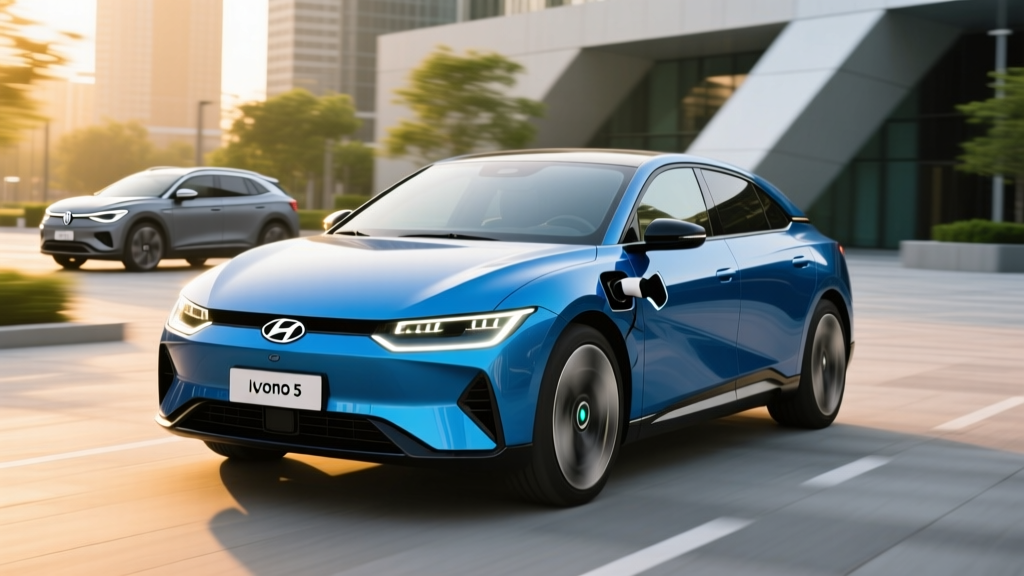
| Hyundai Ioniq 5 SE Std Range | US (Korea-built) | 63 (NMC) | 245 mi (EPA) | $39,950 | 7.4s |
5-Year Total Cost of Ownership: EV vs. EV vs. Gas Baseline
Even without access to Chinese-market pricing, the ownership math for US-market EVs is compelling when you factor in the full picture. Below is a 5-year / 75,000-mile TCO breakdown comparing the Tesla Model 3 RWD, the Chevrolet Equinox EV 2LT, and a Toyota Camry LE (gas baseline at 32 MPG combined):
| Cost Category | Tesla Model 3 RWD | Chevy Equinox EV 2LT | Toyota Camry LE (Gas) |
|---|---|---|---|
| Purchase Price (MSRP) | $38,990 | $33,600 | $28,400 |
| Federal Tax Credit (§30D) | −$7,500 | −$7,500 | $0 |
| Net Purchase After Credit | $31,490 | $26,100 | $28,400 |
| Estimated Insurance (5 yr) | $12,800 | $10,500 | $8,200 |
| Fuel / Charging (5 yr) | $3,750 | $4,200 | $9,375 |
| Maintenance (5 yr) | $1,500 | $1,800 | $4,500 |
| Depreciation (5 yr) | $16,200 | $14,800 | $11,500 |
| Total 5-Year Cost | $65,740 | $57,400 | $61,975 |
| Cost Per Mile | $0.88 | $0.77 | $0.83 |
Assumptions: $0.14/kWh national average electricity (EIA 2025 data), $3.50/gal gasoline, 75,000 miles driven, home charging at 85% of sessions. Insurance sourced from industry averages. Depreciation estimates based on Kelley Blue Book and iSeeCars 2025 data. Tax credit applied at point of sale per IRS §30D rules.
Federal Tax Credit (§30D): Do You Actually Qualify?
The federal EV tax credit can knock up to $7,500 off your purchase price — transferred to the dealer at point of sale as of 2024 onward, meaning you don't need to wait until tax season. But eligibility hinges on several requirements that change frequently and are heavily influenced by battery-sourcing rules designed to reduce reliance on Chinese mineral supply chains.
§30D Eligibility Checklist (2026 Tax Year)
- Income caps: Modified AGI ≤ $150,000 (single), ≤ $225,000 (head of household), ≤ $300,000 (joint)
- MSRP caps: ≤ $55,000 for sedans/wagons; ≤ $80,000 for SUVs, pickups, vans
- Battery sourcing — critical minerals (½ of credit, $3,750): Must be extracted or processed in the US or a free-trade-agreement country, or recycled in North America. Percentage thresholds increase annually.
- Battery sourcing — components (½ of credit, $3,750): Battery components must be manufactured or assembled in North America. Percentage thresholds increase annually.
- Foreign Entity of Concern (FEOC) exclusion: Vehicles with battery components from a FEOC (including many Chinese suppliers) are disqualified — effective 2024 for components, 2025 for critical minerals.
- Vehicle assembly: Final assembly must occur in North America.
- Point-of-sale transfer: You can transfer the credit to the dealer for an immediate price reduction, or claim it on your tax return.
Charging vs. Gas: The Per-Mile Cost Math
The single biggest operational savings for EV ownership comes at the fuel pump — or rather, the charger. Here's how the numbers break down using concrete assumptions:
| Metric | EV (Home Charging) | EV (Public DC Fast) | Gas Vehicle (32 MPG) |
|---|---|---|---|
| Energy Cost | $0.14/kWh | $0.40/kWh | $3.50/gallon |
| Efficiency | 3.5 mi/kWh (286 Wh/mi) | 3.5 mi/kWh | 32 mi/gallon |
| Cost Per Mile | $0.04 | $0.11 | $0.11 |
| Cost for 15,000 mi/year | $600 | $1,650 | $1,650 |
Home charging is where EV economics shine. At $0.04/mile, you're spending roughly a third of what a gas car costs per mile. However, if you rely exclusively on public DC fast charging at $0.35–$0.48/kWh (common on Electrify America and EVgo networks), your per-mile cost rises to parity with gasoline. This is why home Level 2 charging access is the single most important factor in EV ownership economics.
Source: fueleconomy.gov for efficiency data; EIA for electricity pricing averages.
Maintenance Savings: Where EVs Quietly Win
EV maintenance savings aren't as dramatic as fuel savings, but they compound over time. Battery-electric vehicles eliminate oil changes, spark plugs, timing belts, transmission fluid, and exhaust system repairs. Regenerative braking significantly extends brake pad life — many EV owners report original brake pads at 80,000+ miles.
| Maintenance Item | EV (5-Year Cost) | Gas Vehicle (5-Year Cost) |
|---|---|---|
| Oil Changes | $0 | $750 |
| Brake Pads (front + rear) | $0–$300 (regen extends life) | $800–$1,200 |
| Transmission Fluid | $0 (single-speed reduction gear) | $200–$400 |
| Coolant / Filters | $200 | $400 |
| Tire Rotation + Replacement | $1,200 (EVs are heavier, wear tires faster) | $1,000 |
| Cabin Air Filter + Wipers | $300 | $300 |
| Total Estimated (5 yr) | $1,500–$1,800 | $3,450–$4,050 |
The one area where EVs cost more: tires. Heavier curb weights (typically 500–800 lbs more than equivalent gas cars) and instant torque accelerate tire wear. Budget for tire replacement every 30,000–40,000 miles rather than the 50,000+ miles typical for gas vehicles.
Insurance: The EV Cost That Catches Buyers Off Guard
EV insurance premiums run 15–30% higher than comparable gas vehicles. The reasons are structural, not arbitrary:
- Higher repair costs: Battery packs are expensive to replace after collision damage. Even minor underbody impacts can total a battery.
- Specialized labor: High-voltage system repairs require certified technicians, and fewer shops have this capability.
- Parts scarcity: EV-specific body panels and structural components (like Tesla's gigacastings) can be costly and slow to source.
- Vehicle value: Higher purchase prices mean higher insured values.
For context, the Tesla Model 3 averages $2,560/year in insurance premiums nationally, while the Chevy Equinox EV averages around $2,100/year, and a Toyota Camry LE averages $1,640/year. These vary significantly by state, driving record, and insurer — always get quotes before purchasing.
Depreciation and Resale Value: The Evolving Picture
EV depreciation has been volatile. Early EVs suffered steep drops as battery technology improved rapidly and range expectations increased. In 2023–2024, Tesla's aggressive price cuts triggered a wave of used-EV value declines that affected the entire segment.
As of 2026, the depreciation picture has stabilized for mainstream models:
- Tesla Model 3: ~48% retained value at 5 years (improved from 2024 lows, but still below Toyota/Honda sedans)
- Chevrolet Equinox EV: ~44% retained value at 5 years (limited track record; estimated from Bolt EUV and segment trends)
- Hyundai Ioniq 5: ~46% retained value at 5 years
- Gas baseline (Toyota Camry): ~55% retained value at 5 years
EVs still depreciate faster than top gas vehicles, but the gap has narrowed. Battery health reports (State of Health, or SoH) are increasingly standard on used-EV listings, giving buyers confidence in remaining range. Manufacturer battery warranties — typically 8 years / 100,000 miles with a 70% capacity retention floor — also support resale values.
State, Local, and Utility Incentives: Stacking the Savings
Beyond the federal §30D credit, many states, municipalities, and electric utilities offer additional rebates and incentives. These vary enormously by region and change frequently, so always verify with your local utility and state energy office:
- California (CVRP): Up to $2,000 rebate for income-qualified buyers (program funding varies)
- Colorado: Up to $5,000 state tax credit for new EVs (income-dependent)
- New York (Drive Clean Rebate): Up to $2,000 point-of-sale rebate
- Utility rebates: Many utilities offer $250–$1,500 for home Level 2 charger purchase and installation (e.g., PG&E, ConEdison, Xcel Energy)
- HOV lane access: Several states grant EVs access to carpool lanes with a single occupant — a significant commute-time savings
- Used EV credit (§25E): Up to $4,000 (30% of sale price) for qualifying used EVs under $25,000, with income caps
Check fueleconomy.gov and your state's energy department for current programs. Incentive amounts, income limits, and funding availability change annually.
Frequently Asked Questions
How much does it really cost to own an EV over 5 years?
Based on our TCO analysis, a mainstream EV like the Chevy Equinox EV costs approximately $57,400 over 5 years / 75,000 miles (including purchase after federal credit, insurance, charging, maintenance, and depreciation) — roughly $4,575 less than a comparable gas sedan over the same period. The Tesla Model 3 comes in higher at ~$65,740 due to insurance and depreciation, but both EVs benefit from dramatically lower per-mile fuel costs when charging at home.
Do I qualify for the federal EV tax credit?
You may qualify for up to $7,500 under §30D if your modified adjusted gross income is under $150K (single) / $300K (joint), the vehicle MSRP is under $55K (sedans) or $80K (SUVs/trucks), the battery meets critical-mineral and component-sourcing requirements, and final assembly occurred in North America. The FEOC rules specifically exclude vehicles with Chinese-sourced battery components or minerals. Always check the IRS qualified vehicles list before purchasing, as eligibility updates throughout the year.
How much do I save on fuel and maintenance with an EV?
At national average electricity rates ($0.14/kWh) and gas prices ($3.50/gal), a typical EV saves roughly $5,625 on fuel and $2,000–$2,500 on maintenance over 5 years / 75,000 miles compared to a 32 MPG gas sedan. Total operational savings: approximately $7,500–$8,000. These savings are maximized with home charging and diminish if you rely on public DC fast charging.
Are EVs more expensive to insure?
Yes — typically 15–30% more than comparable gas vehicles. Higher repair costs (especially battery replacement after collision), specialized labor requirements, and higher vehicle values all contribute. Expect to pay $2,100–$2,600/year for mainstream EV insurance versus $1,600–$1,800/year for a gas equivalent. Get quotes from multiple insurers before committing to a purchase.
How well do EVs hold their value?
EVs retain roughly 44–48% of their value after 5 years, compared to 50–58% for top-selling gas sedans and SUVs. The gap has narrowed since 2024 as battery technology stabilized and the used-EV market matured. Long battery warranties (8 years / 100,000 miles) help support resale. However, rapid price competition from new models and evolving consumer preferences keep EV depreciation higher than the most reliable gas vehicles.
Can I buy a Chinese EV in the US to take advantage of lower prices?
Not directly. As of 2026, 100% tariffs on Chinese-built EVs effectively double their landed cost, and no major Chinese EV brand has established a US dealer network. Even if imported, these vehicles would not qualify for the §30D federal tax credit due to FEOC battery-sourcing exclusions and lack of North American assembly. The Chinese EV car prices you see in international coverage are not reflective of what US buyers would actually pay.