Quick Answer: Chinese Electric Bikes vs. EVs for Commuting
Chinese electric bikes (e-bikes) typically cost $800–$2,500, offer 20–60 miles of range per charge, and cost $0.05–$0.15 per charge. Electric vehicles (EVs) start around $28,000–$38,000 after incentives, deliver 250–350+ miles of EPA range, and cost $0.10–$0.20 per mile to charge at home. E-bikes excel for short urban commutes under 15 miles; EVs make sense for longer commutes, highway driving, passengers, cargo, and all-weather reliability. Your choice depends on commute distance, climate, cargo needs, and whether you have secure bike storage with charging access.
The Real Numbers: Chinese Electric Bikes vs. EVs
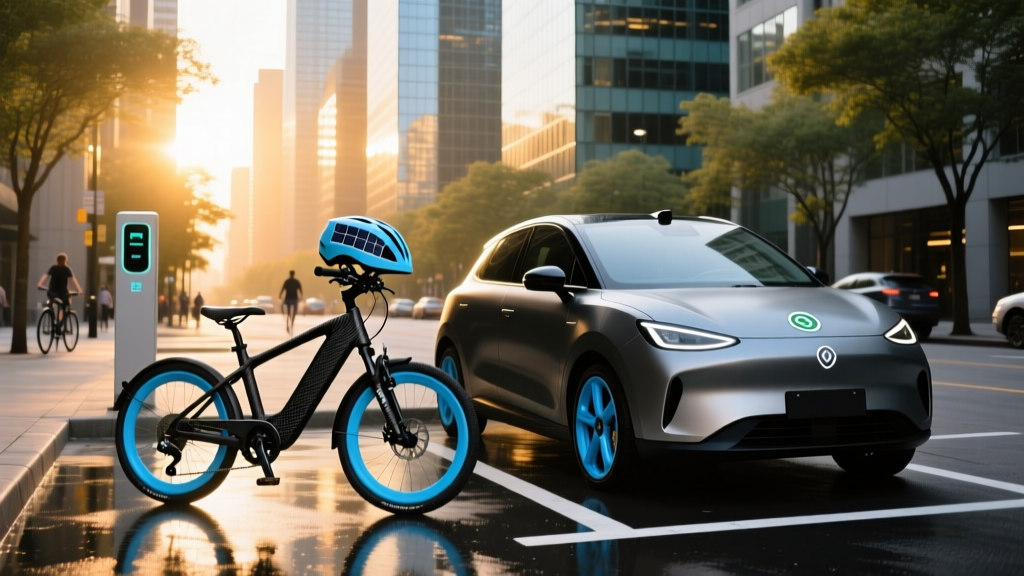
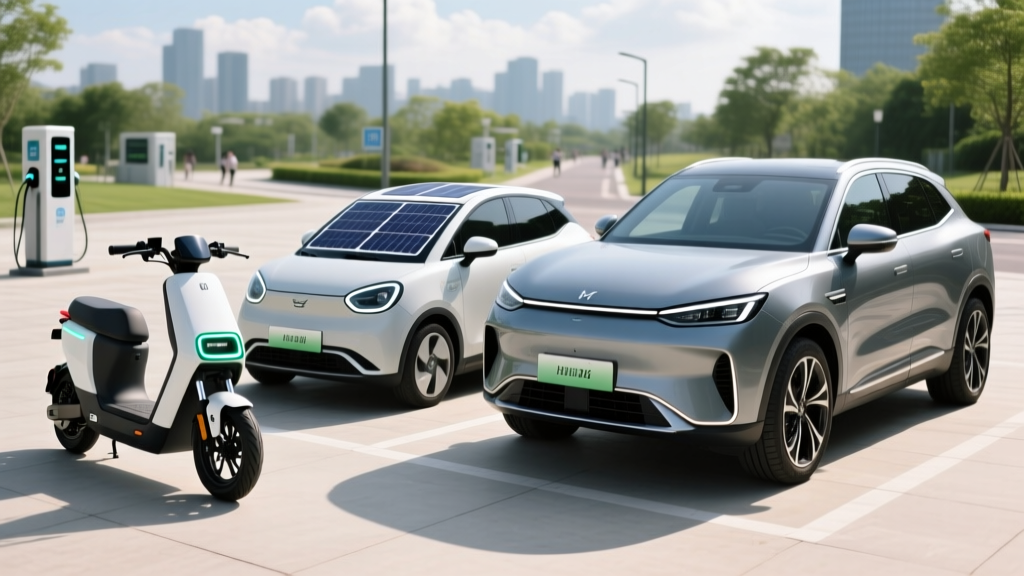
Chinese electric bikes—brands like NIU, Super Soco, and Yadea—have flooded the micromobility market with affordable, lightweight electric two-wheelers. But how do they stack up against a full electric vehicle for daily transportation? Let's break down the concrete data.
| Category | Chinese E-Bike (NIU NQi GT) | Compact EV (Chevrolet Equinox EV LT) |
|---|---|---|
| Purchase Price | $2,800–$3,500 | $33,600 MSRP (~$26,100 after §30D credit) |
| Battery Capacity | 3.5 kWh (lithium-ion) | 85 kWh usable (NMC) |
| Range per Charge | 35–50 miles (real-world) | 315 miles EPA (~270 mi highway) |
| Charge Time (0–100%) | 5–7 hours (120V outlet) | 9.5 hours (Level 2, 11.5 kW); 10–80% in ~26 min (DC fast charge, 150 kW peak) |
| Energy Cost per Mile | $0.003–$0.005 | $0.03–$0.05 (home charging at $0.15/kWh) |
| Annual Insurance | $0–$150 (optional theft coverage) | $1,400–$2,200 |
| Annual Maintenance | $50–$150 (tires, brakes) | $300–$500 (tires, cabin filter, wipers) |
| 5-Year Total Cost (12k mi/yr) | $3,500–$4,500 | $38,000–$45,000 (after credit) |
Sources: EPA Fuel Economy, IRS §30D Clean Vehicle Credit, manufacturer specifications.
Range Reality Check: What the Sticker Doesn't Tell You
Chinese e-bike manufacturers often advertise ranges of 60–80 miles, but real-world testing tells a different story. At 20 mph with a 180-pound rider on flat terrain, expect 35–50 miles from a fully charged 3.5 kWh battery. Add hills, headwinds, cold weather (below 50°F), or a heavier rider, and range drops 20–40%.
EVs face similar real-world penalties. A 315-mile EPA-rated EV typically delivers 260–280 miles on the highway at 70 mph, and cold weather (below freezing) can reduce range 20–30% without a heat pump. But even with these losses, an EV's 200+ mile real-world range dwarfs an e-bike's 25–40 mile cold-weather range.
Cold-Weather Range Loss
Chinese E-Bike (40°F): 35-mile advertised range → 20–25 miles real-world
EV with Heat Pump (20°F): 315-mile EPA → 240–260 miles real-world
Bottom Line: E-bikes become impractical for commutes over 10 miles each way in winter. EVs remain viable but require more frequent charging.
Charging Access: The Make-or-Break Factor
Both e-bikes and EVs require charging access, but the infrastructure differs dramatically.
Chinese E-Bike Charging:
- Removable battery packs (most models) allow indoor charging from any 120V outlet
- Full charge: 5–7 hours at 0.5 kW
- No electrician or permit required
- Apartment-friendly if you can store the bike or battery indoors
EV Home Charging:
- Level 1 (120V): 3–5 miles per hour of charging — impractical for daily use
- Level 2 (240V, 40A circuit): 25–35 miles per hour; full charge in 8–10 hours
- Level 2 installation: $800–$2,500 (charger + electrician + permit); may require panel upgrade ($1,500–$3,000) in older homes
- Requires dedicated garage or driveway parking
The Reality: If you live in an apartment without secure bike storage, an e-bike's removable battery is a major advantage. If you have a garage or driveway, a Level 2 EV charger transforms overnight charging into a non-issue.
Safety, Weather, and Practicality
| Factor | Chinese E-Bike | Electric Vehicle |
|---|---|---|
| Rain/Snow | Limited (most are water-resistant, not waterproof; unsafe in heavy rain or ice) | Full weather protection; heated seats/steering; AWD options |
| Cargo Capacity | 20–40 lbs (rear rack or panniers) | 2,000–3,500 lbs towing; 25–70 cu ft cargo |
| Passengers | 1 rider (some models allow 1 passenger) | 4–7 passengers |
| Safety Features | Helmet, lights, basic ABS (some models) | Airbags, AEB, lane-keep, blind-spot monitoring, crumple zones |
| Theft Risk | High (easily stolen; requires heavy lock + GPS tracker) | Low (immobilizer, alarm, GPS tracking) |
| Highway Use | Not legal or safe (top speed 28–45 mph) | Full highway capability (0–60 in 6–8 sec for most models) |
Common Misconceptions: Myth vs. Fact
| Myth | Fact |
|---|---|
| "Chinese e-bikes are illegal in the U.S." | Class 1 and 2 e-bikes (20 mph max assist) are legal in most states. Class 3 (28 mph) may require registration or have age restrictions. Check your state's e-bike laws. |
| "E-bikes are as safe as bicycles." | E-bikes travel faster and weigh more (60–120 lbs vs. 20–30 lbs for a bicycle), increasing crash severity. NHTSA data shows e-bike injuries rose 500% from 2017–2022. |
| "EVs are too expensive for average buyers." | After the §30D tax credit (up to $7,500), compact EVs like the Chevy Equinox EV start around $26,000—competitive with gas cars. Used EVs qualify for a $4,000 credit. |
| "E-bike batteries are cheap to replace." | Replacement batteries cost $500–$1,200 and last 3–5 years with daily use. That's $100–$240/year in battery depreciation. |
| "EVs don't save money long-term." | EVs save $6,000–$10,000 over 5 years in fuel and maintenance vs. gas cars (DOE data). But upfront cost and insurance are higher. |
Decision Framework: Which Should You Choose?
Choose a Chinese E-Bike If:
- Your one-way commute is under 10 miles
- You live in a mild climate (rarely below 40°F or above 95°F)
- You have secure indoor storage with charging access
- You don't need to carry passengers or heavy cargo
- You want minimal upfront cost ($2,500–$3,500)
- You're comfortable with higher accident risk and limited weather protection
Choose an Electric Vehicle If:
- Your commute exceeds 15 miles one-way or includes highway driving
- You live in a region with cold winters or extreme heat
- You need to transport passengers, groceries, or cargo regularly
- You have garage/driveway access for Level 2 charging installation
- You can budget $26,000–$38,000 after tax credits
- You prioritize safety, comfort, and all-weather reliability
Federal Tax Credits and Incentives (2026)
Electric Vehicles: The §30D Clean Vehicle Credit offers up to $7,500 for new EVs, subject to:
- MSRP caps: $55,000 for sedans; $80,000 for SUVs/trucks
- Buyer income limits: $150,000 single / $300,000 joint
- Battery sourcing requirements (critical minerals and components from U.S. or FTA partners)
- Point-of-sale transfer available (dealer applies credit at purchase)
Chinese E-Bikes: No federal tax credit. Some states and utilities offer $200–$500 rebates for e-bikes. Check your local programs.
See IRS §30D guidelines for current eligibility rules.
FAQ: Chinese Electric Bikes vs. EVs
Can I use a Chinese e-bike as my only vehicle?
Only if your commute is under 10 miles, you live in a mild climate, and you rarely need to carry passengers or cargo. For most Americans, an e-bike works as a secondary vehicle for short trips, not a primary car replacement.
How long do Chinese e-bike batteries last?
Most lithium-ion e-bike batteries last 500–800 charge cycles (3–5 years with daily use) before degrading to 70–80% capacity. Replacement costs $500–$1,200. EV batteries are warranted for 8 years/100,000 miles and typically last 15–20 years before significant degradation.
Are Chinese e-bikes street-legal?
Class 1 and 2 e-bikes (pedal-assist or throttle, max 20 mph) are legal in most states without registration or insurance. Class 3 e-bikes (28 mph) may require registration, insurance, or a driver's license depending on your state. Always check local laws before purchasing.
What's the real cost per mile for an e-bike vs. EV?
E-bikes cost $0.003–$0.005 per mile in electricity. EVs cost $0.03–$0.05 per mile at home (more on public DC fast chargers). But when you factor in insurance, maintenance, and depreciation, e-bikes average $0.15–$0.25 per mile, while EVs average $0.45–$0.65 per mile over 5 years.
Do I need a license or insurance for a Chinese e-bike?
Most states don't require a license, registration, or insurance for Class 1–2 e-bikes. However, theft insurance is highly recommended given the high theft rate. Some renters/homeowners policies cover e-bikes; standalone e-bike insurance costs $100–$200/year.
Bottom Line: It's About Your Commute and Climate
Chinese electric bikes offer unbeatable affordability for short, fair-weather urban commutes. At $2,800–$3,500 and $0.005 per mile, they're the cheapest motorized transport available. But they're not car replacements—they're bicycle replacements with electric assist.
Electric vehicles cost 10x more upfront but deliver 10x the range, full weather protection, highway capability, and passenger/cargo capacity. After the §30D tax credit, a compact EV costs $26,000–$30,000 and saves $6,000–$10,000 over 5 years vs. a gas car.
Your decision hinges on three questions: How far is your commute? How harsh is your winter? Do you need to carry people or cargo? If the answer to any of these is "a lot," "very," or "yes," an EV is the practical choice. If your commute is short, your weather is mild, and you're riding solo, a Chinese e-bike might be all you need.