The Short Answer on the "Avalanche EV"
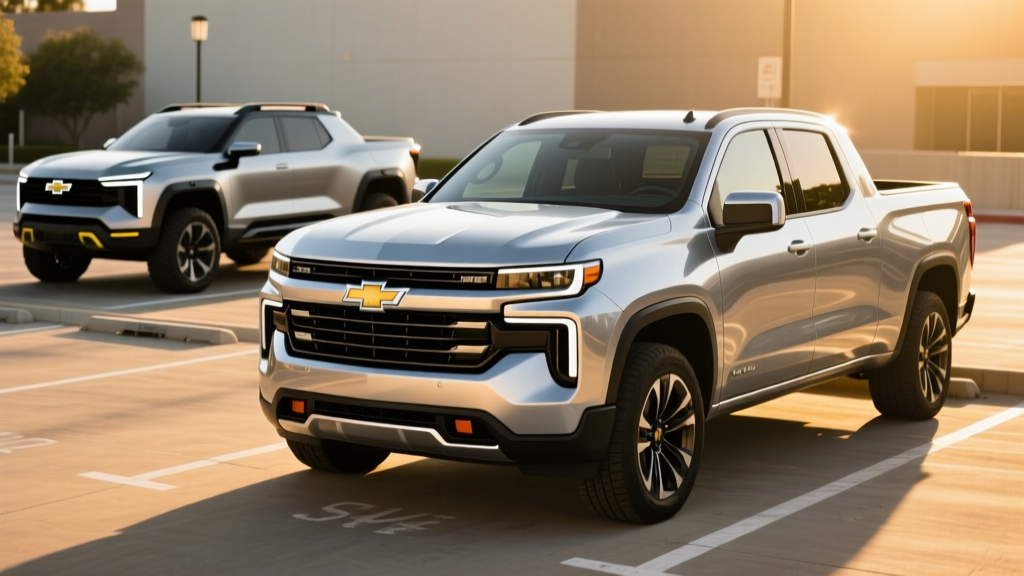
Chevrolet never produced an electric Avalanche, and as of 2026 there is no announced Avalanche EV from GM. The Avalanche nameplate was retired after the 2013 model year. What Chevy does offer in the electric truck space is the Chevrolet Silverado EV, which launched for the 2024 model year and continues into 2026 with expanded trims. If you've been searching for an "Avalanche EV" hoping for a mid-size electric pickup with an open cargo pass-through (the Avalanche's signature midgate), the Silverado EV is the closest spiritual and practical successor — and it actually brings a modernized midgate of its own.
Why the "Avalanche EV" Search Keeps Coming Up
The original Chevy Avalanche (2002–2013) had a cult following for one reason: the midgate. Drop the rear cabin wall, and a 5-foot bed became an 8-foot cargo floor. It was a Swiss-army-knife truck before the term existed. When EV interest surged, forums and speculative renders imagined an "Avalanche EV" revival — a mid-size electric truck with that same trick tailgate.
GM listened, but not with the Avalanche badge. Instead, the Silverado EV arrived on the Ultium platform with its own Multi-Flex Midgate, a 400-mile-plus range option, and available 4-wheel steering. For buyers who typed "avalanche ev" into a search bar hoping for a practical, lifestyle-oriented electric pickup, the Silverado EV is the vehicle to evaluate.
2026 Silverado EV: Range, Battery, and Charging Specs
| Spec | WT4 (Work Truck) | RST First Edition / 4WT | LT (2026) |
|---|---|---|---|
| EPA Range | ~390 mi (est.) | ~440 mi (est.) | ~380 mi (est.) |
| Battery (usable) | ~200 kWh (NMC) | ~200 kWh (NMC) | ~175 kWh (NMC, est.) |
| Horsepower | 510 hp | 664 hp (Max Power) | ~510 hp |
| 0-60 mph | ~5.0 sec | ~4.5 sec | ~5.0 sec |
| Max DC Fast Charge | 350 kW (peak) | 350 kW (peak) | 350 kW (peak) |
| 10–80% DCFC Time | ~30 min (est.) | ~30 min (est.) | ~25 min (est.) |
| Level 2 (Home) | 19.2 kW / 11.5 kW | 19.2 kW / 11.5 kW | 11.5 kW |
| Max Towing | 10,000 lbs | 10,000 lbs | 10,000 lbs |
| Base MSRP (approx.) | ~$55,000 | ~$94,000 | ~$62,000 |
| Battery/Powertrain Warranty | 8 yr / 100,000 mi | 8 yr / 100,000 mi | 8 yr / 100,000 mi |
Note: Specs reflect GM's latest published data for the 2025–2026 model year. Final 2026 EPA certifications may vary by trim. Source: Chevrolet Silverado EV.
Real-World Range Reality Check
The headline 440-mile EPA figure applies to specific trims with the largest battery pack and favorable wheel/tire configurations. In real-world highway driving at 70–75 mph, expect ~340–380 miles from the 440-rated trims. In cold weather (below 30°F), lithium-ion chemistry and cabin heating can knock range down another 15–25%, bringing usable highway range closer to 280–320 miles. Towing a 5,000-lb trailer? Cut range roughly in half — that's physics, not a Chevy flaw.
Silverado EV vs. Gas Silverado 1500: Cost and Capability
| Factor | Silverado EV (4WT / LT) | Silverado 1500 Gas (LTZ 4WD) |
|---|---|---|
| Base MSRP | ~$55,000–$62,000 | ~$52,000–$58,000 |
| Fuel/Energy Cost per Mile | ~$0.04–$0.06 (home L2) | ~$0.16–$0.20 (gas, 19 mpg comb.) |
| Annual Fuel (15,000 mi) | ~$600–$900 | ~$2,400–$3,000 |
| Maintenance (Annual Est.) | ~$300–$500 | ~$800–$1,200 |
| EPA Efficiency | ~65–70 MPGe | ~19 MPG combined |
| Max Towing | 10,000 lbs | 13,300 lbs (max tow pkg) |
| Midgate / Bed Flexibility | Yes (Multi-Flex) | No |
| Federal Tax Credit (§30D) | Up to $7,500 (eligibility varies) | $0 |
The Silverado EV's upfront price is higher, but the per-mile energy cost is roughly one-third that of gasoline at national-average residential electricity rates (~$0.16/kWh). Over five years and 75,000 miles, a home-charging Silverado EV owner could save $9,000–$12,000 in fuel alone, partially offsetting the price premium. Maintenance savings (no oil changes, fewer brake replacements thanks to regen braking) add another $2,500–$4,000 over that span.
However, the gas Silverado 1500 still wins on max towing (up to 13,300 lbs with the right package) and has no range penalty when towing. If you regularly tow over 7,000 lbs long-distance, a gas or diesel truck remains the more practical tool.
Real-World Ownership: What First-Time EV Truck Buyers Need
Home Charging Is (Almost) Mandatory
A 200-kWh battery is enormous. On a standard 120V outlet (Level 1, ~1.4 kW), a full charge would take over 140 hours — essentially impractical. A Level 2 home charger at 11.5 kW adds roughly 30–35 miles per hour of charging, meaning a full overnight session (10 hours) restores ~300+ miles. At 19.2 kW (requires a hardwired 100-amp circuit), that climbs to ~50 miles per hour.
| Item | Typical Cost Range |
|---|---|
| Level 2 Charger (40–80A) | $400–$800 |
| Electrician (240V circuit, 50–100 ft run) | $800–$2,500 |
| Panel Upgrade (if needed, 200A service) | $1,500–$3,500 |
| Permit & Inspection | $100–$400 |
| Total (best case) | $1,300–$2,000 |
| Total (panel upgrade needed) | $2,800–$5,000+ |
If you live in an apartment, rely on street parking, or lack a garage, public DC fast charging is your lifeline. The Silverado EV's 350 kW peak capability means a 10–80% session at a compatible station takes roughly 30 minutes. But public DCFC costs $0.30–$0.50/kWh in most markets, pushing your per-mile cost closer to $0.10–$0.14 — still cheaper than gas, but the gap narrows.
Cold Weather and Towing: The Honest Limitations
Electric trucks face two range killers that gas trucks don't: cold temperatures and towing aerodynamic drag. Lithium-ion batteries lose efficiency below freezing, and electric cabin heating draws significant power. Combined, a 440-mile Silverado EV might deliver 280–320 real-world highway miles in a Midwest winter. Add a box trailer, and you're looking at 180–220 miles between charges.
For daily commuting, school runs, and weekend trips under 250 miles, this is a non-issue. For cross-country towing in January, it's a genuine constraint that requires route planning around DC fast chargers.
Federal Tax Credit: Does the Silverado EV Qualify?
Under IRS §30D rules (current as of 2026), new EV buyers may qualify for up to $7,500 in federal tax credits, available as a point-of-sale transfer to the dealer — effectively a down-payment reduction. However, eligibility depends on multiple factors:
- MSRP Cap: Pickup trucks must have an MSRP at or below $80,000. This eliminates the RST First Edition (~$94,000) but keeps the WT4 and LT trims in play.
- Buyer Income Cap: Modified AGI must not exceed $150,000 (single), $225,000 (head of household), or $300,000 (joint).
- Battery Sourcing: The $7,500 credit splits into two halves — $3,750 for critical-mineral sourcing and $3,750 for battery-component manufacturing. GM's Ultium cells are assembled in the US (Ohio, Tennessee), but critical-mineral compliance varies by model year and supply chain. Check the latest fueleconomy.gov listings before purchasing.
- Point-of-Sale Transfer: You can transfer the credit to the dealer at purchase, reducing your out-of-pocket cost immediately — you don't need to wait until tax filing.
Always confirm eligibility with your tax professional and the IRS clean vehicle credits page. Rules and sourcing requirements have shifted annually.
Silverado EV vs. Rival Electric Trucks
| Spec | Silverado EV (WT4) | Ford F-150 Lightning (XLT) | Rivian R1T (Dual-Motor) |
|---|---|---|---|
| EPA Range | ~390 mi | ~240 mi (std) / ~320 mi (ext) | ~352 mi (Max Pack) |
| Battery (usable) | ~200 kWh | ~98 kWh / ~131 kWh | ~141 kWh |
| Peak DCFC | 350 kW | 150 kW | 200+ kW |
| Max Towing | 10,000 lbs | 10,000 lbs | 11,000 lbs |
| Midgate | Yes | No | No (Gear Tunnel instead) |
| Base MSRP | ~$55,000 | ~$55,000 | ~$79,900 |
| NACS Port | Yes (native) | Yes (2025+) | Yes (2025+) |
Best Range & Charging Speed
Silverado EV — 390–440 miles and 350 kW peak charging lead the segment.
Best for Off-Road / Adventure
Rivian R1T — Quad-motor option, air suspension, Gear Tunnel, and proven trail capability.
Best Value / Fleet
F-150 Lightning — Pro Power Onboard, mature dealer network, and strong fleet pricing.
Best Cargo Flexibility
Silverado EV — The Multi-Flex Midgate is the spiritual heir to the Avalanche's best trick.
Decision Framework: Should You Buy the Silverado EV?
Buy the Silverado EV If:
- You want 350+ miles of real-world range and fast 350 kW charging.
- You value the midgate for hauling long items (lumber, kayaks, furniture) without a trailer.
- You have home Level 2 charging access or a reliable DCFC nearby.
- Your typical towing is under 7,000 lbs and under 150 miles per trip.
- You want native NACS (Tesla Supercharger) access without an adapter.
Skip It (and Consider Gas/Hybrid) If:
- You regularly tow over 8,000 lbs long-distance — range while towing drops to ~200 miles.
- You lack home charging and your area has sparse DCFC infrastructure.
- You need the absolute lowest upfront cost — a gas Silverado 1500 WT starts ~$38,000.
- You live in extreme cold and drive 300+ miles daily without charging stops.
Consider the F-150 Lightning or Rivian R1T If:
- You need Pro Power Onboard for job-site tool use (Lightning).
- You want serious off-road capability and don't mind a higher price (R1T).
Common Myths About the "Avalanche EV" and Electric Trucks
| Myth | Fact |
|---|---|
| "Chevy is releasing an Avalanche EV in 2026." | No. GM has not announced any Avalanche-branded vehicle. The Silverado EV fills the electric-truck role. |
| "Electric trucks can't tow." | The Silverado EV tows 10,000 lbs. The issue isn't capability — it's range reduction while towing (~40–50% loss). |
| "You'll need to replace the battery in 5 years." | GM warranties the Ultium battery for 8 years / 100,000 miles (minimum 70% capacity retention). Real-world degradation data from Bolt EV owners shows ~5–8% loss over 100k miles. |
| "Home charging installation is always $5,000+." | A simple 240V/50A run in a garage with a modern panel often costs $1,300–$2,000. Panel upgrades add cost, but many homes don't need one. |
| "The $7,500 tax credit applies to every EV." | Eligibility depends on MSRP caps, buyer income, battery sourcing, and assembly location. Always verify on fueleconomy.gov. |
Frequently Asked Questions
Will Chevy ever bring back the Avalanche name as an EV?
As of early 2026, GM has made no official announcement regarding an Avalanche-branded EV. The company's electric-truck strategy centers on the Silverado EV and the compact Chevrolet Colorado EV (expected later). If a smaller, lifestyle-oriented electric truck emerges, the Avalanche name would be a logical fit — but nothing is confirmed.
How does the Silverado EV's midgate compare to the original Avalanche's?
The Silverado EV's Multi-Flex Midgate serves the same purpose: fold down the rear cabin wall to extend the bed floor into the cab. The execution is more refined, with a 60/40 split that lets you carry a passenger in the rear while still extending cargo length on one side. The original Avalanche had a simpler fold-down design without the split option.
Can I charge the Silverado EV at a Tesla Supercharger?
Yes. The Silverado EV comes with a native NACS (North American Charging Standard) port, meaning it can use Tesla Supercharger V3 and V4 stalls directly, no adapter needed. At V3 stalls (250 kW max), you'll charge slightly slower than the truck's 350 kW peak, but the Supercharger network's reliability is a significant ownership advantage.
What's the real cost to charge a Silverado EV at home?
At the US average residential rate of ~$0.16/kWh, charging a 200 kWh battery from 10% to 90% (~160 kWh) costs roughly $25.60. That delivers approximately 340–380 real-world miles — equivalent to about 18 gallons of gas, which at $3.50/gal would cost $63. Home charging saves roughly $35–$40 per fill-up equivalent.
Is the Silverado EV eligible for the $7,500 federal tax credit in 2026?
Select trims are. The WT4 and LT trims (MSRP under $80,000) can qualify, provided the buyer meets income caps and the vehicle's battery sourcing meets §30D critical-mineral and component requirements. The RST First Edition (~$94,000 MSRP) exceeds the truck MSRP cap and does not qualify. Always check the current fueleconomy.gov tax credit database and consult a tax professional before relying on the credit in your purchase decision.