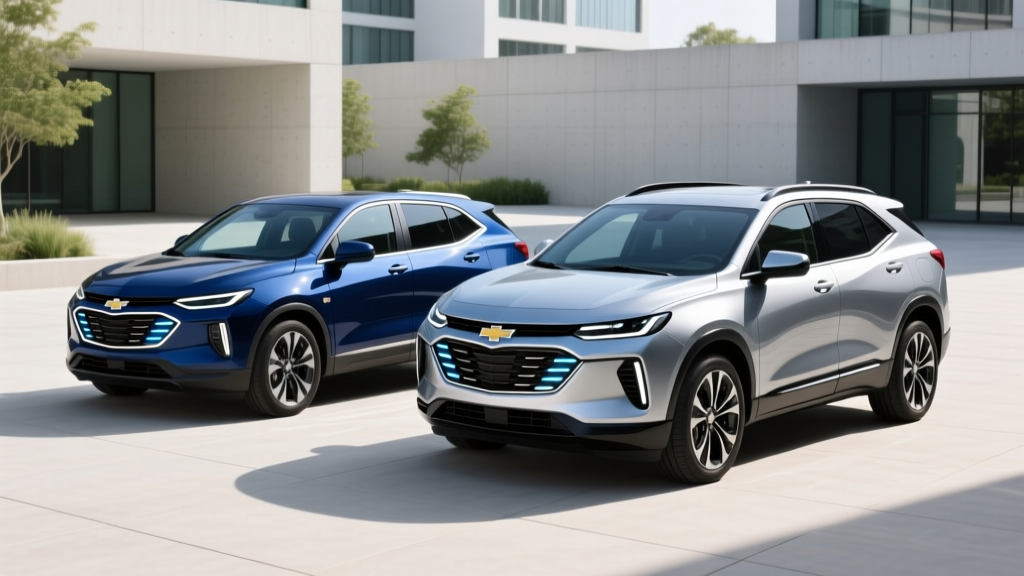
The Quick Answer: Which Chevy EV SUV Should You Buy?
If you want maximum range per dollar and daily practicality: The 2026 Chevrolet Equinox EV 3RS (EPA-est. 319 miles, starting around $34,900 before incentives) is the value pick in the Chevy EV SUV lineup. If you need more power, faster charging, and a roomier cabin: the 2026 Chevrolet Blazer EV 2LT AWD (EPA-est. 279 miles, starting around $44,600) delivers a more premium experience with up to 557 hp in SS trim.
Both qualify for federal incentives under current IRS §30D rules, but eligibility depends on your income, the vehicle's MSRP, and battery-component sourcing. Always verify on the official fueleconomy.gov tax credit page before purchasing.
Chevrolet's EV SUV strategy in 2026 centers on these two Ultium-platform crossovers, replacing the discontinued Bolt EUV. The Equinox EV targets mainstream compact-SUV buyers migrating from gas vehicles like the Toyota RAV4 or Honda CR-V. The Blazer EV sits a tier higher, competing with the Ford Mustang Mach-E, Hyundai Ioniq 5, and Tesla Model Y. Neither is a body-on-frame truck — if you need three rows or serious towing, you're looking at the Silverado EV or waiting for the next-gen Traverse EV.
Spec-by-Spec: Equinox EV vs Blazer EV
Numbers tell the real story. Here's how Chevrolet's two electric crossovers stack up across the metrics that matter most to buyers:
| Specification | 2026 Equinox EV 3RS (FWD) | 2026 Blazer EV 2LT (AWD) |
|---|---|---|
| EPA Range | 319 miles | 279 miles |
| Battery (usable) | 85 kWh (NMC, Ultium) | 102 kWh (NMC, Ultium) |
| Horsepower | 213 hp | 288 hp |
| 0–60 mph | ~8.3 sec | ~6.2 sec |
| Peak DC Fast Charge | 150 kW | 190 kW |
| 10–80% DC Charge | ~34 min | ~28 min |
| Level 2 (240V) Rate | 11.5 kW | 19.2 kW (optional) |
| MPGe (combined) | 98 MPGe | 89 MPGe |
| Cargo Volume | 26.4 cu ft / 57.2 cu ft (rear folded) | 25.5 cu ft / 59.0 cu ft (rear folded) |
| Starting MSRP | ~$34,900 | ~$44,600 |
| Battery Warranty | 8 yr / 100,000 mi | 8 yr / 100,000 mi |
Real-world range caveat: EPA estimates assume moderate temperatures and mixed driving. Expect roughly 15–25% range reduction at sustained highway speeds above 70 mph, and 20–35% loss in sub-freezing winter conditions. That 319-mile Equinox EV may deliver closer to 240–270 miles on a cold-weather road trip. The Blazer EV's larger battery provides a buffer, but its lower efficiency partially offsets the advantage.
Charging Reality: Home and Public Networks
Chevy uses the North American Charging Standard (NACS) connector on both models for 2026, giving native access to Tesla Supercharger stalls — a significant advantage over CCS-only competitors. Both also support J1772 for Level 2 public stations via an included adapter.
| Charging Level | Power | Equinox EV (mi/hr) | Blazer EV (mi/hr) |
|---|---|---|---|
| Level 1 (120V) | ~1.4 kW | ~4 mi/hr | ~3.5 mi/hr |
| Level 2 (240V, 48A) | 11.5 kW | ~34 mi/hr | ~29 mi/hr |
| Level 2 (240V, 80A)* | 19.2 kW | N/A | ~49 mi/hr |
| DC Fast Charge | 150–190 kW peak | ~170 mi in 30 min | ~190 mi in 30 min |
*19.2 kW Level 2 requires an 80A circuit and a 100A breaker — many homes need a panel upgrade. Budget $500–$2,500 for a standard 48A Level 2 install, or $2,000–$5,000+ if a 200A service upgrade is needed.
Charging-curve reality: Peak DC charge rates (150 kW / 190 kW) are sustained only between roughly 10–40% state of charge. Above 60%, the rate tapers significantly — expect the final 20% (60–80%) to take nearly as long as the first 50%. For road trips, plan stops around the 20–80% window to minimize total charge time.
Home charging is where most owners do 80–90% of their charging. If you have access to a 240V outlet in a garage or driveway, a Level 2 home charger (like the ChargePoint Home Flex or Wallbox Pulsar Plus) replenishes either vehicle overnight. Without home charging access, public-only charging adds meaningful time and cost — factor that into your decision honestly.
Cost Breakdown: Purchase, Fueling, and Ownership
The sticker price is just the starting point. Here's a five-year ownership comparison between the Equinox EV and a comparable gas compact SUV (using the 2026 Chevy Equinox Gas AWD as a baseline):
| Cost Category (5 years / 75,000 mi) | Equinox EV 3RS | Equinox Gas AWD (2.0T) |
|---|---|---|
| Base MSRP | $34,900 | $31,900 |
| Federal Tax Credit (§30D) | Up to $7,500* | $0 |
| Effective Purchase Price | ~$27,400 | $31,900 |
| Fuel / Electricity | ~$2,800 (home charging)** | ~$9,400 (gasoline @ $3.50/gal, 28 MPG) |
| Maintenance | ~$1,200 | ~$3,500 |
| Insurance (est. avg) | ~$8,500 | ~$7,200 |
| 5-Year Total Cost | ~$39,900 | ~$52,000 |
*§30D credit eligibility requires meeting adjusted gross income caps ($150K single / $300K joint), MSRP caps ($80K for SUVs), and battery-sourcing requirements. Credit can be transferred to the dealer at point of sale. Verify current eligibility on irs.gov.
**Electricity cost assumes $0.14/kWh national average and 3.0 mi/kWh efficiency. Public DC fast charging costs significantly more — typically $0.35–$0.55/kWh.
The EV wins on operating costs by a wide margin, especially with home charging. The gap narrows if you rely entirely on public fast charging or if you don't qualify for the full tax credit. Insurance tends to run 10–20% higher on EVs due to repair complexity and parts costs — get quotes before committing.
EV vs Gas vs Hybrid: Which Powertrain Fits Your Life?
| Factor | Chevy EV SUV (Equinox EV) | Gas Compact SUV | Compact Hybrid (e.g., RAV4 Hybrid) |
|---|---|---|---|
| Cost per mile (fuel) | $0.04–$0.06 (home) | $0.12–$0.14 | $0.08–$0.10 |
| Home "refueling" | Yes — full charge overnight | No — gas station required | No — gas station required |
| Road-trip convenience | 30-min charge stops every ~250 mi | 5-min fill every ~400 mi | 5-min fill every ~500 mi |
| Cold-weather impact | 20–35% range loss | Minimal (5–10%) | Minimal (5–10%) |
| Maintenance burden | Low (no oil, plugs, transmission) | High (regular services) | Moderate (engine + hybrid system) |
| Best for | Home-charging access, daily commutes, moderate road trips | Rural areas, frequent long hauls, no charging access | Mixed driving, no charging access, budget buyers |
A plug-in hybrid like the upcoming Chevy Traverse PHEV could split the difference — 30–40 miles of electric commuting plus a gas engine for road trips — but it adds powertrain complexity and typically costs more upfront than either a pure EV or conventional hybrid.
Myths vs Facts: What First-Time Chevy EV Buyers Get Wrong
| Myth | Fact |
|---|---|
| "The battery will need a $20,000 replacement in 5 years." | GM's Ultium batteries carry an 8-year/100,000-mile warranty covering defects and capacity loss below 70%. Real-world degradation data from similar platforms shows ~8–12% loss over 100K miles — most owners will never need a replacement. |
| "I can't take road trips." | Both models access Tesla Superchargers via NACS. A 300-mile trip requires one ~25-minute stop. Planning apps like A Better Routeplanner make this straightforward. |
| "I need a special electrical panel." | Most homes with a 200A panel can support a 48A Level 2 charger. An electrician can confirm for $100–$200. Level 1 (120V) charging adds ~4 miles per hour — sufficient for low-mileage drivers. |
| "EVs don't work in cold climates." | They work, but with reduced range. Both models include battery preconditioning for DC charging and available heated seats/steering wheel, which use less energy than cabin heating. Expect 20–35% winter range loss — plan accordingly. |
| "The $7,500 tax credit applies to everyone." | It depends on your AGI, the vehicle's MSRP, and battery-component/critical-mineral sourcing. The credit can now be transferred to the dealer at point of sale, acting as an instant discount. Always confirm eligibility before signing. |
Decision Framework: Which Chevy EV SUV Is Right for You?
Choose the Equinox EV if:
- Your budget is under $40K and you want the longest range per dollar
- Your daily commute is under 60 miles round-trip
- You have home charging access (Level 2 preferred)
- You rarely drive more than 300 miles in a single day
- You prioritize efficiency (98 MPGe combined) over acceleration
Choose the Blazer EV if:
- You want quicker acceleration (288 hp standard, 557 hp in SS trim)
- You need faster DC charging (190 kW peak) for frequent road trips
- You prefer a larger cabin and more premium interior materials
- You want the optional 19.2 kW Level 2 charging for ultra-fast home replenishment
- Budget allows $45K+ before incentives
Neither is right if:
- You have zero home charging access AND regularly drive 200+ miles daily — consider a PHEV or hybrid instead
- You need three rows of seating — wait for the next-gen Traverse EV or consider a minivan PHEV
- You tow more than 1,500 lbs regularly — the Silverado EV is the better Chevy option
Frequently Asked Questions
Does the 2026 Chevy Equinox EV qualify for the $7,500 federal tax credit?
It may, but eligibility depends on multiple factors under IRS §30D: your adjusted gross income (under $150K single / $300K joint filer), the vehicle's MSRP (must be under $80K for SUVs), and whether the battery meets critical-mineral and component-sourcing requirements. The credit can be applied as a point-of-sale discount at the dealer. Always verify current eligibility at irs.gov and with your tax professional.
How long does it take to charge the Blazer EV at home?
On a standard 48A Level 2 charger (11.5 kW), the Blazer EV's 102 kWh battery charges from empty to full in roughly 9 hours. With the optional 19.2 kW onboard charger and an 80A circuit, that drops to about 5.5 hours. Most owners charge overnight and never start the day below 80%.
Can I use Tesla Superchargers with a Chevy EV SUV?
Yes. Both the 2026 Equinox EV and Blazer EV use the NACS (North American Charging Standard) connector natively, granting direct access to Tesla's Supercharger network without an adapter. This is a major practical advantage over CCS-only EVs from other brands.
What happens if the Ultium battery degrades significantly?
GM warrants the battery for 8 years or 100,000 miles against defects and capacity loss below a specified threshold (typically 70% state of health). Independent data from GM's earlier Ultium deployments suggests average degradation of roughly 1–1.5% per year under normal use. Complete battery replacement, while rare, can cost $12,000–$18,000 out of warranty.
Is Super Cruise available on these Chevy EV SUVs?
Super Cruise — GM's hands-off, eyes-on Level 2 driver-assistance system — is available on select Blazer EV trims equipped with the necessary hardware. It operates on over 750,000 miles of mapped highways in the US and Canada. The Equinox EV does not currently offer Super Cruise; it uses Chevy's standard driver-assistance suite. Remember: Super Cruise is SAE Level 2, meaning you must remain attentive and ready to take over at all times. It is not autonomous driving.