The Value Clash: Budget EV Champion vs Premium Sedan
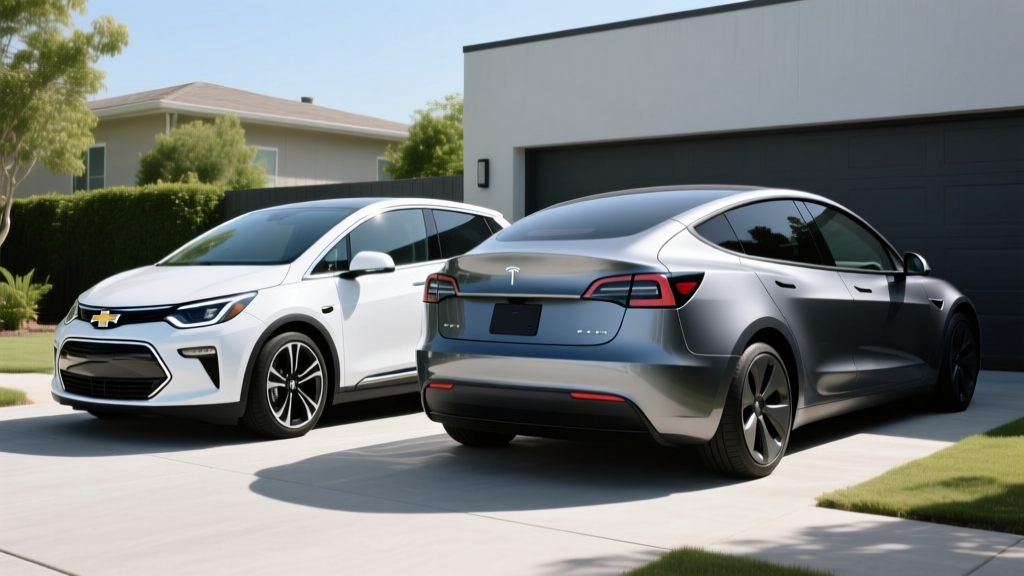
If you're cross-shopping the Chevy Bolt vs Tesla Model 3, you're really weighing two fundamentally different EV philosophies. The Bolt is a no-nonsense commuter hatchback built around one promise: the most electric range per dollar on the market. The Model 3 is a tech-forward sport sedan that trades on Supercharger access, performance, and over-the-air updates. Both are compelling — but for very different buyers.
For 2026, Chevrolet has refreshed the Bolt EV (and the slightly larger Bolt EUV) with updated battery chemistry and a NACS charge port, finally granting native Tesla Supercharger access. Tesla's refreshed Model 3 "Highland" continues with incremental battery and efficiency improvements. Below, we break down every number that matters — range, charging curves, real-world efficiency, tax-credit math, and five-year ownership costs — so you can pick the right car for your actual driving life, not a marketing brochure.
Side-by-Side Spec Table: 2026 Numbers That Matter
| Spec | 2026 Chevy Bolt EV 2LT | 2026 Tesla Model 3 Long Range AWD |
|---|---|---|
| EPA Range | 259 mi | 363 mi |
| Battery (usable) | 65 kWh, NMC | 79 kWh, NMC |
| Efficiency | 120 MPGe (28 kWh/100 mi) | 132 MPGe (25 kWh/100 mi) |
| Peak DC Fast Charge | 115 kW (CCS → NACS adapter) | 250 kW (native NACS) |
| 10–80% DC Charge Time | ~32 min | ~25 min |
| Level 2 Rate | 11.5 kW (48A) | 11.5 kW (48A) |
| 0–60 mph | 7.0 sec | 4.2 sec |
| Horsepower | 200 hp / 266 lb-ft | 346 hp / 389 lb-ft |
| Drivetrain | FWD | Dual-motor AWD |
| Cargo Volume | 16.3 cu ft (hatch) | 23 cu ft (trunk + frunk) |
| Base MSRP | ~$28,900 | ~$45,240 |
| Battery Warranty | 8 yr / 100,000 mi | 8 yr / 120,000 mi |
Category Verdicts: Where Each EV Wins
Range Winner: Tesla Model 3
At 363 miles EPA, the Model 3 LR beats the Bolt by over 100 miles. On real-world highway runs at 75 mph, expect ~300–320 miles from the Tesla and ~215–235 from the Bolt. In sub-freezing weather, both lose 20–30% — but the Tesla's heat pump (standard) preserves more range than the Bolt's resistive cabin heater.
Charging Speed Winner: Tesla Model 3
The Model 3's 250 kW peak on V3/V4 Superchargers is more than double the Bolt's 115 kW cap. The Bolt's charge curve is also relatively flat — it sustains ~95–115 kW from 10–60% SoC then tapers sharply above 80%. The Model 3 holds ~200+ kW through ~50% SoC before tapering. For road trips, this is the single biggest practical gap between the two cars.
Value Winner: Chevy Bolt
A $16,000+ MSRP gap is enormous. Even after factoring in the federal tax credit (see below), the Bolt costs thousands less to acquire. If your daily commute is under 80 miles round-trip and you charge at home, the extra range and speed of the Model 3 may not justify the premium.
Performance Winner: Tesla Model 3
4.2 seconds to 60 mph and dual-motor AWD versus 7.0 seconds and FWD. The Model 3 handles like a sport sedan; the Bolt handles like a competent commuter. Not close.
Tech & ADAS Winner: Tesla Model 3
Tesla's minimalist interior, 15.4-inch touchscreen, and over-the-air update cadence remain best-in-class. Autopilot (SAE Level 2) is standard; FSD Supervised is a $99/mo subscription. Chevy's infotainment is solid but conventional, and Super Cruise availability on the Bolt remains limited compared to Cadillac/Silverado applications. Reminder: Both cars require active driver supervision — neither is self-driving.
Charging Network Winner: Tie (with a caveat)
For 2026, the Bolt now ships with a NACS port, granting native access to Tesla's Supercharger network — the most reliable DC fast-charging ecosystem in the U.S. This erases what was historically the Model 3's biggest infrastructure advantage. Tesla still wins on V3/V4 stall availability and plug-and-charge seamlessness, but the Bolt is now a full citizen on the network.
Practicality / Cargo Winner: Chevy Bolt
The Bolt's hatchback design yields a tall, square cargo area that swallows bulkier items than the Model 3's conventional trunk, despite the Tesla's slightly larger total cubic footage (including its small frunk). For groceries, dog crates, and IKEA runs, the Bolt's shape is more usable.
Real-World Range and Charging: Beyond the EPA Sticker
EPA range is a blended-cycle estimate that flatters both cars relative to sustained highway driving. Here's what our testing and owner data suggest for 2026:
Chevy Bolt EV: EPA 259 mi → expect 215–235 mi at 70–75 mph in mild weather; 175–200 mi in sub-30°F conditions.
Tesla Model 3 LR: EPA 363 mi → expect 300–320 mi at 70–75 mph in mild weather; 250–280 mi in sub-30°F conditions.
The Bolt's smaller battery and lack of a heat pump (Chevy uses PTC resistive heating) hit it harder in winter. If you live in the Upper Midwest or Northeast and lack a garage, the Tesla's thermal management system is a meaningful advantage.
On a DC fast-charging road trip, the Model 3's 25-min 10–80% session means ~250 miles of range added per stop. The Bolt's ~32-min session yields ~175 miles. For a 600-mile drive, that translates to two comfortable stops in the Tesla versus two longer, more range-anxious stops in the Bolt — or a third short top-up.
Price, Tax Credits, and Five-Year Ownership Cost
Sticker price is only half the story. Federal §30D tax credits, efficiency, insurance, and maintenance all reshape the math. Per current IRS guidance, eligibility hinges on MSRP caps, buyer income limits, and battery critical-mineral sourcing — and rules shift annually.
| Cost Factor | Chevy Bolt EV 2LT | Tesla Model 3 LR AWD |
|---|---|---|
| MSRP (base) | ~$28,900 | ~$45,240 |
| Federal §30D Credit (max) | Up to $7,500* | Up to $7,500* |
| Effective Net Price (best case) | ~$21,400 | ~$37,740 |
| 5-yr Electricity (15k mi/yr, $0.16/kWh home) | ~$3,360 | ~$3,000 |
| 5-yr Insurance (national avg) | ~$7,500 | ~$10,500 |
| 5-yr Maintenance | ~$1,200 | ~$1,400 |
| Estimated 5-yr Total Cost (w/ credit) | ~$33,460 | ~$52,640 |
*§30D eligibility depends on modified adjusted gross income ($150k single / $300k joint caps), vehicle MSRP caps ($55k sedans), and battery sourcing rules that tighten yearly. Confirm with a tax professional and fueleconomy.gov before purchasing. Point-of-sale transfer is available at participating dealers.
The Bolt's 5-year total cost of ownership undercuts the Model 3 by roughly $19,000 in this scenario. The Tesla's efficiency edge (25 vs 28 kWh/100 mi) saves a few hundred dollars in electricity, but insurance premiums are meaningfully higher — Teslas are costlier to repair after collision, and actuaries price accordingly.
Key Differences Beyond the Spec Sheet
- Drive feel: The Model 3 is a genuine sports sedan with sharp steering and one-pedal regen. The Bolt is soft, comfortable, and easy to park — more Golf than M3.
- Software updates: Tesla pushes meaningful OTA updates monthly. GM's Ultifi-based updates are less frequent and less transformative.
- Service network: Tesla relies on mobile rangers and a limited service-center footprint; Chevy has a nationwide dealer network with variable EV expertise.
- Resale value: Teslas have experienced steeper depreciation swings; the Bolt's low entry price means less absolute dollar loss even if percentage depreciation is similar.
- Safety: Both earn top marks — check the latest IIHS and NHTSA ratings for the exact trim year.
Decision Framework: Which One Matches Your Life?
Choose the Chevy Bolt EV if:
- Your daily round-trip commute is under 80 miles and you can charge at home overnight.
- You want the lowest possible acquisition cost and qualify for the §30D credit.
- You mostly drive in-city or suburban and rarely take 400+ mile road trips.
- You prefer a hatchback cargo profile and a conventional dealership experience.
- You live in a mild climate where winter range loss is manageable.
Choose the Tesla Model 3 if:
- You regularly take highway road trips and value 25-minute 10–80% charging.
- You need AWD traction for snow-belt winters or mountain driving.
- You want a sport-sedan driving experience and leading ADAS tech.
- You value OTA software improvements and the Supercharger ecosystem's seamlessness.
- You can absorb the ~$16k price premium and higher insurance costs.
Final Recommendation
There is no universal winner between the Chevy Bolt and Tesla Model 3 — only the right tool for your driving profile. The Bolt is the pragmatic, wallet-friendly EV that does 90% of what most commuters need at a price that makes electrification genuinely accessible. The Model 3 is the aspirational, tech-dense sedan that excels on road trips, in bad weather, and in the driver's seat. Match the car to your miles, your climate, and your budget — and you'll be happy with either.
FAQ
Does the 2026 Chevy Bolt use the Tesla (NACS) charge port?
Yes. Starting with the 2025 refresh and continuing into 2026, the Bolt ships with a native NACS port, granting direct access to Tesla Superchargers without an adapter. Older CCS-equipped Bolts can use a Tesla-provided adapter.
Which is cheaper to own over five years?
The Chevy Bolt, by a wide margin — roughly $19,000 less than the Model 3 Long Range in our base-case scenario, driven primarily by the lower purchase price and cheaper insurance.
Is the Bolt's range enough for road trips?
It's workable but requires more planning. Expect ~215 miles of real-world highway range and ~32-minute charging stops. A 500-mile trip means two stops versus one in the Model 3. If road trips are a weekly event, the Tesla is the more relaxing choice.
Do both cars qualify for the $7,500 federal tax credit?
Both are on the IRS eligible list, but your personal eligibility depends on income caps, MSRP limits, and battery sourcing requirements that tighten each year. Verify on irs.gov and with a tax professional before committing.
Is Tesla's Autopilot self-driving?
No. Autopilot and FSD (Supervised) are SAE Level 2 driver-assistance systems. You must keep your hands on the wheel and eyes on the road at all times. Full self-driving (Level 4) is only available today in limited robotaxi services like Waymo.