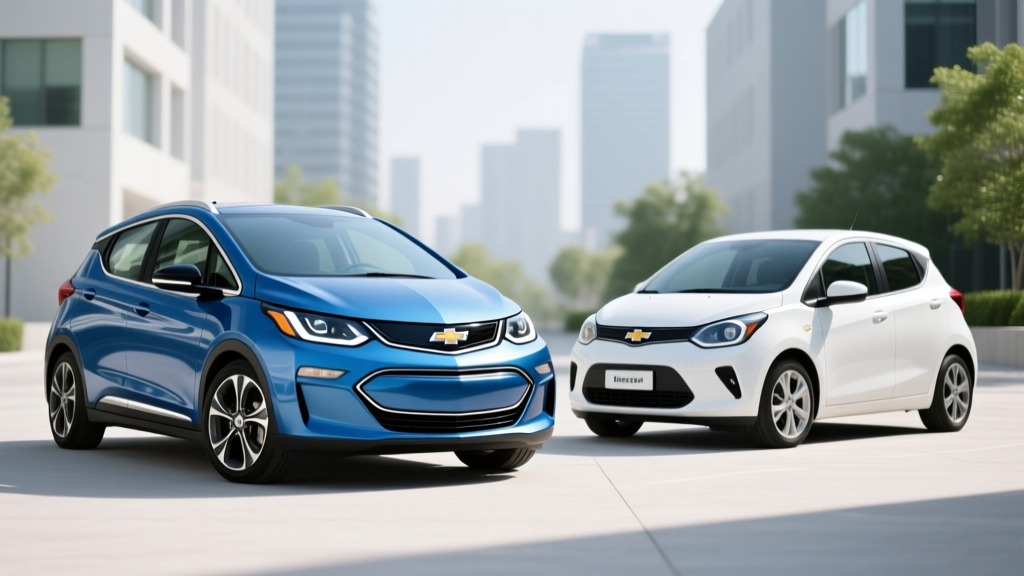
When budget-conscious buyers search for an affordable entry into electric driving, the Chevy Bolt vs Spark comparison comes up often — but it's a matchup between two fundamentally different vehicles serving two very different purposes. The Chevrolet Bolt EV (and its longer-wheelbase sibling, the Bolt EUV) is a dedicated battery-electric compact hatchback that has anchored the affordable EV segment since 2017, while the Chevrolet Spark was a gasoline-powered subcompact city car discontinued after the 2022 model year.
This comparison matters because many shoppers cross-shop these two on the used market or wonder whether upgrading from a Spark to a Bolt EV makes financial sense. In 2026, the Bolt EV has been refreshed with updated battery chemistry and NACS charging compatibility, making the value proposition even more compelling against the Spark's low sticker price but ongoing fuel costs.
Here's exactly how they stack up across every metric that matters — with real numbers, not marketing.
Side-by-Side Specs: Bolt EV vs Spark at a Glance
| Specification | 2026 Chevy Bolt EV (2LT) | 2022 Chevy Spark (1LT — Final Model Year) |
|---|---|---|
| Powertrain | BEV (Battery Electric) | 1.4L Inline-4 Gasoline |
| Horsepower | 200 hp | 98 hp |
| Torque | 266 lb-ft | 94 lb-ft |
| 0–60 mph | 6.5 seconds | 11.8 seconds |
| EPA Range / Fuel Economy | 259 miles (EPA) / 120 MPGe combined | 29 city / 38 hwy / 33 combined MPG |
| Battery / Fuel Tank | 65 kWh usable (NMC lithium-ion) | 9.0 gallon fuel tank |
| Peak DC Fast Charge Rate | 150 kW (NACS connector) | N/A — gasoline refueling |
| 10–80% DC Charge Time | ~30 minutes | ~3 minutes at a gas pump |
| Level 2 AC Charging | 11.5 kW (~39 mi/hr) | N/A |
| Cargo Volume (rear seats up) | 16.6 cu ft | 11.1 cu ft |
| Cargo Volume (rear seats folded) | 57.0 cu ft | 31.2 cu ft |
| Base MSRP (when new) | $28,785 (2026 2LT) | $14,095 (2022 1LT) |
| Federal Tax Credit Eligibility | Up to $7,500 (§30D, subject to income/sourcing) | None |
| Battery/Powertrain Warranty | 8 years / 100,000 miles | 5 years / 60,000 miles (powertrain) |
Sources: EPA fueleconomy.gov, Chevrolet Bolt EV configurator.
Range and Efficiency: Electric Miles vs Gas Miles
The Bolt EV's EPA-estimated 259 miles of range is the headline number, but real-world results depend heavily on driving conditions. In mixed suburban/highway testing at moderate temperatures (65–75°F), expect 230–250 miles from a full charge. Push sustained highway speeds above 70 mph and that drops to roughly 210–225 miles. In freezing winter conditions (below 32°F), lithium-ion batteries lose efficiency and cabin heating draws significant energy — plan for 170–200 miles of usable range.
EPA Sticker: 259 miles
Realistic mixed driving: ~230–250 miles
Sustained 75+ mph highway: ~210–225 miles
Cold weather (below 32°F): ~170–200 miles
The Spark, by contrast, delivers its 33 MPG combined consistently regardless of temperature (though cold-start enrichment and winter fuel blends reduce it slightly to ~30 MPG combined in winter). With a 9-gallon tank, real-world range sits around 270–297 miles — actually competitive with or slightly exceeding the Bolt EV on paper.
But the efficiency economics diverge sharply: the Bolt EV consumes roughly 28 kWh per 100 miles, which at the US average residential electricity rate of ~$0.17/kWh costs about $4.76 per 100 miles. The Spark at 33 MPG with gas at $3.30/gallon costs about $10.00 per 100 miles — more than double the Bolt's energy cost.
The Spark technically edges out on worst-case winter range, but the Bolt EV matches it in fair weather with dramatically lower per-mile energy cost.
At roughly $4.76 vs $10.00 per 100 miles, the Bolt's energy cost advantage is massive and compounds over ownership.
Charging vs Refueling: Speed, Access, and Cost
This is where the comparison gets nuanced — and where your living situation determines the winner.
| Charging/Fueling Method | Bolt EV | Spark |
|---|---|---|
| Level 1 (120V household outlet) | ~1.4 kW / ~4 miles per hour | N/A |
| Level 2 (240V home/public) | 11.5 kW / ~39 miles per hour | N/A |
| DC Fast Charging | 150 kW peak / ~170 mi in 30 min | N/A |
| Gas station refueling | N/A | ~297 miles in ~3 minutes |
| Home "refueling" cost (full) | ~$11.05 (65 kWh × $0.17) | ~$29.70 (9 gal × $3.30) |
Home charging is the Bolt's killer advantage — if you have access to a Level 2 charger. Plug in overnight and wake up to a full 259 miles every morning for about $11. A Level 2 home charger installation typically costs $800–$2,000 including equipment and electrician labor (more if your panel needs an upgrade to 200A service).
The 2026 Bolt EV now uses the NACS (North American Charging Standard) connector, giving it native access to Tesla Superchargers — the most reliable and expansive DC fast-charging network in the US. At 150 kW peak, the Bolt can add roughly 170 miles in 30 minutes, though sustained charging speed tapers significantly above 80% state of charge. Expect a full 10–80% session to take about 30 minutes at a capable station.
For Spark owners, refueling is universally fast and accessible — but you'll visit a gas station roughly 10–12 times per year at 12,000 annual miles, spending about $1,200 annually on fuel versus roughly $570 on electricity for the Bolt EV.
If you can install a Level 2 charger, daily fueling is cheaper and more convenient. Without home charging access, the Spark's gas-station convenience wins for apartment dwellers.
Performance and Driving Experience
This category isn't close. The Bolt EV's electric motor produces 200 horsepower and 266 lb-ft of torque — available instantly from zero RPM. The 0–60 mph time of 6.5 seconds makes it genuinely quick for a budget hatchback, and the instant torque makes city merging and highway on-ramps effortless.
The Spark's 1.4-liter four-cylinder manages just 98 hp and 94 lb-ft, with a CVT that drones under hard acceleration. Its 11.8-second 0–60 time is among the slowest in its class. Highway passing requires planning and a long runway.
The Bolt EV also benefits from a low center of gravity (battery pack under the floor), giving it composed handling that belies its budget pricing. The Spark is lightweight and nimble in tight city parking, but feels unsettled at highway speeds and in crosswinds.
Double the horsepower, triple the torque, and a 5+ second advantage to 60 mph. Electric powertrain smoothness eliminates the CVT drone entirely.
Price, Tax Credits, and True Purchase Cost
The Spark's original MSRP of ~$14,095 looks impossibly cheap, and on the used market in 2026, a 2022 Spark in good condition trades for roughly $10,000–$13,000. But there are no federal incentives for purchasing a used gasoline vehicle.
The 2026 Bolt EV starts at $28,785 for the 2LT trim. Here's where the federal §30D Clean Vehicle Credit changes the math — if you qualify:
- MSRP cap: Must be under $55,000 (cars) — Bolt EV qualifies ✓
- Buyer income cap: AGI ≤ $150,000 (single) / $300,000 (joint) — varies by buyer
- Battery sourcing: Critical minerals and battery components must meet phased-in thresholds that tighten annually through 2032 — verify current-year compliance on IRS.gov
- Point-of-sale transfer: Eligible buyers can apply the credit as a down-payment reduction at the dealer, not just a tax-time refund
- Maximum credit: Up to $7,500 ($3,750 for critical minerals + $3,750 for battery components)
| Cost Factor | 2026 Bolt EV (2LT) | 2022 Spark (Used, 1LT) |
|---|---|---|
| Purchase Price | $28,785 | ~$11,500 (used avg) |
| Federal Tax Credit | Up to –$7,500 (if eligible) | $0 |
| Effective Price (best case) | $21,285 | $11,500 |
| Home Charger Install | +$800–$2,000 | $0 |
| True Out-of-Pocket (best case) | ~$22,085–$23,285 | ~$11,500 |
Even with the full $7,500 credit and home charger installation, the Bolt EV costs roughly $10,000–$12,000 more upfront than a used Spark. But the annual fuel savings (~$630/year) and dramatically lower maintenance costs begin closing that gap from day one.
Nothing beats $11,500 used. If cash flow is your primary constraint, the Spark wins on purchase price alone.
With tax credits, fuel savings, and lower maintenance, the Bolt EV breaks even within 8–10 years and costs less per mile from that point forward.
5-Year Ownership Cost Breakdown
Purchase price tells only part of the story. Here's what five years and 60,000 miles actually costs for each vehicle:
| 5-Year Cost Category | Bolt EV | Spark (Used) |
|---|---|---|
| Depreciation (est.) | ~$8,500 | ~$4,000 |
| Fuel / Electricity | ~$2,850 | ~$6,000 |
| Maintenance | ~$1,200 | ~$2,800 |
| Insurance (avg) | ~$7,200 | ~$5,400 |
| Tires / Brakes | ~$1,400 (regen saves brake pads) | ~$1,600 |
| Total 5-Year Operating Cost | ~$21,150 | ~$19,800 |
Insurance note: EVs typically carry 15–25% higher premiums than comparable gas cars due to higher repair costs and battery replacement risk. Get quotes before purchasing.
The Bolt EV's maintenance advantage is substantial: no oil changes, no spark plugs, no transmission fluid, no exhaust system repairs, and regenerative braking extends brake pad life to 80,000+ miles in many cases. The Spark, as a used gasoline car entering its higher-mileage years, faces timing chain wear, transmission service, and emissions-system maintenance that the Bolt simply never needs.
Despite higher insurance and depreciation, the Bolt's fuel and maintenance savings make 5-year total costs competitive — and the gap widens in years 6+.
Tech, Safety, and Interior Quality
The Bolt EV's 2026 refresh includes a 10.2-inch infotainment touchscreen with wireless Apple CarPlay and Android Auto, a digital instrument cluster, available Super Cruise (GM's Level 2 hands-free highway driving system on compatible roads), and a full suite of ADAS features including automatic emergency braking, lane-keeping assist, and adaptive cruise control.
The Spark, designed as a budget commuter, offers a basic 7-inch touchscreen (in higher trims), wired smartphone integration, and standard rearview camera. It lacks adaptive cruise, lane-keeping, and the advanced crash-avoidance tech now standard on the Bolt. The Spark earned an IIHS "Marginal" rating in the small overlap front passenger-side test — a meaningful safety concern.
Modern infotainment, available Super Cruise, comprehensive ADAS, and superior crash-test performance. The Spark was budget-basic even when new.
Cargo, Practicality, and Daily Use
The Bolt EV offers 16.6 cu ft behind the rear seats and 57.0 cu ft with seats folded — enough for a weekly Costco run or a weekend trip for two with luggage. The Spark manages 11.1 cu ft (seats up) and 31.2 cu ft (seats down), which is tight even for a subcompact.
Both seat four adults, but the Bolt's rear seat is noticeably more accommodating for taller passengers. The Spark's rear seat is best suited for children or very short trips.
Neither vehicle offers towing capability, and neither has a frunk (the Bolt's motor and electronics occupy the front space).
The Decision Framework: Which Should You Choose?
Choose the Chevy Bolt EV if:
- You have access to home Level 2 charging (garage, driveway, or workplace)
- You drive more than 30 miles per day and want to eliminate gas station visits
- You qualify for the §30D federal tax credit (check income and sourcing rules on IRS.gov)
- You want modern safety tech, strong acceleration, and highway composure
- You plan to keep the vehicle 5+ years to capture the full ownership-cost advantage
Choose the Chevy Spark if:
- Your budget is strictly under $15,000 and you need a car now
- You live in an apartment without any charging access and public charging is sparse
- You drive fewer than 20 miles per day in city traffic
- You want the absolute lowest upfront cost with no financing complexity
- You plan to keep the car 2–3 years as a bridge vehicle
Final Recommendation
For most buyers who can manage the higher purchase price and have home charging access, the 2026 Chevy Bolt EV is the stronger vehicle by nearly every measurable metric — performance, efficiency cost-per-mile, safety, technology, and cargo space. The tax credit narrows the price gap significantly, and the ownership-cost advantage grows each year.
The Spark remains a defensible choice only in a narrow set of circumstances: very tight budgets, no charging access, and low annual mileage. It's a competent city runabout, but it's a dead platform — discontinued, aging, and increasingly expensive to fuel and maintain as it accumulates miles.
If you're cross-shopping these two, run your personal numbers: subtract the tax credit from the Bolt's price, add home charger installation, then compare annual fuel and maintenance costs. For most drivers covering 12,000+ miles per year with home charging, the Bolt EV pays for its price premium within the ownership window.
Frequently Asked Questions
Is the Chevy Spark available as an electric vehicle?
No. The Chevrolet Spark was only ever sold as a gasoline-powered vehicle in the United States. It was discontinued after the 2022 model year. GM never produced an electric Spark for the US market (a limited EV version, the Spark EV, was sold in select markets from 2014–2016 with just 82 miles of range and is extremely rare on the used market).
Can I charge the Bolt EV on a regular household outlet?
Yes, but slowly. Level 1 charging on a standard 120V outlet adds roughly 4 miles of range per hour — a full charge takes over 60 hours. For daily use, a Level 2 (240V) home charger is strongly recommended, adding ~39 miles per hour and fully charging overnight.
Does the 2026 Bolt EV qualify for the $7,500 federal tax credit?
It may, depending on your income, the vehicle's battery sourcing compliance, and current-year IRS rules. The Bolt EV's MSRP falls well under the $55,000 car cap. Verify your eligibility using the IRS Clean Vehicle Credit resources and confirm with a tax professional before purchasing.
How much does it cost to replace the Bolt EV battery?
Out-of-warranty battery replacement for the Bolt EV currently ranges from $9,000–$14,000 depending on the source and labor. However, GM's 8-year/100,000-mile battery warranty covers capacity loss below 70% of original capacity, and real-world degradation data shows Bolt batteries typically retain 90%+ capacity at 100,000 miles.
Which is cheaper to insure — the Bolt EV or the Spark?
The Spark is significantly cheaper to insure, typically $1,500–$2,000 less per year. EV insurance premiums are higher due to specialized repair requirements and battery replacement costs. Always get quotes from your insurer for both vehicles before deciding.
Is the Bolt EV good for road trips?
Yes, with planning. The 2026 Bolt's NACS connector gives access to Tesla Superchargers, and 150 kW DC fast charging adds meaningful range in 20–30 minute stops. For trips beyond 250 miles, you'll need one or two charging stops. Use apps like A Better Routeplanner to plan charging around your route.