Chevy Blazer EV vs Ford Mustang Mach-E: The Ultimate Electric SUV Showdown
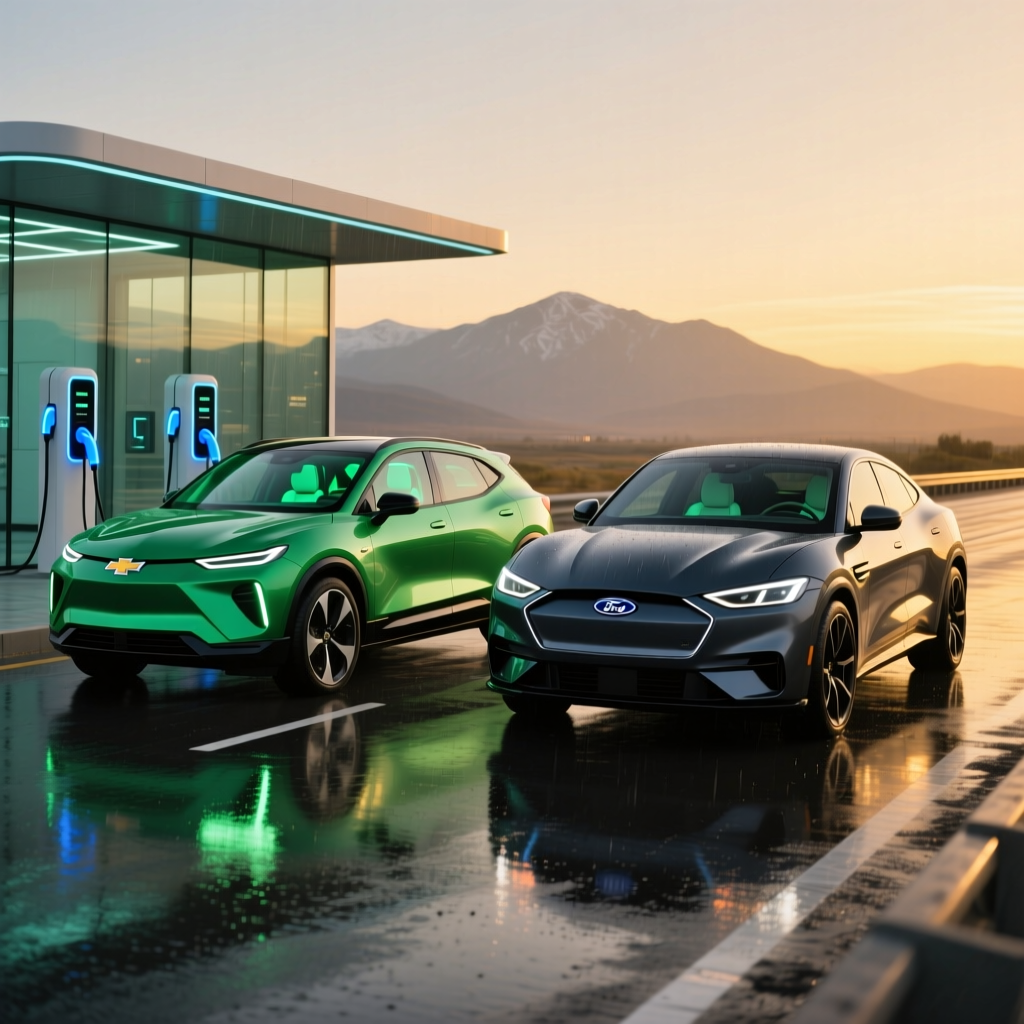
The electric SUV segment has exploded with compelling options, and two of the most talked-about contenders are the Chevy Blazer EV and the Ford Mustang Mach-E. Both are midsize, all-electric crossovers built by legacy American automakers, and both aim to convince mainstream buyers that going electric doesn't mean sacrificing style, performance, or practicality. But which one deserves a spot in your driveway?
In this in-depth comparison, we break down every critical category — from range and pricing to charging speed, performance, interior comfort, technology, and warranty coverage — so you can make a confident decision. Whether you're cross-shopping for your first EV or upgrading from a gas-powered SUV, this head-to-head analysis covers everything you need to know.
For our standalone takes on each vehicle, check out our Chevy Blazer EV review and Ford Mustang Mach-E review. You can also see how both stack up in our best electric SUVs rankings.
Overview: Two American Icons Go Electric
The Chevrolet Blazer EV arrived as a bold, futuristic reinterpretation of the Blazer nameplate. Built on General Motors' Ultium platform, it offers a spacious cabin, aggressive styling, and a wide range of trims — from the budget-friendly entry model to the high-performance SS variant. Chevy positioned the Blazer EV as a family-friendly electric SUV with broad appeal, emphasizing comfort, range, and value.
The Ford Mustang Mach-E took a different approach, borrowing the legendary Mustang name and applying it to an all-electric crossover. The result is a sporty, driver-focused SUV with sharp handling, impressive acceleration (especially in GT trim), and one of the most intuitive infotainment systems on the market. The Mach-E has been on sale longer, giving Ford more time to refine the formula and build a loyal following.
Both vehicles compete in the same midsize electric SUV segment, targeting buyers who want zero emissions without giving up the ride height, cargo space, and versatility of a crossover. Let's dig into the details.
Side-by-Side Specification Comparison
The table below provides a quick snapshot of key specifications. Note that figures vary by trim and drivetrain configuration.
| Specification | Chevy Blazer EV | Ford Mustang Mach-E |
|---|---|---|
| Starting MSRP (approx.) | $43,000 – $44,000 | $39,000 – $42,000 |
| Max EPA-Estimated Range | Up to ~324 miles | Up to ~320 miles |
| Battery Capacity (usable) | ~85 – 102 kWh | ~70 – 91 kWh |
| Horsepower (max) | Up to 557 hp (SS) | Up to 480 hp (GT) |
| 0–60 mph (quickest) | ~3.4 seconds (SS) | ~3.5 seconds (GT) |
| DC Fast-Charging Peak | Up to 190 kW | Up to 150 kW |
| Cargo Volume (behind rear seats) | ~25.5 cu ft | ~29.7 cu ft |
| Front Trunk (Frunk) | No | Yes (~4.7 cu ft) |
| Drivetrain Options | FWD, RWD, AWD | RWD, AWD |
| Towing Capacity | Up to 1,500 lbs | Up to 1,500 lbs |
| Infotainment Screen | 17.7-inch touchscreen | 15.5-inch touchscreen |
| Driver Display | 11.0-inch digital cluster | 10.2-inch digital cluster |
Specifications are based on EPA Fuel Economy data and manufacturer estimates. Always verify with the latest model-year information.
Range and Efficiency
Range anxiety remains one of the biggest concerns for EV shoppers, and both the Blazer EV and Mustang Mach-E deliver reassuring numbers that should satisfy most daily driving needs and road trips alike.
The Chevy Blazer EV achieves its maximum EPA-estimated range of approximately 324 miles in the rear-wheel-drive configuration with the larger battery pack. This puts it among the longest-range electric SUVs in its class. The all-wheel-drive variants see a modest reduction, typically landing in the 279–283 mile range depending on wheel size and equipment.
The Ford Mustang Mach-E peaks at roughly 320 miles of EPA-estimated range in its California Route 1 and Extended Range RWD configurations. The AWD Extended Range models come in around 290–305 miles. While slightly behind the Blazer EV at the top end, the Mach-E's range is still highly competitive.
In real-world highway testing conducted by independent outlets like Edmunds and Motor Trend, both vehicles have shown range figures close to their EPA estimates under moderate conditions. Cold weather and aggressive driving will reduce range in both cases, as is typical for all EVs.
Edge: Chevy Blazer EV, by a slim margin. The Ultium platform's larger battery options give it a slight range advantage, though real-world differences may be negligible for most drivers.
Pricing and Value
Price is often the deciding factor, and this is where the competition gets interesting.
The Ford Mustang Mach-E starts at a lower entry point, with the Select trim coming in around $39,000–$42,000 depending on configuration. Ford has aggressively trimmed pricing over successive model updates to stay competitive, and the Mach-E qualifies for various federal and state EV incentives that can significantly reduce out-of-pocket cost. Check the latest federal EV tax credit eligibility for details.
The Chevy Blazer EV starts slightly higher, typically around $43,000–$44,000 for the base LT trim. However, Chevy has packed in a generous list of standard features, including the massive 17.7-inch infotainment screen, Super Cruise capability (on higher trims), and a comprehensive suite of driver-assistance features. The range-topping SS model pushes well past $60,000, but it delivers supercar-level acceleration in an SUV package.
When you factor in incentives, destination charges, and available trim-level content, the value gap narrows considerably. The Mach-E wins on base price, while the Blazer EV offers more battery capacity and range per dollar at higher trims.
Edge: Ford Mustang Mach-E for entry-level affordability. Chevy Blazer EV for content-rich higher trims.
Charging Speed and Infrastructure
How quickly an EV can recharge is just as important as how far it can go, especially for road-trippers.
The Chevy Blazer EV supports DC fast-charging at up to 190 kW on models equipped with the larger battery. At this rate, Chevy estimates you can add approximately 78 miles of range in just 10 minutes under ideal conditions. On a 150+ kW charger, going from 10% to 80% state of charge takes roughly 30–35 minutes. The Blazer EV also supports Level 2 AC charging at up to 11.5 kW, which can fully replenish the battery overnight.
The Ford Mustang Mach-E peaks at around 150 kW on DC fast chargers with the Extended Range battery. A 10% to 80% charge takes approximately 35–45 minutes depending on charger output and ambient conditions. Ford has partnered with various charging networks, and the Mach-E gained access to Tesla's Supercharger network via an adapter — a significant advantage for long-distance travel. Level 2 home charging tops out at about 10.5 kW.
One of the Mach-E's biggest infrastructure advantages is Ford's integration with multiple charging networks, including Tesla Superchargers. This dramatically expands the number of fast chargers available to Mach-E owners on road trips. Chevy is also working toward broader network access through GM's partnerships, but the rollout timeline varies.
Edge: Chevy Blazer EV for raw peak charging speed. Ford Mustang Mach-E for real-world charging network access, particularly Tesla Supercharger compatibility.
Performance and Driving Dynamics
EVs are known for instant torque, and both of these SUVs deliver exhilarating acceleration — especially in their top performance trims.
The Chevy Blazer EV SS is the performance king of this comparison. With dual motors producing up to 557 horsepower and a WOW (Wide Open Watts) mode, it rockets from 0 to 60 mph in approximately 3.4 seconds. That's sports-car territory in a family SUV. Even the non-SS AWD models feel punchy, with around 288–340 horsepower depending on configuration. The Blazer EV's ride quality leans toward comfortable and compliant, absorbing bumps with ease. Steering is light and easy, making it a great daily driver, though some enthusiasts may find it less engaging.
The Ford Mustang Mach-E GT produces up to 480 horsepower (with the Performance Upgrade) and hits 60 mph in roughly 3.5 seconds. The gap to the Blazer SS is small on paper, but the Mach-E GT feels slightly more agile thanks to its lower center of gravity and sport-tuned suspension. Ford has clearly channeled the Mustang's sporting heritage into the Mach-E's chassis tuning. The steering is more communicative, body control is tighter through corners, and the overall driving experience feels more connected. Standard Mach-E models with the smaller battery still deliver brisk acceleration and a fun-to-drive character that sets them apart from many competitors.
Independent testing by Car and Driver has praised the Mach-E's handling as among the best in the electric SUV segment, while the Blazer EV SS has been lauded for its raw straight-line punch.
Edge: Chevy Blazer EV SS for outright acceleration. Ford Mustang Mach-E GT for handling, agility, and overall driving engagement.
Interior Space, Comfort, and Cargo
For buyers prioritizing practicality, interior dimensions and cargo capacity are critical considerations.
The Chevy Blazer EV is physically larger than the Mach-E, and that translates to a more spacious cabin. Rear-seat passengers enjoy generous legroom and headroom, and the seats themselves are wide and well-cushioned. The Blazer EV offers approximately 25.5 cubic feet of cargo space behind the rear seats, which expands significantly with the rear seats folded. However, it lacks a front trunk (frunk), which is a missed opportunity for additional secure storage.
The Ford Mustang Mach-E has a slightly lower, sportier roofline that marginally reduces rear headroom for taller passengers, but overall cabin space is still comfortable for four adults. Where the Mach-E shines is cargo versatility: it provides about 29.7 cubic feet behind the rear seats — more than the Blazer EV — plus a front trunk (frunk) with roughly 4.7 cubic feet of space. The frunk includes a drain plug, making it useful for storing wet items or even doubling as a cooler for tailgating.
Material quality in both vehicles is good for the segment, though neither quite reaches luxury-brand levels. The Mach-E's interior design is more minimalist and modern, while the Blazer EV goes for a bolder, more traditional SUV aesthetic with ambient lighting and available two-tone color schemes.
Edge: Ford Mustang Mach-E for total cargo volume and the added frunk. Chevy Blazer EV for rear-seat spaciousness and overall passenger comfort.
Technology and Features
Both vehicles are packed with technology, but their approaches differ significantly.
The Chevy Blazer EV features a show-stopping 17.7-inch infotainment touchscreen oriented in portrait style, running GM's latest Ultifi software platform. The interface is customizable, supports wireless Apple CarPlay and Android Auto, and includes built-in Google-based navigation on higher trims. The 11.0-inch digital instrument cluster provides clear driving information. Available Super Cruise — GM's hands-free driving assistance system — is one of the best semi-autonomous systems available, allowing true hands-off driving on hundreds of thousands of miles of compatible highways. Other tech highlights include a digital rearview camera mirror, head-up display, and over-the-air update capability.
The Ford Mustang Mach-E centers its tech experience around a 15.5-inch portrait touchscreen running Ford's SYNC 4A system. The interface is widely praised for its responsiveness, logical menu structure, and large physical volume knob at the bottom of the screen — a welcome touch that many competitors have abandoned. Wireless Apple CarPlay and Android Auto are standard. Ford's BlueCruise hands-free driving system is available and has earned high marks from the Consumer Reports testing. The Mach-E also supports phone-as-a-key functionality, over-the-air updates, and Ford Power-Up software improvements that continuously add features.
Both vehicles offer comprehensive suites of driver-assistance features including automatic emergency braking, lane-keeping assist, adaptive cruise control, and blind-spot monitoring. The Blazer EV's larger screen grabs attention, but the Mach-E's SYNC 4A system is often rated as more user-friendly in daily use.
Edge: Tie. The Blazer EV wins on screen size and wow factor. The Mach-E wins on interface usability and overall software polish. Both offer excellent hands-free driving systems.
Warranty and Ownership Costs
Long-term peace of mind matters, especially with a new technology like an EV powertrain.
Both the Chevy Blazer EV and Ford Mustang Mach-E come with comparable warranty coverage:
- Limited Bumper-to-Bumper Warranty: 3 years / 36,000 miles (both)
- Powertrain Warranty: 5 years / 60,000 miles (both)
- Battery Warranty: 8 years / 100,000 miles (both)
- Roadside Assistance: 5 years / 60,000 miles (both)
The battery warranties on both vehicles meet the industry standard for EVs, guaranteeing that the battery will retain a specified percentage of its original capacity (typically 70% or more) over the coverage period. Both GM and Ford have extensive dealer networks, which makes service and warranty work more accessible than with some startup EV brands.
On the maintenance front, EVs inherently cost less to maintain than gas vehicles — no oil changes, fewer brake replacements thanks to regenerative braking, and fewer moving parts overall. Both vehicles should offer low cost-of-ownership relative to their gas-powered counterparts.
Edge: Tie. Both manufacturers offer nearly identical warranty coverage and the ownership experience benefits of a large dealer network.
Verdict: Which Electric SUV Should You Buy?
After examining every major category, there's no single winner — the right choice depends on your priorities.
Choose the Chevy Blazer EV if:
- You want the longest possible EPA-estimated range in the segment.
- You prefer a roomier rear seat and a more comfortable, cruiser-oriented ride.
- You value the largest infotainment screen and GM's Super Cruise hands-free driving.
- You want the quickest acceleration available (SS trim) without stepping into a luxury brand.
- You appreciate bold, futuristic exterior styling.
Choose the Ford Mustang Mach-E if:
- You want a lower starting price and strong value across the lineup.
- Driving dynamics and handling engagement are top priorities.
- You need maximum cargo space, including a front trunk (frunk).
- You want access to Tesla's Supercharger network for road trips.
- You prefer a more intuitive, user-friendly infotainment interface.
Both the Blazer EV and Mustang Mach-E are excellent electric SUVs that represent the best of what legacy American automakers can deliver. If you're still undecided, we recommend test-driving both back to back — the differences in ride quality, steering feel, and cabin ambiance are best experienced in person. For more guidance, browse our best electric SUVs rankings and our full EV reviews and comparisons hub.
Frequently Asked Questions
Is the Chevy Blazer EV bigger than the Mustang Mach-E?
Yes. The Chevy Blazer EV is slightly longer and taller than the Ford Mustang Mach-E, which translates to a bit more rear-seat legroom and headroom. However, the Mach-E actually offers more cargo volume behind the rear seats and includes a front trunk (frunk) that the Blazer EV lacks. So while the Blazer EV feels more spacious for passengers, the Mach-E is arguably more versatile for hauling gear.
Which is faster: the Blazer EV SS or the Mustang Mach-E GT?
The Chevy Blazer EV SS has a slight edge in straight-line acceleration, reaching 60 mph in approximately 3.4 seconds compared to the Mach-E GT's 3.5 seconds. The difference is marginal and may not be noticeable in everyday driving. However, the Mach-E GT is generally regarded as the better handler, with sharper steering and more balanced chassis dynamics through corners. If drag-strip speed matters most, the Blazer SS wins. If you prefer a sporty driving experience on twisty roads, the Mach-E GT is the better pick.
Can the Mustang Mach-E use Tesla Superchargers?
Yes. Ford has provided Mustang Mach-E owners with access to Tesla's Supercharger network through an adapter (typically a CCS-to-NACS adapter). This significantly expands the number of fast-charging stations available for road trips, adding thousands of locations across the country. Chevy is pursuing similar access for its Ultium-based EVs, but availability and timelines may vary. For the latest details on charging compatibility, check our EV charging guide.
Which EV has better long-term reliability?
Long-term reliability data for both vehicles is still accumulating, as they are relatively new to the market. Both GM and Ford have decades of manufacturing experience and extensive dealer networks for service and warranty work. The battery packs in both vehicles are covered by 8-year/100,000-mile warranties. Independent reliability surveys from sources like J.D. Power and Consumer Reports can provide updated insights as more data becomes available. In general, EVs have fewer mechanical components than gas vehicles, which tends to reduce the frequency of major repairs over time.