Quick Answer: Which Chevy All Electric Vehicle Is Right for You?
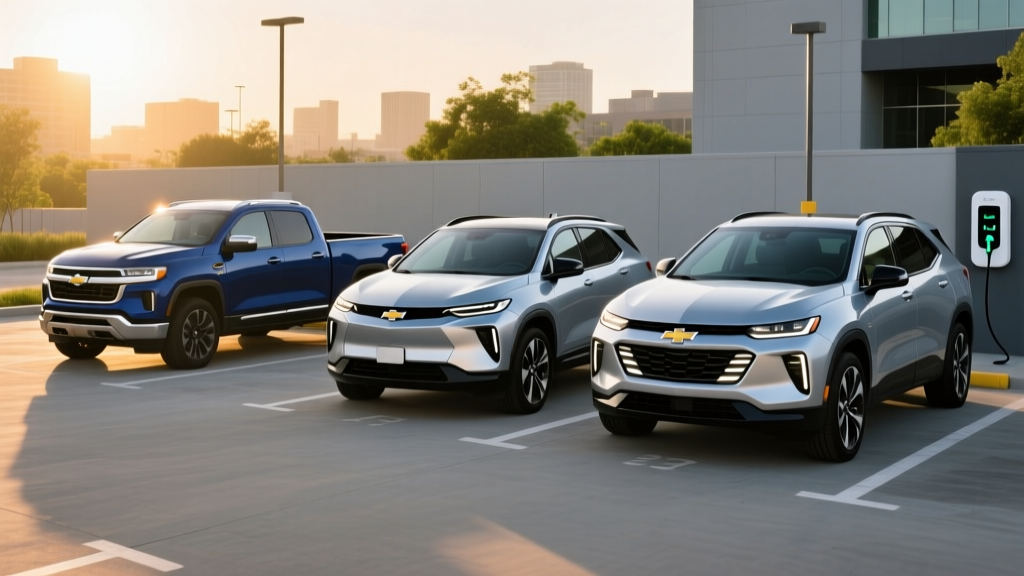
Chevrolet's 2026 all-electric lineup spans three core models built on GM's Ultium platform: the Equinox EV (compact crossover, ~319 miles EPA, starting ~$33,600), the Blazer EV (midsize crossover, ~324 miles EPA, starting ~$44,600), and the Silverado EV (full-size pickup, ~440 miles EPA max, starting ~$57,900). All three use the NACS (Tesla-style) charge port natively for 2026, granting access to Tesla Superchargers without an adapter. The Equinox EV is the volume play for commuters and first-time EV buyers; the Blazer EV targets families needing more cargo space and available AWD performance; the Silverado EV serves truck buyers who need towing and a large bed. Federal §30D tax credit eligibility varies by model, trim, battery sourcing, and buyer income — check current IRS rules before assuming a flat $7,500 credit.
The 2026 Chevy All Electric Lineup at a Glance
Chevrolet has consolidated its EV strategy around the Ultium battery architecture, which uses a modular pouch-cell design with NMC (nickel-manganese-cobalt) chemistry across most trims, though GM has begun integrating LFP (lithium iron phosphate) cells in certain base configurations for cost and longevity benefits. Here's how the three models stack up on paper:
| Spec | 2026 Equinox EV | 2026 Blazer EV | 2026 Silverado EV |
|---|---|---|---|
| Body Style | Compact Crossover | Midsize Crossover | Full-Size Pickup |
| EPA Range (max) | ~319 mi | ~324 mi | ~440 mi (Max Range) |
| Battery (usable) | ~85 kWh | ~102 kWh | ~200 kWh (Max Range) |
| Peak DC Fast Charge | 150 kW | 190 kW | 350 kW |
| 10–80% DC Charge Time | ~35 min | ~30 min | ~20 min |
| Level 2 Rate (kW) | 11.5 kW | 11.5 kW | 19.2 kW (available) |
| 0–60 mph | ~8.2 sec (FWD) | ~4.0 sec (SS AWD) | ~4.5 sec (4WT) |
| Horsepower | 213 hp (FWD) | Up to 557 hp (SS) | Up to 754 hp (4WT) |
| Towing Capacity | Not rated | Not rated | Up to 12,500 lbs |
| Charge Port | NACS (native) | NACS (native) | NACS (native) |
| Base MSRP | ~$33,600 | ~$44,600 | ~$57,900 |
| Battery Warranty | 8 yr / 100,000 mi | 8 yr / 100,000 mi | 8 yr / 100,000 mi |
Sources: Chevrolet.com, EPA fueleconomy.gov. Specs reflect 2026 model year configurations. Real-world range varies with temperature, speed, and terrain.
Real-World Range vs. EPA Sticker
EPA estimates assume a mix of city and highway driving at moderate temperatures. Expect the following in practice:
- Equinox EV (319 mi EPA): Highway-only at 75 mph yields ~260–280 mi. In sub-30°F winter conditions, expect ~220–250 mi.
- Blazer EV (324 mi EPA): Highway cruising drops to ~265–290 mi. Cold weather can reduce range to ~225–260 mi.
- Silverado EV (440 mi EPA, Max Range): Unladen highway driving nets ~370–400 mi. Towing a 7,000-lb trailer at highway speed can slash range to 180–220 mi — a critical planning factor for truck buyers.
The Ultium platform's thermal management system includes battery preconditioning for DC fast charging, which warms or cools the pack to an optimal temperature before you arrive at a charger. Always enable this via the navigation system for best charge speeds.
Charging Infrastructure: NACS Native Advantage
For 2026, all Chevy all-electric models ship with the NACS (North American Charging Standard) port — the Tesla connector — as standard equipment. This is a significant shift from the CCS1 port used on the 2024 Bolt EV and early Blazer EV builds. The practical impact:
- Tesla Supercharger network access: Over 25,000 V3 (150 kW) and V4 stalls in North America are available to Chevy EVs natively, no adapter required.
- Third-party networks: Electrify America, EVgo, and ChargePoint stations with NACS connectors are rapidly expanding. Older CCS-only stations may require an adapter (GM provides one with some trims).
- Home charging: All models accept Level 2 (240V) charging. The Equinox and Blazer EV pull up to 11.5 kW (~37 miles of range per hour), while the Silverado EV can accept up to 19.2 kW with the available onboard charger (~62 miles per hour).
| Charging Level | Power | Miles Added/Hour (Equinox EV) | Best For |
|---|---|---|---|
| Level 1 (120V) | ~1.4 kW | ~4 mi/hr | Overnight trickle, PHEVs |
| Level 2 (240V, 48A) | 11.5 kW | ~37 mi/hr | Daily home charging |
| DC Fast (150 kW peak) | 150 kW | ~200 mi in 20 min | Road trips (Equinox) |
| DC Fast (350 kW peak) | 350 kW | ~280 mi in 20 min | Road trips (Silverado) |
Charging curve reality: The Silverado EV's 350 kW peak rate only holds between roughly 10–25% State of Charge (SoC). From 25–50%, it tapers to ~200 kW, and above 80%, it drops below 75 kW. That "20-minute 10–80%" claim assumes optimal battery temperature and a 350 kW-capable station. Most Electrify America stalls top out at 150–350 kW, and sustained throughput depends on station power sharing.
Cost Breakdown: Chevy EV vs. Gas Equivalent
The upfront price of an EV is typically higher than a comparable gas vehicle, but the total cost of ownership (TCO) equation depends on fuel savings, maintenance, insurance, and incentives. Here's a 5-year comparison between the Equinox EV LT (~$33,600) and a comparably equipped gas Equinox LT (~$30,400):
| Cost Factor (5 Years) | Equinox EV LT | Gas Equinox LT | Notes |
|---|---|---|---|
| MSRP | $33,600 | $30,400 | Before incentives |
| Federal Tax Credit (§30D) | Up to -$7,500* | $0 | *Subject to income, sourcing, MSRP caps |
| Effective Purchase Price | ~$26,100 | $30,400 | If full credit applies |
| Fuel / Electricity (5 yr) | ~$3,200 | ~$8,500 | EV: $0.13/kWh avg; Gas: $3.40/gal, 26 MPG |
| Maintenance (5 yr) | ~$1,200 | ~$3,800 | EV: no oil, fewer brake pads (regen) |
| Insurance (5 yr) | ~$9,500 | ~$7,800 | EV premiums run 10–20% higher on average |
| Home Charger Install | ~$1,200 | $0 | Level 2, 240V/48A, assumes panel capacity |
| Total 5-Year Cost | ~$41,200 | ~$50,500 | EV saves ~$9,300 if credit applies |
Assumptions: 15,000 miles/year, home charging at $0.13/kWh national average, gas at $3.40/gallon. Actual costs vary by region, driving pattern, and electricity rate. Federal tax credit eligibility per IRS §30D — verify your income, the vehicle's battery sourcing, and MSRP cap compliance before purchase.
§30D Federal Tax Credit Checklist (2026 Rules)
- Buyer income cap: AGI must not exceed $150,000 (single), $225,000 (head of household), or $300,000 (joint)
- MSRP cap: Vans/pickups ≤$80,000; other vehicles ≤$55,000
- Battery sourcing: Critical minerals and battery components must meet escalating domestic/free-trade-partner thresholds — percentage requirements increase annually
- Point-of-sale transfer: You can transfer the credit to the dealer at purchase for an immediate price reduction (requires tax filing reconciliation)
- Assembly: Vehicle must undergo final assembly in North America
The Equinox EV (base MSRP ~$33,600) clears the $55,000 MSRP cap easily. The Blazer EV and Silverado EV trims vary — higher trims may exceed the cap for non-pickup classification. Always verify eligibility on the IRS clean vehicle credit page before committing.
EV vs. Gas vs. Hybrid: What Chevy Buyers Should Consider
Chevrolet doesn't currently offer a plug-in hybrid (PHEV) crossover in the U.S., so the comparison for most shoppers is between a Chevy all-electric model and either a gas Chevy or a competitor's hybrid (like the Toyota RAV4 Hybrid). Here's how the math works:
| Metric | Equinox EV (BEV) | Gas Equinox (ICE) | Toyota RAV4 Hybrid (HEV) |
|---|---|---|---|
| EPA Efficiency | ~114 MPGe (combined) | ~26 MPG (combined) | ~39 MPG (combined) |
| Energy Cost/Mile | ~$0.04 | ~$0.13 | ~$0.09 |
| Annual Fuel Cost (15k mi) | ~$640 | ~$1,960 | ~$1,310 |
| Oil Changes | None | 2–3/year | 2–3/year |
| CO₂ Tailpipe Emissions | Zero | ~4.6 tons/year | ~3.1 tons/year |
| Range (single fill/charge) | ~319 mi | ~400 mi | ~570 mi |
| Refuel/Recharge Time | 20–35 min (DC fast) | 5 min | 5 min |
The hybrid middle ground: If you lack reliable home charging access, drive frequently in extreme cold, or regularly take long road trips through areas with sparse DC fast-charging infrastructure, a hybrid (even from another brand) may be a more pragmatic choice. The Equinox EV shines when you can charge at home overnight — waking up to a "full tank" every morning eliminates most range concerns for daily driving under 100 miles round-trip.
First-Time EV Buyer: What You Actually Need to Know
Transitioning from gas to a Chevy all-electric vehicle involves a few adjustments that marketing brochures gloss over:
Home Charging Is Non-Negotiable for Most Owners
Public charging works for road trips, but 80–90% of EV charging happens at home. Before buying, confirm:
- You have a dedicated 240V circuit (or can install one) in your garage or driveway
- Your electrical panel has capacity — a 48A Level 2 charger draws ~11.5 kW, which may require a panel upgrade on older homes (budget $500–$2,500 extra)
- If you rent or live in a condo, check whether your lease or HOA permits charger installation
Cold Weather Reduces Range — Plan Accordingly
Lithium-ion batteries lose efficiency in cold temperatures. At 20°F, expect 20–30% range reduction compared to the EPA sticker. The Ultium platform includes a heat pump (standard on most 2026 trims), which recovers waste heat from the powertrain to warm the cabin and reduce the energy penalty of resistive heating. Preconditioning the battery while plugged in before departure preserves range and improves regenerative braking performance.
Regenerative Braking Changes How You Drive
All three Chevy EVs offer adjustable regen, including one-pedal driving mode where lifting off the accelerator slows the car significantly — enough to come to a complete stop without touching the brake pedal in most situations. This recovers energy back to the battery and reduces brake pad wear (many EV owners go 80,000+ miles on original pads).
| Common Myth | Fact |
|---|---|
| "EV batteries need replacing every few years" | GM warranties the Ultium pack for 8 years/100,000 miles with a capacity retention threshold of ~70%. Real-world degradation data from early Ultium vehicles shows ~5–8% loss over the first 3 years. |
| "Charging takes hours" | Level 2 home charging adds ~37 miles/hour — overnight fills any daily use. DC fast charging adds 150–280 miles in 20–30 minutes on road trips. |
| "EVs are worse in winter" | Range drops 20–30% in extreme cold, but EVs start instantly (no cold-cranking), and preconditioning while plugged in mitigates most of the loss. |
| "The power grid can't handle EVs" | Most home charging occurs overnight during off-peak hours. A single Level 2 charger draws roughly the same as an electric clothes dryer. |
Decision Framework: Which Chevy EV Should You Buy?
Choose the Equinox EV If:
- Your budget is under $40,000 (before incentives)
- Your daily commute is under 80 miles round-trip
- You want the lowest cost-per-mile in the Chevy lineup
- You don't need AWD performance or towing capability
- You're a first-time EV buyer testing the waters
Choose the Blazer EV If:
- You need more cargo room (up to ~58 cu ft with rear seats folded)
- You want available AWD or the high-performance SS trim (557 hp)
- You frequently carry rear-seat passengers who need more legroom
- You're willing to pay $10,000+ more for a larger platform
Choose the Silverado EV If:
- You need a truck bed and towing capacity (up to 12,500 lbs)
- You want maximum range (~440 mi on Max Range trim)
- You value the fastest DC charging in the lineup (350 kW peak)
- You understand that towing will drastically reduce real-world range
- Your budget accommodates a $57,900+ starting price
Consider a Hybrid or Gas Vehicle Instead If:
- You cannot install a Level 2 home charger (apartment, street parking, HOA restrictions)
- You regularly drive in areas with limited DC fast-charging infrastructure (rural routes)
- You tow heavy loads frequently and cannot plan around charging stops
- Your budget is strictly under $28,000 and you need a new vehicle
Frequently Asked Questions
Does the 2026 Chevy Bolt EV still exist?
The original Bolt EV/EUV was discontinued after the 2023 model year. Chevrolet has announced a next-generation Bolt on the Ultium platform, but as of early 2026 it has not yet entered production. The Equinox EV effectively fills the affordable compact EV slot in Chevy's current lineup.
Can I charge a Chevy EV at a Tesla Supercharger?
Yes. All 2026 Chevy all-electric models use the NACS connector natively, which is the same connector used at Tesla Supercharger stations. You can pull up, plug in, and charge without any adapter. Use the Tesla app or the in-dash navigation to locate and activate Supercharger stalls.
How long will the Ultium battery last?
GM provides an 8-year/100,000-mile warranty covering battery capacity retention (typically warranting at least 70% of original capacity). Based on data from early Ultium vehicles and industry-wide lithium-ion degradation curves, most owners can expect 85–92% capacity retention after 5 years of normal use. LFP-equipped trims (where available) may show even slower degradation due to the chemistry's superior cycle life.
Is the Silverado EV practical for daily driving?
It depends on your needs. The Silverado EV is a large vehicle (~233 inches long) that can be challenging in tight urban parking. However, its independent rear suspension and low center of gravity (battery pack under the floor) give it better ride quality than a traditional body-on-frame truck. For daily commuting under 100 miles with home charging, the range is more than sufficient — the challenge is fitting it in your garage.
What's the actual cost to charge at home?
At the U.S. average residential electricity rate of ~$0.16/kWh (as of late 2025), fully charging the Equinox EV's ~85 kWh battery costs about $13.60 — yielding roughly 319 miles of range. That's approximately $0.04 per mile, compared to $0.12–$0.15 per mile for a gas vehicle at current fuel prices. If your utility offers time-of-use rates, charging overnight at off-peak rates (~$0.08–$0.10/kWh) drops the cost further.
Do Chevy EVs qualify for the full $7,500 federal tax credit?
Eligibility is complex and changes as battery sourcing requirements tighten annually. The Equinox EV, assembled in Mexico, has faced sourcing challenges that may limit credit availability depending on the purchase date. The Blazer EV (assembled in Tennessee) and Silverado EV (assembled in Michigan) have had stronger credit eligibility, but critical mineral and battery component thresholds must be met. Always check the fueleconomy.gov tax credit lookup and consult a tax professional before relying on a specific credit amount.