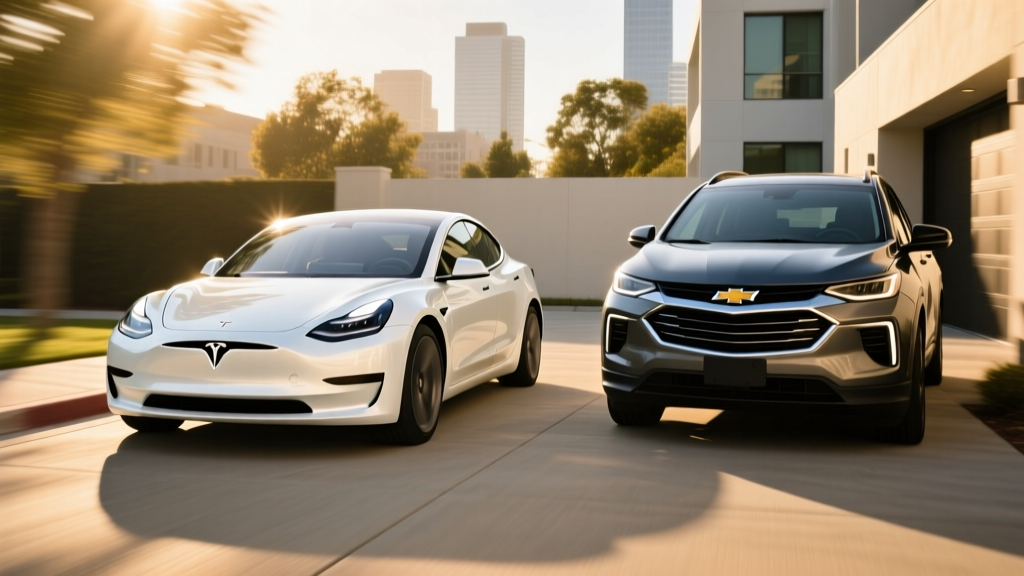
Choosing between the Chevrolet Equinox EV and the Tesla Model Y is one of the most common dilemmas for shoppers entering the electric compact SUV segment. Both vehicles promise practical daily range, modern technology, and zero tailpipe emissions, yet they take fundamentally different approaches to delivering those promises. The Equinox EV arrives as a value-oriented challenger from General Motors, undercutting the competition on price while still offering impressive range. The Model Y, meanwhile, remains the benchmark against which every new electric SUV is measured, backed by Tesla's Supercharger network and industry-leading efficiency.
In this head-to-head comparison, we examine every dimension that matters to EV buyers — from EPA-estimated range and charging speed to interior space, technology features, warranty coverage, and total cost of ownership. Whether you are a first-time EV buyer or upgrading from an older electric vehicle, this detailed breakdown will help you determine which of these two popular electric SUVs deserves a spot in your driveway. For more options in this segment, check out our best electric SUVs ranking.
Overview: Chevrolet Equinox EV and Tesla Model Y at a Glance
The Chevrolet Equinox EV is built on General Motors' Ultium platform, the same flexible architecture that underpins the GMC Hummer EV and Cadillac Lyriq. Chevrolet positioned the Equinox EV as an affordable, long-range electric SUV aimed squarely at mainstream buyers transitioning from gas-powered crossovers. With multiple trim levels and both front-wheel-drive and all-wheel-drive configurations, the Equinox EV lineup offers something for a wide range of budgets and needs. You can read our full Chevrolet Equinox EV review for a deeper dive into every trim.
The Tesla Model Y needs little introduction. As one of the best-selling vehicles in the world — electric or otherwise — it has set expectations for what a compact electric SUV should deliver. Its combination of range, performance, over-the-air updates, and access to Tesla's expansive Supercharger network has made it the default choice for many EV shoppers. The Model Y is available in Long Range and Performance variants, with Tesla periodically refreshing the vehicle's design, interior, and technology. Our complete Tesla Model Y review covers all the details.
Side-by-Side Specification Comparison
The table below provides a quick reference for the most important specifications. Note that exact figures may vary by trim and configuration.
| Specification | Chevrolet Equinox EV | Tesla Model Y |
|---|---|---|
| Starting MSRP (approx.) | $33,000 – $43,000 | $44,000 – $52,000 |
| EPA-Estimated Range | Up to 319 miles | Up to 320 miles |
| Battery Capacity (usable) | ~85 kWh | ~75 kWh |
| Drivetrain Options | FWD / AWD | AWD |
| Horsepower | 213 – 288 hp | 384 – 456 hp |
| 0–60 mph | ~7.5 – 8.5 seconds | ~4.8 – 6.5 seconds |
| DC Fast Charging (peak) | Up to 150 kW | Up to 250 kW |
| Cargo Volume (behind 2nd row) | ~26.4 cu ft | ~30.2 cu ft |
| Seating Capacity | 5 | 5 (optional 7) |
| Towing Capacity | Up to 1,500 lbs | Up to 3,500 lbs |
| Warranty (bumper-to-bumper) | 3 years / 36,000 miles | 4 years / 50,000 miles |
| Battery Warranty | 8 years / 100,000 miles | 8 years / 120,000 miles |
Range and Efficiency: How Far Can Each SUV Go?
Range anxiety remains one of the top concerns for EV buyers, and both the Equinox EV and Model Y deliver reassuring numbers. The Chevrolet Equinox EV in its most efficient front-wheel-drive configuration achieves an EPA-estimated 319 miles of range, putting it among the longest-range electric SUVs in its price class. This is a remarkable achievement for a vehicle at its price point and makes it competitive with EVs costing significantly more.
The Tesla Model Y Long Range also delivers approximately 320 miles of EPA-estimated range, essentially matching the Equinox EV. However, the Model Y achieves this with a smaller battery pack — roughly 75 kWh usable versus the Equinox EV's 85 kWh — which speaks to Tesla's superior energy efficiency. The Model Y's efficiency rating typically hovers around 3.5 to 3.8 miles per kWh, while the Equinox EV achieves closer to 3.3 to 3.6 miles per kWh depending on the configuration.
In real-world driving, independent testing by outlets such as Edmunds and other automotive reviewers has shown that Tesla vehicles tend to come closer to their EPA range estimates than many competitors. The Equinox EV's larger battery provides a buffer, but the Model Y's efficiency advantage means it uses less electricity per mile, which translates to lower charging costs over time. For buyers who regularly drive long distances, the Model Y's edge in efficiency could add up to meaningful savings.
That said, 319 versus 320 miles is effectively a tie on paper, and both vehicles offer more than enough range for daily commuting, road trips, and everything in between. If range is your top priority, you cannot go wrong with either option. Browse our best long-range electric vehicles list to see how these two stack up against the broader market.
Price and Value: Which EV Gives You More for Your Money?
Price is where the Chevrolet Equinox EV makes its strongest argument. With a starting MSRP that undercuts the Model Y by roughly $10,000 or more, the Equinox EV is one of the most affordable long-range electric SUVs on the market. Even well-equipped all-wheel-drive trims of the Equinox EV often cost less than the base Model Y, giving budget-conscious buyers a compelling reason to choose the Chevy.
The Tesla Model Y commands a premium, but that premium buys you access to the Supercharger network, more powerful performance, a more advanced driver-assistance system (with optional Full Self-Driving capability), and generally higher resale values. Tesla's direct-to-consumer sales model also eliminates dealership markups and negotiation, providing a transparent purchasing experience that many buyers appreciate.
When factoring in federal and state EV tax credits and incentives, the value equation can shift significantly. Both vehicles have qualified for various incentive programs, though eligibility rules change periodically. Buyers should always check the latest incentive availability before making a purchase decision. The Equinox EV's lower starting price means that even without incentives, it represents outstanding value — but the Model Y's stronger resale value and lower operating costs can narrow the gap over a typical ownership period.
For buyers who want the most EV for the least money, the Equinox EV is the clear winner. For those willing to pay more for performance, technology, and infrastructure, the Model Y justifies its premium. Our best affordable electric SUVs guide highlights other value-packed options worth considering.
Charging Speed and Infrastructure: Getting Back on the Road Faster
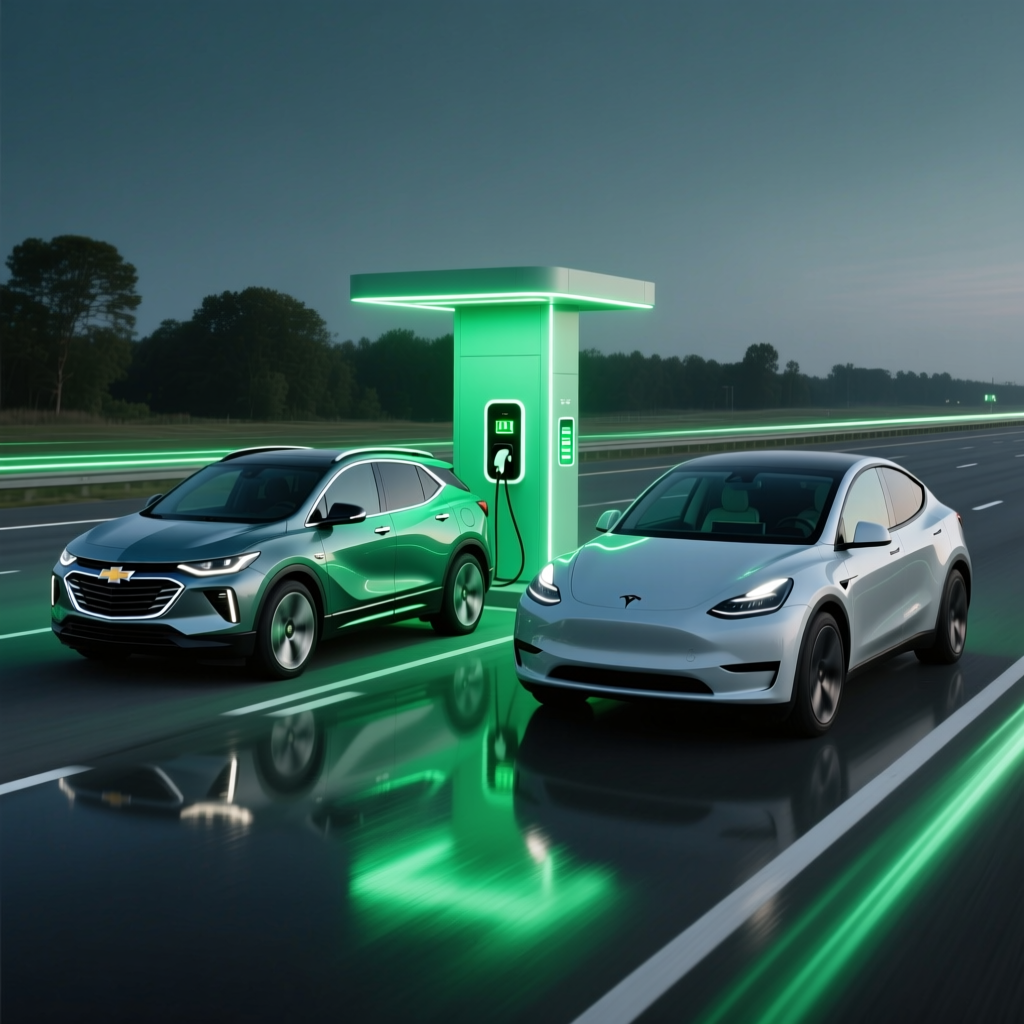
Charging speed is one area where the Tesla Model Y holds a decisive advantage. The Model Y supports DC fast charging at up to 250 kW via Tesla's V3 Superchargers, which can add approximately 200 miles of range in about 15 minutes under optimal conditions. Tesla's Supercharger network is the largest and most reliable fast-charging network in North America, with tens of thousands of stalls across the continent. This infrastructure advantage is difficult to overstate for buyers who plan to road-trip regularly.
The Chevrolet Equinox EV supports DC fast charging at up to 150 kW, which can add roughly 70 miles of range in about 10 minutes or charge from 10% to 80% in approximately 35 to 40 minutes. While this is adequate for most charging scenarios, it is noticeably slower than the Model Y. The Equinox EV uses the CCS (Combined Charging System) connector, which is compatible with networks like Electrify America, EVgo, and others. GM has also announced that newer Ultium-based vehicles will gain access to Tesla's Supercharger network via an adapter, which significantly improves the Equinox EV's long-distance charging prospects.
For Level 2 home charging, both vehicles support similar charging rates (around 11.5 kW), meaning a full overnight charge is easily achievable with a properly installed home charger. Most EV owners do the vast majority of their charging at home, so daily charging convenience is essentially equal between the two.
The bottom line: Tesla wins on charging speed and network reliability today, but GM's adoption of the NACS standard and Supercharger access is rapidly closing the gap. If fast public charging is critical to your lifestyle, the Model Y currently has the edge.
Performance and Driving Dynamics: Power Meets Practicality
The Tesla Model Y is the clear performance leader in this comparison. Even the Long Range variant delivers robust acceleration, sprinting from 0 to 60 mph in roughly 4.8 to 5.0 seconds. The Performance variant drops that figure to around 3.5 seconds, putting it in sports car territory. Tesla's dual-motor all-wheel-drive system provides excellent traction in adverse weather, and the low center of gravity from the underfloor battery pack gives the Model Y surprisingly composed handling for an SUV.
The Chevrolet Equinox EV takes a more relaxed approach to performance. The front-wheel-drive models produce around 213 horsepower, while all-wheel-drive variants bump output to approximately 288 horsepower. Acceleration from 0 to 60 mph ranges from roughly 7.5 to 8.5 seconds — perfectly adequate for highway merging and daily driving but nowhere near the Model Y's punch. The Equinox EV's ride quality is generally comfortable, with GM tuning the suspension to prioritize comfort over sportiness. For buyers who value a smooth, quiet commute over thrilling acceleration, the Equinox EV delivers a pleasant driving experience.
One area where the Equinox EV holds its own is in ride refinement. Several automotive reviewers have noted that the Equinox EV's cabin is well-isolated from road and wind noise, and the overall build quality represents a solid effort from GM. The Model Y, while improved in recent iterations, has historically drawn criticism for interior panel gaps and ride firmness, though Tesla's latest manufacturing refinements have addressed some of these concerns.
If performance and acceleration are high on your priority list, the Model Y is the undisputed choice. If you prefer a comfortable, easy-going daily driver and do not need sports-sedan acceleration, the Equinox EV is more than capable. Compare more performance-oriented options in our best performance electric SUVs roundup.
Interior Space, Cargo, and Comfort
Both the Equinox EV and Model Y offer spacious interiors suitable for families, but they differ in execution. The Tesla Model Y provides approximately 30.2 cubic feet of cargo space behind the second row, with additional space in the front trunk (frunk). Fold the rear seats flat and total cargo capacity expands to over 72 cubic feet. Tesla also offers an optional third row, increasing seating capacity to seven, though the rearmost seats are best suited for small children.
The Chevrolet Equinox EV offers around 26.4 cubic feet behind the second row. While this trails the Model Y on paper, the Equinox EV's cargo area is well-shaped and practical for everyday use. The Equinox EV does not offer a third-row option, keeping things simple with comfortable seating for five. Rear-seat passengers in the Equinox EV enjoy generous legroom and headroom, and the cabin materials are competitive for the vehicle's price range.
In terms of interior design philosophy, the two vehicles could not be more different. The Model Y embraces extreme minimalism — a single 15-inch touchscreen handles virtually all vehicle functions, with no traditional instrument cluster or physical buttons. Some buyers love this clean, futuristic approach; others find it frustrating and distracting while driving. The Equinox EV takes a more conventional route, with a large 17.7-inch infotainment touchscreen complemented by an 11-inch digital instrument cluster and physical buttons for climate controls and other frequently used functions.
For buyers who prioritize cargo versatility and optional third-row seating, the Model Y has the advantage. For those who prefer a more traditional, button-friendly interior layout, the Equinox EV will feel more intuitive. Both vehicles offer comfortable, supportive front seats and ample room for adult passengers in the rear.
Technology, Safety, and Driver Assistance
Tesla has built its brand around technology, and the Model Y reflects that DNA. The vehicle's software is responsive, feature-rich, and regularly updated over the air with new capabilities. The Model Y comes standard with Tesla's Autopilot suite, which includes adaptive cruise control, lane-keeping assist, and automatic emergency braking. The optional Enhanced Autopilot and Full Self-Driving (FSD) packages add features like automatic lane changes, navigation-guided autopilot, and traffic light recognition. While FSD remains a supervised system and not a truly autonomous driving solution, it represents some of the most advanced driver-assistance technology available to consumers.
The Chevrolet Equinox EV comes equipped with Chevy Safety Assist, a comprehensive suite of active safety features including automatic emergency braking, forward collision alert, lane-keep assist with lane departure warning, following distance indicator, and IntelliBeam automatic high beams. Higher trims add features like Super Cruise — GM's hands-free driving assistance system — which is widely regarded as one of the best hands-free highway driving systems available. Super Cruise operates on hundreds of thousands of miles of compatible roads in North America and uses a driver attention monitoring system to ensure the driver remains alert.
Both vehicles earn strong safety ratings from the National Highway Traffic Safety Administration (NHTSA) and the Insurance Institute for Highway Safety (IIHS). The Model Y has historically earned Top Safety Pick+ honors, while the Equinox EV has also performed well in crash testing. Both vehicles offer the peace of mind that comes with modern, thoroughly tested safety engineering.
On the infotainment front, the Equinox EV's Google-built-in system (on higher trims) provides access to Google Maps, Google Assistant, and the Google Play Store directly through the vehicle's display. The Model Y uses Tesla's proprietary operating system, which is fast and feature-rich but does not support Apple CarPlay or Android Auto — a dealbreaker for some buyers. The Equinox EV supports wireless Apple CarPlay and Android Auto, giving it an advantage for smartphone integration.
Warranty and Ownership Costs
Tesla provides a 4-year/50,000-mile basic warranty and an 8-year/120,000-mile battery and drive unit warranty. Chevrolet covers the Equinox EV with a 3-year/36,000-mile basic warranty and an 8-year/100,000-mile battery warranty. Tesla's basic warranty is slightly longer, and its battery warranty covers more miles, giving it a modest advantage in warranty coverage.
However, Chevrolet owners benefit from GM's extensive dealership network, which provides service access in virtually every corner of the country. Tesla's service network has expanded significantly but still relies on a combination of service centers, mobile rangers, and third-party body shops. In some regions, Tesla service wait times can be lengthy, while a Chevy dealer is almost always nearby.
Insurance costs tend to be higher for the Tesla Model Y compared to the Equinox EV, reflecting the Tesla's higher repair costs and more powerful performance. Maintenance costs for both vehicles are low compared to gas-powered SUVs — there are no oil changes, spark plugs, or transmission fluid to worry about — but Tesla's proprietary parts and limited service network can make out-of-warranty repairs more expensive.
Over a typical five-year ownership period, the Equinox EV's lower purchase price, lower insurance costs, and competitive efficiency make it the more economical choice for most buyers. The Model Y's stronger resale value partially offsets its higher upfront cost, but the Equinox EV remains the budget-friendly champion.
Verdict: Which Electric SUV Should You Buy?
The Chevrolet Equinox EV and Tesla Model Y are both excellent electric SUVs, but they serve different buyer priorities.
Choose the Chevrolet Equinox EV if:
- You want the most range for the least money
- You prefer a traditional interior layout with physical buttons and Apple CarPlay/Android Auto
- You value easy access to a widespread dealership service network
- You want a comfortable, quiet daily driver without needing sports-car acceleration
- Lower insurance and overall ownership costs are a priority
Choose the Tesla Model Y if:
- Performance and quick acceleration matter to you
- You want access to the Supercharger network for hassle-free road trips
- You value cutting-edge technology, over-the-air updates, and advanced driver assistance
- You need maximum cargo space or an optional third row
- Strong resale value and long-term brand cachet are important
For the majority of buyers — especially those new to electric vehicles and focused on value — the Chevrolet Equinox EV is the smarter buy. It delivers over 300 miles of range at a price that undercuts the Model Y by thousands, and it does so with a comfortable, well-equipped package that feels familiar and approachable.
For enthusiasts, tech-forward buyers, and those who regularly travel long distances, the Tesla Model Y remains the gold standard. Its combination of efficiency, performance, charging infrastructure, and software sophistication is still unmatched in the segment.
Whichever you choose, you are getting a capable, modern electric SUV that will serve you well for years to come. Explore our complete best electric SUV rankings to see how these two compare against the rest of the field.
Frequently Asked Questions
Is the Chevrolet Equinox EV cheaper to own than the Tesla Model Y?
Generally, yes. The Equinox EV's lower purchase price, competitive insurance rates, and strong efficiency translate to lower total cost of ownership for most buyers. The Model Y's stronger resale value partially offsets its higher upfront cost, but the Equinox EV remains the more affordable option over a typical five-year ownership period. Actual costs will vary based on your location, driving habits, electricity rates, and available incentives.
Can the Chevrolet Equinox EV use Tesla Superchargers?
General Motors has committed to providing NACS (North American Charging Standard) adapter access for Ultium-based EVs, allowing vehicles like the Equinox EV to use Tesla's Supercharger network. Availability of adapters and full network compatibility may vary, so check with your local Chevrolet dealer for the latest information. This development significantly improves the Equinox EV's road-trip charging convenience.
Which SUV has better real-world range: the Equinox EV or Model Y?
Both vehicles achieve approximately 319–320 miles of EPA-estimated range in their most efficient configurations. In independent real-world testing, Tesla vehicles have historically come closer to their EPA estimates than many competitors, giving the Model Y a slight edge in real-world range. However, the Equinox EV's larger battery provides a buffer that helps compensate for its slightly lower efficiency. Both vehicles offer more than enough range for daily driving and most road trips.
Is the Tesla Model Y worth the extra cost over the Equinox EV?
It depends on your priorities. If you value rapid acceleration, the Supercharger network, cutting-edge software, and maximum cargo versatility, the Model Y justifies its premium. If you are primarily looking for affordable long-range electric transportation with a comfortable, familiar interior, the Equinox EV delivers outstanding value at a significantly lower price. Test-driving both vehicles is the best way to determine which one feels right for your lifestyle and budget.