Quick Answer: Which Electric Chevrolet Should You Buy?
If you're shopping for an electric Chevrolet in 2026, the answer depends on your budget and use case. The Equinox EV starts around $33,600 and delivers up to 319 miles of EPA range — the best value in Chevy's EV lineup. The Blazer EV targets midsize SUV buyers with up to 324 miles and sportier performance. The Silverado EV brings up to 440 miles and truck utility starting near $57,000. All three ride on GM's Ultium platform, support DC fast charging up to 190+ kW, and may qualify for the federal §30D tax credit depending on your income, the vehicle's MSRP, and battery-sourcing requirements.
The 2026 Electric Chevrolet Lineup at a Glance
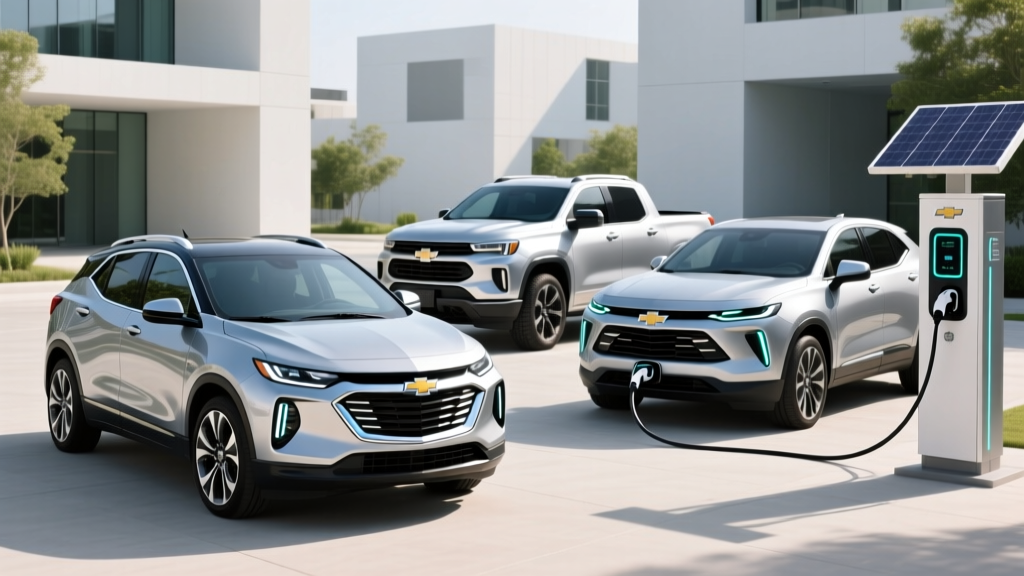
Chevrolet has fully committed to the Ultium battery platform across its electric portfolio. For 2026, three core models define the brand's EV offering: the compact Equinox EV, the midsize Blazer EV, and the full-size Silverado EV. Each targets a distinct buyer, but they share common architecture — GM's Ultium battery modules, NMC (nickel manganese cobalt) chemistry in most trims, and the same underlying software stack for infotainment and driver assistance.
Here's how the three models stack up on the numbers that matter most:
| Spec | 2026 Equinox EV | 2026 Blazer EV | 2026 Silverado EV |
|---|---|---|---|
| Base MSRP | $33,600 (LT2) | $44,600 (2LT) | $57,000 (4WT) |
| EPA Range (max) | 319 mi (RS FWD) | 324 mi (2LT FWD) | 440 mi (4WT) |
| Battery (usable) | ~85 kWh | ~102 kWh | ~200 kWh (max pack) |
| Chemistry | NMC | NMC | NMC |
| Peak DC Fast Charge | 150 kW | 190 kW | 350 kW (4WT) |
| 10–80% DC Charge | ~30 min | ~24 min | ~20 min (350 kW station) |
| Level 2 Home Charge | 11.5 kW | 11.5 kW | 19.2 kW (available) |
| 0–60 mph | ~8.0 sec (FWD) | ~6.1 sec (AWD 2LT) | ~4.5 sec (4WT AWD) |
| Horsepower | 213 hp (FWD) | 288 hp (AWD) | 510 hp (4WT) |
| Towing Capacity | 1,500 lb | 1,500 lb | 10,000 lb (max) |
| Battery Warranty | 8 yr / 100,000 mi | 8 yr / 100,000 mi | 8 yr / 100,000 mi |
Real-World Range vs. EPA Sticker
EPA estimates assume a mix of city and highway driving at moderate temperatures. In practice:
- Highway-heavy driving (70+ mph): Expect 10–15% less than EPA. The Equinox EV's 319-mile sticker drops to roughly 270–290 miles on an interstate run.
- Cold weather (below 32°F): Plan for 20–30% range reduction depending on cabin heating use. An Equinox EV rated at 319 miles may deliver 220–255 miles in freezing conditions.
- Silverado EV towing: Towing a 7,000 lb trailer can cut range by 40–50%. The 440-mile rating is achievable only in light-load, moderate-climate driving.
Charging Speed and Infrastructure: What Each Chevy EV Actually Delivers
Charging speed is where buyers often encounter the biggest gap between marketing claims and real-world experience. Peak kW ratings represent the maximum rate the vehicle can accept at a low state of charge (SoC) on a compatible charger. Sustained rates are lower due to the charge curve — batteries charge fastest between 10–50% SoC, then taper significantly above 80% to protect cell longevity.
| Charging Level | Power (kW) | Miles Added Per Hour | Best For |
|---|---|---|---|
| Level 1 (120V household) | 1.4 kW | ~4–5 mi/hr | Overnight top-ups, low-mileage drivers |
| Level 2 (240V home/public) | 7.7–19.2 kW | 25–65 mi/hr | Daily home charging, destination charging |
| DC Fast Charging | 50–350 kW | 150–1,000+ mi/hr (peak) | Road trips, rapid top-ups |
Key distinction: kW (kilowatts) measures power — how fast energy flows into the battery. kWh (kilowatt-hours) measures energy capacity — the total amount the battery holds. A 150 kW charger filling an 85 kWh battery is like a fire hose filling a bucket: fast at first, slower as it nears the top.
For the Equinox EV, the 150 kW peak means a 10–80% charge takes roughly 30 minutes at a compatible DC fast charger. The Blazer EV at 190 kW shaves that to about 24 minutes. The Silverado EV 4WT with its 350 kW capability can add 100 miles of range in approximately 10 minutes — but only at a 350 kW-capable station like those in Electrify America's or Ionity's newest deployments.
Home charging on a Level 2 circuit (240V, 48-amp dedicated line) will fully replenish an Equinox EV overnight in about 8–9 hours. The Silverado EV's larger pack needs 10–12 hours on the same circuit, or you can opt for the available 19.2 kW onboard charger to cut that to roughly 10 hours — though this requires a 100-amp dedicated circuit and a capable electrical panel.
Electric Chevrolet vs. Gas and Hybrid: The Real Cost Comparison
The purchase price of an electric Chevrolet is only one part of the ownership equation. To understand the true financial picture, you need to compare total cost of ownership (TCO) across five years against comparable gas and hybrid alternatives.
| Cost Category (5 years) | Equinox EV ($33,600) | Equinox Gas (1.5T, ~$29,000) | Equinox Hybrid (if avail.) |
|---|---|---|---|
| Purchase Price | $33,600 | $29,000 | ~$32,000 (est.) |
| Federal Tax Credit (§30D) | Up to $7,500* | $0 | Up to $3,750* |
| Effective Purchase | ~$26,100 | $29,000 | ~$28,250 |
| Fuel/Energy (60,000 mi) | ~$3,200 (home charging)** | ~$7,500 (28 MPG, $3.50/gal) | ~$5,000 (38 MPG) |
| Maintenance (5 yr) | ~$1,500 | ~$3,500 | ~$3,000 |
| Insurance (avg) | ~$9,500 | ~$7,500 | ~$8,000 |
| 5-Year Total | ~$40,300 | ~$47,500 | ~$44,250 |
*Federal §30D credit eligibility depends on buyer income caps ($150K single / $300K joint), vehicle MSRP caps ($55K for SUVs, $80K for trucks), and battery/critical-mineral sourcing requirements. Rules are current for 2026 but subject to change. Verify at irs.gov.
**Based on $0.14/kWh national average and 3.0 mi/kWh efficiency. Actual costs vary by utility rate and charging mix.
The EV's advantage grows if you charge primarily at home on off-peak utility rates. It shrinks if you rely heavily on public DC fast charging, where costs can reach $0.35–$0.50/kWh — making per-mile energy costs comparable to a fuel-efficient gas car.
Federal Tax Credit Eligibility: What You Actually Qualify For
The §30D Clean Vehicle Credit can reduce your federal tax liability by up to $7,500 for a new electric Chevrolet — and as of 2024, it can be transferred to the dealer at point of sale, reducing your purchase price directly. However, eligibility is not universal. Here's the 2026 checklist:
- Income caps: Modified AGI must not exceed $150,000 (single), $225,000 (head of household), or $300,000 (joint filers)
- MSRP caps: $55,000 for SUVs and cars (Equinox EV, Blazer EV); $80,000 for trucks and vans (Silverado EV)
- Battery sourcing: A percentage of critical minerals and battery components must be sourced from the US or free-trade-agreement countries — the split between the two halves of the credit ($3,750 each) means some vehicles may qualify for only half
- Final assembly: Vehicle must be assembled in North America (all three Chevrolet EVs qualify)
- Point-of-sale transfer: You can elect to transfer the credit to the dealer, reducing your out-of-pocket cost at purchase — even if you owe less than $7,500 in federal taxes
The Equinox EV and Blazer EV typically qualify for the full $7,500 under current sourcing rules, but battery-mineral sourcing requirements tighten annually. Always verify a specific VIN's eligibility on fueleconomy.gov before purchasing.
Home Charging: The Make-or-Break Ownership Factor
Owning an electric Chevrolet — or any EV — is fundamentally different depending on whether you can charge at home. Here's the honest breakdown:
If you have a garage or dedicated parking with electrical access: A Level 2 home charger (240V, 40–48 amp) is the single best investment in EV ownership. Equipment costs $400–$700 for a quality unit (ChargePoint Home Flex, Emporia Vue, or Wallbox Pulsar Plus). Professional installation by a licensed electrician typically runs $500–$2,000, depending on whether your electrical panel needs an upgrade. Total: $900–$2,700 for a complete home setup.
| Item | Cost Range |
|---|---|
| Level 2 Charger (hardware) | $400–$700 |
| Electrician (240V circuit install) | $500–$1,500 |
| Permit (local jurisdiction) | $50–$200 |
| Panel upgrade (if needed, 200A) | $1,500–$3,500 |
| Total (no panel upgrade) | $950–$2,400 |
| Total (with panel upgrade) | $2,450–$5,900 |
If you live in an apartment or lack dedicated parking: Public charging becomes your primary fueling method. This is more expensive ($0.30–$0.50/kWh vs. $0.12–$0.16/kWh at home) and less convenient. Before buying, map your daily routes against charging station locations using apps like PlugShare or ChargePoint. If your workplace offers Level 2 charging, that can bridge the gap.
Common Misconceptions About Electric Chevrolets
| Myth | Fact |
|---|---|
| "EV batteries need replacing every few years" | GM warrants the Ultium battery for 8 years/100,000 miles with a minimum 70% capacity retention threshold. Real-world data from similar platforms shows 10–15% degradation over 150,000+ miles. |
| "Charging takes too long for road trips" | The Blazer EV charges 10–80% in ~24 minutes at a 190 kW station. Combined with a 324-mile range, most drivers need one 20-minute stop on a 500-mile trip — roughly the time for a rest break and food. |
| "EVs are worse in cold weather" | Range drops 20–30% in freezing temps — a real limitation. However, preconditioning the battery while plugged in, using seat/steering wheel heaters instead of cabin heat, and the Equinox EV's available heat pump mitigate much of the loss. |
| "The power grid can't handle EVs" | Most EV charging happens overnight during off-peak hours when grid capacity is underutilized. Smart charging and time-of-use rates further reduce grid strain. |
| "EVs cost more to insure" | Partially true: EV insurance premiums run 10–25% higher on average due to higher repair costs for battery and structural components. Shop quotes before buying — the gap varies significantly by insurer and model. |
Decision Framework: Which Electric Chevrolet Fits Your Life?
Choose the Equinox EV if:
- Your budget is under $40,000 and you want maximum value
- You commute 30–60 miles daily and want to charge at home overnight
- You don't need towing capacity over 1,500 lb
- You want the lowest total cost of ownership in Chevy's lineup
Choose the Blazer EV if:
- You want a midsize SUV with more interior space and cargo room
- Performance matters (the SS trim hits 0–60 in under 4 seconds)
- You road-trip regularly and want faster 190 kW DC charging
- Budget allows $45,000–$55,000 before incentives
Choose the Silverado EV if:
- You need truck utility — towing up to 10,000 lb or a large bed
- You want the longest range in the lineup (440 mi EPA with max pack)
- You have access to 350 kW DC fast chargers for road trips
- You can accommodate a large vehicle in your garage and charging setup
Choose a gas or hybrid alternative if:
- You cannot install home charging and public infrastructure is sparse in your area
- You regularly tow heavy loads in cold weather (range loss compounds severely)
- Your annual mileage is under 8,000 miles — the fuel savings won't offset the EV premium within a reasonable timeframe
Frequently Asked Questions
Is the Chevrolet Bolt EV still available in 2026?
The original Bolt EV and Bolt EUV were discontinued after the 2023 model year. GM has announced a next-generation Bolt on the Ultium platform, but as of early 2026, it has not yet entered production. The Equinox EV effectively replaces the Bolt as Chevrolet's entry-level electric offering.
Can I use Tesla Superchargers with my electric Chevrolet?
Yes. Starting in 2025, GM vehicles with the factory-installed NACS (North American Charging Standard) port gained access to Tesla's Supercharger network — over 20,000 stations in North America. If your Chevy has a CCS port, you can use a GM-approved NACS adapter. This significantly expands road-trip charging options beyond Electrify America and EVgo networks.
How much does it cost to charge an Equinox EV at home?
At the national average electricity rate of $0.14/kWh, fully charging the Equinox EV's ~85 kWh battery costs roughly $11.90. That delivers about 280–319 real-world miles — equivalent to about $0.04 per mile. Compare that to a 28 MPG gas car at $3.50/gallon: $0.125 per mile. Home charging is roughly one-third the per-mile cost of gasoline.
What happens if the Ultium battery degrades?
GM's battery warranty guarantees at least 70% capacity retention for 8 years or 100,000 miles, whichever comes first. If the battery falls below that threshold within the warranty period, GM will repair or replace it at no cost. Out-of-warranty replacement costs are not yet well-established for Ultium packs, but industry estimates for batteries of this size range from $12,000–$20,000 depending on pack size. Degradation in practice has been modest — most Ultium-adjacent platforms show 85–90% capacity retention at 100,000 miles.
Does the Silverado EV qualify for the $7,500 tax credit?
The Silverado EV qualifies for §30D credit evaluation, but the truck MSRP cap is $80,000. Higher trims (like the RST, starting above $85,000) may exceed this cap and become ineligible. The 4WT work truck trim, starting near $57,000, falls within the cap. Always check the specific VIN on fueleconomy.gov and confirm your income eligibility on irs.gov before finalizing a purchase.
Is Super Cruise available on electric Chevrolets?
Yes, Super Cruise — GM's hands-free highway driving system — is available on the Blazer EV and Silverado EV on compatible mapped roads (over 750,000 miles in North America as of 2026). This is an SAE Level 2 driver-assistance system: you must remain attentive and ready to take over. It is not autonomous driving. The Equinox EV does not currently offer Super Cruise but includes Chevy's standard driver-assistance suite (automatic emergency braking, lane-keep assist, adaptive cruise).
Important Limitations to Consider
- Charging deserts: Rural areas in the Mountain West, Great Plains, and parts of the Southeast still have sparse DC fast-charging coverage. Plan road trips accordingly.
- Upfront cost: Even with the tax credit, the Blazer EV and Silverado EV carry a higher purchase price than their gas counterparts. The break-even point on fuel savings is typically 3–5 years depending on mileage.
- Insurance premiums: Expect 10–25% higher insurance costs. Get quotes before committing.
- Panel upgrades: Older homes with 100-amp electrical panels may need a costly upgrade ($1,500–$3,500) to support Level 2 charging, especially for the Silverado EV's available 19.2 kW charger.