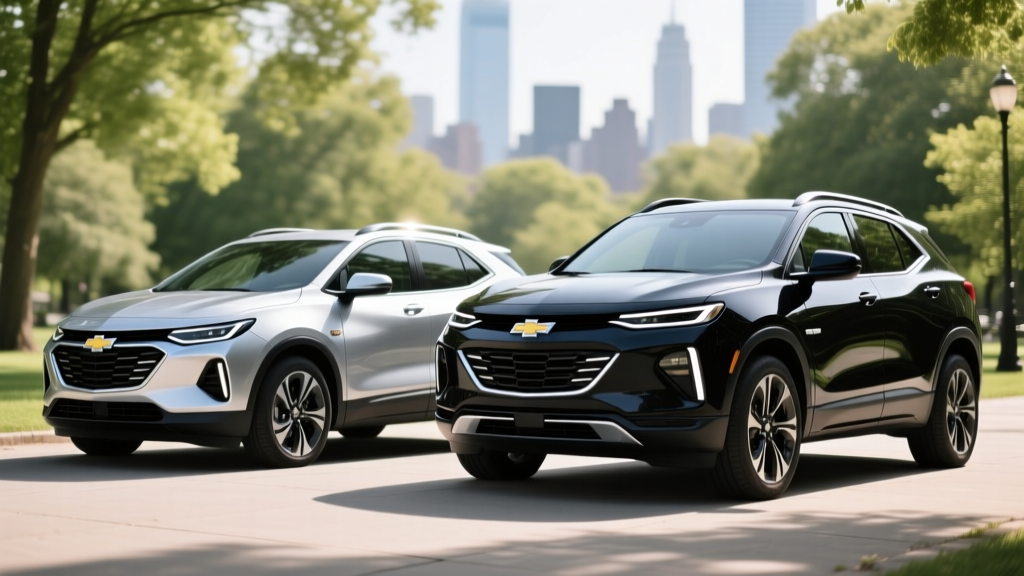
If you're searching for a Chevrolet electric SUV, you have two main choices in 2026: the compact Equinox EV and the midsize Blazer EV. The Equinox EV starts near $33,000, offers up to 319 miles of EPA range, and targets budget-conscious buyers who need daily commuting efficiency. The Blazer EV starts around $44,600, delivers up to 324 miles of range, and adds more cargo space, towing capacity, and performance. Both use GM's Ultium platform with NMC lithium-ion batteries, support DC fast charging up to 190 kW (Equinox) or 190 kW (Blazer), and may qualify for the federal §30D tax credit—though eligibility depends on your income, the vehicle's MSRP, and battery-sourcing requirements that shift annually. This guide breaks down exact specs, real-world range expectations, ownership costs, and a decision framework so you can choose the right Chevy EV for your situation.
Quick Answer: Which Chevrolet Electric SUV Is Right for You?
Choose the Equinox EV if your budget is under $40,000, your daily commute is under 60 miles round-trip, and you prioritize low cost-per-mile over performance.
Choose the Blazer EV if you need 3,500-lb towing, more rear-seat and cargo room, available AWD with 557 hp (SS trim), or you regularly take highway road trips where the larger battery and faster sustained charging help.
2026 Chevrolet Equinox EV: Range, Pricing, and Specs
The Equinox EV is Chevrolet's volume-play electric crossover—priced to undercut rivals like the Hyundai Ioniq 5 and Volkswagen ID.4 while delivering competitive range. For 2026, the lineup includes LT and RS trims with front-wheel drive (FWD) or all-wheel drive (AWD) configurations.
| Spec | Equinox EV 2LT FWD | Equinox EV RS AWD |
|---|---|---|
| Base MSRP | $33,600 | $41,400 |
| EPA Range | 319 mi | 285 mi |
| Battery (usable) | 85 kWh (NMC) | 85 kWh (NMC) |
| Efficiency | ~3.0 mi/kWh (100 MPGe) | ~2.7 mi/kWh (90 MPGe) |
| DC Fast Charge (peak) | 190 kW | 190 kW |
| 10–80% DC Charge Time | ~24 min | ~24 min |
| Level 2 Charge Rate | 11.5 kW | 11.5 kW |
| 0–60 mph | ~7.8 sec | ~6.3 sec |
| Horsepower | 213 hp | 288 hp |
| Cargo Volume | 26.4 cu ft (rear up) | 26.4 cu ft (rear up) |
| Battery Warranty | 8 yr / 100,000 mi | 8 yr / 100,000 mi |
Real-World Range Expectations
EPA sticker: 319 miles (FWD). Expect in practice: ~260–280 miles on highway trips at 70+ mph, and ~210–240 miles in sub-freezing winter conditions. The Equinox EV lacks a standard heat pump (available on higher trims), which increases cabin-heating energy draw in cold climates. If you live in northern states and commute more than 50 miles daily in winter, factor in 20–30% range reduction.
2026 Chevrolet Blazer EV: The Larger Alternative
The Blazer EV sits a segment above, competing with the Tesla Model Y, Ford Mustang Mach-E, and Honda Prologue. It's built on the same Ultium architecture but uses a larger battery and offers a high-performance SS variant.
| Spec | Blazer EV 2LT FWD | Blazer EV RS AWD | Blazer EV SS AWD |
|---|---|---|---|
| Base MSRP | $44,600 | $50,200 | $60,600 |
| EPA Range | 324 mi | 283 mi | 279 mi |
| Battery (usable) | 102 kWh (NMC) | 102 kWh (NMC) | 102 kWh (NMC) |
| DC Fast Charge (peak) | 190 kW | 190 kW | 190 kW |
| 10–80% DC Charge Time | ~28 min | ~28 min | ~28 min |
| 0–60 mph | ~7.9 sec | ~5.4 sec | ~3.4 sec |
| Horsepower | 220 hp | 340 hp | 557 hp |
| Towing Capacity | 1,500 lb | 3,500 lb | 3,500 lb |
| Cargo Volume | 25.5 cu ft | 25.5 cu ft | 25.5 cu ft |
| Battery Warranty | 8 yr / 100,000 mi | 8 yr / 100,000 mi | 8 yr / 100,000 mi |
The Blazer's 102 kWh battery is one of the largest in its class, which gives it strong range but also means longer charge sessions at lower-power DC stations. At a 150 kW Electrify America stall, expect 10–80% in roughly 35–40 minutes rather than the 28 minutes possible at a full-speed 190 kW charger. The charge curve tapers noticeably above 80% SoC—plan to unplug at 80% on road trips rather than topping off to 100%.
Chevy EV vs Gas SUV: Cost Comparison
The most common question from buyers: does a Chevrolet electric SUV actually save money versus a gas-powered Equinox or Blazer? The answer depends on your mileage, electricity cost, and how long you keep the vehicle. Here's a five-year cost breakdown assuming 15,000 miles/year, $0.14/kWh home charging, and $3.40/gallon regular fuel.
| Cost Factor (5 years) | Equinox EV 2LT FWD | Gas Equinox 1.5T AWD |
|---|---|---|
| Purchase Price (MSRP) | $33,600 | $31,900 |
| Est. Federal Tax Credit (§30D) | $0–$7,500* | $0 |
| Fuel/Energy (75,000 mi) | $3,500 | $8,500 |
| Maintenance | $1,200 | $3,800 |
| Insurance (avg) | $9,200 | $7,500 |
| Est. Depreciation | $14,500 | $12,800 |
| Total 5-Year Cost | $45,500–$53,000 | $64,500 |
*The §30D federal tax credit ranges from $0 to $7,500 depending on battery critical-mineral and component sourcing, your modified adjusted gross income (AGI ≤ $150K single / $300K joint), and MSRP caps ($55,000 for SUVs). Rules change frequently—verify current eligibility at IRS.gov before purchasing. Point-of-sale transfer is available at participating dealers.
The EV wins on fuel and maintenance (no oil changes, fewer brake replacements due to regenerative braking), but loses on insurance (typically 15–25% higher for EVs) and can be unpredictable on depreciation. If you qualify for the full $7,500 credit, the Equinox EV becomes substantially cheaper to own over five years. If you don't qualify—or rely solely on public DC fast charging at $0.35–$0.50/kWh—the gap narrows considerably.
Federal Tax Credit Eligibility for Chevrolet Electric SUVs
Tax-credit eligibility is the single most confusing part of buying a Chevy EV. Here's a current checklist based on IRS §30D rules:
- Vehicle MSRP cap: ≤ $80,000 for SUVs (both Equinox EV and Blazer EV qualify on price)
- Buyer income cap: MAGI ≤ $150,000 (single) / $225,000 (head of household) / $300,000 (joint)
- Battery sourcing: Critical minerals and battery components must meet escalating domestic/free-trade-partner thresholds—these tighten each year through 2032
- Final assembly: Must occur in North America (both vehicles are assembled in the U.S. or Mexico—verify VIN via the DOE's qualifying vehicle list)
- Point-of-sale transfer: You can transfer the credit to the dealer at purchase to reduce your out-of-pocket cost immediately, rather than waiting to claim it on your tax return
Because battery-sourcing rules change annually, a Blazer EV that qualifies for the full $7,500 in early 2026 might see a reduction if GM's supply chain shifts mid-year. Always confirm the exact credit amount for the specific VIN you're purchasing.
Real-World Ownership: Charging, Climate, and Daily Life
Owning a Chevrolet electric SUV is fundamentally different from a gas car. Your experience depends heavily on three factors: home charging access, climate, and driving patterns.
Home Charging Setup
Both the Equinox EV and Blazer EV accept up to 11.5 kW on Level 2 (240V). At this rate, a full charge from 10% takes roughly 7–9 hours—ideal for overnight charging. A Level 2 home charger (like the ChargePoint Home Flex or Emporia V2) costs $350–$700 for the unit, plus $500–$2,000 for professional installation depending on whether your electrical panel needs an upgrade to 200A. If you rent or live in a condo without dedicated parking, you'll rely on public charging, which costs 2–4x more per kWh and adds time to your routine.
Cold-Weather Range Loss
In testing and owner reports, both Chevy EVs lose 20–30% of their EPA range in sustained sub-30°F weather. The Blazer EV's larger 102 kWh battery provides a bigger buffer—a 30% loss still leaves ~225 miles—but the Equinox EV FWD at 319 miles dropping to ~225 miles can feel tight for longer winter commutes. Preconditioning the battery while plugged in (using the myChevrolet app) mitigates some loss and improves DC charging speed in cold weather.
Public Charging Reality
Chevy EVs use the CCS1 connector natively, but GM has been transitioning to the NACS (Tesla-style) connector for newer models. For 2026, verify your specific vehicle's port—some trims include a NACS adapter. You can charge on Electrify America, EVgo, ChargePoint, and (with adapter or native NACS) Tesla Superchargers. Expect real-world DC charging speeds of 120–160 kW at most public stations, not the advertised 190 kW peak, because peak rate only holds between roughly 10–40% SoC before tapering.
Common EV Misconceptions Addressed
| Myth | Fact |
|---|---|
| "EV batteries need replacing every few years." | GM's Ultium batteries carry an 8-year/100,000-mile warranty against degradation below 70% capacity. Industry data shows most NMC batteries retain 85–90% capacity at 100,000 miles with normal use. |
| "Charging takes too long for road trips." | At a 190 kW DC station, both Chevy EVs add ~150–180 miles in 15 minutes. Plan stops around meals or rest breaks, and you'll barely notice. |
| "EVs are worse for the environment because of battery mining." | Lifecycle analyses from Argonne National Lab show EVs produce fewer total emissions than gas cars over their lifetime, even accounting for battery manufacturing—especially as the grid decarbonizes. |
| "I need a 300+ mile range EV to avoid range anxiety." | If you charge at home daily, a 250-mile range covers 95% of American driving. The 319-mile Equinox EV FWD is more than sufficient for most buyers. |
| "EVs cost more to insure." | True—typically 15–25% more due to higher repair costs after collisions. Shop quotes from GEICO, Progressive, and State Farm before buying; some offer EV-specific discounts. |
Decision Framework: Which Chevy Electric SUV Should You Buy?
If-This-Then-That EV Picker
IF your all-in budget is under $38,000 AND you charge at home → Equinox EV 2LT FWD ($33,600). Best value per mile of range in the Chevy lineup.
IF you need AWD for snow or mountain driving AND commute under 40 miles daily → Equinox EV RS AWD ($41,400). 285 miles of range is ample with home charging.
IF you tow a small trailer, boat, or camper (up to 3,500 lb) → Blazer EV RS AWD ($50,200). The Equinox EV is not rated for meaningful towing.
IF you want maximum range and lowest cost per mile on road trips → Blazer EV 2LT FWD ($44,600). 324 miles EPA, and the 102 kWh battery means fewer stops.
IF performance matters and budget is flexible → Blazer EV SS ($60,600). 557 hp and a 3.4-second 0–60 time make it the fastest SUV in its price range, but range drops to 279 miles and it won't qualify for the full tax credit if MSRP rules tighten.
IF you have no home charging access → Consider a Chevrolet PHEV or wait until your housing situation changes. Public-only charging is expensive ($0.35–$0.50/kWh vs $0.14 at home) and adds 2–4 hours/week to your routine.
First-Time EV Buyer Checklist
Before you sign paperwork on any Chevrolet electric SUV, work through these practical steps:
- Verify your electrical panel: A Level 2 charger needs a 240V/50A circuit. If your home has a 100A panel, expect a $1,500–$3,000 upgrade to 200A. Get a quote from a licensed electrician before buying.
- Check your VIN for tax-credit eligibility: Use the DOE's qualifying-vehicle tool at fueleconomy.gov and confirm with your tax professional.
- Test-charge before buying: Visit a local DC fast charger and try the CCS or NACS connector. Understand the apps (PlugShare, ChargePoint, EVgo) you'll need.
- Get insurance quotes: Call your insurer for an EV-specific quote. Factor the premium difference ($200–$500/year higher) into your budget.
- Plan your first road trip: Use A Better Route Planner to simulate a drive you take regularly. See where you'd stop, how long charging takes, and whether the route has reliable chargers.
- Understand your lease vs buy options: Leasing can bypass some tax-credit income restrictions because the credit goes to the lessor, who may pass savings through as a lower monthly payment (the "lease loophole").
Frequently Asked Questions
Does the Chevrolet Equinox EV qualify for the $7,500 federal tax credit?
It can, but eligibility depends on your income (MAGI ≤ $150K single / $300K joint), the vehicle's battery-sourcing compliance for the current year, and MSRP caps ($80,000 for SUVs). The Equinox EV's base price is well under the cap. Check the IRS clean vehicle credit page and confirm the specific VIN with your dealer before purchase.
How long does it take to charge a Chevy electric SUV at home?
On a Level 2 (240V) charger at 11.5 kW, the Equinox EV (85 kWh) charges from 10–100% in about 7 hours, and the Blazer EV (102 kWh) in about 9 hours. On a standard 120V outlet (Level 1), expect 3–5 miles of range per hour of charging—only practical for low-mileage drivers or overnight top-offs.
Is the Blazer EV bigger than the Equinox EV?
Yes, but cargo volume is surprisingly similar (25.5 vs 26.4 cu ft behind the rear seats). The Blazer's advantage is rear-seat legroom, a wider cabin, and a 3,500-lb tow rating (AWD trims). If cargo space is your top priority, neither beats a three-row EV like the Kia EV9.
Will a Chevy EV work in cold climates?
Yes, with planning. Expect 20–30% range loss in sub-freezing temperatures. Use the myChevrolet app to precondition the battery while plugged in, which warms the pack and reduces the penalty. The Blazer EV's larger battery provides a bigger cold-weather buffer. Consider installing a heat pump if available on your trim.
What connector do Chevrolet electric SUVs use?
For 2026, GM is transitioning to the NACS (Tesla-style) connector. Some models ship with NACS natively; others include a CCS-to-NACS adapter. Verify your specific vehicle's port configuration with the dealer. Both connector types access the growing Supercharger and Electrify America networks.
How does a Chevy EV compare to a hybrid like the Toyota RAV4 Hybrid?
A RAV4 Hybrid gets ~40 MPG combined and costs ~$33,000, with no charging needed. Over 5 years and 75,000 miles, you'll spend ~$6,400 on gas. The Equinox EV at $0.14/kWh costs ~$3,500 for the same miles. If you charge at home and qualify for the tax credit, the EV is cheaper long-term. If you can't charge at home or drive 30,000+ miles/year in rural areas, the hybrid may be more practical.