The Short Answer: No Fully Electric Camry Exists in 2026
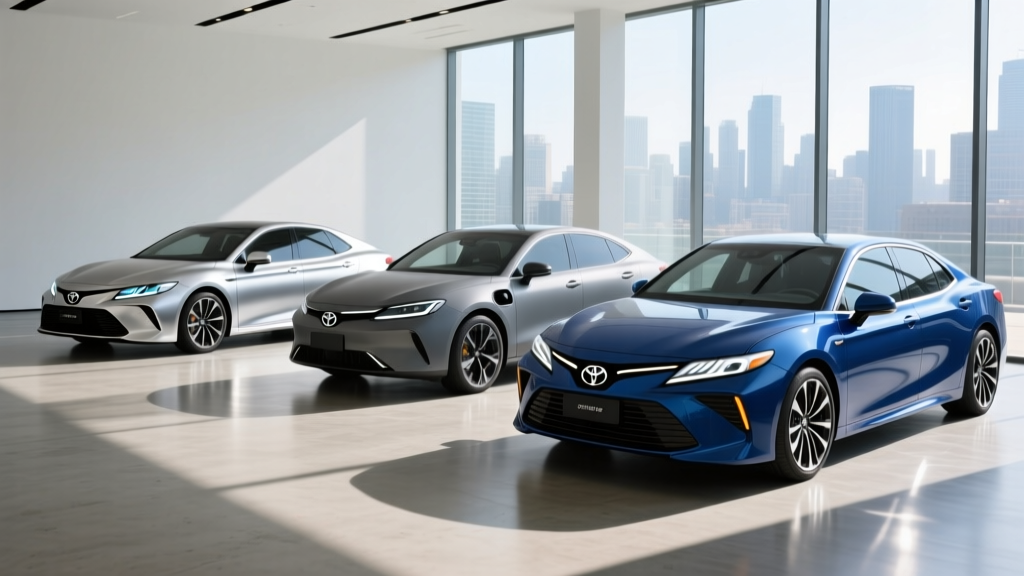
If you're searching for a Camry electric vehicle, here's what you need to know right now: Toyota does not sell a battery-electric Camry in the United States for the 2026 model year. The Camry lineup is exclusively hybrid (HEV) — no plug-in hybrid variant and no battery-electric variant. If you want a Toyota EV sedan close to the Camry in size and price, the Toyota bZ4X crossover is Toyota's current electric offering, though it's an SUV, not a sedan. Toyota has announced plans for a next-generation EV sedan on its dedicated EV platform, but it remains unreleased and specs are preliminary.
Your realistic choices if you love the Camry formula are: the 2026 Camry Hybrid (up to 51 MPG combined), the Toyota bZ4X (252-mile EPA range, BEV), or competitors like the Hyundai Ioniq 6 (361-mile EPA range, BEV sedan). Let's break down the numbers so you can decide.
Why Toyota Hasn't Made an Electric Camry (Yet)
Toyota's strategy has diverged sharply from rivals. While Hyundai, Kia, and Tesla pushed hard into battery-electric sedans, Toyota invested heavily in hybrid technology across its lineup. The 2026 Camry is offered exclusively as a hybrid — every trim uses Toyota's fifth-generation hybrid system pairing a 2.5-liter four-cylinder with electric motors. Toyota has argued that hybrids deliver most of the emissions benefit at a fraction of the infrastructure cost, and the sales data supports that: the Camry Hybrid accounts for the majority of Camry sales.
Toyota's dedicated EV platform (e-TNGA) currently underpins the bZ4X and the Subaru Solterra. A next-generation EV architecture has been announced for future models, and industry reports suggest a Camry-sized electric sedan is in development — but as of 2026, it remains unannounced for the US market with no confirmed specs, pricing, or release date.
2026 Camry Hybrid: The Closest Thing to a Camry EV
Since no fully electric Camry exists, the Camry Hybrid is the electrified Camry you can actually buy. Here's what the numbers look like:
| Spec | 2026 Camry Hybrid LE (FWD) | 2026 Camry Hybrid SE/XSE (AWD) |
|---|---|---|
| Powertrain | 2.5L 4-cyl + electric motor (HEV) | 2.5L 4-cyl + dual electric motors (AWD HEV) |
| Combined Horsepower | 225 hp | 232 hp |
| EPA MPG (City / Hwy / Combined) | 53 / 50 / 51 | 44 / 43 / 44 |
| Fuel Tank | 13.2 gal | 13.2 gal |
| Total Range | ~673 miles | ~581 miles |
| 0-60 mph | ~7.2 sec | ~6.9 sec |
| Battery Type | Lithium-ion (hybrid, ~1 kWh) | Lithium-ion (hybrid, ~1 kWh) |
| Electric-Only Driving | Very short low-speed only (no EV mode range) | Very short low-speed only (no EV mode range) |
| Starting MSRP | ~$29,500 | ~$33,000 |
| Federal Tax Credit (§30D) | Not eligible (HEV, not plug-in) | Not eligible (HEV, not plug-in) |
| Hybrid Battery Warranty | 10 years / 150,000 miles | 10 years / 150,000 miles |
Real-world note: The LE FWD's 51 MPG combined is genuinely achievable in mixed suburban driving. Expect closer to 44-47 MPG on sustained highway trips at 75+ mph, and the AWD trims sacrifice some efficiency for traction. According to fueleconomy.gov, the Camry Hybrid LE is among the most efficient midsize sedans sold without a plug.
EV Sedan Alternatives: What If You Want a True Electric Car?
If your goal is zero tailpipe emissions and home-charging convenience, several electric sedans compete in the Camry's price and size class. Here's how they compare:
| Spec | 2026 Camry Hybrid LE | 2026 Hyundai Ioniq 6 SE LR | 2026 Tesla Model 3 LR | 2026 Toyota bZ4X XLE (FWD) |
|---|---|---|---|---|
| Type | HEV (no plug) | BEV | BEV | BEV |
| EPA Range | ~673 mi (gas) | 361 mi | 341 mi | 252 mi |
| Battery (usable) | ~1 kWh (hybrid) | 77.4 kWh (NMC) | ~75 kWh (NMC/LFP) | 71.4 kWh (NMC) |
| Efficiency | 51 MPG | 140 MPGe (24 kWh/100mi) | 132 MPGe (25 kWh/100mi) | 114 MPGe (29 kWh/100mi) |
| Peak DC Fast Charge | N/A | ~240 kW (10-80% ~18 min) | ~250 kW (10-80% ~18 min) | ~150 kW (10-80% ~30 min) |
| Level 2 Charge Rate | N/A | 10.9 kW | 11.5 kW | 7.2 kW |
| 0-60 mph | ~7.2 sec | ~7.0 sec | ~4.2 sec | ~7.1 sec |
| Starting MSRP | ~$29,500 | ~$38,650 | ~$44,130 | ~$38,465 |
| §30D Federal Tax Credit | None | Up to $7,500 (eligibility varies) | Up to $7,500 (eligibility varies) | Up to $7,500 (eligibility varies) |
Credit caveat: The federal §30D tax credit has strict rules — buyer income caps ($150K single / $300K joint), vehicle MSRP caps ($55K for sedans), and battery critical-mineral and component sourcing requirements that change yearly. Check the latest rules at IRS.gov before assuming eligibility. Point-of-sale transfer is available at participating dealers, effectively reducing your purchase price at the register.
5-Year Cost Breakdown: Camry Hybrid vs Electric Sedan
The sticker price tells only part of the story. Here's a realistic 5-year / 75,000-mile ownership comparison assuming 15,000 miles/year, national-average electricity at $0.17/kWh, and gas at $3.40/gallon:
| Cost Category | Camry Hybrid LE | Hyundai Ioniq 6 SE LR | Tesla Model 3 LR |
|---|---|---|---|
| Purchase Price (MSRP) | $29,500 | $38,650 | $44,130 |
| Est. Federal Tax Credit | $0 | -$7,500* | -$7,500* |
| Effective Purchase Price | $29,500 | $31,150 | $36,630 |
| Fuel/Energy (5 yr) | $5,000 (gas) | $3,190 (electric) | $3,375 (electric) |
| Maintenance (5 yr) | ~$2,800 | ~$1,500 | ~$1,400 |
| Insurance (5 yr, avg) | ~$7,500 | ~$9,000 | ~$9,500 |
| Est. 5-Year Total Cost | ~$44,800 | ~$44,840 | ~$50,905 |
*Tax credit eligibility depends on income, MSRP caps, and battery sourcing — verify at IRS.gov. Insurance premiums for EVs are typically 15-25% higher due to repair costs and battery replacement risk. State/local incentives not included — check your jurisdiction.
The takeaway: The Camry Hybrid and a credit-eligible Ioniq 6 land at nearly identical 5-year costs, but through different paths. The Camry Hybrid wins on lower insurance and zero charging-infrastructure requirements. The Ioniq 6 wins on energy cost and maintenance savings — but only if you qualify for the full credit and have reliable home charging.
Real-World Ownership: What First-Time EV Buyers Must Know
Home Charging Access Is the Dealbreaker
Owning an EV without home charging is viable but significantly less convenient and more expensive. Public DC fast charging costs $0.35-$0.55/kWh in most markets — roughly double or triple home rates. If you can install a Level 2 home charger (240V, 32-48 amps), budget $500-$800 for the charger unit and $800-$2,500 for electrician installation depending on panel capacity and run length. A panel upgrade from 100A to 200A adds $1,500-$3,000. Always get a licensed electrician's assessment before committing to a BEV.
Cold-Weather Range Loss Is Real
If you live where winters regularly drop below 30°F, expect 20-35% range reduction in a BEV. A 361-mile Ioniq 6 can realistically deliver 235-290 miles in freezing conditions, depending on cabin heat use and whether the vehicle has a heat pump (the Ioniq 6 does; not all EVs do). The Camry Hybrid suffers no such range penalty — its fuel range is consistent year-round.
Charging Curves Aren't Linear
When manufacturers advertise "240 kW peak charging," that rate applies only between roughly 10-50% state of charge. Above 80%, charging slows dramatically to protect the battery. A "10-80% in 18 minutes" claim is real, but going from 80-100% can add another 20-30 minutes. Plan road trips around 10-80% charging windows for optimal time efficiency.
Common Misconceptions: Myths vs Facts
| Myth | Fact |
|---|---|
| "The Camry comes in a full electric version." | No. The 2026 Camry is hybrid-only (HEV). Toyota's EV sedan is the bZ4X crossover; a dedicated EV sedan hasn't been announced for the US. |
| "Hybrids need to be plugged in." | Standard hybrids (HEVs) like the Camry Hybrid recharge via regenerative braking and the gas engine. They have no plug and no meaningful electric-only range. |
| "EV batteries need replacing every few years." | Modern EV batteries are warranted for 8 years/100,000 miles minimum (federal mandate). Real-world degradation data shows most lose 10-15% capacity over 8-10 years. The Camry Hybrid battery is warranted 10 years/150,000 miles. |
| "EVs always cost less to own." | Not automatically. Higher insurance, potential home-charging installation costs, and faster tire wear offset fuel savings. The math works best with home charging, federal credit eligibility, and moderate annual mileage. |
| "The $7,500 tax credit applies to everyone." | The §30D credit has income caps ($150K single, $300K joint), MSRP caps ($55K sedans, $80K SUVs/trucks), and battery sourcing requirements. Many buyers and vehicles don't qualify. Check current rules at IRS.gov. |
Decision Framework: Which Path Is Right for You?
Choose the 2026 Camry Hybrid if:
- You want the Camry's size, comfort, and reliability with maximum fuel efficiency (51 MPG)
- You don't have access to home charging or your apartment/condo doesn't support EV charger installation
- You regularly drive 400+ miles in a single day and don't want to plan around charging stops
- You live in an area with limited public DC fast-charging infrastructure
- You want a lower purchase price (~$29,500) with no tax-credit eligibility hoops
- Cold-weather range consistency matters (no battery range loss in winter)
Choose an EV Sedan (Ioniq 6 / Model 3) if:
- You have reliable home Level 2 charging (garage or driveway with 240V access)
- Your daily commute is under 100 miles round-trip (most EV owners charge at home overnight and rarely use public chargers)
- You qualify for the §30D federal tax credit based on income, and the vehicle meets sourcing requirements
- You want zero tailpipe emissions and lower per-mile energy cost (~$0.04-$0.05/mile on home electricity vs ~$0.10/mile in the Camry Hybrid)
- You value instant torque and a quieter driving experience
- You're willing to pay higher insurance premiums (~15-25% more)
Wait for a Future Toyota EV Sedan if:
- You're committed to the Toyota brand and want a BEV with Toyota's dealer network and reliability reputation
- You're not in a rush — no confirmed timeline or specs exist yet for a Camry-class Toyota EV
- You can bridge the gap with a Camry Hybrid now and transition later
Frequently Asked Questions
Will Toyota ever make a Camry EV?
Toyota has announced plans to expand its EV lineup significantly, including next-generation models on a new dedicated EV platform. A Camry-class electric sedan is widely expected in industry reporting, but Toyota has not confirmed US specs, pricing, or a release date. As of 2026, no electric Camry is available for purchase.
Is the Camry Hybrid a plug-in hybrid (PHEV)?
No. The 2026 Camry Hybrid is a conventional HEV — it has no plug, no external charging capability, and no meaningful electric-only range. The small hybrid battery (~1 kWh) recharges through regenerative braking and the gasoline engine. Toyota previously sold a Camry Hybrid in past generations but has never offered a Camry PHEV in the US market.
How does Camry Hybrid fuel cost compare to an EV?
At 51 MPG combined and $3.40/gallon gas, the Camry Hybrid costs roughly $0.067/mile in fuel. An EV like the Ioniq 6 at 24 kWh/100mi and $0.17/kWh home electricity costs about $0.041/mile — a savings of roughly $390/year over 15,000 miles. However, public fast-charging at $0.45/kWh would push EV costs to ~$0.108/mile, making the Camry Hybrid cheaper to "fuel" on road trips.
What Toyota EV can I buy instead of a Camry?
The 2026 Toyota bZ4X is Toyota's current all-electric vehicle in the US. It's a compact crossover (not a sedan) with 252 miles of EPA range (FWD), 150 kW peak DC fast charging, and a starting MSRP around $38,465. It qualifies for the §30D tax credit if you meet eligibility requirements. It's a competent EV but less efficient and lower-range than competitors like the Ioniq 6 or Model 3.
Do I need to worry about the Camry Hybrid battery failing?
Toyota warranties the Camry Hybrid battery for 10 years or 150,000 miles, whichever comes first. Real-world data from millions of Toyota hybrids on the road shows that hybrid battery failures before 150,000 miles are uncommon. If replacement is needed out of warranty, expect $2,000-$4,000 for a refurbished or new hybrid battery pack — far less than a full EV traction battery replacement.