Quick Answer: There Is No Electric BMW X5 — But You Have Two Electrified Paths
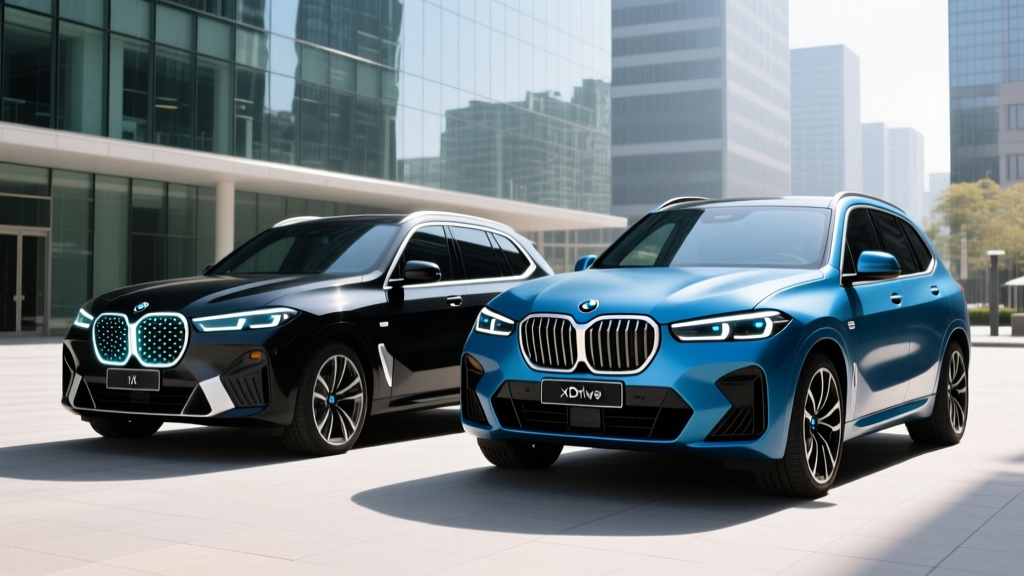
If you're searching for a BMW X5 electric car, here's the reality for 2026: BMW does not sell a fully electric X5. The X5 lineup offers a plug-in hybrid — the X5 xDrive50e — which pairs a turbocharged inline-six with an electric motor and a ~25.7 kWh battery for an EPA-estimated 38 miles of electric-only range. If you want a fully electric BMW SUV in the same size and luxury tier, the closest equivalent is the BMW iX, a dedicated battery-electric vehicle (BEV) with up to 324 miles of EPA range. Your decision comes down to one question: Do you want electric-only driving with a gas backup (PHEV), or full battery-electric with no tailpipe?
BMW X5 xDrive50e: The Plug-In Hybrid Option
The 2026 BMW X5 xDrive50e is the electrified X5 most buyers encounter at dealerships. It uses a 3.0-liter turbocharged inline-six combined with an electric motor integrated into the eight-speed automatic transmission. Total system output is 483 horsepower and 516 lb-ft of torque, delivering a 0–60 mph time of approximately 4.6 seconds — quicker than the previous-generation xDrive45e it replaced.
The traction battery is a 25.7 kWh lithium-ion pack (NMC chemistry). Of that, roughly 22 kWh is usable, buffered to protect long-term health. The EPA rates the xDrive50e at 38 miles of electric-only range and a combined MPGe of 56 when operating in electric mode. Once the battery is depleted, it functions as a conventional hybrid, returning an EPA-estimated 22 mpg combined on gasoline alone.
| Spec | Value |
|---|---|
| Powertrain | 3.0L turbo I-6 + electric motor (PHEV) |
| Total Output | 483 hp / 516 lb-ft |
| Battery (usable) | ~22 kWh usable of 25.7 kWh gross (NMC) |
| EPA Electric Range | 38 miles |
| EPA MPGe (electric mode) | 56 MPGe combined |
| EPA MPG (gas-only) | 22 mpg combined |
| 0–60 mph | 4.6 seconds |
| Level 2 Charge Rate | 7.4 kW (10–100% in ~3.25 hours) |
| DC Fast Charging | Not available |
| Base MSRP | ~$74,400 |
| Drivetrain | xDrive AWD |
| Battery Warranty | 8 years / 80,000 miles |
Real-world caveat: That 38-mile EPA electric range assumes moderate temperatures and mixed driving. In cold weather (below 32°F), expect 25–30 miles of electric range due to cabin heating demands and reduced battery efficiency. Highway-speed electric driving at 70+ mph will also deplete the battery faster — plan on roughly 30 miles in that scenario.
BMW iX: The Fully Electric Alternative
If what you actually want is a BMW electric SUV with X5-level space and luxury but zero gasoline use, the BMW iX is the answer. It rides on BMW's dedicated electric platform and offers two main trims for 2026:
- iX xDrive45: Dual-motor AWD, 402 hp, ~100 kWh usable battery, EPA-estimated 312 miles range. Base MSRP ~$78,000.
- iX xDrive50: Dual-motor AWD, 516 hp, ~105 kWh usable battery, EPA-estimated 324 miles range. Base MSRP ~$88,000.
- iX M60: Performance variant, 610 hp, EPA-estimated 288 miles range. Base MSRP ~$111,500.
The iX supports DC fast charging at up to 195 kW (xDrive50), reaching 10–80% state of charge in approximately 31 minutes under optimal conditions. The charge curve tapers significantly above 80% — a 10–90% session can take 50+ minutes. Level 2 AC charging maxes at 11 kW, meaning a full home charge takes roughly 10–11 hours.
EPA sticker: 324 miles. Expect ~270–290 miles at sustained highway speeds (70–75 mph). In freezing temperatures with the heat on, plan on 230–260 miles. The iX includes a heat pump standard, which mitigates cold-weather losses compared to resistive heating, but physics still applies.
X5 xDrive50e vs. iX: Side-by-Side Comparison
| Attribute | X5 xDrive50e (PHEV) | iX xDrive50 (BEV) |
|---|---|---|
| Powertrain | Turbo I-6 + electric motor | Dual-motor electric AWD |
| Total Output | 483 hp | 516 hp |
| EPA Electric Range | 38 miles | 324 miles (total) |
| Gas Backup? | Yes — 22 mpg combined | No |
| Battery (usable) | ~22 kWh (NMC) | ~105 kWh (NMC) |
| DC Fast Charging | Not supported | 195 kW peak, 10–80% ~31 min |
| Level 2 Home Charging | 7.4 kW (~3.25 hr full) | 11 kW (~10–11 hr full) |
| 0–60 mph | 4.6 sec | 4.4 sec |
| Cargo (rear seats up) | 33.9 cu ft | 35.5 cu ft |
| Base MSRP | ~$74,400 | ~$88,000 |
| Federal Tax Credit (§30D) | Up to $3,750 (partial) | Eligibility varies by sourcing |
| Oil Changes | Yes (gas engine) | None |
| Battery Warranty | 8 yr / 80,000 mi | 8 yr / 80,000 mi |
Real Costs: Purchase, Charging, Fuel, and Maintenance
The sticker price is just the entry point. Here's a five-year cost breakdown comparing the X5 xDrive50e against the iX xDrive50 and a gas-only X5 xDrive40i for buyers weighing all options. Assumptions: 15,000 miles/year, $3.50/gallon regular, $0.16/kWh home electricity, 80% home charging for the BEV.
| Cost Category | X5 xDrive40i (Gas) | X5 xDrive50e (PHEV) | iX xDrive50 (BEV) |
|---|---|---|---|
| Base MSRP | $67,200 | $74,400 | $88,000 |
| Fed. Tax Credit (§30D) | $0 | Up to $3,750* | Up to $7,500* |
| Fuel/Energy (5 yr) | $12,300 | $6,800 | $5,400 |
| Maintenance (5 yr) | $4,200 | $3,400 | $2,100 |
| Insurance (5 yr est.) | $9,500 | $10,200 | $11,800 |
| Est. 5-Yr Total Cost | $93,200 | $91,050 | $99,800 |
*Federal tax credit eligibility under IRS §30D depends on MSRP caps ($80,000 for SUVs), buyer income limits ($300K MFJ / $150K single), and battery critical-mineral/component sourcing. Credit amounts and eligibility change — verify current rules before purchasing. Point-of-sale transfer is available for eligible buyers.
Key takeaways from the numbers:
- The PHEV X5 saves roughly $2,150 over five years vs. the gas X5, primarily from reduced fuel and maintenance — but the upfront premium and partial credit narrow the gap.
- The iX costs ~$8,750 more over five years than the gas X5 at current prices, but eliminates tailpipe emissions entirely and offers a fundamentally different driving experience (silent, instant torque, no gas station visits).
- Insurance runs 10–25% higher on EVs due to repair complexity and parts costs. Get quotes before committing.
- Home charging installation (Level 2, 240V/48A) typically costs $800–$2,500 depending on panel proximity and whether a 200-amp service upgrade is needed. Budget for this separately.
Common Misconceptions — Myth vs. Fact
| Myth | Fact |
|---|---|
| "The BMW X5 comes in a fully electric version." | BMW does not make a BEV X5. The electrified X5 is the xDrive50e plug-in hybrid. The iX is BMW's dedicated electric SUV in this class. |
| "I can DC fast-charge the X5 PHEV on road trips." | The X5 xDrive50e does not support DC fast charging. Level 2 AC at 7.4 kW is the maximum. Plan road-trip electric range around the 38-mile battery. |
| "The PHEV will save me thousands over gas." | Savings depend on your commute. If you drive 30 miles round-trip and charge nightly, you'll use almost no gas. If you drive 80+ miles daily without charging, you'll get 22 mpg — barely better than the gas X5. |
| "I don't need home charging for a BEV." | Relying solely on public DC fast charging costs 2–3× more per mile than home Level 2 and accelerates battery wear. Public charging reliability remains inconsistent outside major metro areas. |
| "EV batteries need replacing every few years." | Modern NMC batteries with active thermal management typically lose 10–15% capacity over 8–10 years. BMW warranties the pack for 8 years/80,000 miles against dropping below 70% capacity. Full replacements (rare) run $12,000–$18,000 for the iX. |
Decision Framework: Which Electrified BMW SUV Is Right for You?
Choose the BMW X5 xDrive50e (PHEV) if:
- Your daily commute is under 35 miles round-trip and you can charge at home every night.
- You regularly take road trips exceeding 300 miles and don't want to plan around charging stops.
- You live in an area with limited public charging infrastructure.
- You want BMW X5 styling, dimensions, and dealer familiarity specifically.
- You're not ready to commit to a full BEV but want to reduce gas consumption.
Choose the BMW iX (BEV) if:
- You have reliable home Level 2 charging (or confirmed workplace charging).
- Most of your driving is under 250 miles per day — covering the vast majority of American drivers.
- You want to eliminate gasoline costs and tailpipe emissions entirely.
- You value the latest EV-specific technology (heat pump, one-pedal driving, 195 kW DC charging).
- You're comfortable planning 20–30 minute charging stops on road trips every ~220 miles.
Stick with the gas X5 xDrive40i if:
- You cannot install home charging (apartment, street parking, HOA restrictions).
- Your budget is firm below $70,000 and you don't qualify for tax credits.
- You frequently tow over 5,000 lbs (the gas X5 rates higher for towing).
What First-Time EV Buyers Should Know
If you're transitioning from a gas vehicle to either the X5 PHEV or the iX BEV, these practical realities matter more than spec sheets:
kW vs. kWh — know the difference. kW (kilowatts) measures power — how fast energy flows. kWh (kilowatt-hours) measures energy — how much the battery holds. A 195 kW charger fills a 105 kWh battery. Think of it like a hose (kW) filling a bucket (kWh). Confusing these is the most common mistake new EV buyers make when comparing vehicles and chargers.
Charge curves are real. The iX's "195 kW peak" rate only applies between roughly 10–40% state of charge. Above 50%, the rate tapers. Above 80%, it drops sharply to protect battery health. A 10–80% session takes ~31 minutes; 80–100% can add another 25 minutes. Plan road-trip stops around 10–80% charges and skip topping off unless you need the extra range to reach your destination.
Preconditioning matters. The iX can precondition its battery before you arrive at a DC fast charger (set it in the navigation). A warm battery charges significantly faster — up to 30% quicker in cold weather. Skip preconditioning and your 195 kW peak may arrive at 120 kW instead.
Home charging is non-negotiable for BEV satisfaction. According to fueleconomy.gov, home Level 2 charging costs an average of $0.14–$0.18/kWh depending on your utility rate, translating to roughly $0.04–$0.05 per mile in the iX. Public DC fast charging averages $0.35–$0.50/kWh. If you can't charge at home, a PHEV is the more practical choice.
Cold weather reduces range — plan for it. Both the X5 PHEV and iX lose range in freezing temperatures. The iX's heat pump helps, but expect 15–25% range reduction at 20°F compared to 70°F. If your winter commute is 200 miles in a 324-mile-range iX, you'll be fine. If it's 280 miles, you'll need to charge en route in January even though July was effortless.
Frequently Asked Questions
Is there a fully electric BMW X5?
No. As of the 2026 model year, BMW does not produce a battery-electric X5. The X5 xDrive50e is a plug-in hybrid with 38 miles of electric range plus a gas engine. The BMW iX is the brand's dedicated electric SUV in the same luxury midsize segment and is the closest equivalent to an "electric X5."
How much does it cost to charge the BMW iX at home?
The iX xDrive50 has a ~105 kWh usable battery. At a national average residential rate of $0.16/kWh, a full 0–100% charge costs approximately $16.80 and provides roughly 324 miles of EPA range — about $0.052 per mile. Compare that to the gas X5 xDrive40i at ~$0.164 per mile (22 mpg at $3.50/gallon).
Does the BMW X5 PHEV qualify for the $7,500 federal tax credit?
Typically not the full amount. Under current IRS §30D rules, PHEVs must meet the same battery-sourcing and critical-mineral requirements as BEVs. The X5 xDrive50e's smaller battery makes full compliance more difficult. Expect up to $3,750 if the critical-minerals requirement is met but not the battery-components requirement. Verify eligibility with your dealer and a tax professional before purchase. The vehicle must also stay under the $80,000 SUV MSRP cap, and buyer income must not exceed $300,000 (married filing jointly) or $150,000 (single).
Can I road-trip the BMW X5 xDrive50e on electric power alone?
Not practically. The 38-mile electric range and lack of DC fast charging mean the X5 PHEV is designed for electric commuting, not electric road-tripping. On long drives, it operates as a conventional hybrid at ~22 mpg. The iX, by contrast, can DC fast-charge at 195 kW and add ~180 miles of range in 20 minutes, making it the better road-trip EV — with planning.
How long will the BMW iX battery last?
BMW warranties the iX battery for 8 years or 80,000 miles against capacity dropping below 70%. Real-world data from similar NMC packs with active liquid thermal management suggests 10–15% degradation over 8–10 years / 150,000 miles is typical. A full battery replacement, if ever needed out of warranty, is estimated at $12,000–$18,000 based on current BMW parts pricing — though this is rare and costs continue to decline.
What's the real-world range of the BMW iX in winter?
The iX xDrive50's EPA range is 324 miles. In sustained freezing temperatures (20–32°F) with cabin heating, expect 240–270 miles. The standard heat pump recovers some efficiency versus resistive heating, but cold chemistry and heating loads still reduce usable range by 15–25%. Preconditioning while plugged in helps preserve range by warming the cabin on grid power before departure.