The Quick Answer: Which BMW Electric SUV Should You Buy?
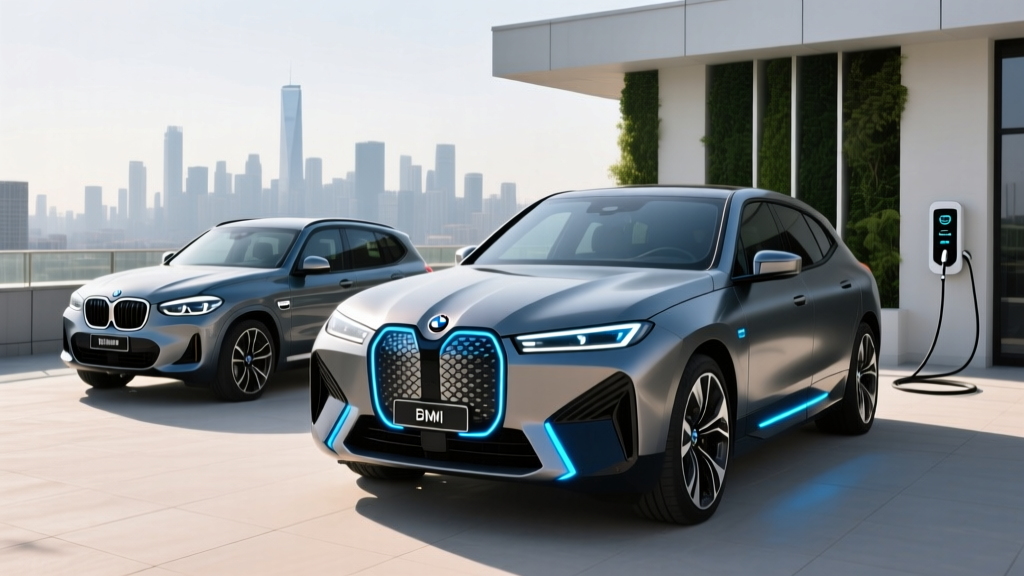
If you need a BMW SUV electric car in 2026, you have two realistic paths. The BMW iX (mid-size flagship, ~320-mile EPA range, starting around $87,000) is the premium, long-range choice for families and road-trippers who want maximum cabin space and 200+ kW DC fast charging. The BMW iX3 (compact, ~270-mile EPA range, starting around $59,000) is the value play for urban and suburban drivers who want BMW's electric driving dynamics without the six-figure price tag. Neither currently qualifies for the full $7,500 federal §30D tax credit due to battery-sourcing rules, so budget accordingly. If you drive more than 15,000 miles per year and can install a Level 2 home charger, either model will undercut its gas counterpart (X5 or X3) on per-mile fueling cost within two years.
2026 BMW Electric SUV Lineup: Specs at a Glance
BMW's electric SUV lineup in the U.S. centers on two production models for the 2026 model year. Here is how the numbers stack up before we get into ownership costs and real-world driving.
| Specification | 2026 BMW iX xDrive50 | 2026 BMW iX M60 | 2026 BMW iX3 (RWD) |
|---|---|---|---|
| EPA Range (est.) | ~324 mi | ~288 mi | ~270 mi |
| Battery (usable kWh) | 105.2 kWh (NMC) | 105.2 kWh (NMC) | 80 kWh (NMC) |
| Horsepower | 516 hp | 610 hp | 286 hp |
| 0–60 mph | 4.4 sec | 3.6 sec | 6.5 sec |
| Peak DC Fast Charge | 200 kW | 200 kW | 135 kW |
| 10–80% DC Charge Time | ~31 min | ~31 min | ~34 min |
| Level 2 AC Charge Rate | 11 kW | 11 kW | 11 kW |
| MPGe (combined, est.) | 86 MPGe | 78 MPGe | 93 MPGe |
| Cargo Volume | 35.5 cu ft (rear up) | 35.5 cu ft | 28.7 cu ft |
| Base MSRP | $87,250 | $111,500 | $59,900 |
| Battery Warranty | 8 yr / 100,000 mi | 8 yr / 100,000 mi | 8 yr / 100,000 mi |
Note: EPA figures are estimates based on BMW-published data and prior model-year fueleconomy.gov listings. Real-world range will vary; see the section below.
Real-World Range: What the EPA Sticker Doesn't Tell You
The EPA range number is a blended-cycle estimate. In practice, three factors will move your actual miles significantly:
iX xDrive50 Range Reality Check
- EPA sticker: ~324 miles
- 70-mph highway driving (mild weather): expect ~270–290 miles
- Cold weather (below 32°F) with cabin heating: expect ~225–255 miles (a 20–30% reduction is normal for NMC chemistry without aggressive preconditioning)
- Mixed suburban/city with regen: ~300–320 miles achievable
The iX uses an NMC (nickel manganese cobalt) battery pack, which offers high energy density but is more temperature-sensitive than LFP chemistry. BMW's thermal management system includes a heat pump (standard on the iX, optional on the iX3 in some markets), which helps mitigate cold-weather losses. If you live in Minnesota or Maine, budget for a 25% range reduction in January. If you're in Southern California, your real-world numbers will track closer to the sticker year-round.
The iX3, with its smaller 80 kWh pack, will see a similar percentage loss in cold weather, translating to roughly 195–215 miles on a winter highway run. For a commuter doing 40 miles round-trip, that's still plenty of buffer. For a 200-mile winter road trip, you'll need one DC fast-charge stop.
Charging Speeds and the Curve You Need to Understand
| Charging Level | Power (kW) | iX Miles Added/Hour | iX3 Miles Added/Hour | Typical Use Case |
|---|---|---|---|---|
| Level 1 (120V household) | ~1.4 kW | ~4 mi/hr | ~5 mi/hr | Emergency / overnight trickle |
| Level 2 (240V home) | 11 kW | ~32 mi/hr | ~38 mi/hr | Daily home charging |
| DC Fast Charge (peak) | 200 kW (iX) / 135 kW (iX3) | ~170 mi in 10 min (peak) | ~100 mi in 10 min (peak) | Road trips |
Critical concept — kW vs kWh: kW (kilowatts) is the rate of power flow, like water pressure from a hose. kWh (kilowatt-hours) is the total energy stored in your battery, like the size of the tank. Your iX has a 105.2 kWh battery (the tank). A 200 kW DC fast charger can push energy in at 200 kW (the pressure) — but only at the start of the session when the battery's state of charge (SoC) is low.
Here's the charging-curve reality BMW's marketing won't emphasize: the iX peaks at 200 kW only between roughly 10% and 30% SoC. By 50%, the rate tapers to around 150 kW, and above 80%, it drops below 50 kW to protect battery health. That's why BMW quotes a 10–80% time (~31 minutes) rather than 0–100%. Charging from 80% to 100% on a DC fast charger can take almost as long as the 10–80% session. On road trips, plan to stop at 10–15% and leave at 80% — that's the efficient window.
At home on an 11 kW Level 2 charger (requiring a 48-amp circuit installed by a licensed electrician), the iX goes from empty to full in roughly 10–11 hours. Most owners plug in nightly and wake up with a full battery, never touching a public charger except on road trips.
Cost of Ownership: BMW Electric SUV vs. Gas X5 and X3
The purchase price of a BMW electric SUV is higher than its gas equivalent, but the operating costs tell a different story. Here's a five-year comparison assuming 15,000 miles per year, home Level 2 charging at $0.14/kWh (national average), and premium gasoline at $4.20/gallon.
| Cost Category (5 Years) | BMW iX xDrive50 | BMW X5 xDrive40i (Gas) | BMW iX3 | BMW X3 xDrive30i (Gas) |
|---|---|---|---|---|
| Purchase Price (MSRP) | $87,250 | $68,500 | $59,900 | $50,200 |
| Federal Tax Credit (§30D) | $0* | $0 | $0* | $0 |
| Fuel/Energy (75,000 mi) | $6,125 | $14,175 | $4,725 | $11,025 |
| Maintenance (est.) | $1,800 | $4,500 | $1,600 | $3,800 |
| Insurance (est. avg.) | $12,500 | $10,200 | $9,800 | $8,600 |
| 5-Year Total | $107,675 | $97,375 | $76,025 | $73,625 |
*As of 2026, BMW's electric SUVs do not meet the critical-mineral and battery-component sourcing requirements under IRS §30D rules for the full $7,500 credit. Always verify current eligibility with a tax professional before purchase. Rules change frequently.
Key takeaways from this comparison:
- Fuel savings are real and substantial. The iX saves roughly $8,050 in energy costs over five years vs. the gas X5. The iX3 saves about $6,300 vs. the gas X3.
- Maintenance is 50–60% cheaper on the EVs — no oil changes, no transmission fluid, fewer brake replacements due to regenerative braking.
- Insurance costs 15–22% more on the electric models. EV repair costs and parts pricing drive higher premiums. Get quotes before you buy.
- The iX does not break even on total cost within five years vs. the X5 — the $18,750 MSRP gap is too large for fuel savings to close. The iX3 nearly matches the X3 on five-year cost, and if BMW ever qualifies for the credit, it tips in the EV's favor.
Federal Tax Credit and Incentive Reality for BMW EVs
§30D New Clean Vehicle Credit — 2026 Requirements
- MSRP cap: SUVs must be under $80,000 (the iX3 qualifies on price; the iX xDrive50 is above the cap)
- Buyer income cap: $150,000 single / $300,000 joint AGI
- Battery sourcing: Critical minerals and battery components must meet escalating domestic/free-trade-agreement percentages — BMW's current supply chain does not meet the 2026 thresholds
- Point-of-sale transfer: If eligible, the credit can be applied at the dealer as a down-payment reduction
- Final assembly: Must occur in North America (the iX is built in Dingolfing, Germany — a disqualifying factor)
This is a significant ownership factor. Unlike the Tesla Model Y or certain Ford and GM EVs that qualify for partial or full credits, BMW's electric SUVs are currently locked out of §30D on multiple fronts: assembly location and battery sourcing. Some buyers in states with additional incentives (California's clean-transportation programs, Colorado's innovative EV tax credit, or New York's Drive Clean Rebate) may find $2,000–$5,000 in state-level relief. Check your state's energy office for current programs.
Decision Framework: Which BMW Electric SUV Fits Your Life?
Choose the BMW iX xDrive50 if:
- You regularly drive 200+ miles in a single day and need 300+ miles of real-world range
- You need three-row-adjacent cargo space (35.5 cu ft behind the second row)
- You want dual-motor AWD for snow or mountain driving
- You have a budget above $90,000 (after options) and accept the higher insurance cost
Choose the BMW iX3 if:
- Your daily driving is under 80 miles round-trip with occasional 200-mile road trips
- You want the lowest entry price into a BMW electric SUV
- You live in a milder climate where cold-weather range loss is manageable
- You prioritize MPGe efficiency (93 MPGe combined vs. the iX's 86)
Stick with a gas X5 or X3 if:
- You cannot install a Level 2 charger at home and lack reliable public charging nearby
- You regularly tow more than 3,500 lbs (the iX is rated for 3,500 lbs; the gas X5 handles up to 7,200 lbs)
- You live in a charging desert (rural parts of the Mountain West, Great Plains) and take frequent long road trips
- Your budget is strictly under $55,000 and the tax credit is a dealbreaker
Common Misconceptions About BMW Electric SUVs
| Myth | Fact |
|---|---|
| "The battery will need replacing in 5 years for $20,000." | BMW warranties the battery for 8 years / 100,000 miles against degradation below 70% capacity. Industry data from Recurrent and other fleet monitors shows NMC packs losing 8–12% capacity over 150,000 miles with normal use. Full replacement is rare and typically covered under warranty if premature. |
| "Charging takes hours — I'll be stuck at stations." | On a 200 kW DC fast charger, the iX adds ~170 miles in 10 minutes at peak rate. A typical road-trip stop (10–80%) takes ~31 minutes — enough time for a meal break. At home, Level 2 charging happens overnight while you sleep. |
| "EVs don't work in cold weather." | Range drops 20–30% in sub-freezing temps, which is real and measurable. But with preconditioning (warming the battery while plugged in before departure), a heat pump, and seat/steering-wheel heaters, the iX remains fully functional in winter. Owners in Norway — one of the coldest EV markets — routinely drive BMWs year-round. |
| "I can just plug into a regular outlet and be fine." | Level 1 (120V) adds about 4 miles of range per hour on the iX. That's ~48 miles in a 12-hour overnight session — adequate for low-mileage commuters, inadequate for anyone driving 60+ miles daily. Budget $800–$2,000 for a proper 240V Level 2 home installation. |
Home Charging Installation: What to Budget
Most BMW electric SUV owners will want a Level 2 home charger. Here's what a typical installation costs:
| Component | Cost Range |
|---|---|
| Level 2 EVSE hardware (e.g., BMW Wallbox, ChargePoint Home Flex, Emporia) | $400 – $750 |
| Electrician labor (48-amp circuit, 60-amp breaker, 240V run) | $600 – $1,800 |
| Permit and inspection | $50 – $300 |
| Electrical panel upgrade (if needed — 100A to 200A service) | $1,500 – $3,500 |
| Total (typical, no panel upgrade) | $1,050 – $2,850 |
If your home has a 200-amp electrical panel with spare capacity, you're on the low end. Older homes with 100-amp service may need a panel upgrade, which is the single biggest variable. Get a quote from a licensed electrician before committing to the car — this is the step too many first-time EV buyers skip.
Frequently Asked Questions
Does the BMW iX qualify for the $7,500 federal EV tax credit in 2026?
No. As of 2026, the BMW iX and iX3 do not qualify for the §30D federal tax credit. The iX exceeds the $80,000 MSRP cap for SUVs, and both models fail the battery-sourcing and North American final-assembly requirements. Always consult IRS guidance and a tax professional for your specific situation.
How much does it cost to charge a BMW iX at home per month?
At the national average electricity rate of $0.14/kWh and driving 1,250 miles per month, the iX xDrive50 (consuming roughly 2.9 kWh/mile) costs about $50–$55 per month in home charging. The gas X5 at 22 MPG combined with premium fuel at $4.20/gallon costs about $239 per month. That's a ~$185 monthly savings.
Can I road-trip the BMW iX cross-country?
Yes. The iX has access to the Electrify America, EVgo, and ChargePoint networks (and Tesla Superchargers via BMW's included adapter for NACS-compatible chargers, where available). With 200 kW peak charging and ~324 miles of EPA range, you'll stop every 2.5–3 hours for a 25–30 minute charge. It's slower than a gas fill-up but very manageable with planning using apps like A Better Routeplanner.
Is the BMW iX all-wheel drive?
Yes. Both the iX xDrive50 and iX M60 use BMW's dual-motor xDrive all-wheel-drive system. The iX3 is rear-wheel drive in most markets; an AWD variant may be offered depending on region. Check BMW's U.S. configurator for current drivetrain availability.
What's the battery replacement cost if it fails out of warranty?
Out-of-warranty high-voltage battery replacement for the iX is estimated at $15,000–$22,000 based on current BMW parts pricing for comparable NMC packs. However, premature failures are rare. Most EV batteries outlast the vehicle itself — NHTSA and fleet data show less than 2% of EV batteries requiring full replacement within the first 10 years.
How does BMW's driver-assistance compare to Tesla Autopilot?
BMW's Driving Assistant Professional is an SAE Level 2 system — it handles steering, acceleration, and braking on highways, but requires continuous driver supervision, just like Tesla's Autopilot and FSD (Supervised). BMW does not market its system as "self-driving" and includes robust hands-on-wheel monitoring. Neither system is Level 4 autonomous. The driver is always responsible.