Quick Answer: The BMW X1 electric car — officially the BMW iX1 — delivers an EPA-estimated 230 miles of range, peaks at 130 kW DC fast charging (10–80% in ~29 minutes), and starts around $39,995. It saves roughly $1,200–$1,500 per year on fuel versus the gas X1, but only qualifies for the §30D tax credit if it meets 2026 battery-sourcing and MSRP rules. If you have Level 2 home charging and drive under 200 miles daily, the iX1 is the lower-cost-ownership choice. If you road-trip frequently in cold climates or lack home charging, the gas X1 or a longer-range EV may serve you better.
What Is the BMW X1 Electric Car? (iX1 Explained)
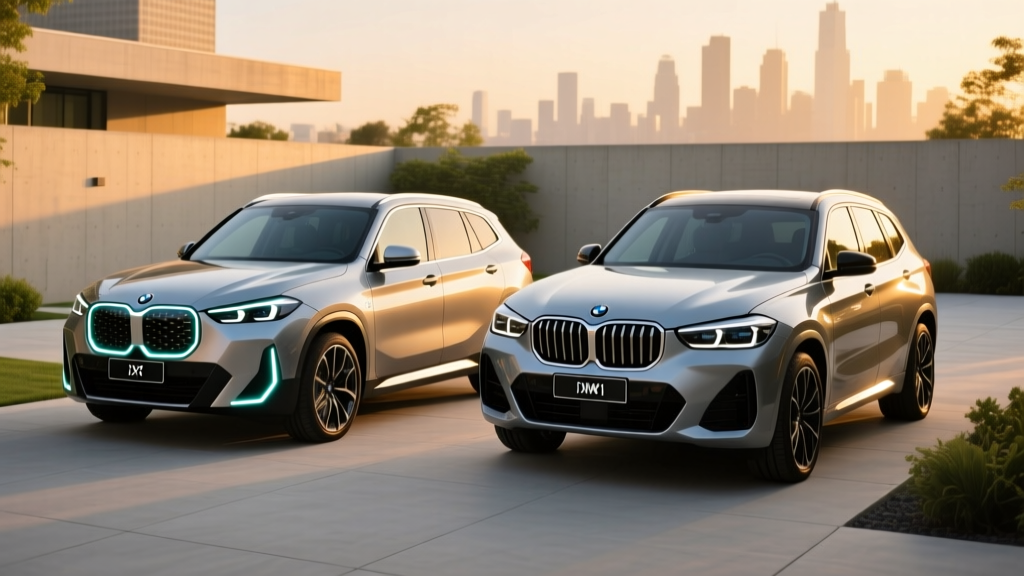
BMW sells the X1 subcompact luxury crossover in two distinct powertrains: the gasoline BMW X1 xDrive28i and the fully electric BMW iX1 xDrive30. They share the same UKL2 platform, similar exterior dimensions, and nearly identical interiors, but the iX1 replaces the turbocharged 2.0L engine with a dual-motor all-wheel-drive system and a floor-mounted battery pack.
For 2026, the iX1 xDrive30 produces 313 horsepower and 364 lb-ft of torque from its two electric motors, launching to 60 mph in approximately 5.6 seconds. The battery is a 64.7 kWh usable lithium-ion pack (NMC chemistry), yielding an EPA-estimated range of 230 miles and a combined efficiency rating of roughly 87 MPGe.
| Spec | Value |
|---|---|
| EPA Range | 230 miles |
| Real-World Range (highway, 70°F) | ~195–210 miles |
| Real-World Range (highway, 20°F) | ~155–175 miles |
| Battery (usable) | 64.7 kWh, NMC |
| Peak DC Fast Charge | 130 kW |
| 10–80% DC Charge Time | ~29 minutes |
| Level 2 Charge Rate | 11 kW (~7.5 hours 0–100%) |
| 0–60 mph | 5.6 seconds |
| Horsepower | 313 hp |
| Drivetrain | Dual-motor AWD (xDrive) |
| Cargo Volume | 25.7 cu ft (rear seats up) |
| Base MSRP | $39,995 |
| Battery/Powertrain Warranty | 8 years / 80,000 miles |
iX1 vs Gas X1: Head-to-Head Comparison
Choosing between the electric iX1 and the gasoline X1 xDrive28i comes down to how you drive, where you charge, and how long you plan to keep the vehicle. Here is the data-driven breakdown.
| Attribute | iX1 xDrive30 (EV) | X1 xDrive28i (Gas) |
|---|---|---|
| Base MSRP | $39,995 | $39,995 |
| Powertrain | Dual-motor EV, AWD | 2.0L turbo I4, AWD |
| Horsepower | 313 hp | 241 hp |
| 0–60 mph | 5.6 sec | 6.2 sec |
| EPA Range / Fuel Economy | 230 mi / 87 MPGe | 28 MPG combined |
| Annual Fuel/Energy Cost* | ~$620 | ~$2,050 |
| Estimated 5-Year Fuel/Energy | ~$3,100 | ~$10,250 |
| Maintenance (5-yr est.) | ~$1,800 | ~$3,500 |
| §30D Federal Tax Credit | Up to $7,500 (if eligible) | $0 |
| Cargo Volume | 25.7 cu ft | 25.7 cu ft |
*Annual fuel/energy cost based on 15,000 miles/year, $0.14/kWh home electricity, and $3.50/gallon gasoline. Actual costs vary by local utility rates and gas prices. Source: fueleconomy.gov.
Real-World Range Reality Check: The iX1's EPA-rated 230 miles assumes mixed city/highway driving at moderate temperatures. On sustained highway trips at 70–75 mph, expect 195–210 miles. In freezing winter conditions (below 25°F), highway range drops to roughly 155–175 miles due to battery heating demands and cabin climate load. The iX1 includes a heat pump for 2026, which mitigates some cold-weather loss, but the physics of lithium-ion chemistry remain. Preconditioning the battery while plugged in before departure helps preserve range in cold weather.
Charging the iX1: What You Actually Need to Know
Charging infrastructure is the single biggest variable in EV ownership satisfaction. The iX1 uses the CCS1 connector for DC fast charging (BMW has not adopted NACS for the iX1 as of the 2026 model year). Here is how the three charging levels break down in practice.
| Level | Power (kW) | Miles Added per Hour | Best Use Case |
|---|---|---|---|
| Level 1 (120V household) | ~1.4 kW | ~3–4 mi/hr | Emergency top-ups only |
| Level 2 (240V home) | 11 kW | ~30–33 mi/hr | Daily overnight charging |
| DC Fast Charging | Peak 130 kW | ~200+ mi/hr (at peak) | Road trips, 10–80% in ~29 min |
The charging curve matters. The iX1 peaks at 130 kW only between roughly 10% and 40% state of charge. Above 50%, the rate tapers to approximately 80–90 kW, and above 80% it drops further to protect battery longevity. That 29-minute 10–80% figure assumes an optimal battery temperature — preconditioning via the BMW app or navigation routing to a charger is essential for achieving it.
Home charging setup: Most iX1 owners install a 48-amp Level 2 home charger (such as the BMW Wallbox or a ChargePoint Home Flex) on a 60-amp dedicated circuit. Expect $800–$1,500 for the charger unit and $500–$2,000 for licensed electrician installation, depending on panel capacity and run length. If your home has a 100-amp panel, a $1,500–$3,000 panel upgrade to 200 amps may be required — a cost many first-time EV buyers overlook.
Total Cost of Ownership: 5-Year Breakdown
The iX1's purchase price matches the gas X1, but ownership economics diverge quickly. This table models a 5-year, 75,000-mile ownership period for both vehicles, assuming home charging at $0.14/kWh and gasoline at $3.50/gallon.
| Cost Category | BMW iX1 xDrive30 | BMW X1 xDrive28i |
|---|---|---|
| Purchase Price | $39,995 | $39,995 |
| §30D Federal Tax Credit | –$7,500 (if eligible) | $0 |
| Effective Purchase Price | $32,495 | $39,995 |
| Fuel/Energy (5 years) | $3,100 | $10,250 |
| Maintenance (5 years) | $1,800 | $3,500 |
| Insurance (5-year est.) | $9,500 | $8,200 |
| Home Charger Install | $1,500 | $0 |
| Estimated Depreciation | $17,000 | $16,500 |
| 5-Year Net Cost | $58,395 | $78,445 |
Key takeaway: With the full $7,500 tax credit applied at point of sale and home charging access, the iX1 costs approximately $20,000 less over 5 years than the gas X1. However, if you do not qualify for the credit or rely entirely on public DC fast charging (at $0.35–$0.50/kWh), the savings narrow to roughly $8,000–$10,000 — still meaningful, but less dramatic.
Insurance premiums on the iX1 typically run 10–18% higher than the gas X1 due to higher repair costs for EV-specific components. Get quotes from your insurer before committing.
§30D Tax Credit: Does the iX1 Qualify?
The federal EV tax credit under IRS §30D can reduce the iX1's effective price by up to $7,500 — but eligibility is not automatic. For 2026, the rules include:
- MSRP cap: The iX1 (SUV classification) must have an MSRP at or below $80,000. The base iX1 qualifies; heavily optioned models may approach the limit.
- Buyer income cap: Adjusted gross income must not exceed $150,000 (single), $225,000 (head of household), or $300,000 (joint filers).
- Battery sourcing: At least 60% of battery component value must be manufactured or assembled in North America, and at least 50% of critical minerals must be sourced from the U.S. or a free-trade-agreement partner. BMW has adjusted supply chains for 2026, but verify VIN-level eligibility at the dealer or on fueleconomy.gov.
- Point-of-sale transfer: You can apply the credit as a discount at purchase rather than waiting for a tax refund — this reduces your out-of-pocket cost immediately.
Important: Tax credit rules change frequently. Always verify current-year eligibility with a tax professional and the IRS before relying on the credit in your purchase decision.
Common Misconceptions About the iX1
| Myth | Fact |
|---|---|
| "230 miles of range means I can drive 230 miles on a road trip." | Sustained highway driving at 70+ mph reduces range to ~195–210 miles. In winter, expect 155–175 miles. Plan charging stops accordingly. |
| "The iX1 charges as fast as a Tesla or Hyundai." | At 130 kW peak, the iX1 charges slower than a Hyundai Ioniq 5 (240 kW peak) or Tesla Model Y (250 kW peak). The 10–80% time of ~29 minutes is adequate but not class-leading. |
| "I don't need home charging — public chargers are everywhere." | Public DC fast charging costs 2–4× more than home charging ($0.35–$0.50/kWh vs. $0.14/kWh). Relying on public charging erases most fuel savings and adds time to your routine. Home Level 2 is strongly recommended. |
| "EV batteries need replacing every few years." | The iX1's NMC battery is warranted for 8 years/80,000 miles at minimum 70% capacity retention. Industry data shows most EV batteries retain 85–90% capacity after 100,000 miles with proper care (avoiding frequent 100% charges and extreme heat exposure). |
| "The iX1 qualifies for the full $7,500 credit automatically." | Eligibility depends on battery sourcing, your income, and MSRP. Verify your specific VIN's eligibility before purchase. |
Decision Framework: Should You Buy the iX1 or the Gas X1?
Choose the BMW iX1 (electric) if:
- You have access to Level 2 home charging (garage or driveway with a 240V circuit).
- Your daily driving is under 150 miles, with occasional road trips under 200 miles between stops.
- You qualify for the §30D tax credit (income and sourcing requirements met).
- You want lower long-term ownership costs (fuel + maintenance savings of ~$8,800 over 5 years).
- You value instant torque, quiet operation, and zero tailpipe emissions in your daily commute.
Choose the BMW X1 xDrive28i (gas) if:
- You live in an apartment or lack access to reliable home or workplace charging.
- You frequently drive 300+ mile road trips in regions with sparse DC fast-charging infrastructure.
- You live in an extremely cold climate (regularly below 10°F) where range loss compounds charging inconvenience.
- You do not qualify for the federal tax credit due to income limits.
- You plan to keep the vehicle only 2–3 years, making the upfront charger investment and credit math less favorable.
Consider a longer-range EV alternative if:
- You want 300+ miles of EPA range for road trips without frequent stops. The Tesla Model Y (310 mi), Hyundai Ioniq 5 (305 mi), or Chevrolet Equinox EV (315 mi) offer more range, though they may differ in luxury positioning and price.
First-Time EV Buyer Checklist
If the iX1 is your first electric vehicle, work through this list before signing:
- Verify home charging feasibility. Confirm your electrical panel can support a 60-amp dedicated circuit. Get a quote from a licensed electrician before purchasing the car.
- Check your utility rate. Some utilities offer off-peak EV charging rates as low as $0.08–$0.10/kWh, dramatically lowering costs. Others charge $0.20+/kWh during peak hours.
- Verify §30D eligibility for your VIN. Use the IRS VIN decoder tool on fueleconomy.gov and confirm with your dealer.
- Get an insurance quote. EV insurance premiums are often 10–18% higher than equivalent gas vehicles. Factor this into your monthly budget.
- Download the BMW app and test public charging networks. Familiarize yourself with Electrify America, EVgo, and ChargePoint apps before your first road trip. The iX1's built-in navigation will route you to compatible CCS chargers.
- Understand the charge curve. Plan road-trip stops to charge from 10–80%, not 0–100%. Charging above 80% slows dramatically and wastes time at the station.
How long does it take to charge the BMW iX1 at home?
On a Level 2 (240V, 48-amp) home charger, a full 0–100% charge takes approximately 7.5 hours. Most owners plug in overnight and wake up to a full battery every morning. A standard 120V outlet (Level 1) adds only 3–4 miles of range per hour and is not practical as a primary charging method.
Can the BMW iX1 use Tesla Superchargers?
As of 2026, the iX1 uses the CCS1 connector. Tesla Superchargers with Magic Dock adapters are available at select locations, but coverage is limited. BMW has not announced a NACS port transition for the iX1. For road trips, plan around Electrify America, EVgo, and other CCS-compatible networks.
What happens if the iX1 battery degrades?
BMW warrants the high-voltage battery for 8 years or 80,000 miles at a minimum of 70% capacity retention. If the battery drops below that threshold within the warranty period, BMW will repair or replace it at no cost. Out-of-warranty battery replacement for the iX1 is estimated at $12,000–$18,000, though this cost is expected to decline as battery technology matures.
Is the iX1 good in winter?
The iX1 includes a heat pump and battery thermal management system for 2026, which helps preserve range and charging speed in cold weather. Expect 25–35% range reduction in sustained sub-25°F conditions. Preconditioning the cabin and battery while plugged in before departure is the most effective way to mitigate cold-weather range loss.
Does the iX1 have one-pedal driving?
Yes. The iX1 offers adjustable regenerative braking with a strong regen mode that enables one-pedal driving in most city and suburban conditions. You can also select adaptive regen, which uses radar data to automatically adjust braking force based on traffic ahead.