Quick Answer: There Is No "BMW X5 EV" — Meet the BMW iX
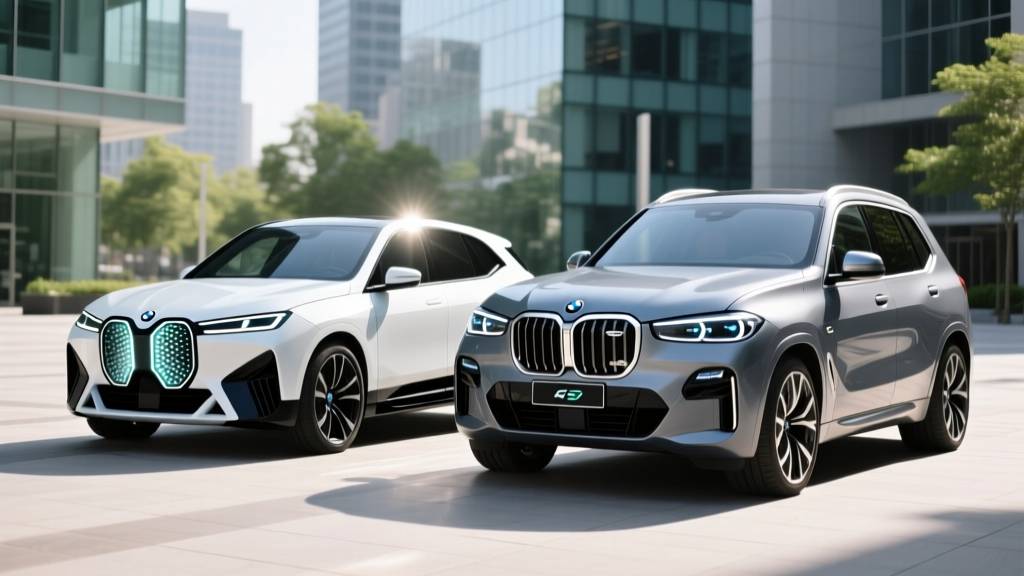
If you're searching for a BMW X5 EV, here's what you need to know: BMW does not currently sell a fully electric X5. The closest equivalent in BMW's 2026 lineup is the BMW iX, a dedicated electric midsize luxury SUV that slots near the X5 in size and price. The X5 itself is available as the X5 xDrive50e plug-in hybrid (PHEV) with roughly 38 miles of electric-only range. If you want a pure battery-electric BMW SUV in this class, the iX is your vehicle. This guide breaks down whether it fits your driveway, budget, and driving patterns — with exact numbers.
2026 BMW iX: The Electric SUV BMW X5 Shoppers Should Consider
The 2026 BMW iX xDrive50 starts at $87,250 (MSRP, before destination) and delivers an EPA-estimated 307 miles of range from a 105.2 kWh usable lithium-ion battery pack (NMC chemistry). The performance-oriented iX M70 pushes 619 horsepower and starts around $111,500 but sacrifices some range, rated at approximately 285 miles EPA.
BMW redesigned the iX for the 2025 model year with updated styling, improved efficiency, and faster charging. For 2026, the lineup carries over with minor trim adjustments. The iX rides on BMW's dedicated EV architecture — not a converted X5 chassis — which gives it a flat floor, lower center of gravity, and more interior volume than a retrofit would allow.
| Spec | iX xDrive50 | iX M70 |
|---|---|---|
| EPA Range | 307 mi | ~285 mi |
| Battery (usable) | 105.2 kWh (NMC) | 105.2 kWh (NMC) |
| Horsepower | 516 hp | 619 hp |
| 0–60 mph | 4.4 sec | 3.6 sec |
| Peak DC Fast Charge | 195 kW | 195 kW |
| 10–80% DC Charge | ~31 min | ~31 min |
| Level 2 (240V) Rate | 11 kW | 11 kW |
| MPGe (combined) | 86 MPGe | ~79 MPGe |
| Base MSRP | $87,250 | $111,500 |
| Battery Warranty | 8 yr / 100,000 mi | 8 yr / 100,000 mi |
Real-World Range Reality Check
The EPA rates the iX xDrive50 at 307 miles. In mixed highway driving at 70–75 mph in moderate temperatures (55–75°F), expect roughly 260–280 miles before needing to charge. In sub-30°F winter conditions, range can drop to 210–240 miles due to battery resistance and cabin heating demands. The iX includes a heat pump as standard equipment, which helps mitigate cold-weather losses compared to resistive heating systems. Always precondition the battery using the BMW app while plugged in to maximize both range and charging speed.
BMW iX vs. Gas X5 vs. X5 PHEV: Which Powertrain Fits You?
The X5 lineup gives buyers three paths: gas (xDrive40i), plug-in hybrid (xDrive50e), or fully electric (iX). Here's how they stack up on the metrics that matter for ownership cost and daily usability.
| Metric | X5 xDrive40i (Gas) | X5 xDrive50e (PHEV) | iX xDrive50 (BEV) |
|---|---|---|---|
| Base MSRP | $67,275 | $74,775 | $87,250 |
| EPA Range / Fuel Economy | 24 MPG combined | 50 MPGe / 22 MPG gas-only | 86 MPGe (307 mi) |
| Electric-Only Range | — | ~38 mi | 307 mi |
| Battery Capacity | — | ~25.7 kWh | 105.2 kWh |
| 0–60 mph | 5.2 sec | 4.6 sec | 4.4 sec |
| Annual Fuel/Energy Cost* | ~$2,750 | ~$1,400 (mixed) | ~$780 (home charging) |
| Federal Tax Credit (§30D) | $0 | Up to $3,750† | Up to $7,500† |
| Estimated 5-yr Maintenance | ~$4,200 | ~$3,500 | ~$1,800 |
*Annual fuel/energy cost assumes 12,000 miles/year, $3.50/gal premium gasoline, and $0.14/kWh home electricity. Actual costs vary by region and driving mix. Source: fueleconomy.gov.
†Federal §30D tax credit eligibility depends on MSRP caps (SUVs: $80,000), buyer income limits ($300K joint / $150K single), battery critical-mineral and component sourcing, and point-of-sale transfer rules. The iX xDrive50 MSRP exceeds the $80,000 SUV cap, so it likely does not qualify for the full credit as of 2026. The X5 xDrive50e PHEV may qualify for partial credit depending on sourcing compliance. Always verify current rules at IRS.gov §30D and consult a tax professional.
Real Cost of Ownership: 5-Year Breakdown
Sticker price is only the start. Here's a 5-year / 60,000-mile ownership cost comparison for buyers cross-shopping the BMW X5 EV path against the gas and hybrid alternatives.
| Cost Category | X5 xDrive40i | X5 xDrive50e | iX xDrive50 |
|---|---|---|---|
| Purchase Price (MSRP) | $67,275 | $74,775 | $87,250 |
| Federal Tax Credit | $0 | –$3,750 (est.) | $0 (MSRP cap) |
| Fuel / Electricity | $13,750 | $7,000 | $3,900 |
| Maintenance | $4,200 | $3,500 | $1,800 |
| Insurance (avg.) | $9,500 | $10,200 | $11,400 |
| Estimated Depreciation | $28,000 | $30,500 | $38,000 |
| 5-Year Total (est.) | $122,725 | $121,725 | $142,350 |
The iX costs roughly $20,000 more over five years than the gas X5, driven primarily by the higher purchase price and steeper depreciation. However, energy savings are substantial — about $9,850 less than the gas model over 60,000 miles when charging at home. The PHEV splits the difference and may be the most cost-effective option if your daily commute falls within its 38-mile electric range.
Insurance premiums on the iX run 15–25% higher than the gas X5, reflecting the higher repair costs associated with EV battery packs and specialized body structures. Get quotes from your insurer before committing.
Charging the BMW iX: Home Setup, Public Networks, and What to Expect
The iX supports three charging levels, and understanding the difference between kW (power, or charge rate) and kWh (energy, or battery capacity) is critical. Think of kW as how fast water flows from a hose, and kWh as the size of the bucket.
| Level | Power (kW) | Miles Added per Hour | Best For |
|---|---|---|---|
| Level 1 (120V) | ~1.4 kW | ~3–4 mi/hr | Emergency top-ups |
| Level 2 (240V, 48A) | 11 kW | ~30–35 mi/hr | Daily home charging |
| DC Fast Charge | Up to 195 kW | ~180+ mi in 10 min | Road trips |
Home charging is the backbone of iX ownership. A full Level 2 charge from empty takes roughly 10–11 hours. Most owners charge overnight, waking to a full battery every morning. A Level 2 home charger installation typically costs $800–$2,500 (equipment + electrician), assuming your electrical panel has capacity. Homes with older 100-amp panels may need a $2,000–$4,000 panel upgrade — factor this into your budget.
DC fast charging on the iX peaks at 195 kW, but like all EVs, the charge curve tapers significantly above 80% state of charge. A 10–80% session takes about 31 minutes at a compatible station (Electrify America, EVgo, or BMW's partnered networks). The iX uses the CCS1 connector for DC fast charging. Note: BMW has announced a transition to the NACS (Tesla-style) connector for future models, but the 2026 iX still uses CCS1. A NACS adapter may be available from BMW for Supercharger access — check with your dealer.
Public charging caveat: If you live in an apartment or lack access to home charging, relying solely on public DC fast charging will cost roughly 2–3x more per mile than home charging ($0.35–$0.55/kWh at public stations vs. $0.14/kWh at home) and adds time to your routine. Evaluate your charging access honestly before purchasing.
Common Misconceptions About the BMW iX (and EVs in This Class)
| Myth | Fact |
|---|---|
| "The iX is just an electric X5." | The iX rides on BMW's dedicated EV platform with a flat battery floor, different proportions, and no shared body panels with the X5. It's a distinct vehicle. |
| "EV batteries need replacing every few years." | BMW warranties the iX battery for 8 years / 100,000 miles against degradation below 70% capacity. Industry data shows NMC batteries typically retain 85–90% capacity after 100,000 miles with proper care (avoiding frequent 100% charges and extreme heat). |
| "I'll get the full $7,500 tax credit." | The iX xDrive50's $87,250 MSRP exceeds the §30D SUV cap of $80,000. As of 2026, it likely does not qualify for the federal credit. Always verify at IRS.gov. |
| "195 kW charging means a full charge in 30 minutes." | Peak rate is not sustained rate. The iX charges fastest between 10–50% SoC, then tapers. A 10–80% session takes ~31 minutes. Charging from 80–100% adds another 20+ minutes due to cell-balancing protocols. |
| "Cold weather destroys range permanently." | Cold-weather range loss (15–30%) is temporary and reversible. The iX's heat pump and battery preconditioning system minimize losses. Range returns to normal in warm weather. |
Decision Framework: Should You Buy the BMW iX, X5 PHEV, or Gas X5?
If / Then Buying Guide
- IF you have home charging access, drive fewer than 250 miles/day, and want zero tailpipe emissions → Choose the iX xDrive50. You'll save ~$1,970/year on fuel vs. gas and enjoy instant torque and quiet operation.
- IF you lack reliable home charging, frequently drive 300+ miles in a day, or live in a region with sparse DC fast-charging infrastructure → Choose the X5 xDrive40i (gas). The refueling flexibility is worth the higher fuel cost.
- IF your daily commute is under 35 miles, you can charge at home, but you still need gas-engine range for road trips → Choose the X5 xDrive50e (PHEV). You'll drive electric most days with a 520+ mile total range safety net.
- IF the $80,000 SUV MSRP cap for the federal tax credit disqualifies the iX and budget is a priority → Consider the X5 xDrive50e, which may qualify for partial credit, or look at the BMW iX xDrive45 (if a lower-MSRP trim becomes available in your market).
- IF performance is paramount and budget is flexible → The iX M70 delivers 619 hp and a 3.6-second 0–60, rivaling the X5 M, at the cost of ~22 miles of range and ~$24,000 more.
What First-Time EV Buyers Should Know Before Purchasing the iX
Transitioning from a gas X5 to the iX involves adjustments beyond the powertrain:
- Plan your home charging before delivery day. Schedule an electrician visit 4–6 weeks before your iX arrives. A NEMA 14-50 outlet is the minimum; a hardwired Level 2 station (like a ChargePoint Home Flex or BMW Wallbox) is more reliable and charges faster.
- Learn the charge curve. On road trips, don't charge past 80% unless you need the range to reach your destination — the last 20% takes disproportionately long. Plan stops using the BMW navigation system, which preconditioning the battery automatically when a DC fast charger is set as your destination.
- Use regenerative braking. The iX offers adjustable regen, including a one-pedal-driving mode. Set it high in city driving to recapture energy and reduce brake wear. The friction brakes on EVs often last 80,000+ miles due to regen doing most of the work.
- Monitor battery health. The iX's iDrive system displays State of Health (SoH). For daily driving, set the charge limit to 80–90% and only charge to 100% for long trips. This extends NMC battery longevity.
- Budget for higher insurance. EV insurance premiums reflect repair complexity. Shop quotes from GEICO, Progressive, and EV-specialty insurers before signing a purchase agreement.
- Check your state incentives. While the federal §30D credit may not apply to the iX due to the MSRP cap, some states offer rebates or HOV-lane access for EVs regardless of price. Consult your state's energy office or AFDC.gov for local programs.
Frequently Asked Questions
Will BMW make an electric X5 (iX5) in the future?
BMW has confirmed that a next-generation X5 with a fully electric variant is in development, expected for the 2027 model year on BMW's Neue Klasse platform. Until then, the iX remains BMW's electric offering in this size and price segment. Specs for the upcoming electric X5 are preliminary and not yet finalized.
How does the BMW iX compare to the Tesla Model X?
The iX xDrive50 (307 mi range, $87,250) and Model X Long Range (~348 mi range, ~$89,990) compete directly. The iX offers a more traditional luxury interior, quieter ride, and BMW dealer service network. The Model X offers longer range, faster Supercharger access, and over-the-air updates. The Model X also qualifies for more Supercharger infrastructure, while the iX relies on CCS1 networks that are expanding but less dense in some regions.
Is the BMW iX reliable?
The iX shares BMW's electric drivetrain technology that has been in use since the i4 and iX3. BMW's 8-year/100,000-mile battery and powertrain warranty provides strong coverage. Check NHTSA.gov and IIHS.org for the latest safety ratings and recall information. Early iX models (2022–2023) had some software-related recalls that have been addressed via OTA updates and service campaigns.
Can I tow with the BMW iX?
Yes. The iX xDrive50 is rated to tow up to 3,500 pounds when properly equipped with BMW's factory towing package. Expect a 20–35% range reduction when towing near maximum capacity, depending on trailer weight, terrain, and speed.
What happens if the iX battery degrades significantly?
If the battery falls below 70% of its original capacity within the 8-year/100,000-mile warranty period, BMW will repair or replace it at no cost. Out-of-warranty battery replacement for a pack this size currently ranges from $15,000–$25,000, though prices are expected to decline as battery manufacturing scales. Real-world data from similar NMC packs suggests most owners will see 85–90% capacity retention at the 100,000-mile mark.