Is There a BMW X5 Electric? Quick Answer
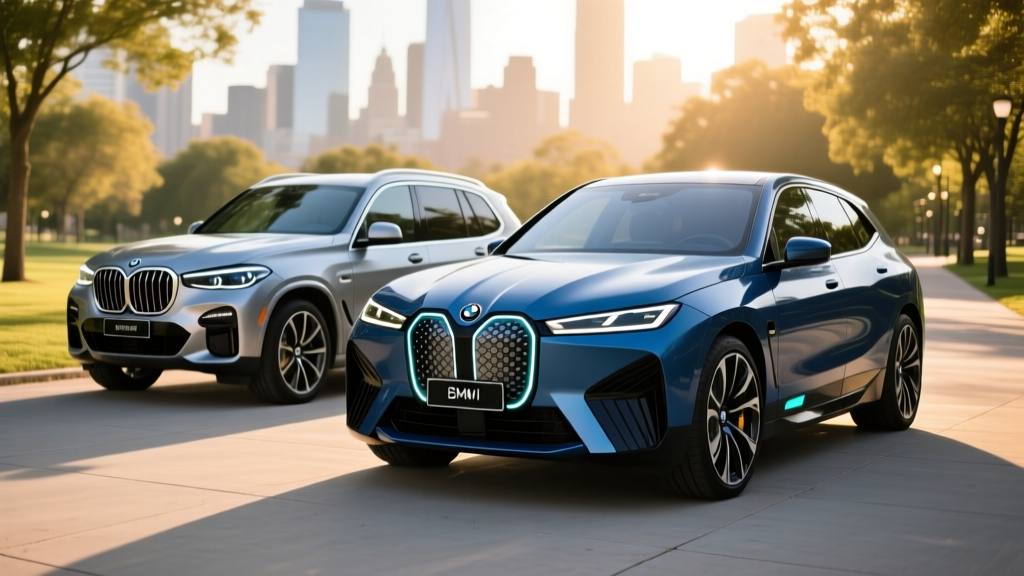
BMW does not sell a fully electric X5 as of 2026. The all-electric equivalent in BMW's lineup is the BMW iX, a midsize luxury SUV built on a dedicated EV platform. If you want an electrified X5 specifically, the BMW X5 xDrive50e is a plug-in hybrid (PHEV) offering about 38 miles of electric-only range. Below, we break down exactly how the iX compares to the gas X5 and the PHEV X5 xDrive50e on range, cost, charging, and real-world ownership so you can pick the right one.
2026 BMW iX xDrive50: The Electric SUV That Replaces the X5
The BMW iX xDrive50 is the closest thing to a "BMW X5 electric." It rides on BMW's dedicated EV architecture, seats five, and competes directly with the Mercedes EQE SUV, Audi Q8 e-tron, and Tesla Model X. For the 2026 model year, BMW has updated the iX with a refreshed interior and slightly improved efficiency.
| Spec | Value |
|---|---|
| EPA Range | 324 miles |
| Battery (usable) | 111.5 kWh, NMC chemistry |
| Peak DC Fast Charge | 200 kW (10–80% in ~31 min) |
| Level 2 AC Charge Rate | 11 kW (~10 hours 0–100%) |
| Horsepower | 516 hp (dual motor AWD) |
| 0–60 mph | 4.4 seconds |
| EPA Efficiency | 86 MPGe combined |
| Cargo Volume | 35.5 cu ft (rear seats up) / 77.9 cu ft (folded) |
| Base MSRP | $87,250 (before destination) |
| Battery/Powertrain Warranty | 8 years / 100,000 miles |
Real-World Range Expectations
The EPA rates the iX xDrive50 at 324 miles. In real-world highway driving at 70–75 mph, expect roughly 270–290 miles. In cold weather (below 32°F), range can drop 15–25%, bringing usable range to approximately 240–275 miles depending on cabin heating use and whether you precondition the battery. The iX uses a heat pump as standard, which helps mitigate cold-weather losses compared to resistive heating systems.
iX vs Gas X5 vs X5 PHEV: Side-by-Side Comparison
Many buyers cross-shop the iX with the conventional X5 and the plug-in hybrid X5 xDrive50e. Here's how the three powertrains stack up on the numbers that matter.
| Attribute | BMW iX xDrive50 (BEV) | BMW X5 xDrive40i (Gas) | BMW X5 xDrive50e (PHEV) |
|---|---|---|---|
| Powertrain | Dual-motor electric AWD | 3.0L turbo I-6 + 48V mild hybrid | 3.0L turbo I-6 + electric motor |
| Horsepower | 516 hp | 375 hp | 483 hp |
| 0–60 mph | 4.4 sec | 5.2 sec | 4.6 sec |
| EPA Range / MPG | 324 mi / 86 MPGe | 24 MPG combined | 38 mi electric + 22 MPG combined |
| Base MSRP | $87,250 | $66,600 | $74,600 |
| Federal Tax Credit (§30D) | Up to $7,500 (eligibility varies) | None | Up to $7,500 (eligibility varies) |
| Estimated Annual Fuel/Energy Cost | ~$620 (electricity) | ~$2,350 (premium gas) | ~$1,200 (mixed) |
| Home Charging Needed? | Strongly recommended | No | Recommended for EV range benefit |
The gas X5 starts about $20,650 lower than the iX, but the annual fuel savings on the iX can recover a significant portion of that gap over five years, especially if you charge at home on off-peak electricity rates. The PHEV X5 xDrive50e splits the difference — you get 38 miles of electric commuting with a gas engine for longer trips, but you're maintaining two powertrains.
Real Costs of Owning the BMW iX: 5-Year Breakdown
Sticker price is only part of the equation. Here's a data-driven look at what five years of iX ownership actually costs versus the gas X5 xDrive40i, assuming 15,000 miles per year and national average energy/fuel prices.
| Cost Category | BMW iX xDrive50 | BMW X5 xDrive40i (Gas) |
|---|---|---|
| Purchase Price (MSRP) | $87,250 | $66,600 |
| Federal Tax Credit (§30D) | –$7,500 (if eligible) | $0 |
| Effective Purchase Price | $79,750 | $66,600 |
| Fuel / Energy (5 years) | $3,100 | $11,750 |
| Maintenance (5 years) | $2,200 | $4,500 |
| Insurance (5 years) | $12,500 | $10,200 |
| Estimated Depreciation | $34,000 | $28,500 |
| Total 5-Year Cost | $97,550 | $121,550 |
Sources: fueleconomy.gov for energy/fuel costs; insurance estimates based on national luxury SUV averages. Tax credit eligibility depends on MSRP caps, buyer income limits, and battery sourcing requirements per IRS §30D rules. Consult a tax professional.
Key takeaways from the numbers:
- Energy savings are massive: ~$8,650 less in fuel/energy over 5 years with the iX.
- Maintenance is roughly half: No oil changes, no transmission fluid, fewer brake replacements due to regenerative braking.
- Insurance costs more: EVs typically carry 15–25% higher premiums due to repair costs and parts pricing.
- Depreciation is steeper: The luxury EV segment has seen aggressive depreciation as newer models undercut older ones on price and range.
Charging the BMW iX: What You Need at Home and on the Road
Charging infrastructure is the single biggest ownership variable for any EV. Here's what iX ownership looks like in practice.
| Level | Power | Miles Added Per Hour | Typical Use Case |
|---|---|---|---|
| Level 1 (120V) | ~1.4 kW | ~4 mi/hr | Emergency / overnight trickle |
| Level 2 (240V, 48A) | 11 kW | ~30 mi/hr | Home daily charging |
| DC Fast Charge | Up to 200 kW | ~600+ mi/hr (peak) | Road trips, 10–80% in ~31 min |
Home charging is essential for iX ownership. Level 1 at 120V adds only about 4 miles per hour — essentially useless for a vehicle with a 111.5 kWh battery. A Level 2 home charger on a 240V/60A circuit delivers a full overnight charge. Expect to pay $800–$1,500 for a quality Level 2 wallbox (such as a ChargePoint Home Flex or BMW Wallbox) and $500–$2,500 for professional electrician installation, depending on panel capacity and run length. If your home electrical panel needs an upgrade to 200A, add $1,500–$3,500.
DC fast charging reality: The iX peaks at 200 kW, but like all EVs, it doesn't sustain peak rate. The charge curve tapers significantly above 80% State of Charge (SoC). A typical 10–80% session takes about 31 minutes at a compatible CCS or NACS station (the 2026 iX supports NACS via adapter on older models or natively on updated builds). Plan road-trip stops around 25–35 minutes.
Federal Tax Credit: Does the iX Qualify?
The BMW iX may qualify for the federal §30D clean vehicle credit of up to $7,500, but eligibility is not guaranteed and depends on several factors that change regularly:
- MSRP cap: SUVs must have an MSRP at or below $80,000. The iX xDrive50 starts at $87,250, which exceeds the cap — meaning the base model does not qualify unless BMW adjusts pricing or you find a dealer-discounted unit below $80,000.
- Buyer income limits: Modified adjusted gross income must not exceed $300,000 (joint), $225,000 (head of household), or $150,000 (single).
- Battery sourcing: Critical minerals and battery component requirements phase in annually. Check the latest fueleconomy.gov tax credit listings for current eligibility.
- Point-of-sale transfer: If eligible, you can transfer the credit to the dealer at purchase for an immediate price reduction rather than waiting for a tax refund.
Important: The iX's MSRP exceeding $80,000 is the primary barrier. The PHEV X5 xDrive50e at $74,600 MSRP clears the cap and may be easier to qualify. Always verify current rules on irs.gov before purchasing.
Common Misconceptions About Going Electric in a Luxury SUV
| Myth | Fact |
|---|---|
| "The iX is just an electric X5." | The iX is built on a dedicated EV platform with a flat battery floor, different proportions, and more interior volume. It shares no body structure with the X5. |
| "I'll save money immediately." | Higher purchase price, insurance, and depreciation mean savings take 3–5 years to materialize vs. a gas X5, depending on mileage and electricity rates. |
| "324 miles means I'll always get 324 miles." | Highway driving, cold weather, and high speeds reduce range by 15–30%. Plan for ~250–290 miles in mixed real-world use. |
| "I can charge on any Level 1 outlet." | Level 1 adds ~4 miles/hour. A full charge would take over 3 days. Level 2 home charging is practically mandatory. |
| "The battery will need replacing soon." | BMW warranties the iX battery for 8 years/100,000 miles at 70% capacity retention. NMC batteries in liquid-cooled packs typically retain 85–90% at 100k miles based on industry data. |
Decision Framework: Which BMW SUV Is Right for You?
Choose the BMW iX (BEV) if:
- You have reliable Level 2 home charging (garage or driveway with 240V access).
- Your daily driving is under 200 miles round-trip, with occasional longer road trips.
- You want the lowest per-mile energy cost and minimal maintenance.
- You value instant torque, a quiet cabin, and one-pedal driving.
- You can accept the higher upfront price and steeper depreciation curve.
Choose the BMW X5 xDrive50e (PHEV) if:
- Your commute is under 38 miles round-trip (covering most daily driving on electricity).
- You regularly take long road trips and don't want to plan charging stops.
- You want an electrified BMW below the $80,000 tax-credit MSRP cap.
- You lack reliable home Level 2 charging but can still plug in overnight on 120V for partial top-ups.
Choose the BMW X5 xDrive40i (Gas) if:
- You have no home charging access whatsoever (apartment, street parking).
- You want the lowest upfront purchase price and widest dealer availability.
- You frequently tow (the gas X5 offers up to 7,200 lbs towing vs. 3,500 lbs on the iX).
- You live in an area with limited public DC fast-charging infrastructure.
Frequently Asked Questions
Will BMW ever make an X5 electric?
BMW has not announced a fully electric X5 (iX5). The iX currently serves as the brand's electric midsize SUV. BMW's next-generation "Neue Klasse" platform, expected to underpin future models from 2027 onward, may eventually produce an electric X5 successor, but nothing is confirmed for sale as of 2026.
How much does it cost to charge the BMW iX at home?
At the US national average electricity rate of ~$0.17/kWh, a full charge of the iX's 111.5 kWh battery costs roughly $19. For 15,000 miles of annual driving at 86 MPGe, expect about $620/year in home electricity costs — compared to ~$2,350/year for premium gasoline in the X5 xDrive40i.
Does the BMW iX support Tesla Superchargers?
For 2026, BMW has been transitioning to NACS (North American Charging Standard) compatibility. Check your specific build — some 2026 models include a native NACS port, while earlier models require a CCS-to-NACS adapter. BMW has approved specific adapters; using an unapproved adapter may void warranty coverage.
What is the real-world range of the BMW iX in winter?
In sustained temperatures below 32°F, expect a 15–25% range reduction. That brings the 324-mile EPA estimate down to roughly 240–275 miles. Using the iX's heat pump and preconditioning the battery while plugged in can reduce losses by 5–10 percentage points.
Is the iX more expensive to insure than the gas X5?
Yes, typically 15–25% more. EV repair costs tend to be higher due to specialized high-voltage components, aluminum-intensive construction, and limited collision repair networks. Budget approximately $2,500/year for iX insurance vs. ~$2,040/year for the gas X5, though rates vary significantly by state, driving record, and insurer.