BMW iX vs Tesla Model X: Which Luxury Electric SUV Wins?
The luxury electric SUV segment has grown into one of the most competitive spaces in the automotive world, and two nameplates consistently rise to the top of every buyer's shortlist: the BMW iX and the Tesla Model X. Both vehicles promise blistering performance, cutting-edge technology, and the kind of premium refinement that justifies a six-figure price tag. But they approach the electric SUV formula in fundamentally different ways.
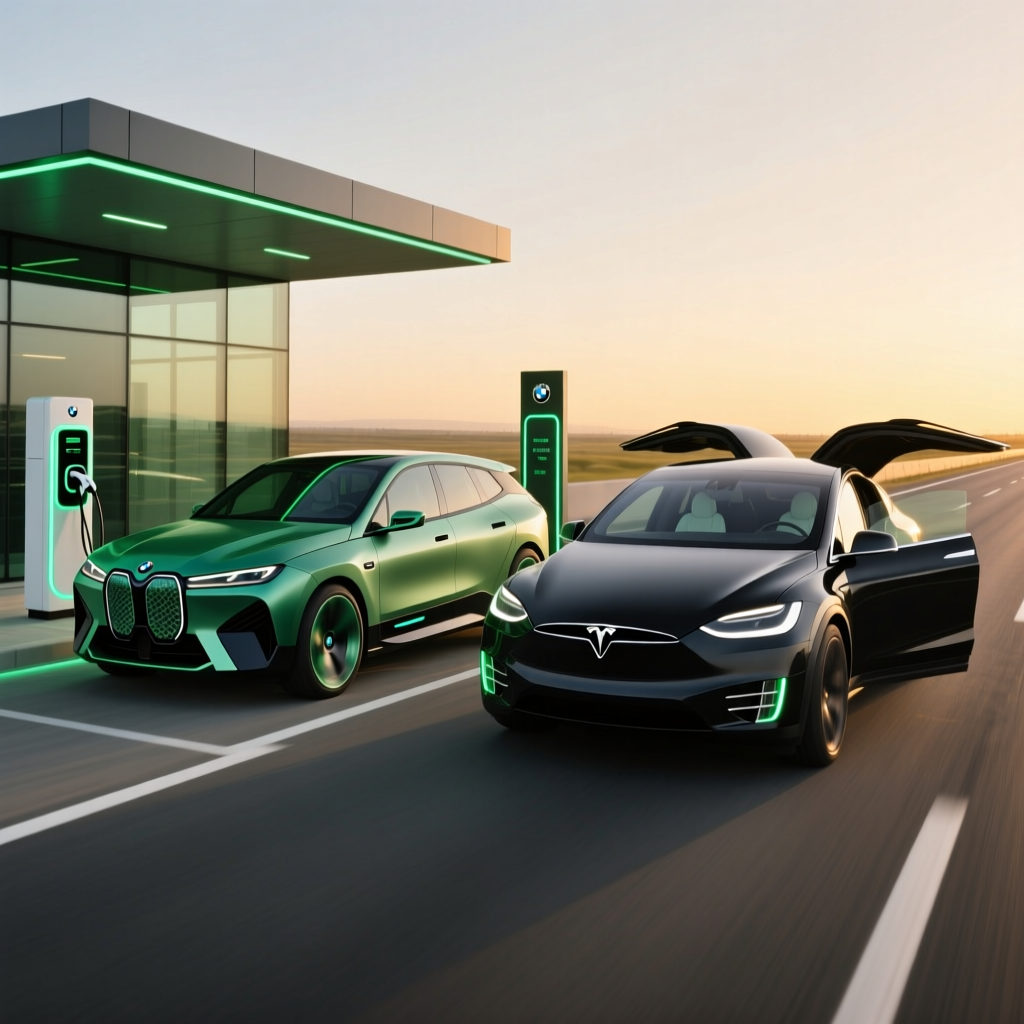
The BMW iX represents the old-world luxury establishment's answer to electrification — a meticulously crafted, design-forward SUV that prioritizes build quality, ride comfort, and a driver-centric cockpit. The Tesla Model X, on the other hand, is the disruptor's flagship — a tech-laden, performance-obsessed machine famous for its Falcon Wing rear doors, massive touchscreen interface, and access to the industry-leading Supercharger network.
In this comprehensive comparison, we put these two luxury electric SUVs head to head across every metric that matters. Whether you are cross-shopping for the first time or trying to finalize a decision, this guide will help you determine which EV deserves a spot in your garage. For more in-depth analysis, check out our best luxury electric SUV rankings and our individual reviews of the BMW iX and Tesla Model X.
BMW iX vs Tesla Model X: Spec-by-Spec Comparison
Before diving into the details, here is a side-by-side look at the key specifications for both vehicles. Data reflects the most commonly configured trims — the BMW iX xDrive50 and the Tesla Model X Long Range (dual motor).
| Specification | BMW iX xDrive50 | Tesla Model X Long Range |
|---|---|---|
| Starting MSRP | ~$87,250 | ~$79,990 |
| EPA-Estimated Range | Up to 324 miles | Up to 335 miles |
| Battery Capacity (usable) | ~105.2 kWh | ~100 kWh |
| Horsepower | 516 hp | 670 hp |
| 0–60 mph | 4.4 seconds | 3.8 seconds |
| Top Speed | 124 mph | 155 mph |
| Max DC Fast Charging | 195 kW | 250 kW |
| Drivetrain | Dual-motor AWD | Dual-motor AWD |
| Seating Capacity | 5 passengers | 5, 6, or 7 passengers |
| Cargo Volume (behind 2nd row) | 35.5 cu ft | 41.1 cu ft |
| Curb Weight | ~5,660 lbs | ~5,185 lbs |
| Towing Capacity | 3,500 lbs | 5,000 lbs |
| Basic Warranty | 4 years / 50,000 miles | 4 years / 50,000 miles |
| Battery Warranty | 8 years / 100,000 miles | 8 years / 150,000 miles |
On paper, the two SUVs trade punches. The Tesla holds slight advantages in range, acceleration, charging speed, cargo space, and towing, while the BMW counters with a larger battery and a reputation for superior build quality. Let us break each category down in detail.
Range & Efficiency: How Far Can Each SUV Go?
Range anxiety remains one of the biggest concerns for EV buyers, and both the BMW iX and Tesla Model X deliver numbers that should satisfy the vast majority of drivers. According to EPA estimates, the Tesla Model X Long Range achieves up to 335 miles of range on a full charge, while the BMW iX xDrive50 with the available aerodynamic wheels reaches up to 324 miles.
That 11-mile gap is negligible in real-world driving. Independent testing by outlets such as Edmunds has shown that both vehicles tend to deliver range figures close to their EPA ratings under mixed driving conditions, though the Tesla has historically exhibited slightly more range variability in extreme cold weather due to its heat pump system's behavior.
The BMW iX carries a larger usable battery pack (~105.2 kWh vs. ~100 kWh), which means it consumes slightly more energy per mile. The Model X benefits from Tesla's industry-leading powertrain efficiency and a lower curb weight — roughly 475 pounds lighter than the iX. That weight advantage translates to better efficiency on the highway and during spirited driving.
If maximum range is your top priority, consider the Tesla Model X or look at the BMW iX with the range-optimized wheel and tire package. Both vehicles will comfortably handle 250-plus mile road-trip legs with room to spare, making them excellent choices for long-distance travel. For more on maximizing your electric miles, read our guide to getting the most range from your EV.
Price & Value: What Does Your Money Buy?
Pricing is where the conversation gets interesting. The Tesla Model X Long Range starts at approximately $79,990, while the BMW iX xDrive50 opens around $87,250. On the surface, the Tesla appears to be the more affordable option by a significant margin.
However, the comparison is not that simple. BMW includes a generous list of standard features that Tesla charges extra for or simply does not offer. The iX comes standard with a panoramic electrochromic glass roof, heated and ventilated front seats, a head-up display, Harman Kardon surround sound, and BMW's Driving Assistant Professional suite. Tesla's approach is more à la carte — the base Model X is relatively well-equipped, but options like enhanced Autopilot ($6,000) and Full Self-Driving capability ($8,000 or more) can push the price upward quickly.
When comparably equipped, the price gap narrows to just a few thousand dollars. The BMW's higher starting price buys you a more traditionally luxurious experience with richer materials and more standard amenities. The Tesla's lower entry point gives you access to more performance and technology for the dollar, provided you are comfortable with its minimalist approach to interior luxury.
Both vehicles may qualify for various federal, state, and local incentives depending on your location and the current incentive landscape. Always check the latest eligibility requirements before purchasing. Our EV incentives guide breaks down what may be available in your area.
Charging Speed & Infrastructure: Getting Back on the Road
Fast-charging capability is critical for road-trip practicality, and this is an area where Tesla holds a clear advantage. The Model X supports peak DC fast-charging rates of up to 250 kW at V3 Superchargers, allowing it to add approximately 200 miles of range in about 15 minutes under ideal conditions.
The BMW iX peaks at 195 kW on a DC fast charger, which is respectable but noticeably slower. In real-world testing, the iX can add roughly 150 to 170 miles of range in a 15-minute session. That difference of 30 to 50 miles per charging stop can add up on cross-country trips.
Beyond raw charging speed, the charging network itself is a major differentiator. Tesla's Supercharger network remains the gold standard for reliability, coverage, and ease of use. With thousands of stations across North America and Europe, Superchargers are strategically located along major travel corridors and in urban centers. The plug-and-charge experience — where the car is automatically recognized and billing begins without any app interaction — is seamless.
The BMW iX relies on third-party networks such as Electrify America, EVgo, and ChargePoint. While these networks have expanded significantly and continue to improve, they still lag behind Tesla's Supercharger network in terms of reliability and station density. That said, BMW provides complimentary charging through partner networks for a limited period with new vehicle purchases, which can offset some of the convenience gap.
It is also worth noting that Tesla has begun opening its Supercharger network to non-Tesla vehicles through the use of adapters and the NACS charging standard. This could eventually reduce one of Tesla's biggest competitive advantages. For a deeper look at the evolving charging landscape, see our charging network comparison guide.
Performance & Driving Dynamics: Thrills vs. Refinement
If straight-line speed is your primary metric, the Tesla Model X wins this round decisively. The Long Range dual-motor variant produces 670 horsepower and rockets from 0 to 60 mph in just 3.8 seconds. Step up to the Model X Plaid with its tri-motor setup and 1,020 horsepower, and the 0–60 time drops to an astonishing 2.5 seconds — supercar territory in a seven-passenger SUV.
The BMW iX xDrive50 delivers 516 horsepower and a 0–60 time of 4.4 seconds, which is quick by any reasonable standard. The available iX M60 variant bumps output to 610 horsepower and cuts the sprint to 3.6 seconds. But BMW's performance philosophy extends beyond drag-strip numbers.
Where the iX truly shines is in ride quality and handling composure. BMW's decades of chassis-tuning expertise are on full display. The available adaptive air suspension delivers a supple, well-damped ride that isolates occupants from road imperfections while maintaining confident body control through corners. The steering is precise and well-weighted, and the overall driving experience feels planted and sophisticated.
The Model X, by contrast, prioritizes acceleration and tech-forward driving aids over traditional ride refinement. The air suspension does a capable job, but the overall ride quality can feel slightly firm over broken pavement, and the regenerative braking system — while effective — takes some acclimation for drivers accustomed to conventional brake feel. The Model X's higher seating position and larger glass area provide excellent outward visibility, which is a welcome trait in daily driving.
For the driving enthusiast who values composure, balance, and old-school luxury dynamics, the BMW iX is the more rewarding choice. For the thrill-seeker who wants face-melting acceleration and the latest in autonomous driving technology, the Tesla Model X — particularly in Plaid trim — is hard to beat.
Interior Space, Comfort & Cargo: Living With Your SUV
Both the BMW iX and Tesla Model X are midsize-to-large luxury SUVs, but they differ significantly in their approach to interior design and passenger accommodation.
Seating & Passenger Comfort
The BMW iX seats five passengers in a spacious, lounge-like cabin. The rear seats are generously proportioned with ample legroom and headroom, and the flat floor (a benefit of the dedicated EV platform) makes the middle seat genuinely usable. The available massaging front seats, four-zone climate control, and ambient lighting create an atmosphere that rivals the best luxury sedans.
The Tesla Model X offers more seating flexibility with configurations for five, six, or seven passengers. The available third row is best suited for children or occasional use, but its mere existence gives the Model X an edge for larger families. Second-row captain's chairs in the six-passenger layout provide excellent individual comfort, though the fixed center console limits pass-through access to the third row.
Cargo Capacity
The Model X leads in cargo volume with 41.1 cubic feet behind the second row and an additional front trunk (frunk) for smaller items. The iX offers 35.5 cubic feet behind the rear seats and, notably, does not include a frunk — a surprising omission for a purpose-built EV. With the rear seats folded, both vehicles provide generous cargo space suitable for large grocery hauls, luggage for family trips, or bulky gear.
Interior Quality & Design
This is where the BMW iX pulls significantly ahead. The cabin is a showcase of premium materials — available open-pore wood trim, crystal glass controls, microfiber headliners, and meticulously stitched leather. Every surface feels considered and expensive. The curved display panel housing the instrument cluster and infotainment screen is elegantly integrated, and the hexagonal steering wheel adds a distinctive design flourish.
The Model X interior has improved considerably over its earlier iterations, with higher-quality materials and better panel fitment than previous versions. However, the minimalist aesthetic — dominated by the 17-inch landscape touchscreen — will not appeal to everyone. The lack of physical buttons for climate controls, audio, and other functions means that nearly all interactions require navigating the touchscreen, which can be distracting while driving.
If interior ambiance and traditional luxury are priorities, the BMW iX is the clear winner. If you value configurable seating and maximum cargo versatility, the Model X has the advantage.
Technology & Software: Two Very Different Philosophies
Technology is a core battleground for these two SUVs, and each takes a radically different approach.
Infotainment & Connectivity
The Tesla Model X runs on Tesla's proprietary software platform, which is widely regarded as the most advanced and responsive in the industry. The 17-inch touchscreen serves as the command center for virtually every vehicle function, from navigation and media to suspension height and mirror adjustments. Over-the-air (OTA) updates continuously add new features, improve existing ones, and even enhance performance — something Tesla pioneered and continues to execute better than any competitor.
The BMW iX uses the latest generation of BMW's iDrive system, displayed on a beautifully curved panel that combines a 12.3-inch instrument cluster with a 14.9-inch central touchscreen. iDrive is intuitive, visually polished, and supports wireless Apple CarPlay and Android Auto — features Tesla does not offer. The system also includes a capable voice assistant, gesture control, and the available iDrive Controller rotary dial for those who prefer physical input methods.
Driver Assistance & Autonomy
Tesla's Autopilot and available Full Self-Driving (FSD) capability represent the most ambitious driver-assistance suite on the market. While the system is impressive in its scope — handling highway lane changes, navigating on-ramps and off-ramps, and recognizing traffic signals — it remains a Level 2 system that requires constant driver supervision. Independent safety evaluations have raised questions about driver engagement monitoring, and the system's performance can be inconsistent in construction zones or adverse weather.
BMW's Driving Assistant Professional is a more conservative but highly polished system. It includes adaptive cruise control with stop-and-go, lane-keeping assist, and the excellent Highway Assistant feature that allows hands-free driving at speeds up to 85 mph on divided highways (with eyes-on monitoring via an interior camera). The system is predictable, smooth in its interventions, and inspires confidence. While it lacks the ambitious scope of Tesla's FSD, many drivers find BMW's approach more trustworthy for daily use.
For the tech maximalist who wants the latest features and is comfortable with a beta-test mentality, Tesla's ecosystem is unmatched. For the driver who prefers polished, reliable technology with physical controls as a backup, BMW's iDrive and driver-assistance systems are the better fit. Explore more about these systems in our best EV driver assistance rankings.
Warranty & Ownership Experience
Both BMW and Tesla offer a basic limited warranty of 4 years or 50,000 miles, which is standard for the luxury segment. Where they differ is in battery coverage and the overall ownership experience.
Tesla provides a battery and drive unit warranty of 8 years or 150,000 miles (whichever comes first), with a minimum 70% battery retention guarantee. BMW covers the iX battery for 8 years or 100,000 miles with a similar retention threshold. Tesla's extra 50,000 miles of battery coverage provides additional peace of mind for high-mileage drivers.
The ownership experience diverges sharply beyond the warranty booklet. BMW's dealer network is vast and well-established, offering traditional service appointments, loaner vehicles, and the kind of white-glove treatment luxury buyers expect. BMW also includes complimentary scheduled maintenance for the first three years or 36,000 miles, which reduces ownership costs and hassle.
Tesla operates a direct-to-consumer model with no traditional dealerships. Service is handled through Tesla Service Centers and mobile service vans that can address many issues at your home or office. While mobile service is convenient for minor repairs, more complex issues may require a Service Center visit, and wait times for appointments can be lengthy in high-volume markets. Tesla's service experience has improved over time but remains a common point of criticism among owners.
For buyers who value a predictable, premium service experience with a familiar dealer relationship, BMW holds a significant advantage. For those who prefer the convenience of mobile service and OTA updates that reduce the need for physical service visits, Tesla's model has appeal.
The Verdict: Which Luxury Electric SUV Is Right for You?
After examining every dimension of these two exceptional vehicles, the right choice depends entirely on what you value most as a buyer.
Choose the BMW iX if:
- Interior luxury is your top priority. The iX cabin is a masterclass in premium design, materials, and comfort that the Model X cannot match.
- You prefer physical controls and traditional ergonomics. BMW's iDrive system blends touchscreen functionality with tactile inputs for safer, more intuitive operation.
- Ride quality and driving refinement matter to you. The iX delivers a supple, composed, and engaging driving experience that reflects BMW's engineering heritage.
- You want a comprehensive standard feature list. BMW includes many luxury amenities as standard that Tesla charges extra for.
- A traditional dealer service experience is important. BMW's established network provides predictable, premium after-sales care.
Choose the Tesla Model X if:
- Performance and acceleration are non-negotiable. The Model X Long Range is quicker than the iX xDrive50, and the Plaid variant is in a class of its own.
- You need flexible seating for up to seven passengers. The available third row makes the Model X the more versatile family hauler.
- Charging infrastructure is a concern. Tesla's Supercharger network remains the most reliable and convenient charging ecosystem available.
- You want the most advanced software and OTA updates. Tesla's tech platform is industry-leading and continuously evolving.
- You value maximum cargo space and towing capacity. The Model X leads in both categories, making it more practical for active lifestyles.
Both the BMW iX and Tesla Model X are outstanding luxury electric SUVs that will serve their owners well for years to come. The iX is the better luxury car; the Model X is the better electric vehicle. Which of those statements matters more to you will determine the winner. For more help making your decision, browse our complete EV buying guide and see how these SUVs stack up in our best electric SUV rankings.
Frequently Asked Questions
Is the BMW iX more reliable than the Tesla Model X?
Reliability data for both vehicles is still accumulating given their relatively recent introductions. Historically, Tesla has faced criticism for inconsistent build quality and panel gaps, though the latest Model X production shows significant improvement. BMW benefits from decades of manufacturing expertise and generally earns strong reliability ratings from industry analysts. That said, the iX's complex luxury features — such as the electrochromic glass roof and crystal controls — introduce additional components that could require attention over time. Long-term reliability will depend heavily on proper maintenance and the maturation of each brand's EV service infrastructure.
Which is better for road trips: the BMW iX or the Tesla Model X?
For road trips, the Tesla Model X currently holds the edge thanks to its access to the Supercharger network, faster peak charging speeds, and slightly longer EPA-estimated range. Superchargers are reliably located along major highways and offer a seamless plug-and-charge experience that minimizes downtime. The BMW iX is a supremely comfortable road-trip companion with its quiet cabin and excellent ride quality, but reliance on third-party charging networks can introduce variability in charging availability and reliability. As non-Tesla EVs gain broader access to Superchargers through NACS adapters, this gap is expected to narrow.
Can the Tesla Model X really seat seven passengers comfortably?
The Model X offers an available third row, bringing total seating capacity to seven. However, the third row is best described as suitable for children or occasional adult use on short trips. Legroom and headroom in the third row are limited compared to the first two rows, and access requires folding the second-row seats. For families that regularly need to transport more than five passengers, the Model X is one of the few electric SUVs that offers this flexibility. For everyday use with the third row folded, the cargo area is generous and practical.
Does the BMW iX support over-the-air software updates like Tesla?
Yes, the BMW iX supports over-the-air (OTA) updates and receives them regularly. BMW uses its Remote Software Upgrade system to deliver improvements to infotainment features, driver-assistance systems, and even powertrain calibration. However, the scope and frequency of BMW's OTA updates are generally more conservative than Tesla's. Tesla has built its entire software architecture around continuous OTA improvement, often adding significant new features — such as new entertainment options, UI redesigns, and performance enhancements — multiple times per year. Both systems ensure your vehicle improves after purchase, but Tesla's approach is more aggressive and comprehensive.