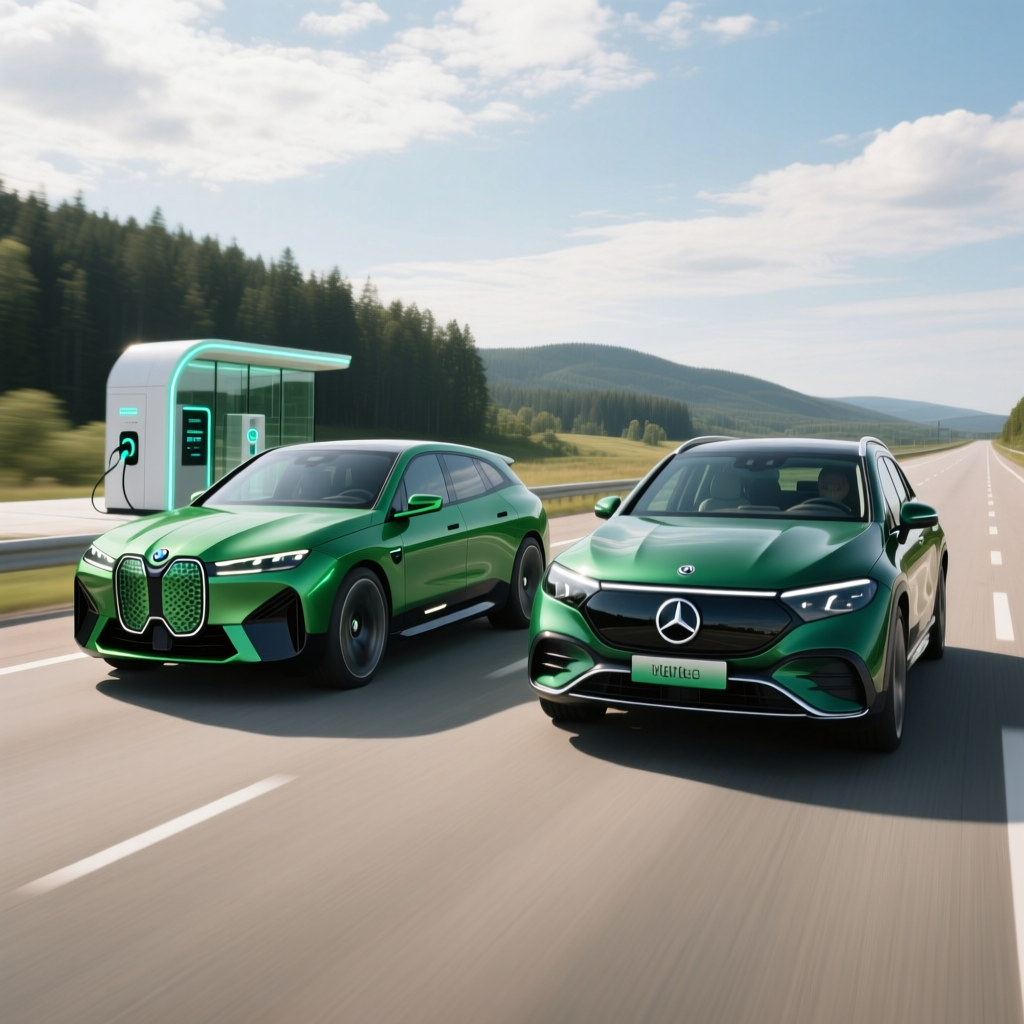
The luxury electric vehicle market is fiercely competitive, and nowhere is this more evident than in the midsize premium SUV segment. German automakers have brought their absolute best to the table, resulting in a heavyweight showdown between the BMW iX and the Mercedes-Benz EQE SUV. Both vehicles represent the pinnacle of their respective brands’ electric engineering, offering whisper-quiet cabins, cutting-edge technology, and effortless torque. However, they approach the concept of electric luxury from fundamentally different philosophies.
The BMW iX is a bold, tech-forward statement piece that prioritizes driving dynamics, a lounge-like interior, and maximum versatility. In contrast, the Mercedes EQE SUV focuses on aerodynamic efficiency, supreme ride isolation, and the brand’s signature prestige. If you are cross-shopping these two exceptional machines, the decision ultimately comes down to what you value most in your daily drive. In this comprehensive head-to-head comparison, we will break down every critical metric to help you decide which electric SUV deserves a spot in your garage. For more detailed insights, you can also read our dedicated BMW iX full review and Mercedes EQE SUV full review.
Side-by-Side Spec Comparison
Before diving into the nuances of daily driving, let’s look at the raw numbers. The table below compares the most popular dual-motor, all-wheel-drive configurations of both vehicles to provide a baseline for comparison.
| Specification | BMW iX xDrive50 | Mercedes EQE 350 4MATIC SUV |
|---|---|---|
| Horsepower | 516 hp | 288 hp (350+ RWD) / 288 hp (4MATIC) |
| Torque | 564 lb-ft | 564 lb-ft (4MATIC) |
| EPA Estimated Range | Up to 324 miles | Up to 279 miles (4MATIC) |
| 0-60 mph | 4.4 seconds | 6.4 seconds (4MATIC) |
| Peak DC Fast Charging | 195 kW | 170 kW |
| Max Cargo Space | 77.9 cu-ft | 52.6 cu-ft |
| Starting MSRP (Approx) | $87,000 | $78,000 |
Range & Efficiency: Going the Distance
Range anxiety is a common concern for EV buyers, and both German automakers have engineered their battery packs to handle long-distance road trips with ease. However, the BMW iX holds a distinct advantage in this category. According to EPA estimates, the BMW iX xDrive50 achieves an impressive 324 miles on a single charge when equipped with standard 20-inch aerodynamic wheels. Even when upgraded to larger 21- or 22-inch wheels, the iX consistently outpaces its rival, thanks to its highly efficient silicon-carbide inverters and advanced thermal management system.
The Mercedes EQE SUV, while highly aerodynamic, sacrifices some range due to its heavier curb weight and the energy demands of its luxury amenities. The rear-wheel-drive EQE 350+ SUV can achieve up to 305 miles, but the more popular all-wheel-drive EQE 350 4MATIC sees its range drop to approximately 279 miles. Independent real-world highway testing conducted by major automotive publications frequently shows the BMW iX exceeding its EPA estimates at 70 mph, whereas the Mercedes EQE SUV tends to fall slightly short of its official numbers under heavy highway loads.
Efficiency is also measured in miles per kWh. The BMW iX operates at roughly 86 MPGe combined, translating to excellent energy consumption. The Mercedes EQE SUV is slightly less efficient in its AWD guise, hovering around 81 MPGe. For buyers who frequently embark on cross-country road trips, the BMW iX offers a noticeably larger buffer between charging stops.
Performance & Driving Dynamics
When it comes to performance, the BMW iX embraces the brand’s heritage of building “Ultimate Driving Machines.” Despite tipping the scales at over 5,600 pounds, the iX xDrive50 rockets from 0 to 60 mph in just 4.4 seconds. The dual-motor setup provides relentless, linear acceleration, and the near 50/50 weight distribution ensures the SUV remains remarkably flat through corners. BMW’s available rear-axle steering drastically reduces the turning radius, making the iX feel like a much smaller vehicle in tight city streets. For those craving supercar levels of thrust, the high-performance iX M60 variant drops the 0-60 time to a blistering 3.6 seconds.
The Mercedes EQE SUV takes a decidedly different approach. It is tuned for supreme comfort, isolation, and wafting capability rather than aggressive corner carving. The EQE 350 4MATIC produces 288 horsepower and 564 lb-ft of torque, resulting in a 0-60 mph time of 6.4 seconds. While it is certainly quick enough for merging onto highways and passing slower traffic, it lacks the visceral punch of the BMW. However, where the Mercedes truly shines is in its ride quality. The standard Airmatic air suspension absorbs imperfections with a magic-carpet-like elegance that the slightly firmer BMW cannot quite match. The EQE SUV is the ultimate highway cruiser, isolating its occupants from wind, road, and tire noise better than almost any other vehicle in its class.
Both vehicles offer sophisticated regenerative braking systems. BMW utilizes an adaptive recuperation system that uses radar and GPS data to automatically adjust regen based on traffic and upcoming curves. Mercedes offers a similar intelligent system but also provides steering-wheel paddles, allowing drivers to manually toggle between coasting, mild regen, and strong one-pedal driving modes.
Charging Speed & Infrastructure
A long range is only half the battle; how quickly you can replenish that battery is equally crucial. For a deeper understanding of public charging networks, check out our comprehensive EV charging guide.
The BMW iX features an 800-volt-capable electrical architecture (though it operates slightly below that threshold in real-world application), allowing it to accept a peak DC fast-charging rate of 195 kW. Under optimal conditions at a 350-kW Electrify America or Ionity station, the iX can charge from 10% to 80% in roughly 31 minutes. Its charging curve is remarkably flat, meaning it sustains high charging speeds for a longer duration before tapering off.
The Mercedes EQE SUV is built on a 400-volt architecture and peaks at 170 kW. While still highly competitive, its 10% to 80% charging time takes closer to 32-35 minutes. The difference in peak charging speeds might seem marginal on paper, but during back-to-back road trip legs, the BMW’s ability to pull more power in the critical 80% to 90% top-off phase can save you valuable time at the charging plaza.
Both SUVs come equipped with robust route-planning software that automatically preconditions the battery when a DC fast charger is selected as your destination. Mercedes’ MBUX system is particularly adept at this, offering highly accurate state-of-charge predictions upon arrival, while BMW’s iDrive system provides equally reliable routing with integrated Plug & Charge functionality on compatible networks.
Interior Space, Comfort & Cargo
Stepping inside the BMW iX is a revelation. BMW has completely reimagined the cabin as a mobile lounge. The minimalist dashboard, hexagonal steering wheel, and massive panoramic electrochromic glass roof create an airy, futuristic environment. The materials are sustainably sourced, featuring FSC-certified wood, recycled microfiber, and olive-leaf-tanned leather. In terms of passenger space, the iX offers abundant rear legroom and a completely flat floor, making it exceptionally comfortable for three adults in the second row.
Cargo capacity is where the BMW iX completely dominates the competition. With the rear seats folded flat, the iX offers a cavernous 77.9 cubic feet of storage space. It functions much like a traditional midsize SUV, easily swallowing golf clubs, camping gear, or large furniture items.
The Mercedes EQE SUV interior is a masterclass in traditional luxury. The available MBUX Hyperscreen—a massive 56-inch curved glass panel spanning the entire dashboard—is a showstopper that bathes the cabin in ambient light and high-tech flair. The seats are plush, heavily bolstered, and offer exceptional massage functions. However, the sloping, aerodynamic roofline compromises rear headroom for taller passengers, and the overall cabin feels slightly more enclosed than the glass-heavy BMW.
Cargo space in the EQE SUV is its Achilles heel. Due to the sloping rear hatch and the packaging of the rear electric motor, maximum cargo volume is limited to 52.6 cubic feet. While sufficient for groceries and luggage, it falls significantly short of the BMW iX and even some smaller compact luxury SUVs. Furthermore, neither vehicle offers a front trunk (frunk), as the space under the hood is occupied by HVAC components and power electronics.
Technology & Infotainment
Technology is a core pillar of the luxury EV experience, and both brands offer flagship software suites. The BMW iX runs on the latest iteration of iDrive, featuring a sleek 14.9-inch curved touchscreen that floats above the instrument cluster. The system is highly responsive, features excellent voice recognition via the BMW Intelligent Personal Assistant, and supports wireless Apple CarPlay and Android Auto. The iDrive controller on the center console remains a favorite for those who prefer tactile feedback over screen tapping while driving.
Mercedes counters with the MBUX (Mercedes-Benz User Experience) system. The standard setup includes a 12.3-inch digital gauge cluster and a 12.8-inch OLED central touchscreen. The optional Hyperscreen adds a dedicated 12.3-inch screen for the front passenger. MBUX is visually stunning, featuring zero-layer menus that put critical functions front and center. The “Hey Mercedes” voice assistant is widely considered the industry standard for natural language processing, capable of understanding complex, conversational commands.
Regarding Advanced Driver Assistance Systems (ADAS), both vehicles offer comprehensive suites. BMW’s Active Driving Assistant Professional includes excellent adaptive cruise control and lane-keeping, while Mercedes’ Driver Assistance Package offers similar capabilities. However, Mercedes holds an edge with its available automated lane-change feature, which feels slightly more confident and natural on the highway. For a look at how these tech suites rank against the broader market, explore our list of the best luxury EV SUVs.
Pricing, Warranty & Value
Pricing for these premium SUVs reflects their flagship status, though there is a noticeable gap at the entry level. The Mercedes EQE SUV generally starts at a lower MSRP, making it an attractive entry point into the brand’s electric lineup. However, once you begin adding high-ticket options like the Hyperscreen, Nappa leather, and premium audio systems, the price quickly escalates to match or exceed the BMW.
The BMW iX commands a higher starting price but includes a vast amount of standard equipment, such as the panoramic roof, heated seats, and advanced driver aids, which Mercedes often bundles into expensive premium packages. When evaluating overall value, the BMW iX offers more standard range, more cargo space, and faster charging for the dollar.
Warranty coverage is virtually identical between the two German giants. Both offer a 4-year/50,000-mile limited warranty and a 4-year/50,000-mile powertrain warranty. Crucially, both back their high-voltage battery packs with an 8-year/100,000-mile warranty, providing peace of mind for long-term ownership. BMW includes complimentary scheduled maintenance for the first 3 years or 36,000 miles, a perk that Mercedes does not currently match, slightly tilting the value proposition in BMW’s favor. Be sure to check our guide on EV tax credits to see if your specific configuration qualifies for federal or state incentives.
The Verdict: Which EV SUV is Right for You?
Choosing between the BMW iX and the Mercedes EQE SUV ultimately depends on your lifestyle and driving preferences. Both are exceptional, world-class luxury electric vehicles that push the boundaries of automotive engineering.
Choose the BMW iX if: You prioritize driving dynamics, maximum cargo versatility, and real-world range. The iX is the better choice for active families, road-trippers, and driving enthusiasts who want an SUV that handles like a sports sedan. Its bold design and lounge-like interior make a statement, and its superior charging speeds make long-distance travel a breeze.
Choose the Mercedes EQE SUV if: You value supreme ride comfort, acoustic isolation, and cutting-edge dashboard technology. The EQE SUV is the ideal pick for executives and commuters who want a serene, magic-carpet ride that shields them from the chaos of the outside world. Its traditional luxury aesthetic and industry-leading voice assistant provide a deeply premium daily experience.
Frequently Asked Questions
Which is faster, the BMW iX or the Mercedes EQE SUV?
The BMW iX is significantly faster in its standard dual-motor configuration. The iX xDrive50 produces 516 horsepower and sprints from 0 to 60 mph in 4.4 seconds. The Mercedes EQE 350 4MATIC SUV produces 288 horsepower and completes the same sprint in 6.4 seconds. While Mercedes offers the high-performance AMG EQE SUV variant to rival the BMW iX M60, in base-to-base comparisons, the BMW holds a decisive performance advantage.
Does the Mercedes EQE SUV have more cargo space than the BMW iX?
No, the BMW iX offers substantially more cargo space. With the rear seats folded down, the BMW iX provides a massive 77.9 cubic feet of cargo volume. The Mercedes EQE SUV, constrained by its sloping aerodynamic roofline and rear motor packaging, maxes out at 52.6 cubic feet. If hauling large items is a priority, the BMW iX is the clear winner.
Which luxury EV SUV has the better warranty coverage?
Both vehicles offer nearly identical baseline warranty coverage, including a 4-year/50,000-mile bumper-to-bumper warranty and an 8-year/100,000-mile battery warranty. However, the BMW iX edges out the Mercedes EQE SUV in overall value because BMW includes complimentary scheduled maintenance for the first 3 years or 36,000 miles, whereas Mercedes charges out-of-pocket for routine service visits.