Quick Answer: Which BMW EV Sedan Fits You?
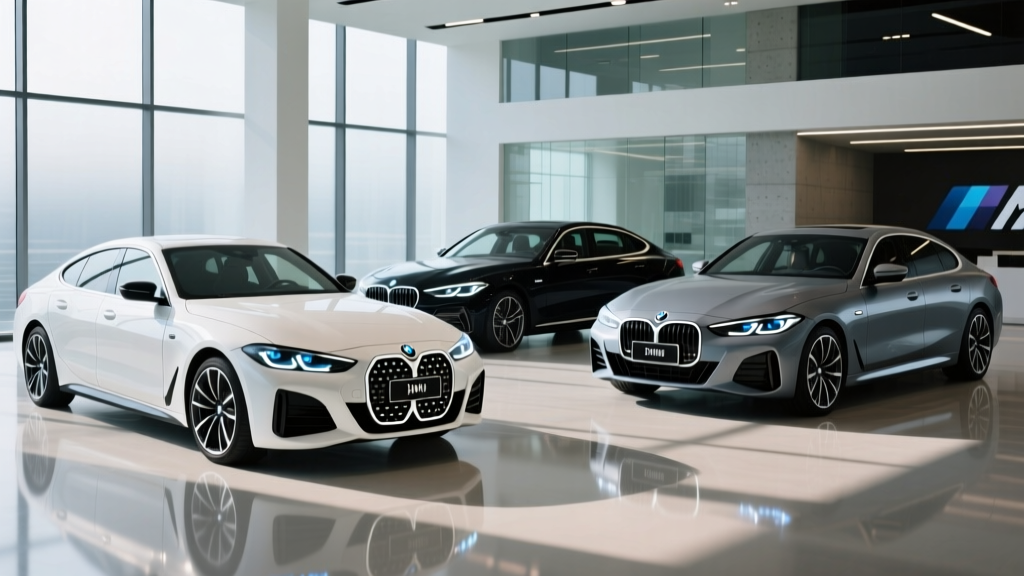
The 2026 BMW EV sedan lineup spans three models: the i4 (compact sport sedan, ~307 miles EPA, starting ~$53,000), the i5 (mid-size executive, ~295 miles EPA, starting ~$58,000), and the i7 (full-size luxury flagship, ~318 miles EPA, starting ~$107,000). If you want an engaging daily driver with the lowest entry price, pick the i4. If you need rear-seat space and a premium commute, choose the i5. If budget is secondary and you want S-Class-level luxury with electric power, the i7 delivers. All three use BMW's Gen5 eDrive architecture, support DC fast charging above 200 kW, and qualify for varying degrees of federal and state incentives depending on your income and sourcing eligibility.
The BMW EV Sedan Lineup at a Glance
BMW committed to electrification earlier than most legacy automakers, and the result is a sedan portfolio that covers nearly every premium segment. Unlike competitors that adapted gas platforms awkwardly, BMW developed its CLAR architecture to accommodate both ICE and battery-electric powertrains from the start. That means packaging is competitive, though not quite as optimized as a dedicated EV skateboard like Hyundai's E-GMP or Tesla's structural battery pack.
| Spec | BMW i4 eDrive40 | BMW i5 eDrive40 | BMW i7 eDrive50 |
|---|---|---|---|
| EPA Range | 307 mi | 295 mi | 318 mi |
| Battery (usable) | 81.5 kWh (NMC) | 81.2 kWh (NMC) | 101.7 kWh (NMC) |
| Horsepower | 335 hp | 335 hp | 455 hp |
| 0-60 mph | 5.5 sec | 5.7 sec | 4.5 sec |
| Peak DC Charge Rate | 205 kW | 205 kW | 195 kW |
| 10-80% DC Fast Charge | ~31 min | ~30 min | ~34 min |
| Level 2 (AC) Rate | 11 kW | 11 kW | 11 kW |
| MPGe (combined) | 97 MPGe | 93 MPGe | 82 MPGe |
| Base MSRP (2026 est.) | $53,200 | $58,200 | $107,500 |
| Drivetrain | RWD | RWD | AWD |
| Battery Warranty | 8 yr / 100,000 mi | 8 yr / 100,000 mi | 8 yr / 100,000 mi |
Real-World Range Reality: The EPA sticker is a starting point, not a guarantee. In our experience and aggregated owner reports, expect roughly 260-275 miles from the i4 at sustained 75 mph highway speeds. In cold weather (below 32°F), plan for a 15-25% reduction — that 307-mile i4 could deliver 230-260 miles on a frigid January commute. The i7's larger battery gives it a buffer advantage, but its heavier mass and less aerodynamic profile mean real-world highway numbers land closer to 265-285 miles. BMW's thermal management system (standard heat pump across the lineup) helps mitigate cold-weather losses compared to older-generation EVs.
Charging Speed and Infrastructure: What You'll Actually Experience
All three BMW EV sedans use the CCS1 connector standard (though BMW has confirmed NACS adoption for future models). DC fast charging peaks at 205 kW for the i4 and i5, and 195 kW for the i7. However, peak rate is not sustained rate — a distinction many buyers miss.
A typical charging curve for the i4 looks like this: from 10% to roughly 45% SoC, you'll see rates near 200 kW. From 45-65%, it tapers to approximately 150 kW. Above 80%, the rate drops sharply to protect battery health, often falling below 50 kW. This is why the 10-80% metric matters more than peak numbers. BMW quotes roughly 31 minutes for the i4 and i5, and 34 minutes for the i7.
| Charging Level | Power (kW) | Approx. Miles Added per Hour | Where You'll Use It |
|---|---|---|---|
| Level 1 (120V) | 1.4 kW | 3-5 mi/hr | Emergency / overnight trickle |
| Level 2 (240V, 48A) | 11 kW | 30-35 mi/hr | Home / workplace daily charging |
| DC Fast Charge | Up to 205 kW | ~500-650 mi/hr (peak) | Road trips, 10-80% in ~31 min |
For home Level 2 charging, BMW includes a Flexible Fast Charger (portable unit) with each vehicle, capable of 11 kW on a 240V/48A circuit. A full overnight charge from 10-100% takes about 8-9 hours for the i4/i5 and roughly 10 hours for the i7. Most owners charge between 20-80% daily, which completes in 4-5 hours at Level 2 — easily within an overnight window.
BMW EV Sedan vs Gas Equivalent: The Ownership Cost Picture
How does a BMW EV sedan stack up against its gasoline counterpart? Let's compare the i4 eDrive40 against the BMW 430i Gran Coupe, and the i5 against the 530i, over a 5-year/60,000-mile ownership horizon.
| Cost Factor | BMW i4 eDrive40 | BMW 430i Gran Coupe | BMW i5 eDrive40 | BMW 530i |
|---|---|---|---|---|
| Base MSRP | $53,200 | $48,500 | $58,200 | $57,900 |
| Est. Federal Tax Credit (§30D) | $0-$7,500* | $0 | $0-$7,500* | $0 |
| Fuel/Charging (5 yr, 60k mi) | $3,600 | $7,800 | $3,900 | $8,100 |
| Maintenance (5 yr) | $1,800 | $4,200 | $1,800 | $4,500 |
| Est. Insurance (5 yr avg) | $9,200 | $7,800 | $9,500 | $8,200 |
| 5-Year Total (pre-incentive) | $67,800 | $68,300 | $73,400 | $78,700 |
*Federal §30D tax credit eligibility depends on MSRP caps (sedans capped at $55,000), buyer income limits ($150K single / $300K joint AGI), and battery critical-mineral sourcing requirements. The i4 eDrive40 base price sits below the cap, making it potentially eligible. The i5 and i7 exceed the sedan MSRP cap and do not qualify. Always verify current rules at IRS.gov and consult a tax professional. Credit can be transferred at point of sale as an upfront discount under current regulations.
The data tells a clear story: the i4 can achieve cost parity with the 430i within the first year when the federal credit applies, and decisively wins on fuel and maintenance savings thereafter. The i5 breaks even around year 3-4 without the credit. The i7 is a luxury purchase where cost savings are secondary to the experience.
Fuel savings assume $0.14/kWh national average electricity cost (home charging) and $3.80/gallon premium gasoline. If you rely exclusively on public DC fast charging at $0.35-$0.48/kWh, your charging costs roughly double — narrowing the gap significantly. Home charging access is the single biggest variable in EV economics.
Real-World Ownership: What First-Time BMW EV Buyers Should Know
Home Charging Setup
Budget $800-$2,200 for a professional Level 2 home charger installation (240V, 50A circuit with a hardwired Wallbox or ChargePoint unit). If your electrical panel is at capacity, a panel upgrade to 200A can add $1,500-$3,000. BMW's included Flexible Fast Charger works on existing 240V dryer outlets (NEMA 14-50) but delivers only 9.6 kW on a 40A circuit — adequate for overnight needs but not the full 11 kW the car can accept.
Driving Pattern Fit
BMW EV sedans are optimized for drivers who:
- Commute 30-80 miles round-trip daily (easily within range)
- Have reliable home or workplace Level 2 charging
- Take road trips 4-8 times per year (DC fast charging handles this with 20-30 min stops)
- Live in moderate climates or pre-condition their vehicles while plugged in
They are a poorer fit if you regularly drive 350+ miles between charging opportunities, live in an apartment without charging access, or frequently tow (BMW EV sedans are not rated for significant towing — the i7 maxes out at roughly 4,400 lbs, and BMW recommends against towing with the i4).
Insurance Considerations
EV insurance premiums typically run 15-25% higher than gas equivalents due to higher repair costs (specialized high-voltage components, aluminum body panels, recalibration of ADAS sensors after bodywork). Get quotes from GEICO, State Farm, and EV-specialty insurers before purchasing. BMW's own insurance program (in select states) sometimes offers competitive rates for brand-loyal owners.
Software and ADAS
All three sedans come with BMW's iDrive 8.5 infotainment system, featuring a curved display, wireless Apple CarPlay/Android Auto, and over-the-air updates. The Driving Assistant Professional package ($2,500 on i4/i5, standard on i7) includes adaptive cruise with stop-and-go, lane-keeping, and automatic lane change. This is SAE Level 2 driver assistance — you must keep hands on the wheel and eyes on the road. It is not autonomous driving.
Common BMW EV Sedan Misconceptions, Corrected
| Myth | Fact |
|---|---|
| "BMW EVs don't qualify for the tax credit." | The i4 eDrive40 base MSRP is under the $55,000 sedan cap. Eligibility depends on your income, battery sourcing, and current IRS rules — but it's not categorically excluded. The i5 and i7 do exceed the cap. |
| "The battery will need replacing in 5 years." | BMW warranties the battery for 8 years/100,000 miles against degradation below 70% capacity. Real-world data from i4 owners at 60,000+ miles shows 92-96% capacity retention with normal charging habits. |
| "You can't road-trip a BMW EV." | With 205 kW DC fast charging and access to Electrify America, EVgo, and (via adapter) Tesla Superchargers, a 600-mile trip requires two 25-30 minute stops — comparable to gas-car rest stops. |
| "EV maintenance is the same as gas cars." | No oil changes, no spark plugs, no transmission fluid. Regenerative braking extends pad life to 80,000-120,000 miles. You'll still need tire rotations, cabin air filters, brake fluid checks, and wiper fluid — roughly 40-60% less maintenance cost overall. |
| "Cold weather makes BMW EVs useless." | Expect 15-25% range loss below freezing. A 307-mile i4 becomes a ~240-mile car. Preconditioning while plugged in recovers much of this loss. The standard heat pump is far more efficient than resistive cabin heating. |
Decision Framework: Which BMW EV Sedan Should You Buy?
Choose the BMW i4 if:
- Your budget is $50,000-$62,000
- You want a sporty, compact daily driver
- You want the best chance at the §30D federal tax credit
- Rear-seat space is secondary (it's a Gran Coupe liftback, so cargo is decent)
- You prioritize driving dynamics over luxury features
Choose the BMW i5 if:
- Your budget is $55,000-$75,000
- You need genuine rear-seat comfort for adults
- You want executive-sedan presence without i7 pricing
- You value the latest iDrive tech and available Highway Assistant
- You're upgrading from a 5 Series and want to go electric
Choose the BMW i7 if:
- Your budget exceeds $100,000
- You want full-size luxury with massaging rear seats and the available 31-inch Theater Screen
- AWD is important (eDrive50 is standard AWD)
- Range and ride comfort matter more than efficiency
- You're cross-shopping the Mercedes EQS and Porsche Taycan but prefer BMW's driving character
Frequently Asked Questions
Does the BMW i4 qualify for the $7,500 federal tax credit in 2026?
The i4 eDrive40's base MSRP of approximately $53,200 falls under the $55,000 sedan cap set by §30D. However, eligibility also requires buyer AGI below $150,000 (single) or $300,000 (joint), and the vehicle must meet critical-mineral and battery-component sourcing thresholds that shift annually. Check the latest eligible vehicle list at fueleconomy.gov and confirm with a tax professional. If eligible, the credit can be applied at point of sale as an immediate price reduction.
How long does it take to charge a BMW i5 at home?
On a 240V Level 2 charger delivering 11 kW, a full 0-100% charge takes roughly 8.5 hours. Most owners charge from 20-80%, which completes in about 4.5 hours. If your home circuit is limited to 40A (9.6 kW), add approximately 1 hour to these estimates.
Can I use Tesla Superchargers with a BMW i4, i5, or i7?
As of 2026, BMW has not transitioned to the NACS connector natively. You can use a CCS-to-NACS adapter (BMW has approved specific adapters) to access Tesla Superchargers that support non-Tesla vehicles. Confirm adapter compatibility with your dealer and check Tesla's "Charge Your Non-Tesla Vehicle" map for open stations.
What happens if the BMW EV battery degrades significantly?
BMW's high-voltage battery warranty covers capacity loss below 70% of original capacity for 8 years or 100,000 miles, whichever comes first. If your battery falls below this threshold during the warranty period, BMW will repair or replace modules as needed at no cost. Out-of-warranty replacement for the i4/i5 battery pack is estimated at $15,000-$20,000; the i7's larger pack could exceed $25,000. However, NMC batteries in BMW's Gen5 system have shown excellent longevity — most owners report less than 5% degradation at 50,000 miles with normal charging habits (avoiding persistent 100% SoC storage and frequent DC fast charging above 80%).
Is the BMW i7 worth the premium over the i5?
The i7 costs roughly $50,000 more than a comparably equipped i5. You gain a 22.3 kWh larger battery, 120 more horsepower, AWD, significantly more rear-seat space, and flagship luxury features (available Executive Lounge seating, Bowers & Wilkins Diamond surround sound, and the rear Theater Screen). If those features matter and your budget allows it, the i7 is a genuinely excellent electric luxury sedan. If you're primarily a driver who sits in the front seat, the i5 delivers 90% of the experience at half the price.
How does BMW EV sedan efficiency compare to Tesla?
The i4 at 97 MPGe combined trails the Tesla Model 3 Long Range (approximately 132 MPGe). The gap comes down to aerodynamics, weight, and drivetrain efficiency — Tesla's dedicated EV platform is lighter and more optimized. On a per-mile cost basis, the Model 3 uses roughly 26 kWh/100mi vs the i4's 35 kWh/100mi. Over 60,000 miles at $0.14/kWh, that's a $750 electricity cost difference. Meaningful but not decisive for most luxury sedan buyers who value BMW's build quality, ride refinement, and dealer experience.
BMW's EV sedan lineup offers a clear progression from sporty value to flagship luxury, with genuine range, competitive charging speeds, and the build quality the brand is known for. The right choice depends on your budget, space needs, and whether tax-credit eligibility factors into your purchase math. Test-drive all three if you can — the driving-character differences are more pronounced than the spec sheet suggests.