Quick Answer: Which BMW EV Model Is Right for You?
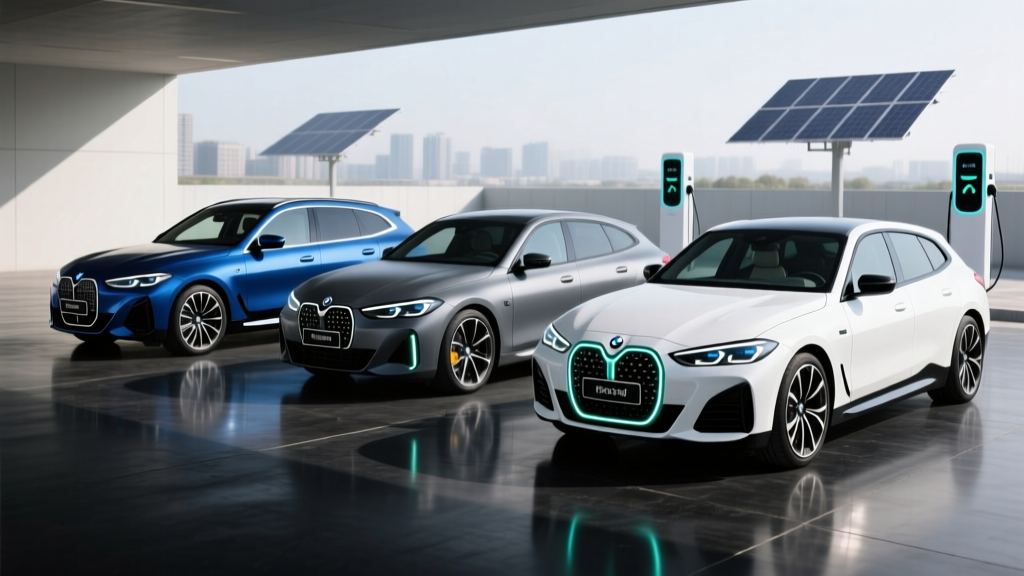
BMW's 2026 EV lineup spans four core models built on the flexible CLAR platform: the i4 sport sedan (EPA 307 mi, ~$52,200), the i5 executive sedan (EPA 295 mi, ~$66,800), the i7 flagship luxury sedan (EPA 318 mi, ~$105,700), and the iX midsize SUV (EPA 324 mi, ~$87,250). All use 800V-capable architectures with NMC battery chemistries, DC fast-charge at 195–250 kW peak, and qualify for varying portions of the federal §30D tax credit depending on battery-sourcing compliance and buyer income. If you want a sporty daily driver under $60K, the i4 eDrive40 is the value pick. If you need SUV cargo space and all-weather traction, the iX xDrive50 is the strongest all-rounder.
The 2026 BMW EV Lineup at a Glance
BMW doesn't use a dedicated EV skateboard platform like Hyundai's E-GMP or Tesla's architecture. Instead, every current BMW EV shares the CLAR platform with its gas counterpart — the i4 with the 4 Series Gran Coupe, the i5 with the 5 Series, the i7 with the 7 Series, and the iX stands alone as a purpose-built electric SUV. This approach means BMW EVs inherit familiar driving dynamics and interior layouts but sacrifice some packaging efficiency (no frunk, thicker floor) compared to ground-up EV designs.
| Spec | i4 eDrive40 | i5 eDrive40 | iX xDrive50 | i7 eDrive50 |
|---|---|---|---|---|
| EPA Range | 307 mi | 295 mi | 324 mi | 318 mi |
| Battery (usable kWh) | 81.5 kWh (NMC) | 81.2 kWh (NMC) | 105.2 kWh (NMC) | 101.7 kWh (NMC) |
| Horsepower | 335 hp | 335 hp | 516 hp | 449 hp |
| 0–60 mph | 5.5 sec | 5.7 sec | 4.4 sec | 5.4 sec |
| Peak DC Fast Charge | 205 kW | 205 kW | 250 kW | 195 kW |
| 10–80% DCFC Time | ~31 min | ~30 min | ~34 min | ~34 min |
| Level 2 Charge Rate | 11 kW | 11 kW | 11 kW | 11 kW |
| MPGe (combined) | 97 MPGe | 93 MPGe | 89 MPGe | 82 MPGe |
| Cargo Volume | 16.6 cu ft | 17.3 cu ft | 35.5 cu ft | 17.7 cu ft |
| Base MSRP | $52,200 | $66,800 | $87,250 | $105,700 |
| Battery Warranty | 8 yr / 100,000 mi | 8 yr / 100,000 mi | 8 yr / 100,000 mi | 8 yr / 100,000 mi |
Sources: fueleconomy.gov, BMW USA press materials. EPA ranges reflect 2026 model-year estimates. Real-world highway range typically runs 10–15% lower; cold-weather (below 32°F) can reduce range 20–30%.
Real-World Range vs. EPA Sticker
The iX xDrive50's 324-mile EPA rating is achievable in mixed city/suburban driving at moderate temperatures. On a 75-mph highway cruise in 85°F heat, expect roughly 275–290 miles. In 20°F winter conditions with cabin heat running, plan for 225–260 miles before needing a charger. BMW's heat pump (standard on all 2026 EV models) helps mitigate cold-weather loss compared to resistive heating, but physics still applies. The i4 eDrive40, with its lighter curb weight, tends to hold its EPA number better in mixed driving than the heavier i7.
BMW EV vs. Gas BMW: What Does Ownership Actually Cost?
The purchase price of a BMW EV carries a premium over its gas sibling, but operating costs tell a different story. Here's a five-year cost comparison between the i4 eDrive40 and a comparable 430i Gran Coupe, assuming 12,000 miles/year, $0.14/kWh home electricity, $3.60/gallon premium fuel, and 80% home / 20% public charging.
| Cost Category | i4 eDrive40 (EV) | 430i Gran Coupe (Gas) |
|---|---|---|
| Base MSRP | $52,200 | $48,300 |
| Est. Federal Tax Credit (§30D) | −$3,750* | $0 |
| Effective Purchase Price | $48,450 | $48,300 |
| Fuel/Energy (5 yrs, 60K mi) | $4,704 | $9,072 |
| Maintenance (5 yrs) | $1,800 | $4,200 |
| Insurance (5 yrs, avg) | $9,600 | $8,400 |
| Est. 5-Year Total | $64,554 | $69,972 |
*The i4's §30D credit amount depends on battery critical-mineral and component sourcing compliance for the 2026 tax year. Not all BMW EVs qualify for the full $7,500. Verify current eligibility at irs.gov. Income caps ($150K single / $300K joint) and MSRP caps ($55K sedans) apply.
The i4 closes the price gap almost entirely after the partial tax credit and saves roughly $5,400 over five years in fuel and maintenance. The tradeoff: EV insurance premiums run 10–20% higher due to battery replacement costs in collision claims, and the i4's MSRP sits near the §30D sedan cap of $55,000 — adding options can push it over the limit, eliminating credit eligibility entirely.
Charging at Home and on the Road
All 2026 BMW EV models accept a maximum 11 kW on Level 2 (240V, 48A), which replenishes a depleted i4 battery in roughly 8.5 hours and the larger iX battery in about 11 hours. For daily driving, most owners need only 30–50 miles of range per day — easily covered by overnight Level 2 charging.
| Charging Level | Power (kW) | Miles of Range Added per Hour | Typical Use Case |
|---|---|---|---|
| Level 1 (120V) | 1.4 kW | ~4–5 mi/hr | Emergency / trickle top-up |
| Level 2 (240V, 48A) | 11 kW | ~30–36 mi/hr | Daily home / workplace charging |
| DC Fast Charge (peak) | 195–250 kW | ~500–700 mi/hr (at peak) | Road trips, rapid top-ups |
On DC fast charging, BMW's charge curves are competitive but not class-leading. The iX peaks at 250 kW but sustains that rate only up to roughly 30% State of Charge (SoC), then tapers progressively. The 10–80% time of ~34 minutes is solid, but a Hyundai Ioniq 5 with its 800V E-GMP platform can do 10–80% in ~18 minutes. If you road-trip frequently, this matters — you'll spend roughly 15 extra minutes per stop compared to the fastest-charging competitors.
BMW uses the CCS1 connector on all 2026 EVs. With a NACS adapter (available from BMW and third parties), you can access Tesla's Supercharger network, which significantly expands your DC fast-charging options in rural corridors. BMW's built-in navigation includes route preconditioning — the car warms or cools the battery before arriving at a charger to optimize charge speed. Always enable this; skipping preconditioning in cold weather can cut your peak charge rate by 40% or more.
Federal Tax Credit: What BMW EVs Actually Qualify For
The §30D federal EV tax credit for 2026 has become a maze of sourcing requirements, MSRP caps, and income limits. Here's what applies to BMW's lineup:
- MSRP Caps: Sedans (i4, i5, i7) must be ≤$55,000 MSRP. SUVs/vans (iX) must be ≤$80,000 MSRP. The i4 eDrive40 base price qualifies; adding packages often pushes it over. The i5, i7, and iX exceed their respective caps at most trim levels.
- Buyer Income Caps: Modified AGI ≤$150,000 (single), ≤$225,000 (head of household), ≤$300,000 (joint).
- Battery Sourcing: The credit splits into two halves — $3,750 for critical-minerals compliance and $3,750 for battery-component sourcing. BMW sources cells from CATL and Samsung SDI; compliance varies by batch and model year. Check the DOE's qualifying vehicle list for the specific VIN.
- Point-of-Sale Transfer: You can transfer the credit to the dealer at purchase for an immediate price reduction rather than waiting to claim it on your tax return.
In practice, the i4 eDrive40 is the only BMW EV with a realistic shot at partial credit in 2026, and even that depends on the specific battery batch. The iX, i5, and i7 exceed their MSRP caps at most configurations, eliminating §30D eligibility regardless of sourcing. Always confirm credit status with your dealer and a tax professional before relying on it in your budget.
BMW EV vs. Gas vs. Plug-In Hybrid: Which Powertrain Fits Your Life?
BMW still sells gas-powered 4 Series, 5 Series, 7 Series, and X5 models — plus plug-in hybrids (PHEVs) like the X5 xDrive50e with ~38 miles of electric-only range. Here's how they stack up for different buyers:
| Factor | Battery EV (i4/i5/iX/i7) | PHEV (X5 xDrive50e) | Gas (430i / 530i) |
|---|---|---|---|
| Daily Commute (<40 mi) | Excellent — home-charge overnight | Excellent — runs on battery alone | Fine — higher fuel cost |
| Road Trips (300+ mi) | Good — 30-min DCFC stops | Great — gas engine takes over | Great — 5-min fill-ups |
| Home Charging Access | Required for best experience | Helpful but not mandatory | Not needed |
| Cold-Weather Range Loss | 20–30% reduction | Minimal (gas heat available) | Minimal |
| Maintenance Cost (5 yr) | ~$1,800 | ~$3,500 | ~$4,200 |
| Fuel/Energy Cost (5 yr, 60K mi) | ~$4,700 | ~$6,500 | ~$9,100 |
| Tax Credit Potential | Up to $7,500 (varies) | Up to $7,500 (varies) | None |
Decision Framework: Which BMW Powertrain Is Right for You?
Choose a BMW EV (i4/i5/iX/i7) if: You have reliable Level 2 home charging, your daily driving is under 200 miles, you want the lowest operating costs, and you road-trip fewer than 6 times per year.
Choose a BMW PHEV (X5 xDrive50e) if: You want electric-only commuting but lack reliable public fast-charging near your home, you take frequent long road trips, or you live in an extremely cold climate where EV range loss is a dealbreaker.
Choose a gas BMW if: You have no home charging access, you regularly drive 300+ miles between stops, or your annual mileage is low enough that fuel savings don't offset the EV price premium.
First-Time BMW EV Buyer: What You Need to Know
Home Charging Installation Is a Real Cost
Budget $500–$2,500 for a Level 2 home charger installation. A basic 48A hardwired unit on an existing 200A panel with a short conduit run might cost $600–$800. If your panel needs upgrading to 200A or the run is long through finished walls, expect $1,500–$2,500+. Get a quote from a licensed electrician before purchasing — panel upgrades alone can hit $3,000–$5,000 in older homes.
BMW's Driving Dynamics Carry Over
The CLAR-platform approach means BMW EVs drive like BMWs. The i4 M50 (593 hp, 0–60 in 3.7 seconds) delivers the kind of corner-carving precision the 4 Series is known for, with the added benefit of instant electric torque. The iX, despite its 5,600-lb curb weight, handles surprisingly well thanks to standard air suspension and a low center of gravity from the under-floor battery pack. If driving engagement matters to you, BMW EVs are among the best in the luxury segment.
The iDrive System and Software
All 2026 BMW EVs run iDrive 8.5 on a curved display. The system supports wireless Apple CarPlay and Android Auto, over-the-air updates, and the Digital Key Plus feature (your phone becomes the key fob). The Driving Assistant Professional package adds Highway Assistant — a Level 2 SAE driver-assist system that handles steering, acceleration, and braking on divided highways up to 85 mph. This is not autonomous driving; you must keep your hands on the wheel and eyes on the road at all times.
Common Misconceptions About BMW EVs
| Myth | Fact |
|---|---|
| "BMW EVs don't qualify for any tax credit." | The i4 eDrive40 at base MSRP can qualify for partial credit ($3,750) depending on battery sourcing. The iX may qualify if configured under $80K. Always check the DOE's current list. |
| "The battery will need replacing in 5 years." | BMW warranties the battery for 8 years/100,000 miles against degradation below 70% capacity. NMC chemistries in BMW's thermal-managed packs typically retain 88–92% capacity at 100K miles based on fleet data. |
| "You can't road-trip a BMW EV." | With 250 kW DCFC capability, CCS + NACS adapter access, and built-in route planning, road trips require ~30-minute stops every 250 miles. Plan ahead and it's practical. |
| "BMW EVs have no frunk, so they're impractical." | True — the CLAR platform doesn't offer a front trunk. But the iX provides 35.5 cu ft of rear cargo, competitive with gas X5 models. The i4's liftback design gives 16.6 cu ft, more than many sedans. |
| "Regenerative braking makes EVs hard to drive." | BMW offers three regen settings plus an adaptive mode that uses radar to adjust regen based on traffic ahead. You can also select a low-regen "coasting" mode that feels like a conventional automatic transmission. |
BMW EV Insurance, Depreciation, and Resale Reality
Insurance for BMW EVs typically runs 12–20% higher than equivalent gas models. Insurers factor in battery replacement costs ($15,000–$25,000 out of warranty), specialized repair training, and higher collision repair bills. Get quotes from at least three insurers before buying — some companies (like Progressive and State Farm) offer EV-specific policies with bundled home-charger coverage.
Depreciation on luxury EVs has been steeper than gas counterparts in recent years. The i4 and iX saw 45–55% value loss over three years in the 2023–2025 period, partly driven by Tesla price wars and rapid EV tech advancement. If you plan to keep the car 5+ years, this matters less. If you lease (and BMW Financial Services frequently offers aggressive EV lease deals), you're insulated from resale risk.
Frequently Asked Questions
Does BMW make a fully electric SUV?
Yes. The BMW iX is a midsize electric SUV with up to 324 miles of EPA range, 516 hp (xDrive50), and 35.5 cu ft of cargo space. BMW has also announced the iX3 (based on the next-gen X3), expected for the 2027 model year on the Neue Klasse platform — but it is not yet available for purchase.
What is the cheapest BMW EV?
The 2026 BMW i4 eDrive40 starts at $52,200 before destination. With partial §30D credit eligibility, the effective price can drop to ~$48,450, making it competitive with the gas 430i.
Can I charge a BMW EV at a Tesla Supercharger?
Yes, with a NACS adapter. BMW EVs use the CCS1 connector natively, but BMW offers an official NACS adapter, and the car's navigation can route to Supercharger stalls. Tesla's network remains the most reliable DC fast-charging option in the US.
How long does a BMW EV battery last?
BMW warranties the high-voltage battery for 8 years or 100,000 miles, guaranteeing it retains at least 70% of original capacity. Real-world data from earlier BMW EV fleets (i3, early iX3) suggests NMC packs with active thermal management retain 88–92% capacity at 100,000 miles under normal use. Full battery replacement outside warranty costs $15,000–$25,000 depending on the model.
Is the BMW i4 rear-wheel drive or all-wheel drive?
The i4 eDrive40 is rear-wheel drive. The i4 M50 adds a front motor for all-wheel drive and 593 hp. The i5, i7, and iX are available in both RWD and AWD configurations depending on trim.
What's the difference between kW and kWh?
kW (kilowatts) measures power — how fast energy flows, like water pressure in a hose. kWh (kilowatt-hours) measures energy — the total amount stored or consumed, like gallons in a tank. A 250 kW charger delivers energy quickly; an 81.5 kWh battery holds 81.5 kilowatt-hours of total energy.