The Short Answer on the BMW Electric Cycle
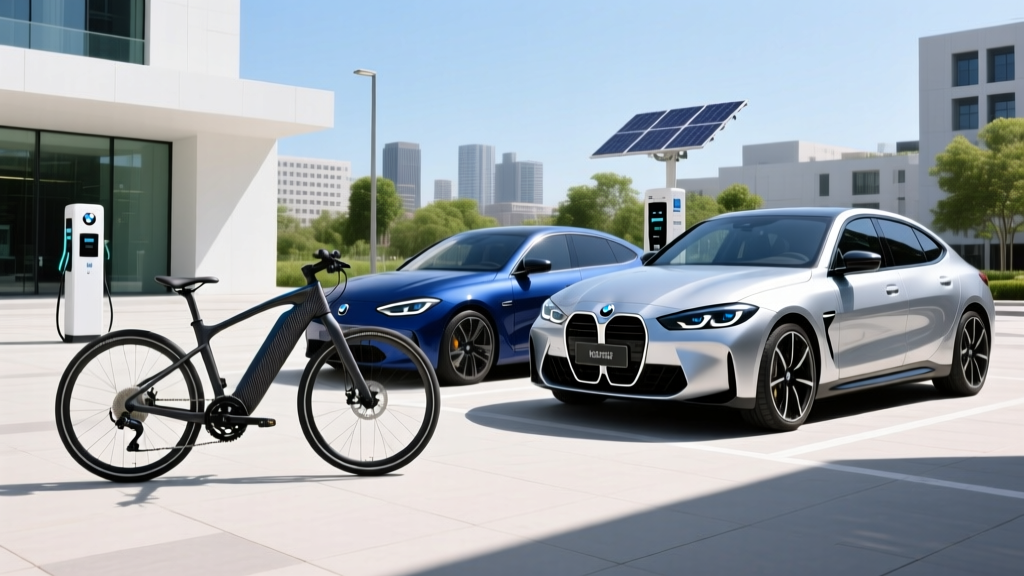
BMW Motorrad does not currently sell a full-size, street-legal BMW electric cycle (motorcycle) in the U.S. market as of 2026. BMW's electric two-wheeler lineup is limited to the CE 04 electric scooter (urban commuter, ~80-mile range, ~$12,000 MSRP) and the CE 02 (a smaller city runabout aimed at European/Asian markets). If you're researching a "BMW electric cycle" for daily transportation, the practical decision is whether an electric scooter, a plug-in hybrid car like the BMW X5 xDrive50e, or a full EV like the BMW i4 better fits your commute, budget, and lifestyle. Below, we break down the real numbers.
What BMW Actually Offers in Electric Two-Wheelers
BMW Motorrad's electrified portfolio has grown, but it remains narrow compared to the four-wheeled BMW EV lineup. Here's what exists:
- BMW CE 04 — The flagship electric scooter. Air-cooled permanent-magnet motor, 8.9 kWh usable battery (from a 10.5 kWh pack), claimed city range of approximately 80 miles (WMTC cycle). Peak output: 42 hp (31 kW). 0-30 mph in 2.6 seconds. Level 2 AC charging at 2.4 kW (full charge in ~4 hours); optional DC fast-charge capability at 6.9 kW reduces a 10-80% charge to roughly 45 minutes. MSRP starts around $12,195 before destination and options.
- BMW CE 02 — A lighter, more affordable electric "eParkourer" aimed at younger urban riders. 4 kW motor, ~1.96 kWh battery, approximately 55 miles of city range. Primarily available in Europe and select Asian markets; not officially sold in the U.S. as of the 2026 model year.
- BMW Vision DC Roadster / Concept bikes — These are design studies, not production models. BMW has announced intentions to expand its electric motorcycle range, but no full-size electric touring or sport motorcycle is on sale.
If your search for "BMW electric cycle" was driven by interest in a zero-emission BMW on two wheels, the CE 04 is the only real option stateside — and it's a scooter, not a motorcycle in the traditional sense.
BMW CE 04 vs. BMW Electric Cars: Range, Cost, and Practicality
Most readers landing on this topic are weighing whether a BMW electric two-wheeler or a BMW electric car makes more financial and logistical sense. Let's put hard numbers side by side.
| Spec | BMW CE 04 (Scooter) | BMW i4 eDrive40 (EV) | BMW X5 xDrive50e (PHEV) |
|---|---|---|---|
| Powertrain | Electric scooter | Battery EV (BEV) | Plug-in hybrid |
| MSRP (base) | ~$12,195 | ~$57,900 | ~$74,900 |
| Battery (usable) | 8.9 kWh | 81.5 kWh (NMC) | 25.7 kWh (NMC) |
| Range (EPA / claimed) | ~80 mi (city/WMTC) | 307 mi (EPA) | 38 mi electric + ~440 mi total |
| Real-world range (highway/cold) | ~50-60 mi | ~240-270 mi highway | ~28-32 mi electric-only |
| Peak charge rate | 6.9 kW (DC option) | 205 kW (DC) | 7.4 kW (AC only) |
| 10-80% charge time | ~45 min (DC opt.) | ~31 min (DC fast) | ~3.5 hrs (Level 2) |
| 0-60 mph | N/A (0-30 in 2.6s) | 5.5 sec | 4.6 sec |
| Federal tax credit (§30D) | Not eligible | Up to $7,500* | Up to $3,750* |
| Cargo / storage | Under-seat helmet | 16.6 cu ft trunk | 33.9 cu ft cargo |
* §30D credit eligibility depends on MSRP caps, buyer income limits, battery sourcing, and critical mineral requirements. Always verify current-year rules at IRS.gov. The CE 04, as a motorcycle/scooter, does not qualify for the §30D new clean vehicle credit.
Real Costs: Charging, Maintenance, and Insurance
The purchase price is only one line item. Here's how ongoing ownership compares.
| Annual Cost (est.) | BMW CE 04 | BMW i4 eDrive40 | Gas BMW 330i (baseline) |
|---|---|---|---|
| Energy/fuel (8,000 mi/yr) | ~$90 (home charging) | ~$320 (home charging) | ~$1,050 (gasoline, 28 MPG avg) |
| Maintenance | ~$150 (tires, brake fluid) | ~$400 (cabin filter, tires, fluid) | ~$800 (oil, filters, brakes, tires) |
| Insurance | ~$400-600 | ~$1,600-2,200 | ~$1,400-1,800 |
| Total annual operating | ~$640-$840 | ~$2,320-$2,920 | ~$3,250-$3,650 |
The CE 04 is dramatically cheaper to operate, but it solves a different problem than a car. It's a fair-weather urban commuter — not a vehicle for a family, a road trip, or a January morning in Minneapolis.
Real-World Ownership Considerations
Before committing to either a BMW electric scooter or a BMW EV, weigh these practical factors:
Home Charging Access
The CE 04 charges on a standard 120V household outlet (Level 1) at roughly 1.2 kW — a full overnight charge is feasible given its small 8.9 kWh battery. No panel upgrade or 240V circuit is required. For a BMW i4, you'll want a Level 2 home charger (240V, 40-48A circuit) for practical overnight charging; installation typically runs $800-$2,500 depending on panel capacity and wiring distance.
Climate and Seasonality
The CE 04's 80-mile claimed range drops to 50-60 miles in cold weather (below 40°F) due to battery chemistry and increased rolling resistance. In most of the northern U.S., an electric scooter is a 6-8 month vehicle, not a year-round solution. An EV like the i4, with its heat pump and active thermal management, retains roughly 75-85% of EPA range in winter — far more practical for four-season commuting.
Driving Patterns
If your daily commute is under 30 miles round-trip on surface streets, the CE 04 is efficient and fun. If you drive 40+ miles daily, mix in highway segments, carry passengers, or need cargo space, you need a car — and the question becomes BEV vs. PHEV.
Decision Framework: Which Electrified BMW Fits You?
Choose the BMW CE 04 if:
- Your commute is under 30 miles round-trip on city/suburban roads
- You already own a car for longer trips and bad weather
- You want the lowest possible operating cost and have a standard outlet for charging
- You live in a mild climate or accept seasonal storage
Choose the BMW i4 (BEV) if:
- You need a primary vehicle for year-round, all-weather driving
- You have home Level 2 charging access (or can install it)
- You want 240+ real-world highway range and fast DC charging for road trips
- You want to pursue the §30D federal tax credit (up to $7,500, subject to eligibility)
Choose the BMW X5 xDrive50e (PHEV) if:
- You want ~30 miles of electric-only commuting but need 440+ miles of total range
- You lack reliable DC fast-charging access for road trips
- You need SUV cargo and passenger space
- You're willing to maintain a gas engine alongside the electric drivetrain
Common Misconceptions About BMW Electric Motorcycles
| Myth | Fact |
|---|---|
| "BMW makes a full-size electric motorcycle." | Not yet. The CE 04 is a scooter; no BMW electric touring or sport bike is in production for 2026. |
| "Electric scooters qualify for the $7,500 federal EV tax credit." | §30D applies to four-wheeled vehicles meeting specific MSRP, income, and battery-sourcing criteria. Motorcycles and scooters are excluded. |
| "The CE 04 can do 80 miles at highway speed." | The 80-mile figure is based on WMTC city-cycle testing. Sustained 65+ mph highway riding reduces range to roughly 45-55 miles. |
| "I'll need a special charger for the CE 04." | The CE 04 charges on a standard 120V outlet. The optional DC fast-charge port uses a Type 2/CCS connector, but most owners charge at home overnight. |
What a First-Time EV or Electric Scooter Buyer Should Know
Whether you're eyeing the CE 04 or stepping into a BMW i4, these principles apply:
- kW vs. kWh: kW measures power (charge speed or motor output); kWh measures energy (battery capacity). The CE 04 has an 8.9 kWh battery and charges at up to 6.9 kW. The i4 has an 81.5 kWh battery and charges at up to 205 kW. Bigger numbers in both categories mean more range and faster fills.
- EPA vs. real-world range: Always discount EPA figures by 10-20% for highway driving and another 10-20% for cold weather. This applies to both scooters and cars.
- Charging curves taper: Peak DC charge rates (e.g., 205 kW on the i4) are sustained only between roughly 10-50% state of charge. Above 80%, speeds drop sharply to protect the battery. Plan road-trip stops around 10-80% fills, not 0-100%.
- Tax credits are not guaranteed: The §30D credit has MSRP caps ($55,000 for cars, $80,000 for SUVs/trucks), buyer income limits ($150K single / $300K joint for new vehicles), and stringent battery-sourcing rules. Verify your eligibility at IRS.gov before assuming the full $7,500.
- Insurance can be higher: EVs and electric scooters often carry higher insurance premiums than comparable gas vehicles due to repair costs and parts pricing. Get quotes before purchasing.
Frequently Asked Questions
Does BMW make an electric motorcycle?
BMW Motorrad sells the CE 04 electric scooter and the CE 02 (not available in the U.S.). As of 2026, BMW does not produce a full-size electric motorcycle. The company has signaled future electric motorcycle plans, but nothing is on sale.
How much does the BMW CE 04 cost?
The 2026 BMW CE 04 starts at approximately $12,195 before destination charges and options. Fully optioned examples can approach $15,000. It does not qualify for the §30D federal EV tax credit.
What is the real-world range of the BMW CE 04?
BMW claims roughly 80 miles under WMTC city-cycle testing. In real-world mixed riding, expect 60-70 miles. Sustained highway speeds (65+ mph) or cold temperatures (below 40°F) can reduce range to 45-55 miles.
Can I charge the BMW CE 04 at home?
Yes. The CE 04 charges on a standard 120V household outlet at approximately 1.2 kW, reaching a full charge overnight (~7-8 hours). An optional DC fast-charge port enables 10-80% in roughly 45 minutes at compatible public stations.
Is the BMW CE 04 better than buying a BMW electric car?
They serve different purposes. The CE 04 is a low-cost urban commuter with ~80 miles of range and minimal operating expenses. A BMW i4 or iX provides 240-320 miles of range, all-weather capability, passenger and cargo space, and eligibility for federal tax credits — at a significantly higher purchase price.
Will BMW release a full-size electric motorcycle?
BMW has indicated that future electric motorcycles are part of its long-term strategy, and concept bikes like the Vision DC Roadster hint at the direction. However, no production model has been announced with a firm release date. Any future model's specs and pricing should be considered preliminary until BMW issues an official launch.
Sources: BMW Motorrad official specifications; IRS Clean Vehicle Credits (§30D); U.S. EPA Fuel Economy.