Quick Answer: Which BMW All Electric Car Should You Buy?
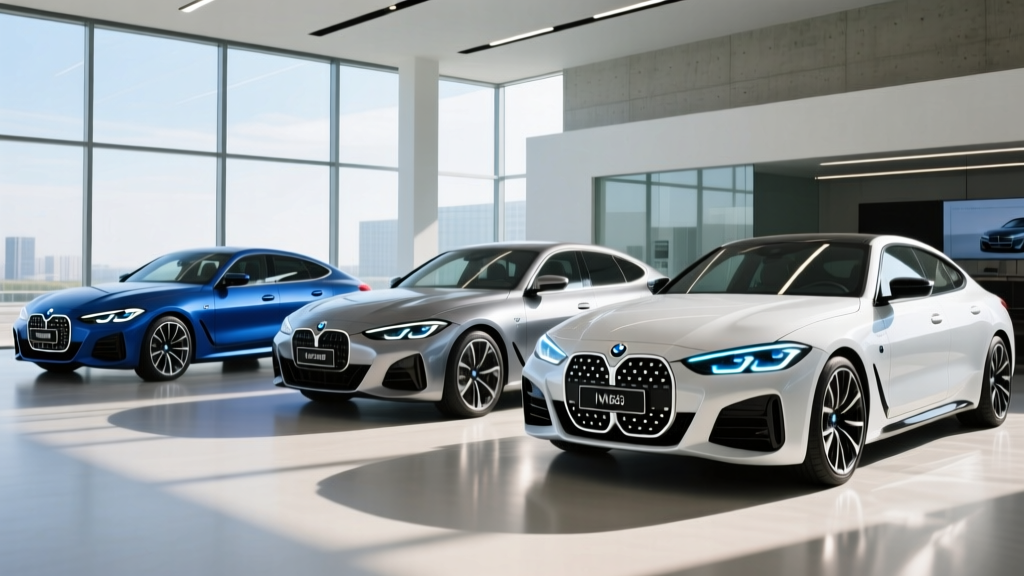
If you're shopping for a BMW all electric car in 2026, the lineup spans five core models from ~$52,000 to over $120,000. The i4 is the entry sport sedan (EPA 307 mi, ~$52,800), the i5 is the executive midsize (EPA 295 mi, ~$70,200), the iX is the flagship SUV (EPA 324 mi, ~$87,250), and the i7 is the luxury flagship sedan (EPA 318 mi, ~$124,200). Expect real-world highway range to drop 10–15% below EPA, and 25–35% in sub-freezing weather. Federal §30D tax credit eligibility is limited due to BMW's German battery sourcing — most models do not qualify for the full $7,500 credit, though point-of-sale lease incentives may apply.
The 2026 BMW All Electric Car Lineup at a Glance
BMW's EV strategy centers on its fifth-generation eDrive architecture, which pairs a battery pack (NMC chemistry across the lineup) with rear- or dual-motor setups. Unlike dedicated EV platforms from Hyundai or Tesla, BMW builds its electric models on flexible architectures shared with gas counterparts. The result: familiar BMW driving dynamics, but with some packaging compromises like a driveshaft tunnel hump in the rear floor.
| Model | Body Style | EPA Range | Battery (kWh usable) | Peak DC Charge (kW) | 10–80% Time | 0–60 mph | Base MSRP |
|---|---|---|---|---|---|---|---|
| i4 eDrive40 | Gran Coupe | 307 mi | 81.5 kWh (NMC) | 205 kW | ~31 min | 5.5 sec | $52,800 |
| i4 M50 | Gran Coupe | 271 mi | 81.5 kWh (NMC) | 205 kW | ~31 min | 3.7 sec | $69,700 |
| i5 eDrive40 | Sedan | 295 mi | 84.3 kWh (NMC) | 205 kW | ~30 min | 5.7 sec | $70,200 |
| i5 M60 | Sedan | 256 mi | 84.3 kWh (NMC) | 205 kW | ~30 min | 3.6 sec | $84,100 |
| iX xDrive50 | SUV | 324 mi | 105.2 kWh (NMC) | 195 kW | ~35 min | 4.4 sec | $87,250 |
| iX M60 | SUV | 296 mi | 105.2 kWh (NMC) | 195 kW | ~35 min | 3.6 sec | $111,500 |
| i7 eDrive50 | Flagship Sedan | 318 mi | 101.7 kWh (NMC) | 195 kW | ~34 min | 4.5 sec | $124,200 |
Real-World Range Reality Check
EPA estimates assume a mix of city and moderate-speed driving. In our experience and consistent with independent testing, expect the following adjustments:
- Highway (70–80 mph sustained): Subtract 10–15%. An i4 eDrive40 rated at 307 mi EPA will deliver ~260–275 mi on a flat interstate run.
- Cold weather (below 32°F): Subtract 25–35% without preconditioning. The iX xDrive50 may drop from 324 mi to ~220–240 mi in 20°F conditions.
- Preconditioning helps: BMW's iDrive system allows scheduled departure preconditioning, which warms the battery to optimal temperature, recovering 5–10% of cold-weather range and enabling faster DC charging.
BMW EV vs Gas BMW: Total Cost of Ownership Breakdown
The sticker price of a BMW all electric car is higher than its gas equivalent, but the ownership equation shifts when you factor in fuel, maintenance, and incentives. Here's a 5-year comparison between the i4 eDrive40 ($52,800) and the comparable gas-powered 430i Gran Coupe ($49,900).
| Cost Category (5 Years / 75,000 mi) | BMW i4 eDrive40 (EV) | BMW 430i Gran Coupe (Gas) |
|---|---|---|
| Purchase Price | $52,800 | $49,900 |
| Federal Tax Credit (§30D) | $0–$3,750* | $0 |
| Fuel/Energy Cost | $3,900 (home charging avg) | $9,400 (premium gas, 28 MPG combined) |
| Maintenance | $1,800 | $4,200 |
| Insurance (est. avg) | $11,500 | $9,800 |
| Estimated Depreciation | $22,000 | $19,500 |
| Total 5-Year Cost | ~$68,000 | ~$83,800 |
*BMW's battery cells are manufactured in Germany and China. Under current IRS §30D critical mineral and battery component sourcing rules, most BMW EVs do not meet the full $7,500 threshold. Some may qualify for $3,750 (critical minerals only) depending on model year and supply-chain updates. Always verify with your tax professional before purchase. Leasing may unlock a $7,500 commercial credit passed through as a lease incentive.
The i4 saves roughly $15,800 over five years compared to the gas 430i, primarily through fuel and maintenance reductions. EVs eliminate oil changes, spark plugs, transmission fluid, and brake pad replacements are far less frequent thanks to regenerative braking. However, insurance premiums for BMW EVs run 15–20% higher than gas equivalents due to higher repair costs and parts pricing.
Charging a BMW All Electric Car: Home, Public, and Costs
BMW uses the CCS1 (Combined Charging System) connector for DC fast charging and J1772 for Level 2 AC charging across its entire 2026 EV lineup. BMW has not adopted Tesla's NACS connector, though adapters are available for Supercharger access.
| Charging Level | Power | Connector | Miles of Range per Hour | Typical Use Case |
|---|---|---|---|---|
| Level 1 | 1.4–1.9 kW | J1772 (120V outlet) | 4–6 mi/hr | Emergency / overnight trickle |
| Level 2 (Home) | 7.4–11.5 kW | J1772 (240V) | 22–38 mi/hr | Daily home charging |
| DC Fast Charge | 195–205 kW peak | CCS1 | ~650–800 mi/hr (peak) | Road trips, 10–80% in ~30–35 min |
Home Charging Setup Costs
Most BMW EV owners will want a Level 2 home charger. BMW offers the Wallbox Home+ (up to 11.5 kW / 48A) for approximately $700. Professional installation varies widely:
| Item | Cost Range |
|---|---|
| Level 2 Charger (BMW Wallbox or ChargePoint Home Flex) | $500–$750 |
| Electrician Labor (240V/50A circuit, 30–60 ft run) | $800–$2,000 |
| Electrical Permit | $50–$200 |
| Panel Upgrade (if needed, 100A → 200A) | $1,500–$3,500 |
| Total Typical Install | $1,350–$2,950 |
Important: If your home has a 100-amp electrical panel and you're already running multiple high-draw appliances (electric oven, dryer, HVAC), you may need a panel upgrade. A licensed electrician should perform a load calculation before installation. The Residential Clean Energy Credit does not cover EV chargers for 2026, though some utility companies offer rebates of $250–$500 for Level 2 installations.
Public DC Fast Charging Costs
At Electrify America or EVgo stations, expect to pay $0.35–$0.55 per kWh. A 10–80% charge on the i4 (roughly 57 kWh delivered) costs approximately $20–$31. That's still less than filling a 430i's 15.8-gallon tank with premium ($65+), but public charging erodes the EV cost advantage if you rely on it exclusively.
Understanding the Charge Curve
BMW's stated peak charge rate (205 kW for i4/i5, 195 kW for iX/i7) is a maximum, not a sustained rate. In real-world DC fast charging:
- The battery accepts peak power only between roughly 10–40% state of charge (SoC)
- From 40–60%, the rate tapers to ~150 kW
- Above 80%, the rate drops sharply to ~50 kW or less to protect battery longevity
- This is why manufacturers quote 10–80% times — the final 20% can take as long as the first 70%
Always precondition the battery (via iDrive navigation to a charger) before DC fast charging. BMW's thermal management system will heat or cool the pack to ~77°F for optimal charge acceptance.
BMW EV vs Hybrid: Which Electrified BMW Makes Sense?
BMW also offers plug-in hybrid (PHEV) versions of the 3 Series, 5 Series, 7 Series, and X5. If you're weighing a BMW all electric car against a BMW PHEV, the decision hinges on your driving patterns and charging access.
| Factor | BMW All Electric (e.g., i5 eDrive40) | BMW PHEV (e.g., 530e xDrive) |
|---|---|---|
| Electric-Only Range | 295 mi (full battery) | ~35 mi (small 19.4 kWh battery) |
| After Battery Depletes | N/A — must recharge | Gas engine takes over, ~30 MPG combined |
| Home Charging Needed? | Essential for daily use | Helpful but not required (runs fine on gas) |
| Base MSRP | $70,200 | $60,900 |
| Maintenance Complexity | Lower (no engine, transmission) | Higher (dual powertrains) |
| Best For | Home chargers, predictable routes, road-trip capable | No home charger, frequent long trips, range-anxious buyers |
The PHEV is a bridge solution. If you can charge at home and drive under 300 miles between stops, the all-electric BMW saves more money and delivers a smoother, quieter experience. If you regularly drive 400+ miles in a day, live in a charging desert, or can't install a home charger, the PHEV eliminates range risk at the cost of ongoing gas purchases and dual-system maintenance.
Battery Longevity, Warranty, and Replacement Costs
Every 2026 BMW EV uses NMC (nickel manganese cobalt) battery chemistry, which offers high energy density but slightly faster degradation than LFP (lithium iron phosphate) cells used in some Tesla and BYD models.
| Myth | Fact |
|---|---|
| "EV batteries need replacing every 5 years" | BMW warranties the battery for 8 years / 80,000 miles against dropping below 70% capacity. Real-world data from older BMW i3 and iX3 fleets shows ~8–12% degradation at 100,000 miles with normal use. |
| "Fast charging destroys the battery" | Occasional DC fast charging has minimal impact. BMW's thermal management actively cools the pack during fast charging. Daily fast charging without preconditioning may accelerate degradation by 1–2% over 5 years. |
| "Battery replacement costs $30,000+" | Full pack replacement for an i4 runs $18,000–$22,000 at current pricing; the iX is $24,000–$28,000. However, out-of-warranty failures are rare, and BMW can replace individual modules for $2,000–$5,000 rather than the full pack. |
To maximize battery lifespan, BMW recommends:
- Setting a daily charge limit of 80% SoC for routine driving (configurable in iDrive)
- Reserving 100% charges for road trips
- Using preconditioning before DC fast charging
- Avoiding leaving the car at 100% SoC for extended periods (more than 24 hours)
Common Misconceptions About BMW Electric Cars
"BMW EVs get the full $7,500 federal tax credit"
This is largely false for 2026. The IRS §30D credit requires that a percentage of battery critical minerals and components be sourced from the U.S. or free-trade-agreement countries. BMW's supply chain is heavily European and Asian. Most BMW EVs qualify for $0 to $3,750 at purchase. However, leasing a BMW EV may allow the dealer to apply the $7,500 commercial clean vehicle credit as a capitalized cost reduction — effectively a lease discount. Ask your dealer about "lease cash" or "EV lease incentives."
"You can't road-trip in a BMW EV"
With 250–324 miles of EPA range and DC fast charging that adds ~180 miles in 15 minutes (at peak rate, 10–50% SoC), road-tripping is viable on corridors with reliable CCS infrastructure (Interstate 5, I-95, I-80). The limitation is rural routes in the Mountain West and Great Plains, where CCS chargers may be 80–120 miles apart. Plan with BMW's built-in route planner or apps like A Better Route Planner (ABRP).
"All BMW EVs are the same under the skin"
While they share eDrive components, the i4 and i5 use BMW's CLAR platform (shared with gas 4/5 Series), which means the battery is mounted low but doesn't fully optimize interior space. The iX uses a more EV-optimized variant with a flat floor and more cabin volume relative to its footprint. The i7 also uses CLAR. This matters for rear-seat comfort and cargo — the iX offers 35.5 cu ft of cargo space behind the rear seats, while the i4 offers just 16.6 cu ft due to its coupe-like roofline.
Decision Framework: Which BMW All Electric Car Is Right for You?
Choose Based on Your Situation
Choose the i4 eDrive40 if: You want the most affordable entry into a BMW EV, primarily commute under 60 miles daily, value sport-sedan handling, and can charge at home. At $52,800, it's the value pick.
Choose the i4 M50 if: You want M-car performance (536 hp, 3.7-sec 0–60) without the M-car fuel bill, and you accept 36 fewer miles of range for the privilege.
Choose the i5 eDrive40 if: You need a proper midsize executive sedan with rear-seat space for adults, want nearly 300 miles of range, and your budget supports $70K+. This is the best all-around BMW EV for professionals.
Choose the iX xDrive50 if: You need SUV cargo capacity (35.5 cu ft), want the longest range in the lineup (324 mi EPA), and frequently carry passengers or gear. The iX is the most "EV-native" feeling BMW, with a flat floor and spacious cabin.
Choose the i7 eDrive50 if: Budget is secondary to luxury, you want SAE Level 2+ highway driving assist (BMW Highway Assistant with hands-off capability up to 85 mph on divided highways), and you value rear-seat executive comfort. At $124,200, this competes with the Mercedes EQS and Porsche Taycan.
Consider a BMW PHEV instead if: You cannot install a home charger, regularly drive 400+ miles in a single day, or live in an area with sparse CCS charging infrastructure.
A Note on BMW's Driver Assistance
BMW's Highway Assistant (part of the Driving Assistance Professional Package, ~$1,700) is an SAE Level 2 system. It provides hands-off steering on qualifying divided highways at speeds up to 85 mph, but you must keep your eyes on the road — an infrared camera monitors driver attention. This is not self-driving. You are legally and operationally responsible for the vehicle at all times. Only SAE Level 4 systems (like Waymo's robotaxi service) operate without a human driver in the loop.
FAQ: BMW All Electric Car Ownership
Do BMW electric cars qualify for the $7,500 federal tax credit?
Most do not qualify for the full amount under current IRS §30D rules. BMW's battery supply chain doesn't meet the full battery-component sourcing requirement. Some models may qualify for $3,750 (critical minerals portion). Leasing can unlock a $7,500 commercial credit passed as a lease discount. Verify current eligibility on the IRS qualified vehicles list before purchasing, as sourcing can change model year to model year.
How long does it take to charge a BMW EV at home?
On a Level 2 home charger (11.5 kW / 48A), a full 0–100% charge on the i4 takes approximately 8.5 hours. The iX, with its larger 105.2 kWh battery, takes about 10.5 hours. Most owners charge from 20–80% overnight, which takes 4–6 hours — easily handled while you sleep.
Can I use Tesla Superchargers with a BMW EV?
BMW uses CCS1 connectors, not Tesla's NACS. However, BMW offers a CCS-to-NACS adapter (~$200–$300) that enables access to Tesla's Supercharger network. As of 2026, Tesla has opened a growing number of Superchargers to non-Tesla EVs, but availability varies by station. Check the Tesla app for "Charge Your Non-Tesla Vehicle" compatibility at specific locations.
What is the real-world range of a BMW i4 in winter?
In temperatures below 32°F, expect the i4 eDrive40 (307 mi EPA) to deliver approximately 200–230 miles of range if the cabin heater is running and the battery isn't preconditioned. Using heated seats and a heated steering wheel instead of cabin heat can recover 10–15 miles. Preconditioning while plugged in is the single most effective way to preserve winter range.
How does BMW EV insurance compare to gas models?
Insurance premiums for BMW EVs are typically 15–20% higher than equivalent gas models. For a 40-year-old driver with a clean record, expect annual premiums of $2,200–$2,800 for an i4, compared to $1,800–$2,300 for a 430i. The higher cost reflects pricier collision repairs (specialized EV body shops, aluminum-intensive construction, battery protection). Shop quotes from GEICO, Progressive, and EV-specialty insurers like Lemonade or Root.
Is the BMW iX worth the premium over the i4?
If you need SUV practicality — 35.5 cu ft of cargo, higher seating position, standard AWD — the iX justifies its ~$34,000 premium over the i4. If you primarily commute solo and value driving dynamics over utility, the i4 is the smarter financial choice. The iX also rides on a more EV-optimized platform, giving it a flatter floor and better rear-seat comfort.
Specs sourced from fueleconomy.gov and BMW USA official specifications for 2026 model year. Tax credit information reflects IRS rules current as of publication; always verify at irs.gov and consult a tax professional. Pricing excludes destination charges and dealer fees.