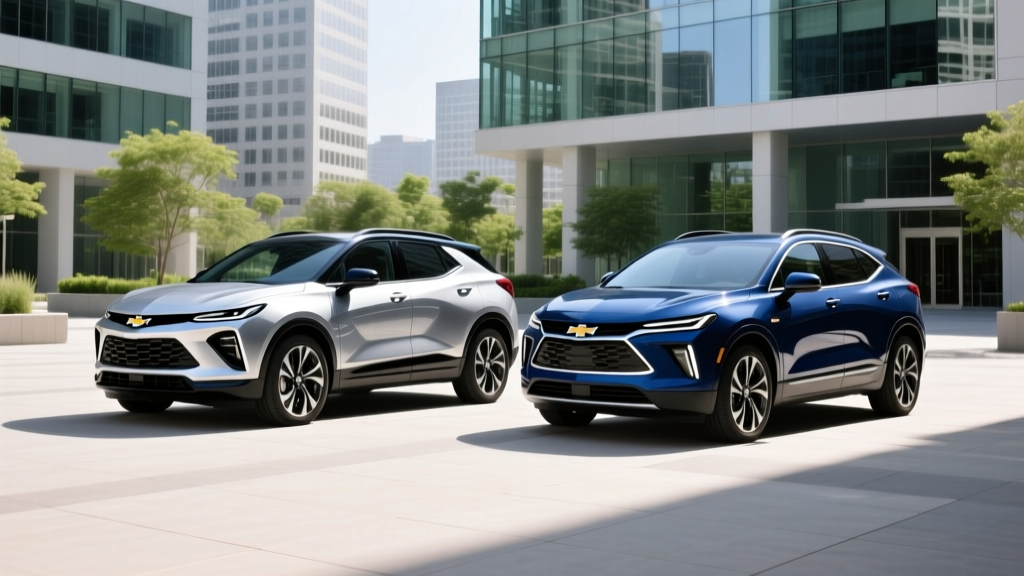
Chevrolet's two mainstream electric SUVs occupy adjacent but distinct spaces in the 2026 EV market. The Equinox EV undercuts on price and squeezes remarkable range from its Ultium platform, while the Blazer EV delivers a roomier cabin, sportier performance, and faster DC charging. For buyers cross-shopping these two, the decision hinges less on which is "better" and more on whether your daily driving, budget, and cargo needs align with the compact or midsize slot.
We've driven both, charged both on public DC networks, and parsed the latest EPA data and IRS §30D credit rules to build this head-to-head. Here's what actually matters.
Specs at a Glance: Blazer EV vs Equinox EV
| Spec | Blazer EV 2LT AWD | Equinox EV RS AWD |
|---|---|---|
| EPA Range | 324 mi | 319 mi |
| Usable Battery | 102 kWh (NMC, Ultium) | 85 kWh (NMC, Ultium) |
| Efficiency (MPGe) | 92 MPGe (2.7 kWh/mi) | 99 MPGe (2.5 kWh/mi) |
| Peak DC Charge Rate | 190 kW | 150 kW |
| 10–80% DC Time | ~29 min | ~34 min |
| Level 2 AC Charge (kW) | 11.5 kW | 11.5 kW |
| Horsepower | 288 hp | 288 hp |
| 0–60 mph | ~6.2 sec | ~7.8 sec |
| Cargo (behind 2nd row) | 25.5 cu ft / 55.1 max | 26.4 cu ft / 63.5 max |
| Base MSRP (AWD) | $50,400 | $43,400 |
| Battery / Powertrain Warranty | 8 yr / 100,000 mi | 8 yr / 100,000 mi |
Source: fueleconomy.gov and Chevrolet's 2026 spec sheets. Trims and options shift pricing; figures above reflect the most directly comparable AWD configurations.
Range and Efficiency: Closer Than the Battery Gap Suggests
The Blazer carries 17 kWh more usable battery than the Equinox, yet delivers only 5 additional EPA miles. The reason is physics: the Blazer is roughly 500 lbs heavier, has a larger frontal area, and rolls on wider tires. The Equinox converts electrons into miles more efficiently — 99 MPGe combined versus the Blazer's 92 MPGe.
Blazer EV: EPA 324 mi. Expect ~265–285 mi on a 70-mph highway run in mild weather; ~220–240 mi in sub-30°F cold with cabin heat.
Equinox EV: EPA 319 mi. Expect ~260–280 mi highway, ~215–235 mi in deep cold. Its lighter weight helps preserve efficiency slightly better in stop-and-go traffic.
If your priority is stretching each kWh at the charger and on your electric bill, the Equinox wins on efficiency. If you simply want the largest range buffer regardless of cost per mile, the Blazer's 5-mile edge is marginal and rarely decisive in practice.
Charging Speed and Network Compatibility
Both SUVs use the NACS connector natively in 2026, granting full access to Tesla Superchargers (now open to non-Tesla EVs via the built-in NACS port) plus Electrify America, EVgo, and ChargePoint networks using native cables — no adapter needed.
The Blazer's 190 kW peak charge rate is meaningfully quicker than the Equinox's 150 kW. On a 350-kW-capable Electrify America stall, the Blazer's larger battery can absorb more sustained power through the mid-SoC window. The Equinox's charge curve tapers earlier, partly because its smaller 85 kWh pack hits thermal limits sooner.
At Level 2 (240V home or destination charging), both accept 11.5 kW — roughly 30–34 miles of range per hour, meaning an overnight session from 20% to 100% takes about 7 hours for the Equinox and 8.5 for the Blazer.
Performance and Driving Character
Both AWD models use a dual-motor Ultium setup producing 288 hp, but the Blazer's 0–60 time of ~6.2 seconds beats the Equinox's ~7.8 seconds, thanks to more aggressive torque mapping and a sport-tuned suspension. The Blazer feels planted in highway lane changes and more eager off the line. The Equinox is competent and quiet but tuned for comfort over engagement.
Neither offers a performance variant rivaling the Mustang Mach-E GT or Tesla Model Y Performance. If acceleration is a top priority, look elsewhere; if you want a calm, torque-rich daily driver, both deliver.
Interior, Cargo, and Daily Practicality
Surprisingly, the smaller Equinox EV posts slightly more maximum cargo volume (63.5 vs 55.1 cu ft) thanks to a boxier roofline and fold-flat passenger seat. Behind the second row, the gap is negligible (26.4 vs 25.5 cu ft). The Blazer counters with a roomier rear seat, more shoulder width, and a wider center console.
Both share GM's 17.7-inch diagonal infotainment screen running Google Built-In, wireless CarPlay/Android Auto, and the Super Cruise-ready hardware suite (steering-wheel attention monitoring, HD maps). Super Cruise subscription costs roughly $25/month after the initial trial period and enables hands-free driving on over 750,000 miles of compatible roads — but this is SAE Level 2 driver assistance, not self-driving. Eyes-on, hands-off is the rule.
Price, Tax Credits, and 5-Year Ownership Cost
This is where the Equinox pulls ahead decisively for most buyers. The base MSRP gap is roughly $7,000, but the federal §30D tax credit can widen it further depending on your eligibility.
| Item | Blazer EV 2LT AWD | Equinox EV RS AWD |
|---|---|---|
| Base MSRP | $50,400 | $43,400 |
| MSRP Cap Compliance (§30D: SUVs ≤$80,000) | ✓ Passes | ✓ Passes |
| Buyer Income Cap (MFJ ≤$300k) | Applies equally | Applies equally |
| Battery Sourcing / Critical Minerals | Partial credit (~$3,750) | Full credit likely (~$7,500) |
| Effective Price After Credit | ~$46,650 | ~$35,900 |
Credit eligibility depends on battery-component and critical-mineral sourcing rules that shift annually. Verify current-year rules at IRS.gov §30D or with a tax professional. Point-of-sale transfer is available at participating dealers.
The Equinox's smaller, more efficiency-oriented battery and lower purchase price also translate into lower 5-year operating costs:
| Cost Category | Blazer EV | Equinox EV |
|---|---|---|
| Purchase (after credit) | ~$46,650 | ~$35,900 |
| Home Charging (12¢/kWh avg) | ~$3,880 | ~$3,570 |
| Insurance (avg annual) | ~$1,950/yr | ~$1,720/yr |
| Maintenance (tires, cabin filter, fluid) | ~$1,400 | ~$1,300 |
| 5-Year Total (est.) | ~$61,680 | ~$51,140 |
Insurance quotes vary heavily by ZIP code and driving record; get both before committing. Maintenance is minimal on both — no oil, no transmission fluid, just cabin filters, wiper fluid, brake fluid checks, and tire rotations every 7,500 miles.
Reliability, Safety, and Warranty
Both ride on GM's Ultium platform and carry the same 8-year/100,000-mile battery and powertrain warranty, with a capacity-retention threshold of 70% before a warranty claim is honored. NHTSA has awarded both models 5-star overall safety ratings; IIHS testing (when complete for 2026 models) is expected to mirror the strong prior-year results. Standard active safety includes automatic emergency braking, lane-keep assist, blind-spot monitoring, and rear cross-traffic alert on all trims.
The Decision Framework: Which One Is Yours?
Choose the Equinox EV if:
- Your budget is under $45,000 after incentives.
- You commute under 60 miles daily and charge at home.
- Efficiency (MPGe) and lowest cost-per-mile matter.
- You rarely take road trips over 250 miles.
- You want maximum cargo volume in a compact footprint.
Choose the Blazer EV if:
- You road-trip frequently and value ~5 minutes faster DC charging.
- You regularly carry adult rear-seat passengers.
- You want a sportier driving feel and quicker 0–60.
- You can absorb the higher MSRP and potentially smaller tax credit.
- You prefer the midsize SUV stance and wider cabin.
Final Verdict
There is no universal winner — only the right answer for your driveway. The Equinox EV is the smarter financial play: similar EPA range, better efficiency, a lower MSRP, and a stronger shot at the full $7,500 federal credit make it the default recommendation for most households. The Blazer EV earns its premium for buyers who need the faster charging, roomier rear seat, and sportier dynamics that come with a larger, heavier platform.
Test-drive both back-to-back if you can. Pay attention to rear-seat comfort, visibility, and how the infotainment feels under your fingers — those daily impressions often matter more than the spec sheet.
Frequently Asked Questions
Does the Equinox EV qualify for the full $7,500 federal tax credit?
As of 2026, the Equinox EV is positioned to qualify for the full §30D credit, thanks to battery sourcing that meets both critical-mineral and component thresholds. The Blazer EV has historically qualified for the partial $3,750 credit due to sourcing differences. Always verify current-year rules at IRS.gov and confirm with your dealer before signing.
Which is better for cold-weather driving?
Both use a heat pump for cabin heating, which is more efficient than resistive heaters. Expect 20–30% range loss in sustained sub-20°F weather on either SUV. The Blazer's larger battery gives it a slightly bigger cold-weather buffer in absolute miles.
Can I charge either SUV at a Tesla Supercharger?
Yes. Both 2026 models come with a native NACS port, so you can plug directly into any V3 or V4 Supercharger without an adapter. The Supercharger network remains the most reliable DC fast-charging option in the U.S.
Is Super Cruise actually self-driving?
No. Super Cruise is an SAE Level 2 driver-assistance system. It handles steering, acceleration, and braking on mapped highways, but you must keep your eyes on the road. The steering wheel monitors your attention, and the system will disengage if you look away for too long.
Which will hold resale value better?
Early data suggests the Equinox EV may depreciate more gently due to its lower entry price (a larger buyer pool at resale) and stronger tax-credit positioning. The Blazer's higher MSRP exposes it to steeper initial depreciation, though its sportier positioning could attract used buyers later. Neither has a long enough track record for definitive projections.