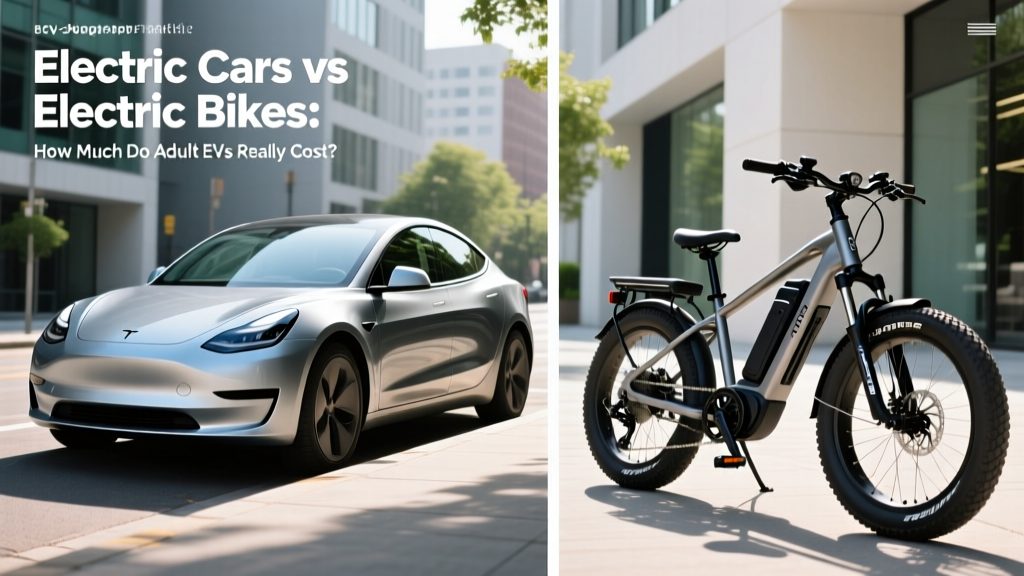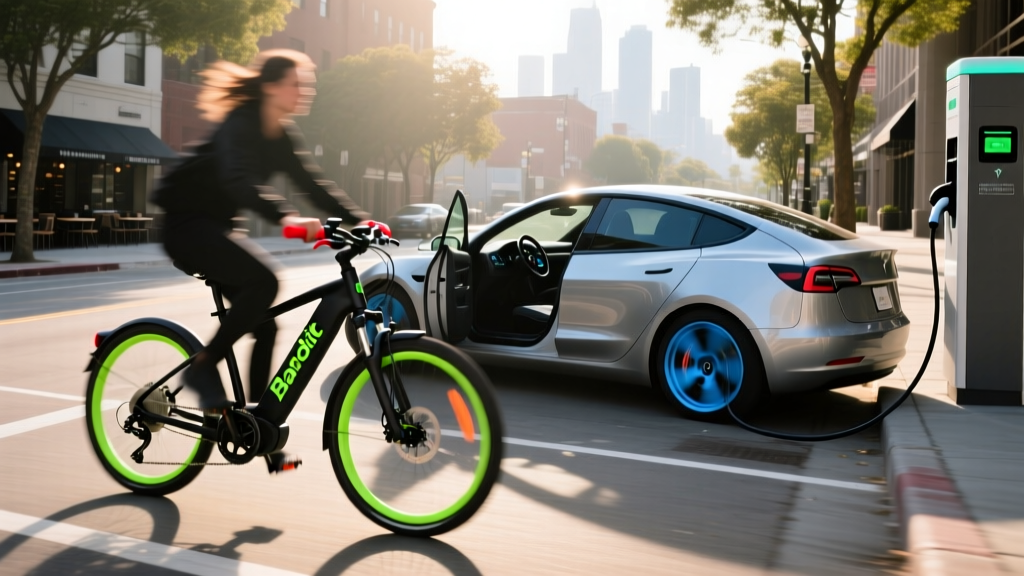
The Short Answer on Bandit Electric Bikes vs. EVs
If you're researching Bandit electric bikes as a potential commuter vehicle, here's the practical reality: a Bandit-style e-bike (typically $1,500–$3,500, 28–60 miles of range, 28 mph top speed) solves last-mile and short urban commutes brilliantly, but it does not replace a car for most American drivers. A compact EV like the 2026 Chevrolet Equinox EV ($33,600 MSRP, 319 miles EPA) or 2026 Hyundai Kona Electric ($32,975 MSRP, 261 miles EPA) handles highway driving, weather, cargo, and passengers that no e-bike can. The right choice depends on your commute distance, climate, and whether you need a primary vehicle or a supplemental one. Below, we break down the exact costs, ranges, and ownership realities of both.
What Bandit Electric Bikes Actually Offer (Specs & Limits)
Bandit electric bikes fall into the high-power e-bike category — often classified as Class 2 or Class 3 e-bikes depending on the model. These are not toys; they're legitimate urban transport for the right use case. Here's what a typical Bandit-style e-bike delivers:
| Spec | Typical Bandit E-Bike | 2026 Chevy Equinox EV (Base) |
|---|---|---|
| Price | $1,500–$3,500 | $33,600 MSRP |
| Battery Capacity | 0.5–1.0 kWh | 85 kWh usable (NMC) |
| Range (real-world) | 28–60 miles (pedal-assist dependent) | 319 mi EPA (~270 mi highway real-world) |
| Top Speed | 20–28 mph (Class 2/3 legal limit) | 112 mph (electronically limited) |
| Charging Time (full) | 4–6 hours (standard 120V outlet) | ~9.5 hours (Level 2, 11.5 kW); 10–80% in ~25 min (DC fast charge, 150 kW peak) |
| Weather Protection | None (rider exposed) | Full enclosure, climate control, heat pump available |
| Cargo Capacity | Panniers/rack: ~30–50 lbs | 26.4 cu ft (rear seats up), 63.5 cu ft (folded) |
| Passengers | 1 (some models: 1 child seat) | 5 |
| Federal Tax Credit (§30D) | Not eligible | Up to $7,500 (income/MSRP/sourcing rules apply) |
The battery on a Bandit e-bike is roughly 1/85th the capacity of a compact EV. That's the fundamental physics difference: an e-bike is a lightweight, low-speed personal transporter, while an EV is a full highway-capable vehicle. Neither is inherently better — they serve different roles.
Cost Breakdown: E-Bike vs. Electric Car vs. Gas Car
The purchase price gap is enormous, but total cost of ownership (TCO) tells a more nuanced story. Below is a 5-year TCO comparison assuming a 15-mile round-trip daily commute (3,750 miles/year), $3.50/gallon gas for the ICE vehicle, and $0.14/kWh electricity.
| Cost Factor (5-Year) | Bandit-Style E-Bike | 2026 Chevy Equinox EV | 2026 Honda CR-V (Gas) |
|---|---|---|---|
| Purchase Price | $2,500 | $33,600 | $32,350 |
| Federal Tax Credit | $0 | Up to $7,500 (§30D)* | $0 |
| Effective Purchase | $2,500 | $26,100 | $32,350 |
| Fuel/Energy (18,750 mi total) | $75 (electricity) | $525 (electricity) | $2,400 (gasoline) |
| Insurance (5 years) | $0–$600 (optional) | $7,500–$9,000 | $6,500–$8,000 |
| Maintenance (5 years) | $300–$600 (tires, brake pads, chain) | $1,200–$1,800 (tires, cabin filter, fluid top-offs) | $2,500–$3,500 (oil, filters, brakes, belts) |
| Battery Replacement Reserve | $400–$800 (year 4–5 likely) | $0 (8-yr/100,000-mi warranty) | $0 |
| Total 5-Year Cost | $3,275–$4,575 | $35,325–$37,425 | $41,350–$43,850 |
| Cost Per Mile | $0.18–$0.24 | $1.88–$2.00 | $2.20–$2.34 |
*The §30D federal tax credit has income caps ($150K single / $300K joint), MSRP caps ($55K cars / $80K SUVs/trucks), and battery critical-mineral sourcing requirements that change annually. Verify current eligibility at IRS.gov before purchasing. The credit can be transferred to the dealer as a point-of-sale discount.
The e-bike wins on raw cost by a landslide — but only if it actually replaces car trips. If you still need a car for groceries, highway trips, bad weather, or passengers, the e-bike becomes a supplement, not a replacement, and you're paying for both.
Range Reality: Where E-Bikes Excel and Where They Fail
Bandit electric bikes advertise ranges up to 60 miles, but that number requires heavy caveats — much like EV EPA estimates.
E-Bike Range Factors
- Pedal-assist level: Eco mode (minimal motor assist) can stretch a 0.7 kWh battery to 50+ miles. Turbo mode (full throttle, no pedaling) cuts that to 20–25 miles.
- Rider weight and terrain: A 200-lb rider on hilly terrain will see 30–40% less range than a 150-lb rider on flat ground.
- Cold weather: Lithium-ion e-bike batteries lose 20–35% capacity below 40°F — the same chemistry limitation that affects EVs.
- Speed: Sustained 28 mph riding consumes significantly more energy than 15 mph cruising.
EV Range Factors (for comparison)
- Highway driving: Expect 15–20% less than EPA at sustained 70+ mph.
- Cold weather: 20–30% range loss below freezing; heat pump equipped models (like the Equinox EV) mitigate this.
- DC fast charging taper: Charging slows significantly above 80% SoC to protect the battery — a 150 kW peak rate is not sustained for the full session.
For a 15-mile round-trip commute with errands, an e-bike has adequate range in fair weather. For a 40-mile highway commute, it's not a viable option regardless of battery size — the speed and safety limitations are the real constraint, not the kWh.
Charging Practicality: Home Access Is the Deciding Factor
One area where e-bikes have a genuine advantage: you don't need a dedicated charging installation. A Bandit e-bike charges from any standard 120V household outlet, and the battery is often removable — meaning apartment dwellers can charge indoors. This is a significant practical benefit for the ~30% of Americans who lack access to home EV charging.
For a full-size EV, home Level 2 charging (240V) requires:
- A 240V outlet (NEMA 14-50) or hardwired Level 2 station: $500–$2,000 for equipment
- Electrical panel capacity (a 200-amp panel is typical; older homes with 100-amp panels may need a $2,000–$4,000 upgrade)
- Electrician labor and permits: $800–$2,500
- Total home charging setup: $1,300–$6,500 depending on your panel and run length
If you rent an apartment without charging access and your commute is under 20 miles, an e-bike may be the only electrified vehicle you can practically own. If you own a home with a garage, Level 2 EV charging is straightforward and transforms daily ownership.
Myths vs. Facts: E-Bikes and EVs
| Myth | Fact |
|---|---|
| "E-bikes are just as green as EVs." | Both are far cleaner than gas, but e-bikes use ~1/85th the battery materials. However, e-bike batteries are often lower-grade cells with shorter lifespans (500–800 charge cycles vs. 1,500+ for EV NMC packs), meaning more frequent replacement. |
| "An e-bike can replace my car." | For 10–15% of Americans with short, flat, fair-weather commutes — possibly. For the other 85–90% who need highway capability, cargo space, weather protection, or passenger capacity — no. |
| "EVs cost more to insure than gas cars." | Generally true: EV insurance premiums run 10–20% higher on average due to higher repair costs and battery replacement risk. E-bike insurance is optional and cheap ($100–$150/year) or covered under renters/homeowners policies. |
| "E-bikes don't need maintenance." | E-bike drivetrains (chain, cassette, brake pads) wear faster than car components due to higher torque from the motor. Budget $100–$200/year for consumables. EVs have far fewer moving parts than gas cars but still need tire rotations, cabin filters, and brake fluid checks. |
| "I can ride an e-bike anywhere a car can go." | E-bikes are restricted from most highways and interstates. Class 3 e-bikes (28 mph) face additional trail and bike-lane restrictions in many jurisdictions. Check local regulations. |
Decision Framework: Should You Buy an E-Bike, an EV, or Both?
Choose a Bandit-style e-bike if:
- Your one-way commute is under 15 miles on surface streets (no highway required)
- You live in a mild climate or are willing to ride in cold/rain with proper gear
- You lack home EV charging access (apartment, street parking only)
- You want a sub-$4,000 purchase with near-zero operating costs
- You already have access to a car (owned, shared, or ride-hail) for longer trips
Choose a compact EV (Equinox EV, Kona Electric, Nissan Leaf) if:
- Your commute includes highway driving or exceeds 20 miles one-way
- You need to carry passengers, groceries, or cargo regularly
- You live in a region with harsh winters or frequent rain
- You have (or can install) home Level 2 charging
- You want a single primary vehicle that handles all trips
Choose both (EV + e-bike) if:
- You want to minimize car miles for short urban trips (reducing tire wear, insurance claims, and parking hassle)
- You have secure bike storage at home and work
- Your household budget supports a ~$35K EV plus a ~$2.5K e-bike
- You live in a bike-friendly city with protected lanes
What First-Time EV Buyers Should Know
If you're cross-shopping Bandit electric bikes and full-size EVs, you're likely new to electrified transport. Here are the non-obvious realities that matter:
- kW vs. kWh: kW (kilowatts) measures power — how fast you charge or accelerate. kWh (kilowatt-hours) measures energy — how big the battery is and how far you go. An e-bike might charge at 0.2 kW into a 0.7 kWh battery. An EV might charge at 150 kW into an 85 kWh battery. Never confuse the two.
- The §30D tax credit is not guaranteed: Battery sourcing requirements (critical minerals and components must come from the US or FTA-partner countries) eliminate many models from eligibility. Always check the fueleconomy.gov tax credit tracker for the specific trim you're buying.
- Real-world EV range is 75–85% of EPA in winter: If you live in Minnesota or Michigan, a 319-mile EPA rating becomes roughly 240–270 miles in January. Plan accordingly.
- E-bike battery degradation is faster: E-bike batteries typically use lower-cost cells that degrade noticeably after 2–3 years of daily use. Budget for a $400–$800 replacement. EV batteries are warrantied for 8 years/100,000 miles and typically retain 85–90% capacity at that point, per NHTSA-monitored warranty standards.
- Insurance matters: EV insurance is higher than gas-car insurance on average. Get quotes before committing. E-bike coverage through a homeowners policy is usually negligible in cost.
Frequently Asked Questions
Are Bandit electric bikes street-legal?
It depends on classification and your state. Class 2 e-bikes (throttle-assisted, max 20 mph) are legal on most roads and bike paths. Class 3 (pedal-assist up to 28 mph) face restrictions in some jurisdictions. Some high-power Bandit models exceed Class 3 limits and may be classified as electric motorcycles, requiring registration, insurance, and a motorcycle endorsement. Check your state's DMV rules before purchasing a high-wattage model.
Can I charge a Bandit e-bike at an EV charging station?
No. EV charging stations (Level 2 J1772/NACS or DC fast chargers) deliver far more power than an e-bike battery can accept and use incompatible connectors. E-bikes charge from standard 120V household outlets using their included charger. Some public bike-charging stations exist in cities, but they're rare.
How long does an e-bike battery last before replacement?
Most e-bike lithium-ion batteries are rated for 500–800 full charge cycles before dropping to 80% capacity. With daily charging, that's roughly 2–3 years of practical use before you'll notice meaningful range loss. Replacement batteries cost $400–$800 depending on the model and capacity. By contrast, EV batteries are warrantied for 8 years/100,000 miles at 70% capacity retention minimum.
Is an e-bike actually faster than driving for a city commute?
In dense urban cores with heavy congestion and limited parking, yes — an e-bike averaging 15–20 mph can beat a car averaging 12–18 mph in stop-and-go traffic, especially when you factor in parking time. For commutes over 10 miles or routes requiring highway segments, a car (EV or gas) is faster and safer.
Do e-bikes qualify for any tax credits or incentives?
At the federal level, e-bikes do not qualify for the §30D clean vehicle credit. However, some states and municipalities offer e-bike rebates or tax incentives — typically $300–$1,500 — often tied to income or e-bike type (cargo e-bikes sometimes get larger rebates). Check your state energy office or local air quality district for current programs.