The Short Answer: Which All Electric Audi SUV Fits You?
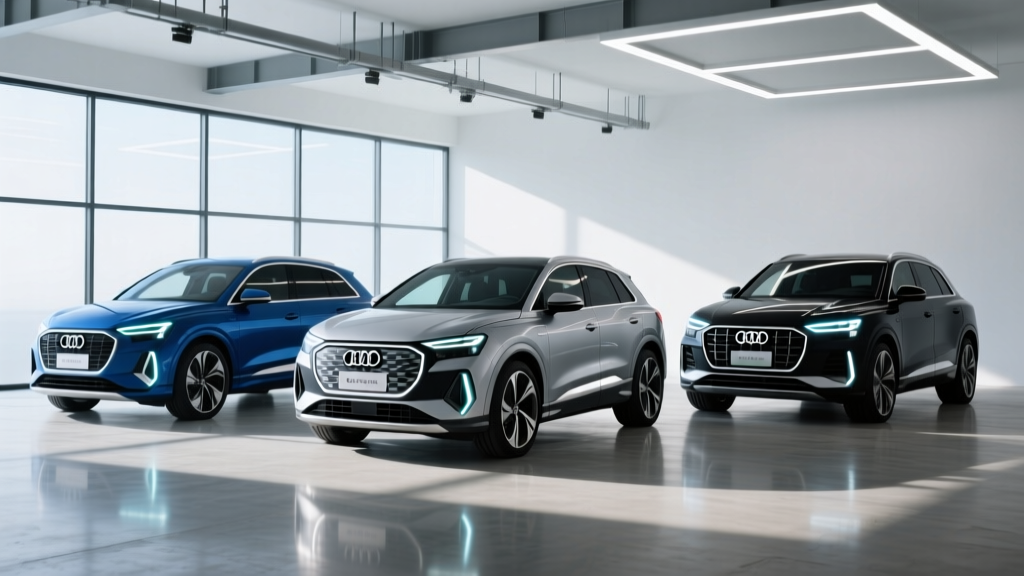
Audi currently sells three all electric SUVs in the U.S. The Q4 e-tron (starting ~$49,800) is the entry point with up to 265 miles EPA range. The Q6 e-tron (starting ~$63,800) is the mid-size tech leader with up to 321 miles and 270 kW DC fast charging. The Q8 e-tron (starting ~$74,400) is the flagship luxury hauler with up to 285 miles and the most cargo room. Your choice hinges on budget, daily mileage, and whether you prioritize cabin luxury over efficiency.
The 2026 Audi Electric SUV Lineup at a Glance
Audi's electric SUV portfolio spans compact to full-size luxury, each riding on a different Volkswagen Group platform. The Q4 e-tron uses the MEB platform shared with the VW ID.4. The Q6 e-tron is the first Audi on the new PPE (Premium Platform Electric) architecture co-developed with Porsche. The Q8 e-tron rides on a heavily revised MLB Evo platform — the oldest of the three, though updated for 2025-2026 with improved battery chemistry.
| Spec | Q4 e-tron (quattro) | Q6 e-tron (quattro) | Q8 e-tron (quattro) |
|---|---|---|---|
| EPA Range | 265 mi | 321 mi | 285 mi |
| Battery (usable) | 77 kWh NMC | 94.4 kWh NMC | 106 kWh NMC |
| Horsepower | 295 hp | 456 hp | 402 hp |
| 0-60 mph | 5.8 sec | 4.9 sec | 5.4 sec |
| Peak DC Fast Charge | 175 kW | 270 kW | 170 kW |
| 10-80% DCFC Time | ~28 min | ~21 min | ~31 min |
| Level 2 (240V) | 11 kW | 11 kW | 11 kW |
| MPGe (combined) | 95 MPGe | 105 MPGe | 82 MPGe |
| Cargo Volume (rear seats up) | 24.8 cu ft | 28.2 cu ft | 28.5 cu ft |
| Base MSRP | $49,800 | $63,800 | $74,400 |
| Battery Warranty | 8 yr / 100,000 mi | 8 yr / 100,000 mi | 8 yr / 100,000 mi |
Sources: EPA fueleconomy.gov, Audi USA. Specs reflect 2026 model year. Always verify with your dealer as mid-year adjustments occur.
Real-World Range Reality Check
EPA stickers don't tell the whole story. On sustained highway driving at 70-75 mph, expect roughly 10-15% less than EPA across all three models. The Q6 e-tron's 321-mile rating realistically translates to ~275-290 highway miles. In cold weather (below 30°F), any of these SUVs will shed 20-30% of range due to cabin heating and battery chemistry limitations. The Q6 e-tron's heat pump (standard on PPE) helps mitigate this better than the Q4 and Q8's optional heat pumps.
Charging Speed: Where the Q6 e-tron Pulls Ahead
The single biggest differentiator in this lineup is DC fast-charge capability. The Q6 e-tron's PPE platform supports an 800-volt electrical architecture, enabling a peak charge rate of 270 kW — among the fastest of any luxury electric SUV. The Q4 e-tron and Q8 e-tron use 400-volt systems capped at 175 kW and 170 kW respectively.
What does this mean in practice? On a 350 kW Electrify America or Tesla Supercharger (with NACS adapter), the Q6 e-tron can recover 10-80% in roughly 21 minutes. The Q4 and Q8 need 28-31 minutes for the same session. On a road trip from Denver to Moab, that's one fewer coffee break.
However, peak kW is not sustained kW. All three models taper charging speed significantly above 80% State of Charge (SoC). The Q6 e-tron's charge curve holds above 200 kW from roughly 10-40% SoC, then gradually steps down. The Q8 e-tron's curve is notably flatter — it rarely sustains its 170 kW peak for long, meaning real-world 10-80% times can stretch to 35 minutes on a warm battery.
| Charging Level | Power | Q4 e-tron | Q6 e-tron | Q8 e-tron |
|---|---|---|---|---|
| Level 1 (120V) | 1.4 kW | ~4 mi/hr | ~4 mi/hr | ~4 mi/hr |
| Level 2 (240V, 48A) | 11.5 kW | ~32 mi/hr | ~36 mi/hr | ~30 mi/hr |
| DC Fast Charge | Up to peak kW | 175 kW peak | 270 kW peak | 170 kW peak |
Audi Electric SUV vs. Gas and Hybrid Alternatives
Shopping an all electric Audi SUV means cross-shopping against Audi's own gas models (Q5, Q7) and plug-in hybrids. Here's how the numbers stack up when you look beyond the sticker price.
| Metric | Q6 e-tron quattro | Q5 45 TFSI (gas) | Q5 TFSI e (PHEV) |
|---|---|---|---|
| Base MSRP | $63,800 | $47,400 | $56,800 |
| EPA Range / MPG | 321 mi / 105 MPGe | ~410 mi / 25 MPG combined | 23 mi electric + 26 MPG |
| Fuel/Energy Cost (annual, 12k mi) | ~$540 (at $0.15/kWh, home charging) | ~$1,730 (at $3.60/gal) | ~$1,100 (mixed) |
| Annual Maintenance | ~$300 | ~$800 | ~$750 |
| Federal Tax Credit (§30D) | Eligibility varies* | None | Eligibility varies* |
*Audi's electric SUVs face shifting §30D eligibility due to battery sourcing and critical-mineral requirements. Check IRS.gov §30D rules for current-year qualification. The MSRP cap for SUVs is $80,000, and buyer income caps apply ($300k MFJ / $150k single). Point-of-sale transfer is available if eligible.
The Q6 e-tron's higher upfront cost is offset by roughly $1,200/year in fuel and maintenance savings versus the gas Q5. Over five years, that's $6,000 back — not including any tax credit. The PHEV Q5 splits the difference: lower sticker than the Q6 e-tron, but you're still buying gas for longer trips and maintaining a combustion engine.
Real Costs of Ownership: 5-Year Breakdown
Let's run a concrete 5-year / 60,000-mile ownership scenario for the Q6 e-tron versus the gas Q5. This assumes home Level 2 charging at the national average of $0.15/kWh, no tax credit applied, and current insurance averages.
| Cost Category (5 yr / 60k mi) | Q6 e-tron quattro | Q5 45 TFSI (gas) |
|---|---|---|
| Purchase Price (base) | $63,800 | $47,400 |
| Fuel / Electricity | $2,700 | $8,650 |
| Maintenance | $1,500 | $4,000 |
| Insurance (est. average) | $9,500 | $7,800 |
| Estimated Depreciation | ~$28,000 | ~$19,000 |
| Total 5-Year Cost | ~$105,500 | ~$86,850 |
Key takeaways: EV insurance premiums run 15-25% higher than comparable gas models, per industry data. Depreciation on luxury EVs remains steeper than gas counterparts, though this is narrowing as the used-EV market matures. The Q6 e-tron saves you nearly $6,000 in fuel and maintenance, but the higher purchase price, insurance, and depreciation mean the gas Q5 still wins on pure 5-year total cost — unless you qualify for the $7,500 tax credit, which nearly closes the gap.
Home Charging: What First-Time Buyers Need to Know
All three Audi electric SUVs accept 11 kW on Level 2 (240V), which means roughly 8-10 hours for a full charge from near-empty. For daily driving of 30-50 miles, an overnight session replenishes everything you used.
If you have a garage or dedicated parking spot: Budget $800-$2,500 for a professional Level 2 installation (240V/50A circuit with a hardwired wallbox or NEMA 14-50 outlet). If your electrical panel is maxed out or you need a service upgrade from 100A to 200A, add $1,500-$3,500. Always get a quote from a licensed electrician before committing to the car.
If you rely on public charging: Audi includes complimentary charging credits with Electrify America on new purchases (typically 250-500 kWh). After that, DC fast charging costs $0.35-$0.55/kWh depending on location and time of day. At $0.48/kWh, fully charging the Q6 e-tron's 94.4 kWh battery costs about $45 — comparable to filling a gas tank. Public charging exclusively will erase most of the fuel-cost advantage.
Connector note: Audi has transitioned to the NACS (Tesla-style) connector for new vehicles starting in the 2025-2026 model years, with CCS1 adapters provided for legacy infrastructure. Confirm with your dealer which connector your specific vehicle ships with.
Common Misconceptions About Audi's Electric SUVs
| Myth | Fact |
|---|---|
| "The battery will need replacing in 5 years." | Audi warranties the battery for 8 years/100,000 miles against degradation below 70% capacity. Industry data shows NMC batteries typically retain 85-90% capacity at 100k miles with normal use. |
| "All electric Audi SUVs qualify for the $7,500 tax credit." | Eligibility depends on battery critical-mineral sourcing, buyer income, and MSRP caps. Rules change frequently — always verify on IRS.gov before purchasing. |
| "The Q8 e-tron is just a renamed e-tron and hasn't changed." | The 2025-2026 Q8 e-tron received a larger 106 kWh battery (up from 95 kWh), revised thermal management, and improved aerodynamics. Range jumped from ~222 to 285 miles EPA. |
| "I can charge to 100% every night without consequences." | Regularly charging NMC batteries to 100% accelerates degradation. Audi's onboard software lets you set a daily charge limit (80-90%) — use it. Save 100% for road trips. |
| "Electric Audis are self-driving." | Audi's Adaptive Cruise Assist is an SAE Level 2 driver-assistance system. You must keep hands on the wheel and eyes on the road at all times. It is not autonomous. |
Decision Framework: Which Audi Electric SUV Should You Buy?
Choose the Q4 e-tron if: Your budget caps around $50-55k, your daily commute is under 60 miles, you want the most affordable entry into Audi's electric lineup, and you primarily drive in urban/suburban settings where 265 miles of range is plenty.
Choose the Q6 e-tron if: You want the best combination of range (321 mi), fast-charging speed (270 kW), and modern tech. You road-trip at least a few times a year and value shorter charging stops. You're willing to pay $63-72k for a mid-size luxury SUV that competes directly with the BMW iX and Mercedes EQE SUV.
Choose the Q8 e-tron if: You prioritize maximum interior space, ride comfort, and flagship luxury over efficiency. You need the most cargo room (28.5 cu ft, expanding to 57 cu ft with seats folded). You're less concerned about charging speed and more about the premium cabin experience on longer, relaxed drives.
Consider a PHEV (Q5 TFSI e) instead if: You lack reliable home charging access, frequently drive in areas with sparse public charging infrastructure, or regularly tow (the gas Q5 offers higher tow ratings). A PHEV eliminates range anxiety while still giving you ~23 miles of electric-only commuting.
Frequently Asked Questions
Do any Audi electric SUVs qualify for the federal tax credit in 2026?
Eligibility under IRS §30D depends on battery-component sourcing, critical-mineral origin, buyer income limits ($300k married filing jointly / $150k single), and the $80,000 SUV MSRP cap. Audi has worked to reshore battery sourcing, but qualification can change mid-year. Always check the IRS clean vehicle credit page and confirm with your dealer at time of purchase. The point-of-sale transfer option lets you apply the credit as a down-payment reduction if eligible.
How does cold weather affect range on Audi electric SUVs?
In sustained sub-30°F temperatures, expect 20-30% range loss across all three models. The Q6 e-tron's standard heat pump recovers some efficiency compared to resistive cabin heating. Preconditioning the battery while plugged in (using the myAudi app) before departure significantly reduces cold-weather energy loss and improves regenerative braking performance.
What's the actual maintenance difference versus a gas Audi?
No oil changes, no spark plugs, no transmission fluid, and significantly less brake wear (thanks to regenerative braking). Expect to pay for cabin air filters, wiper blades, brake fluid checks, and tire rotations. Annual maintenance runs $250-$400 versus $700-$1,000 for a gas Q5 or Q7.
Can I use Tesla Superchargers with an Audi electric SUV?
Newer 2025-2026 Audi models are shipping with the NACS charge port, granting direct access to Tesla's Supercharger network (now open to non-Tesla EVs at many locations). Older CCS-equipped models can use a NACS adapter. Confirm your vehicle's connector type with your dealer and check Supercharger availability on the Tesla app.
What happens if the battery degrades significantly?
Audi's high-voltage battery warranty covers capacity retention above 70% for 8 years or 100,000 miles. If degradation falls below that threshold under warranty, Audi will repair or replace modules as needed. Out-of-warranty battery replacement costs vary but can range from $12,000-$20,000+ depending on the model — though full-pack replacements are rare in practice.
Is the Q4 e-tron too small for a family?
With 24.8 cu ft of cargo space behind the rear seats (and a small frunk), the Q4 e-tron fits a family of three comfortably. For two car seats plus stroller and groceries, the Q6 e-tron's 28.2 cu ft is noticeably more practical. Test-load your specific gear before committing.