Quick Answer: Are Prius Electric?
No, the standard Toyota Prius is not a fully electric vehicle (EV). It is a hybrid electric vehicle (HEV) that pairs a 2.0-liter gasoline engine with a small electric motor and a 0.9 kWh battery pack. It cannot plug in and runs entirely on gasoline. However, the Toyota Prius Prime is a plug-in hybrid (PHEV) with a 13.6 kWh battery that delivers an EPA-estimated 44 miles of electric-only range before the gas engine engages. Neither qualifies for the full $7,500 federal EV tax credit under current IRS §30D rules, as neither is a battery-electric vehicle.
Prius Lineup Explained: HEV, PHEV, and Where EVs Fit
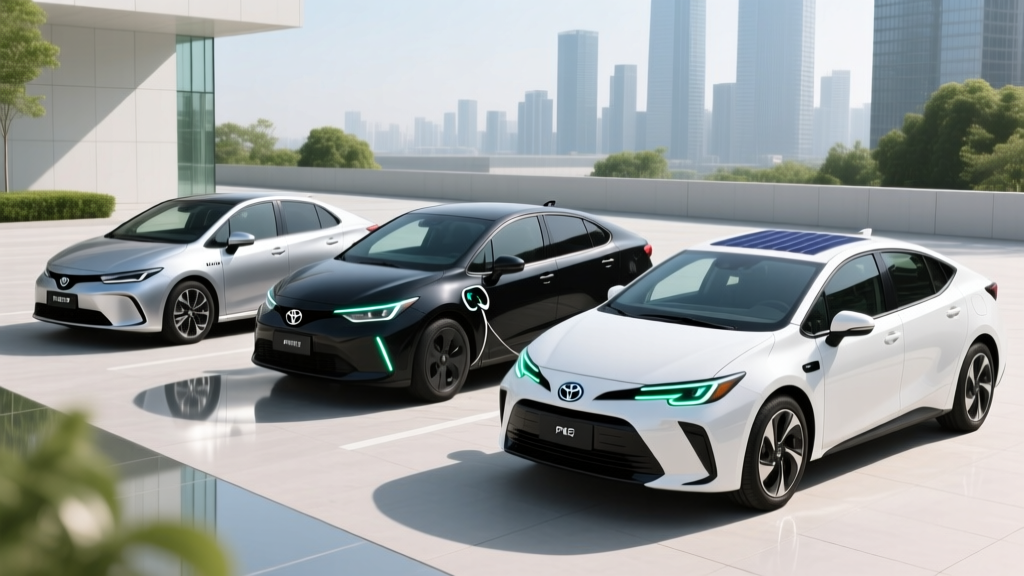
The confusion around "are Prius electric" is understandable. Toyota uses the hybrid badge prominently, and the Prius Prime can drive on electricity alone for short trips. Here's how the 2026 lineup breaks down:
| Model | Type | Battery (kWh) | EPA Electric Range | EPA Combined MPG/MPGe | Plug-In? | Base MSRP |
|---|---|---|---|---|---|---|
| 2026 Toyota Prius LE | HEV (Hybrid) | 0.9 kWh (NiMH) | N/A (gas only) | 57 MPG combined | No | $29,445 |
| 2026 Toyota Prius Prime SE | PHEV (Plug-In Hybrid) | 13.6 kWh (Li-ion) | 44 mi electric-only | 52 MPG / 127 MPGe | Yes (Level 1/2) | $34,670 |
| 2026 Hyundai Ioniq 6 SE | BEV (Battery Electric) | 77.4 kWh (NMC) | 361 mi (EPA) | 140 MPGe | Yes (Level 1/2/DC) | $39,250 |
| 2026 Chevrolet Equinox EV LT | BEV (Battery Electric) | 85 kWh (NMC) | 319 mi (EPA) | 117 MPGe | Yes (Level 1/2/DC) | $34,900 |
The standard Prius recovers energy through regenerative braking and uses its electric motor to assist the gas engine, but it never drives on electricity alone for meaningful distances. The Prius Prime, by contrast, operates as a short-range EV for daily commutes before switching to hybrid mode. A full battery-electric vehicle like the Equinox EV or Ioniq 6 has no gas engine at all.
Real Costs: Prius HEV vs Prius Prime vs a Battery EV
The purchase price tells only part of the story. Let's compare five-year ownership costs across all three categories, assuming 15,000 miles driven annually, $3.50/gallon regular gasoline, and $0.14/kWh for home electricity (national averages).
| Cost Category (5 Years) | Prius HEV ($29,445) | Prius Prime ($34,670) | Equinox EV ($34,900) |
|---|---|---|---|
| Purchase Price (after incentives) | $29,445 (no federal credit) | $34,670 (no federal credit)* | $27,400 (after $7,500 §30D credit)** |
| Fuel/Energy (75,000 mi total) | $4,605 (gasoline) | $2,620 (mix of electricity + gas) | $2,625 (electricity only) |
| Maintenance | $2,800 (oil changes, filters, brake pads) | $2,500 (fewer engine-on miles) | $1,200 (no engine, minimal wear items) |
| Insurance (avg) | $6,500 | $6,800 | $7,600 |
| Estimated 5-Year Total | $43,350 | $46,590 | $38,825 |
* The Prius Prime does not qualify for the $7,500 federal EV tax credit because it is not a battery-electric vehicle. Some state incentives may apply — check afdc.energy.gov for state-specific PHEV rebates.
** Federal §30D credit eligibility for the Equinox EV depends on MSRP caps ($55,000 for sedans), buyer income limits ($150K single / $300K joint AGI), battery critical-mineral sourcing, and point-of-sale transfer rules. Verify current eligibility at irs.gov before purchasing.
Who Should Buy What: The Ownership Reality Check
The right choice depends on your daily driving, charging access, and climate. Here's a practical framework:
Decision Framework: Which Powertrain Fits You?
Choose the Prius HEV if:
- You cannot charge at home (apartment, street parking, no garage)
- You drive more than 200 miles regularly without stopping
- You want the lowest purchase price and zero charging logistics
- You live in a rural area with sparse public charging infrastructure
Choose the Prius Prime if:
- You have Level 2 home charging (240V) and a commute under 40 miles round-trip
- You want EV-like daily driving but need gas flexibility for road trips
- You live in a region with extreme cold where EV range loss is significant
- You're not ready to commit to a full EV but want to reduce gas consumption
Choose a Battery EV (e.g., Equinox EV) if:
- You have reliable home Level 2 charging and drive under 250 miles daily
- You qualify for the $7,500 federal tax credit (income and sourcing rules)
- You want the lowest per-mile energy cost and near-zero drivetrain maintenance
- You're comfortable planning road trips around DC fast-charging networks
Cold Weather, Range, and the Real-World Gap
One of the most important considerations for electrified vehicles is how they perform outside ideal conditions.
Prius HEV: Since it runs on gasoline, cold weather affects fuel economy modestly — expect a 5-10% MPG drop in freezing temperatures due to engine warm-up cycles and winter fuel blends. You'll still get roughly 50-53 MPG combined in winter.
Prius Prime: The 44-mile electric-only range drops significantly in cold weather. At 20°F, expect roughly 30-35 miles of electric range before the gas engine kicks in. The Prime uses a resistance heater for cabin warmth in EV mode, which draws heavily from the 13.6 kWh battery. Once the engine engages, it operates as a standard hybrid, so total range isn't a concern.
Battery EVs: Cold weather is the Achilles' heel of full EVs. A vehicle with a 319-mile EPA rating like the Equinox EV will typically deliver 220-260 miles at highway speeds in 20°F weather, depending on whether it has a heat pump (the Equinox EV does). DC fast charging also slows considerably in cold weather unless the battery is preconditioned — a 10-80% charge that takes 20 minutes at 70°F might take 35-40 minutes at freezing without preconditioning.
Charging the Prius Prime: What You Need to Know
If you're considering the Prius Prime, here's the charging reality:
| Charging Level | Power (kW) | Time to Full (13.6 kWh) | Equipment Needed |
|---|---|---|---|
| Level 1 (120V household outlet) | ~1.4 kW | ~10 hours | Included portable cord |
| Level 2 (240V home charger) | ~3.3 kW (vehicle-limited) | ~4 hours | Home wall charger or public Level 2 |
| DC Fast Charging | Not supported | N/A | N/A |
The Prius Prime's onboard charger is limited to 3.3 kW, meaning even a 48-amp Level 2 home charger won't fill it faster than about 4 hours. This is perfectly adequate for overnight charging but means you can't top up quickly on the road. Crucially, the Prime does not support DC fast charging — a key distinction from full EVs that can accept 100-250 kW at highway charging stations.
For home Level 2 installation, budget $500-$1,500 for the charger unit and $800-$2,500 for electrician labor, depending on your panel capacity and wiring run distance. If your home has a 100-amp electrical panel and no spare capacity, a panel upgrade to 200 amps can add $1,500-$3,000.
Common Misconceptions About the Prius and EVs
| Myth | Fact |
|---|---|
| "The Prius is an electric car." | The standard Prius is a hybrid (HEV) that runs on gasoline. Only the Prius Prime can plug in, and it still has a gas engine. |
| "Hybrids don't save that much money." | At 57 MPG combined, the Prius HEV saves roughly $450/year vs. a 30 MPG gas car (15K miles, $3.50/gal). Over 10 years, that's $4,500 in fuel savings. |
| "EV batteries need replacing every few years." | Modern EV batteries are warrantied for 8 years/100,000 miles. Toyota's hybrid battery warranty is 10 years/150,000 miles. Data from fueleconomy.gov shows most EV batteries retain 90%+ capacity after 100K miles. |
| "The Prius Prime qualifies for the $7,500 EV tax credit." | It does not. The federal §30D credit applies only to battery-electric vehicles and some fuel-cell vehicles. PHEVs with batteries under 16 kWh generally no longer qualify under current rules. |
| "I need an EV with 400 miles of range." | The average American drives 37 miles per day (FHWA data). Even a 250-mile EV covers most daily needs with home charging. Range matters most for road trips, which are ~5% of driving. |
Warranty and Long-Term Reliability
Toyota backs both the Prius and Prius Prime with a 3-year/36,000-mile basic warranty and a 5-year/60,000-mile powertrain warranty. The hybrid battery is covered for 10 years or 150,000 miles, whichever comes first — one of the best hybrid battery warranties in the industry.
For comparison, the Chevrolet Equinox EV carries an 8-year/100,000-mile battery and powertrain warranty, which is the federal minimum for EV battery coverage. Replacement costs out of warranty vary significantly: a Prius hybrid battery replacement runs roughly $2,500-$4,000, while a full EV battery pack replacement can cost $12,000-$20,000+ depending on the model and chemistry.
Frequently Asked Questions
Can the standard Toyota Prius run on electricity alone?
No. The standard Prius HEV uses its electric motor only to assist the gasoline engine during acceleration and to enable brief low-speed electric-only movement (typically under 1 mile at very low speeds). It cannot plug in and has no meaningful electric-only range.
Does the Prius Prime qualify for any tax credits in 2026?
The Prius Prime does not qualify for the federal §30D clean vehicle credit, which is reserved for battery-electric and hydrogen fuel-cell vehicles. However, some states offer separate PHEV rebates — check your state's energy office or afdc.energy.gov for current programs.
How much does it cost to charge a Prius Prime at home?
Filling the 13.6 kWh battery from empty costs roughly $1.90 at the national average electricity rate of $0.14/kWh. That delivers about 44 miles of electric driving, or roughly 4.3 cents per mile — compared to about 8.8 cents per mile in a 57 MPG Prius HEV at $3.50/gallon gas.
Is the Prius Prime better than a full EV for road trips?
For long road trips, yes. The Prius Prime can refuel at any gas station in under 5 minutes, giving it unlimited range flexibility. A full EV requires DC fast-charging stops every 200-280 real-world miles, each taking 20-40 minutes depending on charger speed and battery preconditioning. If you road-trip frequently and travel through charging-sparse regions, the Prime eliminates that friction entirely.
What's the best Prius for someone who can't charge at home?
The standard Prius HEV. Since it never needs to plug in, it's ideal for apartment dwellers, street parkers, and anyone without garage access. You still get class-leading 57 MPG combined without any charging infrastructure.