The Short Answer: No, the Ford Bronco Is Not Electric
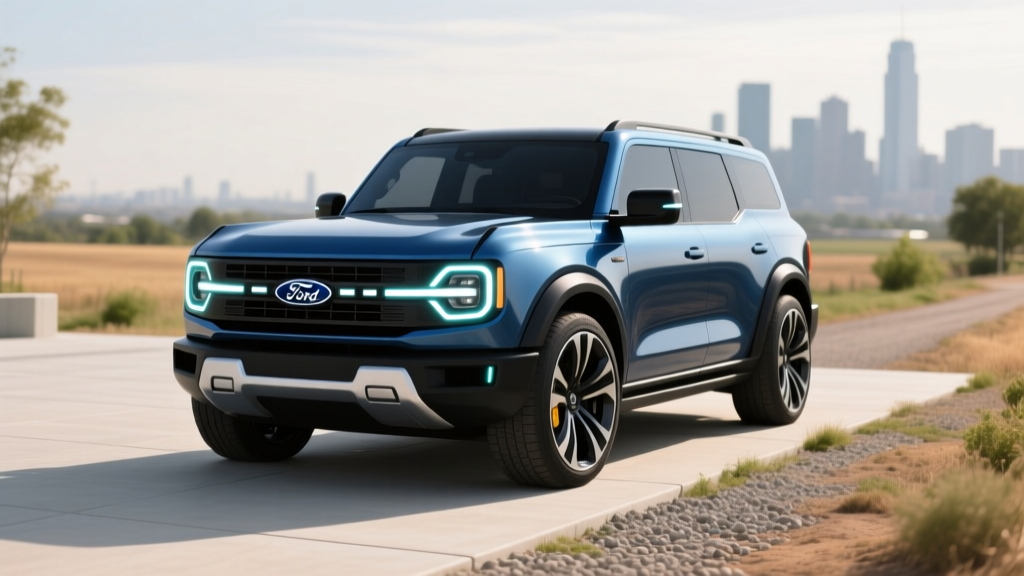
As of the 2026 model year, no production Ford Bronco is electric. Every Bronco sold today — the two-door, four-door, Bronco Sport, and Bronco Raptor — uses a gasoline engine (turbocharged EcoBoost four-cylinder or V6). Ford has not announced an all-electric Bronco (BEV), a plug-in hybrid Bronco (PHEV), or a hybrid Bronco (HEV) for sale in the United States. If you see headlines about an "electric Bronco," they refer to speculative renders, aftermarket conversions, or Ford's broader EV strategy — not a vehicle you can order from a dealer today.
Why the Confusion? Ford's Electrification Roadmap
The question "are Broncos electric" has trended because Ford has invested heavily in EVs — the F-150 Lightning, Mustang Mach-E, and E-Transit are all on sale. In 2022, Ford CEO Jim Farley publicly floated the idea of an electric Bronco, and trademark filings for "Bronco" in EV-related categories fueled speculation. However, Ford subsequently scaled back several EV product plans, delayed its next-generation electric platform (in partnership with Renault), and canceled or postponed certain battery-electric SUV programs to focus on hybrids and range-extended EVs.
The practical reality for 2026: Ford's off-road brand priorities lean toward keeping the Bronco's body-on-frame architecture, removable doors and roof, and proven gasoline powertrains. An electric Bronco would require either a heavily modified version of the F-150 Lightning/T1 platform or Ford's next-generation flexible EV architecture — neither of which has been confirmed for the Bronco nameplate.
2026 Ford Bronco Powertrain Lineup: What You Can Actually Buy
Every 2026 Bronco variant uses internal combustion. Here is the current lineup with exact powertrain data from Ford's official specifications:
| Model | Engine | Horsepower | Torque (lb-ft) | EPA MPG (Combined) | Starting MSRP |
|---|---|---|---|---|---|
| Bronco 2-Door | 2.3L EcoBoost I4 | 300 hp | 325 | 20-21 MPG | ~$39,995 |
| Bronco 4-Door | 2.3L EcoBoost I4 | 300 hp | 325 | 20 MPG | ~$43,995 |
| Bronco (optional) | 2.7L EcoBoost V6 | 330 hp | 415 | 18-19 MPG | + $2,000 |
| Bronco Raptor | 3.0L EcoBoost V6 | 418 hp | 440 | 15 MPG | ~$89,995 |
| Bronco Sport | 1.5L EcoBoost I3 | 181 hp | 190 | 26-28 MPG | ~$31,995 |
None of these trims offer a hybrid or plug-in hybrid option. The Bronco Sport previously offered a 2.0L EcoBoost option, but no electrified variant has materialized. Ford's hybrid focus for 2026 is concentrated on the Maverick, F-150 PowerBoost, and Escape Hybrid — not the Bronco.
Bronco vs. Electric SUV Alternatives: Cost & Capability Comparison
If you want Bronco-like off-road capability in an electric package, the closest 2026 alternatives are the Rivian R1S, the Jeep Wrangler 4xe (PHEV, not a Bronco but a direct rival), and the upcoming electric SUVs from other brands. Here is how a gas Bronco 4-Door stacks up against the leading electrified off-roaders:
| Metric | 2026 Ford Bronco 4-Door (2.3L) | 2026 Rivian R1S Dual-Motor | 2026 Jeep Wrangler 4xe (PHEV) |
|---|---|---|---|
| Powertrain | Gasoline (2.3L Turbo) | BEV (Dual Motor AWD) | PHEV (2.0L Turbo + Electric) |
| Horsepower | 300 hp | 533 hp | 375 hp (combined) |
| EPA Range / MPG | 20 MPG (~340 mi per tank) | ~352 mi (EPA est.) | 49 MPGe / 22 mi electric-only |
| 0-60 mph | ~6.8 sec | ~4.5 sec | ~6.0 sec |
| Ground Clearance | 8.3-11.6 in | 6.7-14.9 in (adjustable) | 10.8 in |
| Towing Capacity | 3,500 lbs | 7,700 lbs | 3,500 lbs |
| Starting MSRP | ~$43,995 | ~$75,900 | ~$52,995 |
| Federal Tax Credit (§30D) | $0 | Up to $7,500 (check eligibility) | Up to $7,500 (check eligibility) |
| Removable Doors/Roof | Yes | No (glass roof option) | Yes |
Sources: fueleconomy.gov, IRS §30D, manufacturer specifications. Tax credit eligibility depends on MSRP caps, buyer income limits, battery sourcing, and point-of-sale transfer rules — consult a tax professional.
Real Cost of Ownership: Bronco Gas vs. Electric SUV Over 5 Years
One of the most common questions from shoppers asking "are Broncos electric" is whether going electric would save money. Let's compare the 5-year total cost of ownership for a gas Bronco 4-Door versus a Rivian R1S, assuming 15,000 miles/year, $3.50/gallon gas, and $0.14/kWh home electricity:
| Cost Category | 2026 Bronco 4-Door (Gas) | 2026 Rivian R1S (BEV) |
|---|---|---|
| Purchase Price (base) | $43,995 | $75,900 |
| Federal Tax Credit | $0 | -$7,500 (if eligible) |
| Net Purchase | $43,995 | $68,400 |
| Fuel/Energy (5 yr / 75K mi) | $13,125 | $3,937 |
| Maintenance (5 yr) | $3,500 | $1,500 |
| Insurance (5 yr est.) | $9,500 | $12,500 |
| Estimated Depreciation (5 yr) | $19,800 | $30,700 |
| 5-Year Total Cost | ~$90,420 | ~$117,037 |
| Cost Per Mile | $1.21/mi | $1.56/mi |
The gas Bronco wins on total cost over 5 years primarily due to its lower purchase price and stronger resale value in the off-road segment. The R1S saves roughly $9,200 on fuel and $2,000 on maintenance over five years, but those savings don't offset the $24,400 higher net purchase price. However, if you drive significantly more than 15,000 miles per year or have access to very cheap electricity (under $0.08/kWh), the math shifts toward the EV.
Common Misconceptions About an Electric Bronco
| Myth | Fact |
|---|---|
| "Ford is releasing an electric Bronco in 2026" | No official announcement exists. Ford has not confirmed an electric Bronco for any model year. |
| "The Bronco Sport is available as a hybrid" | The 2026 Bronco Sport is gasoline-only. No hybrid or PHEV variant is offered. |
| "An electric Bronco would be bad off-road" | Electric motors deliver instant torque and precise wheel-by-wheel control, which can actually improve rock-crawling capability. The Rivian R1S and GMC Hummer EV demonstrate this. |
| "I can convert my gas Bronco to electric" | Aftermarket EV conversions exist (companies like EV West and Stealth EV), but they cost $30,000-$60,000+, void factory warranties, and may not meet emissions or safety certification in all states. |
| "Ford's EV platform is ready for a Bronco" | Ford's current EV platforms (used for F-150 Lightning and Mustang Mach-E) are not directly compatible with the Bronco's body-on-frame, removable-top architecture without significant re-engineering. |
Real-World Ownership Considerations for Off-Road EV Shoppers
If you're considering an electric alternative to the Bronco for trail use, several practical factors matter beyond the spec sheet:
Charging Access on Trails
Most off-road trailheads and national forests lack DC fast charging or even Level 2 infrastructure. A gas Bronco can carry spare fuel cans; an EV cannot carry spare electrons. If your off-road adventures take you more than 150 miles from a reliable charger, a gas or PHEV vehicle remains the pragmatic choice in 2026. The PlugShare app can help you map charging availability near your favorite trails.
Cold-Weather Range Loss
Electric SUVs lose 20-35% of their EPA-rated range in sub-freezing temperatures due to battery chemistry limitations and cabin heating demands. A Rivian R1S rated at 352 miles may deliver only 230-280 miles in 20°F winter conditions. Gas vehicles also lose efficiency in cold weather, but the reduction is typically 10-15% and refueling takes minutes regardless of temperature.
Home Charging: A Prerequisite for EV Ownership
Without Level 2 home charging (240V, 32-48 amps), EV ownership becomes significantly less convenient. A home Level 2 installation typically costs $800-$2,500 depending on panel capacity, wiring distance, and local permit requirements. Apartment dwellers and street parkers face additional challenges. If you cannot install home charging, a gas Bronco or the Wrangler 4xe (which can run on gas when the battery is depleted) may be more practical.
Trail Damage and Repair Costs
Off-road driving carries risk of underbody damage. Gas vehicles have well-understood repair networks for skid plate, exhaust, and drivetrain damage. EV battery packs and high-voltage components are expensive to repair if impacted — a punctured battery can cost $15,000-$30,000 to replace. Rivian and other EV makers include underbody armor, but the repair ecosystem for trail-damaged EVs is still maturing.
Decision Framework: Should You Wait for an Electric Bronco or Buy Now?
Buy a gas Ford Bronco now if:
- You need removable doors and roof (no current EV offers this)
- Your off-road trips exceed 200 miles from charging infrastructure
- You want a purchase price under $50,000
- You lack reliable home Level 2 charging access
- You prefer a proven dealer service network for trail repairs
Consider an electric off-road SUV (Rivian R1S, etc.) if:
- You have home Level 2 charging and mostly drive within 150 miles of home
- You value instant torque, quiet operation, and lower per-mile fuel costs
- You want higher towing capacity (R1S: 7,700 lbs vs. Bronco: 3,500 lbs)
- You qualify for the §30D federal tax credit (income and sourcing requirements apply)
- You don't need removable doors or a convertible top
Consider the Jeep Wrangler 4xe (PHEV) if:
- You want removable doors/roof AND some electric driving
- You want 22 miles of electric-only range for commuting, with gas for trail adventures
- You want to reduce fuel costs without full EV commitment
- You need a proven off-road platform with extensive aftermarket support
Wait for an electric Bronco if:
- You specifically want the Bronco brand, styling, and removable-top design in an EV
- You're willing to wait an undefined timeline — Ford has not confirmed any electric Bronco program
- You have a current vehicle that meets your needs in the interim
What First-Time EV Buyers Should Know (If You Go Electric Instead)
If you've decided to pursue an electric alternative to the Bronco, here are the essentials that separate informed buyers from disappointed ones:
- kW vs. kWh: kW (kilowatts) measures power — how fast you charge. kWh (kilowatt-hours) measures energy — how big the battery is. A 100 kWh battery charged at 150 kW doesn't charge in 40 minutes because the charge rate tapers above 80% state of charge.
- Real-world range: EPA range is measured under ideal conditions. Highway driving at 75 mph, cold weather, and elevation changes reduce range by 15-35%. Plan trips around 70-80% of the EPA number for safety.
- Charging curves: No EV charges at peak kW for the entire session. A vehicle rated for 250 kW peak may average 120-150 kW over a 10-80% session. Always check 10-80% charge time, not peak kW alone.
- §30D tax credit complexity: The federal credit of up to $7,500 has MSRP caps ($80,000 for SUVs), buyer income limits ($300,000 joint / $150,000 single), and battery sourcing requirements that change annually. Check the IRS clean vehicle credit page before assuming eligibility.
- Insurance premiums: EVs typically cost 15-25% more to insure than comparable gas vehicles due to higher repair costs and specialized parts. Get quotes before purchasing.
Frequently Asked Questions
Is Ford planning an electric Bronco for 2027 or 2028?
Ford has not officially announced an electric Bronco for any future model year. Industry analysts have speculated that Ford's next-generation flexible EV platform could support a Bronco EV eventually, but no timeline, specs, or pricing have been confirmed. Any articles claiming specific release dates are speculative.
Can I put a hybrid powertrain in a Ford Bronco?
Ford does not offer a factory hybrid Bronco. Aftermarket hybrid conversions are extremely rare and cost-prohibitive. If you want a hybrid off-roader, the Jeep Wrangler 4xe (PHEV) is the only mainstream option in this segment for 2026.
How much does it cost to fuel a Bronco per year?
At 15,000 miles per year, 20 MPG combined, and $3.50 per gallon, a 2026 Bronco 4-Door costs approximately $2,625 per year in gasoline. An equivalent electric SUV at 3 mi/kWh and $0.14/kWh home electricity would cost approximately $700 per year — a savings of roughly $1,925 annually.
Does the Bronco qualify for any tax credits?
No. The §30D federal clean vehicle credit applies only to battery-electric (BEV) and plug-in hybrid (PHEV) vehicles that meet specific battery sourcing, MSRP, and buyer income requirements. The gasoline-only Ford Bronco does not qualify for any federal EV tax credit.
What is the most fuel-efficient 2026 Ford Bronco?
The 2026 Bronco Sport with the 1.5L EcoBoost three-cylinder achieves the best fuel economy in the lineup at approximately 26-28 MPG combined (depending on trim and drivetrain). The standard Bronco 4-Door with the 2.3L EcoBoost rates at 20 MPG combined.
Will an electric Bronco ever have removable doors?
This is an engineering challenge. Removable doors require specific structural rigidity that body-on-frame designs provide. Electric vehicles typically use skateboard platforms with the battery integrated into the floor, which can accommodate removable doors but requires careful engineering for side-impact safety and structural stiffness. The Jeep Wrangler 4xe (PHEV) manages removable doors with a battery pack, proving it's possible — but whether Ford would engineer this for a Bronco EV remains unknown.