The Quick Answer: No, Not All Prius Models Are Electric
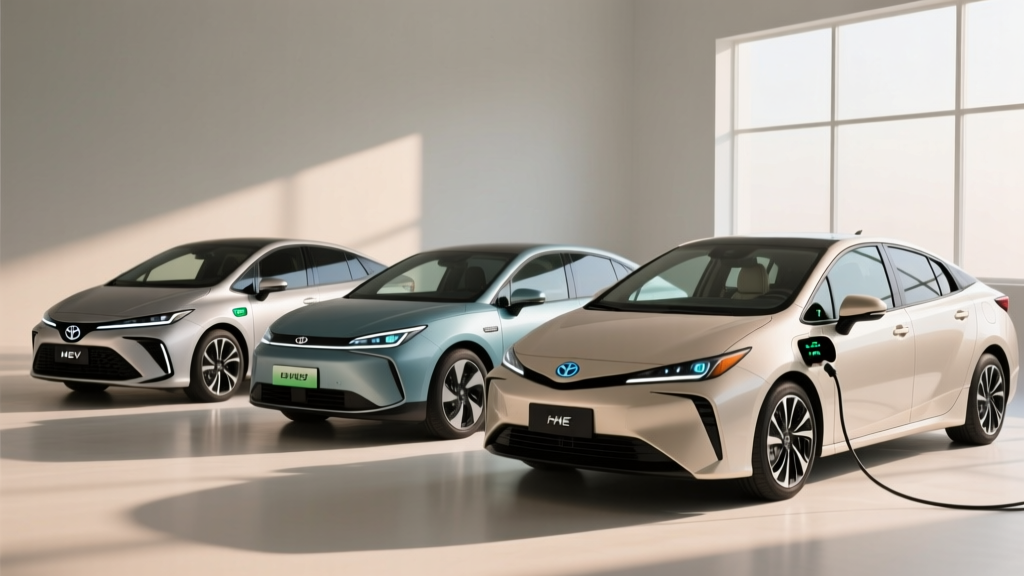
Short answer: No. The Toyota Prius lineup in 2026 includes two distinct powertrains — neither is a fully electric vehicle (BEV):
- Prius (HEV): A conventional hybrid. It uses a small battery charged by the engine and regenerative braking. No plug, no electric-only highway driving. EPA-estimated 57 MPG combined.
- Prius Prime (PHEV): A plug-in hybrid. Larger battery you can plug in to charge, delivering roughly 44 miles of electric-only range before the gas engine kicks in. EPA-estimated 52 MPG combined once the battery is depleted.
If you want a Toyota with a plug and zero tailpipe emissions, the Prius isn't it — you'd look at the bZ4X (Toyota's BEV) or wait for upcoming models. But if your question is really "should I get a Prius, a PHEV, or a full EV?", that's what we break down below with real numbers.
Prius HEV vs Prius Prime PHEV: Spec-by-Spec Comparison
| Spec | 2026 Prius (HEV) | 2026 Prius Prime (PHEV) |
|---|---|---|
| Powertrain | 2.0L 4-cyl + electric motor | 2.0L 4-cyl + larger electric motor |
| Combined Horsepower | 194 HP (FWD) / 196 HP (AWD) | 220 HP |
| 0–60 mph | ~7.0 sec | ~6.6 sec |
| Battery (traction) | ~1.0 kWh lithium-ion | ~13.6 kWh lithium-ion |
| Plug-in capable? | No | Yes (Level 1 / Level 2) |
| Electric-only range | N/A (motor assists at low speed) | EPA 44 mi (SE trim) |
| EPA combined MPG / MPGe | 57 MPG | 52 MPG gas / 127 MPGe electric |
| Max Level 2 charge rate | N/A | 3.5 kW (adds ~10 mi/hr) |
| Level 1 (120V) full charge | N/A | ~10 hours |
| Level 2 (240V) full charge | N/A | ~4 hours |
| Base MSRP (2026 est.) | ~$29,500 | ~$34,500 |
| Federal §30D tax credit | Not eligible | Up to $3,750* (see IRS rules) |
| Hybrid battery warranty | 10 yr / 150,000 mi | 10 yr / 150,000 mi |
*The IRS §30D credit for PHEVs requires a minimum 7 kWh battery (Prime qualifies), but the exact amount depends on critical-mineral and battery-component sourcing rules that shift annually. The Prius Prime has historically qualified for a partial credit — verify on the IRS qualified vehicles list before purchase. The credit has MSRP caps ($55,000 for sedans) and buyer income limits ($150K single / $300K joint).
The Real Cost of Ownership: Prius HEV vs Prime vs a Full EV
Sticker price is only the start. Here's a 5-year / 75,000-mile ownership projection comparing the Prius HEV, Prius Prime (assuming nightly home charging), and a representative BEV (the Hyundai Ioniq 6 SE, chosen for similar price class and 361-mi EPA range). Gas priced at $3.50/gal; electricity at $0.16/kWh national average.
| Cost Category (5 yr / 75K mi) | Prius HEV | Prius Prime (home-charged) | BEV (Ioniq 6 SE ref) |
|---|---|---|---|
| Base MSRP | $29,500 | $34,500 | $39,500 |
| Fed. tax credit applied | $0 | ~$3,750 | $0–$7,500* |
| Fuel / electricity cost | ~$4,600 (gas) | ~$1,900 (mix) | ~$1,800 (electric) |
| Estimated maintenance | ~$2,200 | ~$1,900 | ~$900 |
| Home charger install (L2) | $0 | ~$600–$1,200 | ~$600–$1,200 |
| 5-yr avg insurance (est.) | ~$7,500 | ~$7,800 | ~$9,200 |
| Estimated 5-yr total cost | ~$43,800 | ~$42,350–$42,950 | ~$45,800–$50,600 |
*BEV credit varies widely based on battery sourcing and buyer income. Check fueleconomy.gov for the latest qualified-vehicle list.
What the table shows: The Prius Prime's $5,000 premium over the HEV is typically recovered within 3–4 years through fuel savings if you can charge at home nightly. A full BEV has the lowest running costs but carries a higher upfront price, insurance premiums (BEVs average 15–25% more to insure than equivalent hybrids), and the risk of public-charging dependency if you can't install Level 2 at home.
Common Misconceptions About the Prius and EVs
| Myth | Fact |
|---|---|
| "The Prius is a fully electric car." | False. Both Prius models use a gasoline engine. The HEV can't plug in; the Prime can plug in but still has a gas tank. |
| "Hybrid batteries need replacing every 5 years." | Toyota's hybrid battery warranty runs 10 years / 150,000 miles. Real-world data shows most Prius traction batteries last 150K–200K+ miles before significant degradation. |
| "PHEVs are pointless — just get a full EV." | For drivers without reliable home charging, who take frequent road trips, or who live in extreme cold (where BEVs can lose 20–40% of range), a PHEV eliminates range anxiety while still cutting fuel use 40–70%. |
| "The Prius Prime qualifies for the full $7,500 tax credit." | Not guaranteed. Credit amount depends on critical-mineral sourcing and battery-component rules under §30D. Verify on the IRS list the month you buy. |
| "Hybrids don't save much money." | At 57 MPG vs a typical 28-MPG gas sedan, the Prius HEV saves ~$4,000 in fuel over 5 years at 75K miles — often enough to offset any price premium. |
Real-World Ownership Considerations Most Buyers Overlook
Home charging access is the single biggest variable
If you own a home with a garage or driveway, a 240V Level 2 outlet ($600–$1,200 installed, more if your panel needs upgrading from 100A to 200A) makes a PHEV or BEV dramatically cheaper to run. If you rent an apartment or park on the street, a PHEV still works — you simply rely on the gas engine more — but a BEV becomes a gamble on public-charging availability and pricing (DC fast charging often costs $0.35–$0.50/kWh, erasing much of the BEV cost advantage).
Cold weather hits BEVs hardest
In sub-freezing climates, BEVs lose 20–40% of EPA range due to battery chemistry and cabin heating demands. The Prius Prime loses some EV range too, but its gas engine provides waste heat for the cabin — so total range (electric + gas) barely changes. The HEV Prius is essentially unaffected.
Driving pattern determines the winner
If 90% of your driving is under 40 miles round-trip with home charging, the Prime runs almost entirely on electricity — effectively a part-time EV. If you regularly drive 200+ miles in a day, the HEV's 57 MPG and zero charging logistics may serve you better than a BEV requiring 1–2 DC fast-charge stops.
Decision Framework: Which Prius (or EV) Fits You?
Choose the Prius HEV if:
- You can't install home charging (apartment, street parking)
- You want maximum simplicity — no plugs, no apps, no charging planning
- Your budget is firm under $32,000
- You drive mostly highway miles where EV range advantages shrink
Choose the Prius Prime PHEV if:
- You have home or workplace Level 2 charging
- Your daily commute is under 40 miles round-trip
- You still want gas flexibility for road trips or cold climates
- You want EV-like daily driving without range anxiety
Choose a full BEV (bZ4X, Ioniq 6, Model 3) if:
- You have reliable home Level 2 charging
- You're ready to plan road trips around DC fast-charging networks
- You want zero tailpipe emissions and the lowest per-mile cost
- You qualify for the full §30D credit, narrowing the price gap
Frequently Asked Questions
Can I convert a regular Prius to plug-in electric?
No. The standard Prius HEV has a ~1 kWh battery and no charge port. Aftermarket plug-in conversions exist in theory but void Toyota's 10-year hybrid warranty, compromise safety systems, and cost more than the $5,000 price gap to a factory Prius Prime. Not worth it.
Does the Prius Prime drive on electricity only at highway speeds?
Yes. Unlike older PHEVs that limited EV mode to ~25 mph, the current Prius Prime can sustain electric-only driving up to about 84 mph under moderate acceleration. Most highway driving is doable on battery alone until the ~44-mile range is exhausted.
How long does the Prius Prime battery last?
Toyota warranties the Prime's traction battery for 10 years / 150,000 miles against dropping below ~70% capacity. PHEV batteries are smaller and cycle more often than BEV batteries, but Toyota's conservative buffer management (you never use 100% or 0% of the pack) has yielded strong longevity data across multiple generations.
Is the Prius Prime eligible for the $7,500 federal tax credit?
It has historically qualified for a partial credit (often $3,750), but the exact amount depends on current-year battery-sourcing rules under IRS §30D. The credit is available as a point-of-sale rebate at participating dealers, subject to buyer income caps ($150K single / $300K joint) and the $55,000 sedan MSRP cap. Confirm the current amount at irs.gov before purchase.
Should I just wait for an all-electric Prius?
Toyota has announced plans to expand its BEV lineup significantly by 2028, but as of 2026, no all-electric Prius has been officially confirmed. If your purchase timeline is within 12 months, buy based on today's lineup — don't wait for an unannounced model.
What's better for the environment: Prius HEV or a full EV?
Over a full lifecycle, a BEV charged on the average U.S. grid produces fewer CO₂-equivalent emissions than any hybrid, per EPA analysis. However, a Prius HEV still emits roughly 50% less CO₂ than a comparable gas-only sedan. The "best" choice depends on your local grid mix, driving habits, and how long you keep the vehicle.