Quick Answer: Ancheer Folding Electric Collapsible Commuter vs. an EV
If your daily round-trip commute is under 20 miles and you need portability (folding into a car trunk or apartment closet), the Ancheer folding electric collapsible commuter e-bike costs roughly $400–$700 upfront with pennies-per-charge energy costs. But if you need weather protection, highway speeds, cargo capacity, or year-round comfort, a used EV like the Chevy Bolt EV (~$14,000 used, 259-mile EPA range) or a new Nissan Leaf ($28,140 MSRP) is the practical choice. These serve fundamentally different use cases — the e-bike is a last-mile micro-mobility tool, not an EV replacement.
What Is the Ancheer Folding Electric Collapsible Commuter?
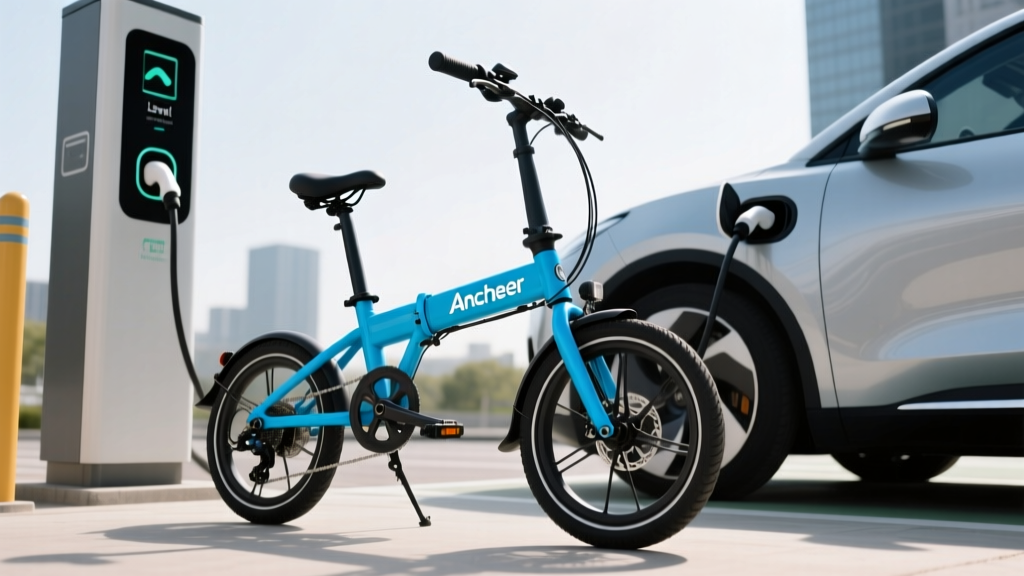
Ancheer is a budget e-bike brand that sells directly online, and their folding electric collapsible commuter models typically feature a 250W–350W rear hub motor, a 36V lithium-ion battery (usually 8–10 Ah, yielding roughly 288–360 Wh of energy), and a folding aluminum frame designed for compact storage. Top assisted speed caps at 15.5–20 mph depending on the model and local regulations. These are Class 1 or Class 2 e-bikes under U.S. federal classification — not electric vehicles in the automotive sense.
Here's what the typical Ancheer folding commuter delivers on paper:
| Spec | Typical Ancheer Folding E-Bike | 2026 Nissan Leaf S (Baseline EV) |
|---|---|---|
| Price (MSRP / retail) | $400–$700 | $28,140 |
| Battery capacity | 288–360 Wh (36V, 8–10 Ah) | 60 kWh usable (NMC) |
| Range per charge | 15–28 miles (pedal-assist dependent) | 212 miles (EPA est.) |
| Top speed | 15.5–20 mph | 90+ mph |
| Motor power | 250–350W | 160 kW (214 hp) |
| Charge time (full) | 4–6 hours (standard outlet) | ~10 hrs (L2); 10–80% in ~45 min (DCFC) |
| Weight | 40–55 lbs | ~3,600 lbs |
| Weather protection | None (rider exposed) | Full enclosure, HVAC |
| Federal tax credit (§30D) | Not eligible | Up to $7,500 if sourcing rules met |
Sources: fueleconomy.gov (2026 Nissan Leaf), manufacturer listings for Ancheer models.
Real Cost Breakdown: E-Bike vs. EV Commuting
Let's run the numbers on a 15-mile round-trip commute, 240 working days per year (3,600 miles/year). We'll compare the Ancheer folding e-bike, a used 2022 Chevy Bolt EV, and a 30-MPG gas compact car.
| Cost Category | Ancheer E-Bike | Used Chevy Bolt EV | Gas Car (30 MPG) |
|---|---|---|---|
| Purchase price | $550 | $14,000 | $12,000 |
| Energy cost/mile | ~$0.003 (360 Wh battery, $0.16/kWh) | ~$0.048 (3.5 kWh/mi at $0.16/kWh home) | ~$0.117 (30 MPG at $3.50/gal) |
| Annual energy cost (3,600 mi) | $11 | $173 | $420 |
| Annual insurance | $0–$100 (optional) | $1,200–$1,800 | $1,100–$1,600 |
| Annual maintenance | $50–$150 (tires, brake pads, chain) | $200–$400 | $500–$800 |
| Year-1 total cost | $611–$800 | $15,373–$16,373 | $13,020–$13,820 |
| 5-year total cost | $861–$1,300 | $21,973–$25,373 | $18,020–$21,820 |
The e-bike wins on pure cost by a massive margin. But this comparison only works if the e-bike can actually replace those car trips — and for many commuters, weather, distance, cargo needs, and safety concerns make that impractical for more than a few months a year.
EV vs. Gas vs. E-Bike: Which Fits Your Commute?
The right choice depends on your specific commuting pattern, not abstract preferences. Here's a data-driven decision framework:
Choose the Ancheer Folding E-Bike If:
- Your one-way commute is under 10 miles on bike-friendly routes
- You live in a mild climate (or are willing to ride in rain/cold with proper gear)
- You need to fold and carry the bike onto transit or store it in a small apartment
- You already own a car for longer trips and want to eliminate short-drive fuel costs
- Your total annual budget for commuting is under $1,000
Choose an EV (Bolt, Leaf, Model 3) If:
- Your round-trip commute exceeds 20 miles or includes highway segments
- You need year-round, all-weather transportation
- You have access to Level 2 home charging (a 240V outlet or dedicated circuit)
- You want a single vehicle that handles commuting, groceries, road trips, and passengers
- You qualify for the §30D federal tax credit (up to $7,500 — see IRS rules for income caps and battery-sourcing requirements)
Choose a Gas Car If:
- You lack reliable home or workplace charging access
- You frequently drive 300+ miles in areas with sparse DC fast-charging infrastructure
- Your budget is under $15,000 and you can't find a used EV with acceptable battery health
What a First-Time Buyer Should Know About the Ancheer E-Bike
If you're seriously considering the Ancheer folding electric collapsible commuter as a daily rider, here are the ownership realities that spec sheets don't highlight:
Real-World Range Is Lower Than Advertised
Ancheer typically advertises 15–28 miles of range. In practice, expect 12–18 miles on throttle-only mode with a 170-lb rider on flat terrain. Pedal-assist mode extends this to 20–25 miles, but you're doing physical work. Cold weather (below 40°F) reduces lithium-ion battery performance by 15–30%, shrinking a 20-mile range to 14–17 miles. This matters for commute reliability.
Battery Longevity and Replacement
The 36V lithium-ion pack in budget e-bikes typically uses generic NMC cells without sophisticated thermal management. Expect 500–800 full charge cycles before capacity drops to 80% — roughly 2–4 years of daily commuting use. Replacement batteries cost $100–$200 from third-party suppliers, but compatibility and safety certification (UL listing) vary. Unlike EV traction batteries with 8-year/100,000-mile warranties, e-bike batteries carry 6–12 month warranties at best.
Charging Is Simple but Slow
The included charger is typically a 2A unit at 42V, delivering about 84W of power. Charging a 360 Wh battery from empty takes 4–5 hours. There's no DC fast charging, no public charging network compatibility, and no standardized connector — you must use the proprietary charger. This is fine for overnight home charging but means you can't top up at a public station during the day.
Safety and Legal Considerations
E-bikes are not crash-tested by NHTSA or IIHS. You're exposed to traffic with minimal protection. Helmet use is essential, and many states require helmets for Class 2 e-bikes. Check your local regulations — some municipalities restrict e-bike use on sidewalks or require registration. Insurance is optional but recommended; renters or homeowners policies may cover theft, but liability coverage for injuring a pedestrian requires a specific e-bike policy ($100–$200/year from providers like Velosurance).
Common Misconceptions: E-Bike vs. EV
| Myth | Fact |
|---|---|
| "An e-bike is just a small EV — same benefits, lower cost." | E-bikes are micro-mobility devices, not automobiles. They lack crash protection, HVAC, cargo space, highway capability, and the §30D federal tax credit. They solve a different problem. |
| "I can commute year-round on an e-bike in any city." | Snow, ice, heavy rain, and extreme heat make e-bike commuting impractical or unsafe for 3–5 months per year in most of the U.S. An EV handles all conditions. |
| "The e-bike battery will last as long as an EV battery." | EV batteries (with active thermal management and 8-year warranties) routinely last 150,000+ miles with 10–15% degradation. Budget e-bike batteries typically need replacement in 2–4 years. |
| "E-bikes qualify for the same tax credits as EVs." | The §30D federal tax credit applies only to four-wheeled motor vehicles meeting specific battery-sourcing, MSRP, and buyer-income requirements. E-bikes are not eligible. Some states offer separate e-bike rebates — check local programs. |
| "Charging an e-bike costs the same per mile as an EV." | E-bikes use roughly 0.015–0.025 kWh per mile; EVs use 0.25–0.35 kWh per mile. The e-bike is 10–15x more energy-efficient per mile, but both are dramatically cheaper than gasoline. |
Home Charging Considerations: E-Bike vs. EV
One advantage of the Ancheer folding e-bike: it charges from any standard 120V household outlet with no electrical upgrades required. You simply plug in the included charger. For apartment dwellers without garage access, you can fold the bike and charge it indoors.
An EV requires more infrastructure. Level 2 home charging (the practical standard for daily EV ownership) requires a 240V circuit — either a NEMA 14-50 outlet ($300–$800 installed by a licensed electrician) or a hardwired wall connector ($600–$2,000+ installed, depending on panel capacity and run length). If your home's electrical panel is at capacity, a panel upgrade adds $1,500–$3,500. However, once installed, a Level 2 charger adds 25–35 miles of range per hour of charging, easily replenishing any daily commute overnight.
For EV owners without home charging access (roughly 30% of U.S. households), workplace Level 2 charging or public DC fast charging becomes necessary. This adds $50–$150/month in public charging costs and 20–40 minutes of weekly charging time — a meaningful inconvenience that makes the e-bike's plug-anywhere simplicity attractive for the right use case.
Bottom Line: Complementary Tools, Not Competitors
The Ancheer folding electric collapsible commuter e-bike and an electric vehicle serve different transportation needs. The e-bike excels as an ultra-low-cost, portable last-mile solution for fair-weather commuting under 10 miles each way. The EV provides all-weather, full-speed, long-range transportation with cargo capacity and safety features that a bicycle cannot match.
For many households, the optimal setup isn't one or the other — it's both: an EV as the primary vehicle for longer trips, bad weather, and family hauling, paired with an e-bike for solo fair-weather commutes that eliminate fuel costs and parking hassles on the days conditions allow.
Does the Ancheer folding electric e-bike qualify for the federal EV tax credit?
No. The IRS §30D clean vehicle credit applies only to four-wheeled motor vehicles with a gross vehicle weight under 14,000 lbs that meet battery-sourcing and MSRP caps. E-bikes are classified as consumer products or low-speed vehicles, not clean motor vehicles. Some states and cities offer separate e-bike purchase rebates — check your local transportation authority.
How long does the Ancheer e-bike battery last before needing replacement?
Expect 500–800 full charge cycles, or roughly 2–4 years of daily use, before capacity drops noticeably below 80%. Replacement batteries cost $100–$200 but may not carry UL safety certification. By comparison, an EV battery like the Nissan Leaf's 60 kWh pack is warrantied for 8 years/100,000 miles against dropping below 70% capacity.
Can I fold the Ancheer e-bike and bring it on public transit?
Most transit agencies allow folding bikes on buses and trains, including during peak hours when full-size bikes may be restricted. The Ancheer folding models weigh 40–55 lbs, which is manageable for short carries but heavy for extended walking. Check your local transit authority's specific folding-bike policy.
Is an e-bike cheaper to own than a used EV over 5 years?
In pure dollar terms, yes — a $550 e-bike with $11/year in energy costs and minimal maintenance totals $860–$1,300 over five years. A used EV at $14,000 with insurance, charging, and maintenance runs $22,000–$25,000 over the same period. But the EV provides capabilities the e-bike cannot: highway travel, all-weather comfort, passenger seating, cargo space, and crash protection. Cost per mile favors the e-bike; cost per capability favors the EV for most households.
What happens to the e-bike battery in cold weather?
Lithium-ion batteries lose 15–30% of usable capacity below 40°F and charge more slowly in cold temperatures. A 20-mile summer range may drop to 14–17 miles in winter. Store and charge the battery indoors when possible, and expect reduced performance on freezing mornings. EV batteries have active thermal management systems that precondition the pack, mitigating cold-weather range loss to 10–20% in most modern models.