Quick Answer: Ancheer Folding Bike Electric vs. a Budget EV
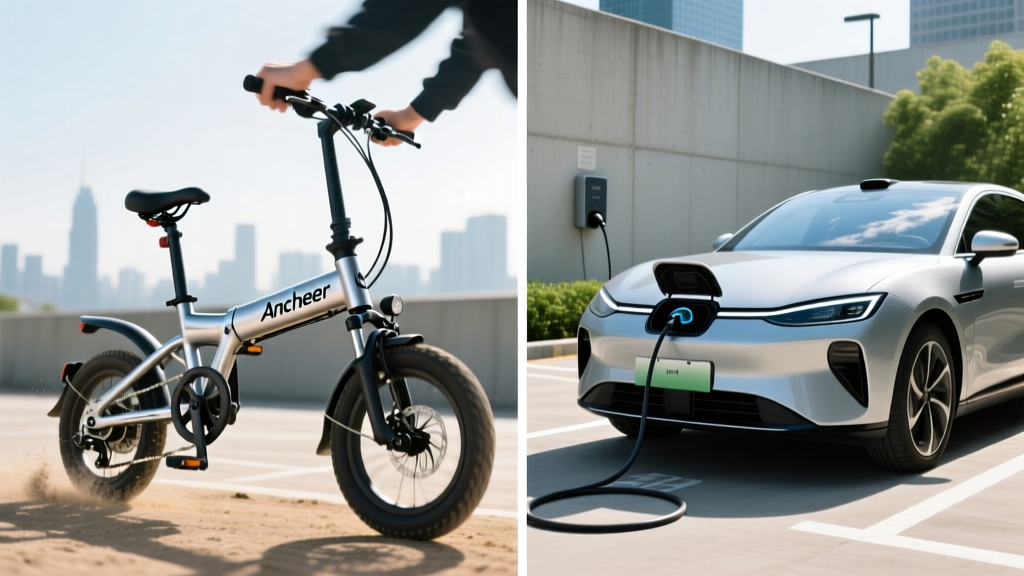
An Ancheer folding electric bike typically costs $400–$900 upfront, adds $3–$8 per month in electricity, requires no insurance or registration in most states, and delivers 15–40 miles of real-world range per charge. A budget EV like the 2026 Chevrolet Equinox EV or Nissan Leaf starts around $28,000–$33,000 before incentives, delivers 220–319 miles of EPA range, and costs $50–$120/month in electricity at home. The Ancheer wins on upfront cost and last-mile commuting; the EV wins on range, weather protection, safety, and highway capability. Your decision hinges on commute distance, climate, cargo needs, and whether you need a car for more than commuting.
What Is the Ancheer Folding Electric Bike, Exactly?
Ancheer is a budget e-bike brand that has sold folding electric bicycles through Amazon and direct channels since roughly 2017. Their folding models—commonly 20-inch wheel designs with 250W–500W hub motors and 8–15 Ah lithium-ion battery packs—target urban commuters who need something that folds for apartment storage, office closets, or car trunks. In 2026, Ancheer's lineup includes 350W and 500W folding models priced between $450 and $850, depending on battery capacity and component spec.
Key specs you'll encounter across the Ancheer folding range:
- Motor: 250W–500W rear hub motor (pedal-assist and throttle)
- Battery: 36V 8Ah to 48V 15Ah removable lithium-ion (roughly 0.29–0.72 kWh)
- Claimed range: 20–40 miles (pedal-assist mode); 12–22 miles (throttle-only)
- Top assisted speed: 15.5–20 mph (Class 1/2 e-bike limits)
- Charge time: 4–6 hours on a standard 120V outlet
- Weight: 45–60 lbs depending on model
- Folded dimensions: roughly 34" × 16" × 27"
These are not high-performance electric vehicles in the automotive sense—they're Class 1 or Class 2 e-bikes under most state laws, meaning no license, registration, or insurance is required in the majority of US jurisdictions. But buyers often cross-shop them against budget EVs for commuting, which is where the comparison gets interesting.
Ancheer Folding Bike vs. Budget EV: Spec-by-Spec Comparison
To ground this in data, here's a side-by-side comparison between a representative 2026 Ancheer folding e-bike (500W, 48V 12.5Ah model) and two common budget EVs: the 2026 Nissan Leaf S and the 2026 Chevrolet Equinox EV LT.
| Attribute | Ancheer Folding E-Bike (500W) | 2026 Nissan Leaf S | 2026 Chevy Equinox EV LT |
|---|---|---|---|
| Base Price | $650–$850 | ~$28,140 (MSRP) | ~$33,600 (MSRP) |
| Federal Tax Credit (§30D) | Not eligible (not a motor vehicle) | Up to $7,500 (subject to sourcing/income rules) | Up to $7,500 (subject to sourcing/income rules) |
| Real-World Range | 15–28 miles (throttle/assist mix) | ~140–149 miles (EPA 149 mi, cold weather ~110 mi) | ~260–319 miles (EPA 319 mi, cold weather ~240 mi) |
| Energy Capacity | 0.6 kWh | ~50 kWh usable | ~85 kWh usable |
| Charge Time (0–100%) | 4–5 hours (120V wall outlet) | ~7.5 hours (Level 2, 7.2 kW); ~45 min DCFC 10–80% | ~9.5 hours (Level 2, 11.5 kW); ~20 min DCFC 10–80% |
| Top Speed | ~20 mph (assisted) | ~90 mph (electronically limited) | ~115 mph |
| Annual Insurance | $0 (not required in most states) | $1,200–$1,800/year | $1,400–$2,100/year |
| Annual Maintenance | $50–$150 (tires, brake pads, chain) | $300–$500 (tires, cabin filter, brake fluid) | $300–$600 |
| Weather Protection | None (rider exposed) | Full enclosure, HVAC, heated seats available | Full enclosure, heat pump, heated seats available |
| Cargo Capacity | Rear rack ~25 lbs; panniers optional | 23.6 cu ft (rear seats up) | 26.4 cu ft (rear seats up) |
| Passenger Capacity | 1 rider | 5 passengers | 5 passengers |
| Registration/License Required | No (Class 1/2 e-bike) | Yes | Yes |
Sources: fueleconomy.gov (Nissan Leaf), fueleconomy.gov (Equinox EV), manufacturer specifications.
Real Costs and Savings: 5-Year Ownership Breakdown
The upfront price gap is enormous, but total cost of ownership (TCO) is where the math gets nuanced. Below is a 5-year cost projection assuming a 15-mile daily round-trip commute, 250 workdays/year (3,750 miles/year), home charging at $0.16/kWh national average, and no major battery replacement for either vehicle.
| Cost Category (5-Year) | Ancheer Folding E-Bike | 2026 Nissan Leaf S | 2026 Chevy Equinox EV LT |
|---|---|---|---|
| Purchase Price | $750 | $28,140 | $33,600 |
| Federal Tax Credit | $0 | –$3,750 (partial, battery sourcing) | –$7,500 (if eligible) |
| Effective Purchase | $750 | $24,390 | $26,100 |
| Registration & Taxes (5 yr) | $0 | $1,500 | $1,750 |
| Insurance (5 yr) | $0 | $7,500 | $8,750 |
| Electricity (5 yr, 18,750 mi) | $48 | $480 | $560 |
| Maintenance (5 yr) | $500 | $2,000 | $2,500 |
| Battery Replacement (if needed) | $150–$300 (aftermarket pack) | Covered under 8yr/100k warranty | Covered under 8yr/100k warranty |
| Total 5-Year Cost | ~$1,448 | ~$35,870 | ~$39,660 |
| Cost Per Mile | ~$0.077 | ~$1.91 | ~$2.11 |
The Ancheer is dramatically cheaper—but only if it can actually replace your car trips. If you still need a car for weekends, groceries, family trips, or bad weather, the Ancheer becomes an additional expense on top of whatever vehicle you already own, not a replacement.
Tax Credit Reality Check: §30D Eligibility
The Ancheer folding electric bike does not qualify for the federal §30D Clean Vehicle Credit. That credit applies only to four-wheeled motor vehicles meeting specific battery sourcing, MSRP caps, and buyer income limits under current IRS rules. E-bikes fall outside this definition entirely.
For the EVs in the comparison above, §30D eligibility in 2026 depends on:
- MSRP caps: $55,000 for sedans; $80,000 for SUVs, trucks, vans
- Buyner income limits: $150,000 single / $300,000 joint (modified AGI)
- Battery sourcing: Critical minerals and battery components must meet phased-in domestic/Friend-shored sourcing thresholds that tighten annually
- Point-of-sale transfer: Eligible buyers can apply the credit as a down-payment reduction at the dealer
Always verify current-year eligibility on the IRS Clean Vehicle Credit page and confirm with a tax professional before purchasing. Credit amounts vary by model and production date.
Real-World Ownership Considerations
Climate and Seasonality
This is where the Ancheer's limitations become stark. In mild climates—think San Diego, Austin, or Charlotte—an e-bike commute is viable 10–11 months of the year. In Minneapolis, Chicago, or Boston, you're realistically looking at 5–7 months of comfortable e-bike commuting before cold, ice, snow, and early darkness make it impractical or unsafe. Lithium-ion e-bike batteries also lose 20–30% of their capacity in freezing temperatures, cutting an already modest 20-mile range to 14 miles or less.
EVs lose range in cold weather too—typically 15–30% depending on whether they have a heat pump—but you're still operating from a base of 140–319 miles, so a 25% loss leaves you with 105–240 miles. You also have heated seats, a heated steering wheel, and a defroster.
Home Charging Access
Both the Ancheer and a budget EV benefit enormously from home charging, but the requirements differ sharply. The Ancheer's removable battery pack charges from any standard 120V outlet in 4–5 hours—no electrical work needed. You can charge it at your desk, in your apartment, or on a kitchen counter.
A Level 2 home charger for an EV (240V, 32–48 amps) typically costs $500–$2,500 installed, depending on whether your electrical panel needs an upgrade. If you live in an apartment or condo without dedicated parking and charging access, public charging becomes your primary fuel source—and that changes the economics significantly. DC fast charging at networks like Electrify America or EVgo costs $0.35–$0.55/kWh, roughly 2–3× the cost of home charging.
Driving Patterns and Trip Variety
If 90% of your trips are under 15 miles and you live in a bike-friendly city with protected lanes, the Ancheer can genuinely replace many car trips. But if you regularly need to carry passengers, haul groceries for a family, drive on highways, or take road trips, an e-bike simply can't substitute.
Common Misconceptions: Myth vs. Fact
| Myth | Fact |
|---|---|
| "An e-bike qualifies for the EV tax credit." | E-bikes do not qualify for §30D. Some states and local utilities offer separate e-bike rebates ($100–$500), but there is no federal credit for two- or three-wheeled e-bikes as of 2026. |
| "The Ancheer gets 40 miles of range." | That's a best-case pedal-assist claim on flat terrain with a light rider. Real-world throttle-only range on a 500W Ancheer with a 12.5Ah pack is typically 15–22 miles. Pedal-assist extends it to 22–30 miles with moderate effort. |
| "An e-bike is always cheaper than an EV." | Cheaper to buy and charge, yes. But if you still need a car for other trips, the e-bike is an added cost, not a replacement. Total household transportation cost matters. |
| "E-bike batteries last forever." | Budget e-bike batteries (like Ancheer's) typically last 500–800 full charge cycles before significant degradation. At daily charging, that's 1.5–2.5 years before you notice meaningful range loss. Replacement packs cost $150–$300. |
| "EVs are more expensive to own in every scenario." | Higher upfront cost, but over 5–8 years with home charging and tax credits, a budget EV's per-mile cost drops significantly. And an EV replaces all your car trips; an e-bike replaces only some. |
| "I don't need insurance for an e-bike." | Most states don't require it for Class 1/2 e-bikes, but theft, crash liability, and medical costs aren't covered by your auto policy. Dedicated e-bike insurance (e.g., through homeowners/renters riders or specialty insurers) costs $100–$300/year and is worth considering in urban areas. |
Decision Framework: Which Should You Choose?
Choose the Ancheer Folding Electric Bike If:
- Your one-way commute is under 10 miles and you have bike-lane infrastructure
- You live in a mild climate (or accept seasonal limitations)
- You already own a car for longer trips, bad weather, and passengers
- You need something that folds for apartment storage, office, or transit
- Your budget is under $1,000 and you want to reduce gas consumption on short trips
- You don't qualify for the §30D EV tax credit (income above caps, or no qualifying model in your price range)
Choose a Budget EV (Leaf, Equinox EV, etc.) If:
- You need a primary vehicle that handles all trip types: commute, highway, errands, passengers, road trips
- You live in a cold-weather climate where e-bike commuting is impractical 4–6 months/year
- You have or can install Level 2 home charging (or have reliable workplace charging)
- You qualify for the §30D credit, bringing effective purchase price down by $3,750–$7,500
- Safety is a priority: airbags, crash structure, ABS, ESC, and advanced driver-assist features are absent on any e-bike
- You need to carry passengers, child seats, or significant cargo
Consider Both If:
- You own an EV for primary transportation but want an e-bike for short solo errands, campus commuting, or last-mile transit connections
- The Ancheer folds into your EV's cargo area, giving you multi-modal flexibility
What First-Time EV Buyers Should Know (If You're Cross-Shopping)
If you're researching the Ancheer folding electric bike and also considering an EV, here are the essentials that most first-time EV buyers overlook:
- kW vs. kWh: kW (kilowatts) measures power—how fast you charge. kWh (kilowatt-hours) measures energy—how big the battery is. A 50 kWh battery charged at 10 kW takes 5 hours. Don't confuse them.
- EPA range vs. real-world: EPA range figures are tested under mixed conditions. Sustained highway driving at 70+ mph, cold weather, and mountainous terrain each reduce range by 15–30%. Budget EVs with ~150 miles EPA range can dip below 100 miles in winter highway driving.
- DC fast charging taper: Peak charge rates (e.g., 100 kW) only apply at low state-of-charge. Above 80%, charging slows dramatically to protect battery health. A "30-minute charge" often means 10–80%, not 0–100%.
- Home charging is the foundation: 80–90% of EV charging happens at home. If you can't install Level 2, make sure you have reliable, affordable public charging within a few miles of your home or workplace before buying.
- Battery warranty: Federal law mandates 8 years/100,000 miles minimum on EV battery packs (10 years/150,000 in CARB states). Most packs outlast the vehicle. Budget e-bike batteries have no such mandate.
- Insurance costs more: EV insurance premiums run 15–25% higher than equivalent gas cars due to repair costs and battery replacement risk. Get quotes before purchasing.
Frequently Asked Questions
Is the Ancheer folding electric bike street-legal?
In most US states, Class 1 and Class 2 e-bikes (pedal-assist up to 20 mph, or throttle up to 20 mph) are legal on bike lanes, paths, and roads without registration or licensing. A few states have specific age requirements or helmet mandates. Check your state's e-bike classification laws before riding.
Can I use the Ancheer folding e-bike in the rain?
Ancheer e-bikes have basic water resistance, but they are not waterproof. Light rain is generally fine; heavy downpours, puddle submersion, or pressure washing can damage the motor, controller, or battery connections. EVs, by contrast, are fully sealed and operate safely in any weather.
How long does the Ancheer battery last before replacement?
Expect 500–800 full charge cycles from a budget lithium-ion e-bike battery before capacity drops to ~70–80% of original. With daily charging, that translates to roughly 1.5–3 years of usable service. Replacement packs cost $150–$300 from Ancheer or third-party suppliers. EV battery packs, by contrast, are designed for 1,500–3,000+ cycles and carry 8-year/100,000-mile warranties.
Does the Ancheer folding electric bike qualify for any incentives?
Not the federal §30D credit. However, some cities, states, and utility companies offer e-bike rebate programs—typically $100–$500. Check your local utility's energy efficiency programs or your state's clean transportation incentive database. Income-qualified e-bike rebate programs exist in a growing number of jurisdictions as of 2026.
Can I fold the Ancheer and bring it on a train or bus?
Most transit agencies allow folded e-bikes on board during non-peak hours, but policies vary. The Ancheer folding models weigh 50–60 lbs, which makes carrying them up stairs or onto crowded trains challenging. Check your local transit authority's e-bike policy before relying on multi-modal commuting.
Which saves more: Ancheer e-bike + used gas car, or just one EV?
Financially, the single cheapest option is usually the Ancheer alone (if your lifestyle allows it). The second-cheapest is an Ancheer paired with a reliable used gas car you already own. A single budget EV with the §30D credit and home charging can approach the per-mile cost of a gas car over 5–8 years while replacing all your trips. The right answer depends on whether you can eliminate car ownership entirely or just reduce it.