Quick Answer: Is the Alice Electric Aircraft Relevant to EV Buyers?
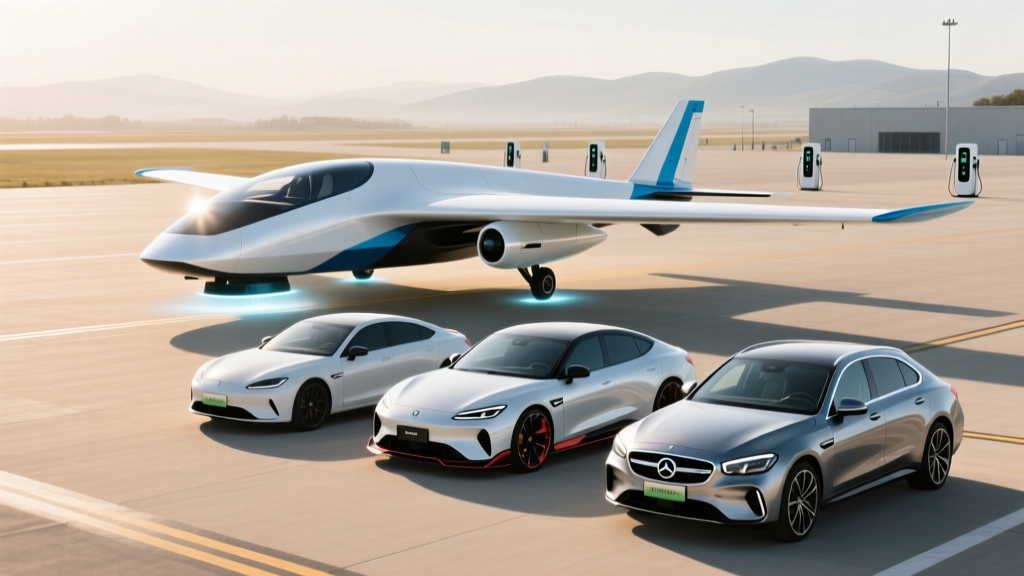
The Eviation Alice is an all-electric commuter aircraft targeting short-haul regional flights (up to ~250 nautical miles / 288 statute miles), not a car you can buy. For ground transportation, a 2026 EV like the Tesla Model 3 Long Range (EPA 363 mi, ~$38,990 base) or Hyundai Ioniq 6 SE Long Range (EPA 361 mi, ~$38,650) delivers comparable range at a fraction of the cost, with widely available Level 2 and DC fast charging. The Alice matters as a future feeder to EV ground transport at regional airports, but it is not a substitute for personal EV ownership.
What Is the Alice Electric Aircraft, Exactly?
The Eviation Alice is a 9-passenger, all-electric commuter aircraft developed by Israeli-American aerospace company Eviation. It made its first flight in September 2022 from Moses Lake, Washington, and has been progressing through FAA Part 23 type certification since. As of early 2026, Eviation lists the Alice as targeting a cruise speed of 250 knots (288 mph), a maximum range of approximately 250 nautical miles (~288 statute miles), and a service ceiling of 32,000 feet.
Key preliminary specs from Eviation's published data:
- Battery capacity: ~900 kWh (lithium-ion cells, supplier partnerships with CATL and others reported)
- Propulsion: Two magniX EP850 electric motors, ~850 HP combined
- Charge time (target): ~30 minutes ground turnaround (DC fast-charge infrastructure at airports)
- List price (announced): ~$4.1 million per aircraft
- Target operators: Regional carriers, cargo operators, air-taxi services
This is aviation electrification, not automotive. The Alice has no EPA sticker, no IRS §30D tax credit eligibility, and no Supercharger access. But understanding its energy economics reveals why EVs on the ground remain the practical electrified transport choice today.
Alice Electric Aircraft vs EVs: Range and Energy Compared
To put the Alice's 900 kWh battery in perspective: that's roughly 12 times the usable capacity of a Ford F-150 Lightning Extended Range (131 kWh usable) or about 11 times a Tesla Model S (100 kWh usable). The aircraft needs that energy to overcome aerodynamic drag at altitude and maintain 250-knot cruise.
| Vehicle | Battery (kWh usable) | Max Range | Energy per Mile | Base Price |
|---|---|---|---|---|
| Eviation Alice (aircraft) | ~900 kWh | ~288 mi (250 NM) | ~3,125 Wh/mi | ~$4,100,000 |
| Tesla Model 3 LR (2026) | ~75 kWh | 363 mi (EPA) | ~207 Wh/mi (25 kWh/100mi) | $38,990 |
| Hyundai Ioniq 6 SE LR (2026) | 77.4 kWh | 361 mi (EPA) | ~214 Wh/mi (26 kWh/100mi) | $38,650 |
| Chevy Silverado EV 4WT (2026) | ~200 kWh | 440 mi (EPA est.) | ~455 Wh/mi | $60,900 |
| Toyota Camry Hybrid (gas/electric) | 1.6 kWh (HEV) | ~686 mi (52 MPG × 13.2 gal) | N/A (gasoline) | $29,995 |
Sources: fueleconomy.gov (EPA data), Eviation published specifications (preliminary, subject to FAA certification).
The efficiency gap is stark: an EV sedan moves a passenger-mile using roughly 15× less energy than the Alice. That's physics — airplanes fight gravity and high-speed drag; cars roll on pavement at lower velocities. For daily commuting, ground EVs win on energy cost by an overwhelming margin.
Real Cost Breakdown: Alice Operating Cost vs EV Ownership
Eviation markets the Alice on the promise of lower direct operating costs compared to turboprop aircraft like the Pilatus PC-12 or Cessna Caravan. For aviation buyers, that pitch may work. For anyone weighing personal electrified transport, the comparison to EVs tells a different story.
| Cost Factor | 2026 Tesla Model 3 LR | 2026 Toyota Camry Hybrid | Alice (per-seat share, 9 pax, 288 mi flight) |
|---|---|---|---|
| Energy cost per mile | $0.04–$0.06 (home L2, $0.15/kWh avg) | $0.07 (52 MPG, $3.50/gal) | $0.40–$0.65 (est. aviation electricity + fees) |
| Annual energy (12k mi) | $480–$720 | $840 | $4,800–$7,800 |
| Maintenance/yr | $300–$500 (tires, cabin filter, fluid top-off) | $600–$900 (oil, filters, brakes) | Aviation-certified inspection (major cost) |
| Insurance/yr | $1,800–$2,800 (EV premium over gas) | $1,200–$1,800 | Aviation hull + liability (six figures) |
| Purchase price | $38,990 (before incentives) | $29,995 | ~$4,100,000 |
Even splitting Alice flight costs across 9 passengers, per-seat energy costs dwarf ground EV charging. A single 288-mile flight at 900 kWh would cost approximately $135 in electricity alone at $0.15/kWh — roughly what a Model 3 owner spends charging for an entire month of commuting.
Federal Tax Credit: EVs Yes, Aircraft No
Under IRS §30D, qualifying new EVs (battery electric and plug-in hybrid) purchased in 2026 may be eligible for up to $7,500 in federal tax credits, subject to:
- MSRP caps: $80,000 for SUVs/pickups/vans; $55,000 for sedans
- Buyer income limits: $300,000 MFJ / $225,000 HOH / $150,000 single (modified AGI)
- Battery sourcing: Critical minerals and battery components must meet escalating domestic/free-trade-partner thresholds
- Point-of-sale transfer: Buyers can transfer the credit to the dealer for an immediate price reduction
The Alice electric aircraft does not qualify for §30D — that credit applies to highway-capable vehicles with four wheels. Aviation electrification incentives fall under separate FAA and DOE programs. See IRS.gov clean vehicle credits for current rules.
Real-World Ownership: What First-Time EV Buyers Should Know
If you've arrived here researching the Alice and are considering your first EV instead, here's what actually matters for ground-level electric ownership in 2026:
Home Charging Is the Foundation
Over 80% of EV charging happens at home. A Level 2 home charger (240V, 32–48 amps) delivers 7.7–11.5 kW, adding 25–44 miles of range per hour. Installation costs range from $500 (simple NEMA 14-50 outlet near the panel) to $3,000+ if your home needs a panel upgrade from 100A to 200A service. Always get a quote from a licensed electrician before purchasing equipment.
If you lack home charging access (apartment, street parking), public Level 2 networks (ChargePoint, EVgo, Tesla Destination) and DC fast charging (Tesla Supercharger, Electrify America, EVgo) can sustain ownership, but expect higher per-kWh costs ($0.30–$0.55/kWh at DCFC vs. $0.12–$0.18 home).
Real-World Range vs. EPA Stickers
EPA range estimates are calculated under moderate conditions. In practice:
- Highway driving (75+ mph): Expect 10–15% below EPA due to aerodynamic drag
- Cold weather (below 32°F): Expect 20–30% range loss from battery chemistry and cabin heating (heat pumps mitigate this)
- DC fast charging: Peak kW rates (e.g., 250 kW) are not sustained — the charge curve tapers above 80% SoC to protect battery health. A "10–80% in 18 minutes" claim means 80–100% may take another 20+ minutes
Battery Longevity and Warranty
Most 2026 EVs carry an 8-year/100,000-mile battery warranty (10 years/150,000 miles in CARB states) guaranteeing at least 70% capacity retention. Real-world degradation data from fleets shows most NMC and LFP batteries retain 85–92% capacity at 100,000 miles. LFP (lithium iron phosphate) chemistries, used in standard-range Teslas and some Rivian models, trade lower energy density for longer cycle life and tolerance for 100% daily charging.
Common Misconceptions: EV Myths vs Facts
| Myth | Fact |
|---|---|
| "Electric aircraft like the Alice will replace short car trips" | The Alice targets 250-NM regional air routes between airports, not point-to-point ground travel. You'll still need ground transport at each end. |
| "EV batteries need replacing every few years" | Modern EV batteries are warrantied for 8–10 years and routinely outlast 150,000+ miles with 85%+ capacity. Full replacement costs $8,000–$20,000 but is rarely needed in normal ownership. |
| "EVs are worse for the environment because of battery mining" | Lifecycle analyses from Argonne National Lab and ICCT show EVs produce 50–70% fewer lifecycle emissions than gas cars in the US grid mix, even accounting for battery manufacturing. The gap widens as grids decarbonize. |
| "Charging takes too long for road trips" | At 250–350 kW DCFC stations, 10–80% takes 15–25 minutes for most 2026 EVs — comparable to a gas stop with food and restroom break. The real bottleneck is charging-desert gaps in rural corridors, not speed. |
| "All EVs qualify for the $7,500 tax credit" | Many do not. MSRP caps, buyer income limits, and battery-sourcing rules disqualify some models and buyers. Always verify on fueleconomy.gov before purchasing. |
Decision Framework: Should You Buy an EV, Hybrid, or Wait?
Choose a Battery Electric Vehicle (BEV) if:
- You have reliable home or workplace Level 2 charging access
- Your daily driving is under 100 miles round-trip (most commutes)
- You want the lowest per-mile energy cost ($0.04–$0.06/mi home charging)
- You qualify for federal/state incentives that reduce the purchase gap
- You're willing to plan DCFC stops on road trips exceeding your vehicle's real-world range
Choose a Plug-in Hybrid (PHEV) if:
- You lack reliable home charging but want some electric-only driving (20–40 mi EV range)
- You frequently drive long distances in areas with sparse DCFC infrastructure
- You want one vehicle for both city EV commuting and gas-powered road trips without range planning
- Examples: Toyota RAV4 Prime (42 mi EV, 38 MPG gas), Jeep Wrangler 4xe (22 mi EV)
Choose a Standard Hybrid (HEV) if:
- You have zero charging access and cannot install a home charger
- You want maximum range flexibility without plug-in infrastructure
- Your budget prioritizes lower upfront cost over lowest per-mile energy cost
- Examples: Toyota Camry Hybrid (52 MPG combined), Honda Accord Hybrid (48 MPG combined)
Wait on Electric Aviation (Alice) if:
- You're a personal buyer — the Alice is a $4.1M commercial aircraft, not a consumer product
- You're a regional airline or cargo operator evaluating fleet electrification — engage Eviation directly on certification timeline and route economics
Frequently Asked Questions
Can I buy the Eviation Alice for personal use?
No. The Alice is a type-certified commercial aircraft targeting regional airlines and cargo operators. It requires FAA Part 23 certification (in progress as of 2026), a pilot's license, and aviation-grade maintenance infrastructure. List price is approximately $4.1 million.
How far can the Alice electric aircraft fly on a charge?
Eviation targets approximately 250 nautical miles (288 statute miles) with reserves. That's comparable to the EPA range of a Tesla Model 3 Long Range (363 mi), but the Alice covers it at 288 mph cruise at altitude — in about one hour versus 5+ hours of driving.
Does the Alice qualify for the $7,500 EV tax credit?
No. IRS §30D applies to highway motor vehicles with at least four wheels. Aircraft are not eligible. Aviation electrification incentives exist under separate FAA and DOE programs.
What's more efficient per passenger-mile: the Alice or an EV?
Ground EVs are dramatically more efficient. A Tesla Model 3 uses approximately 207 Wh/mi; the Alice uses roughly 3,125 Wh/mi at the aircraft level, or ~350 Wh/passenger-mile when fully loaded (9 passengers). That's still ~1.7× the per-passenger energy of the car — and most EVs carry 1–2 passengers on average, narrowing the gap. However, the Alice's value proposition is speed (288 mph vs. 70 mph), not efficiency.
When will electric aircraft like the Alice be in regular service?
Eviation has not published a firm entry-into-service date as of early 2026. FAA type certification timelines for novel aircraft typically span 5–8 years from first flight. Competing electric and hybrid-electric aircraft (Heart Aerospace ES-30, Beta Technologies Alia) are on similar timelines. Expect limited commercial service no earlier than 2028–2030.
Should I buy an EV now or wait for electric aviation to mature?
These solve different problems. EVs handle daily ground transportation now with mature infrastructure, $30,000–$50,000 pricing, and available tax credits. Electric aircraft will serve regional air routes between airports — you'll still need a car, rideshare, or transit at each end. If you need personal transport today, an EV or hybrid is the actionable choice.