The Quick Answer: E-Bikes and EVs Solve Different Problems
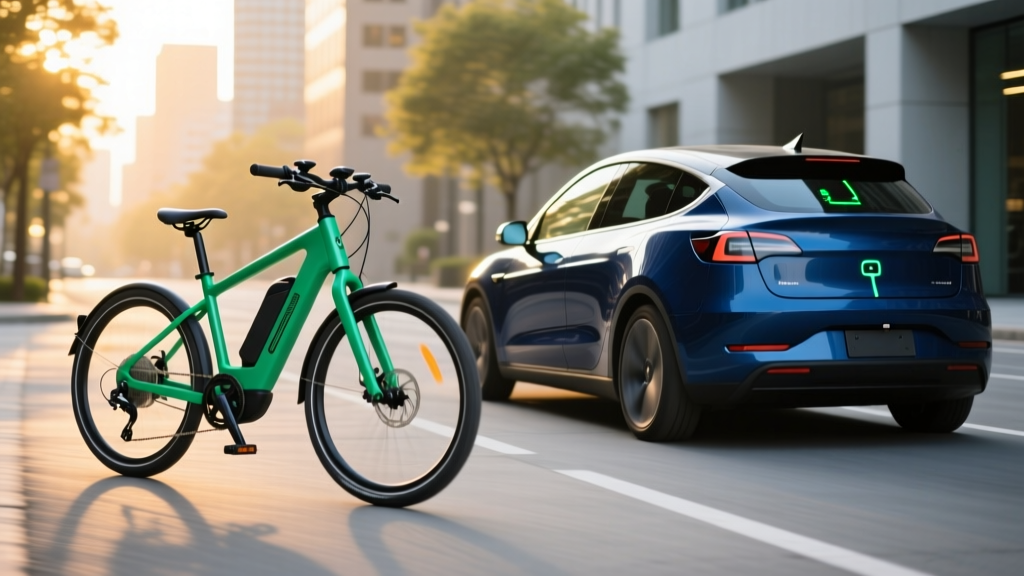
Adult electric bikes under $1000 deliver 20–45 miles of real-world range, cost $0.02–$0.05 per charge, and require zero insurance or registration. A budget EV like the 2026 Nissan Leaf or Chevrolet Bolt EV costs $28,000–$30,000 before incentives, delivers 240+ miles of EPA range, and costs $0.04–$0.06 per mile to fuel on grid electricity. The right choice depends on your trip distance, weather, and cargo needs — not just budget.
At autoedgeview.com, we focus on four-wheeled electric vehicles, but thousands of readers ask us whether a sub-$1,000 e-bike can replace a car — or complement one. The honest answer requires data, not hype. Below, we break down the real costs, range, and ownership trade-offs between budget e-bikes and entry-level EVs using 2026 pricing and energy rates.
Range and Efficiency: What the Numbers Actually Show
The most common question from prospective e-bike buyers is range. Most adult electric bikes under $1000 ship with 360–500 Wh (watt-hour) batteries — typically 36V 10Ah or 48V 10Ah lithium-ion packs using generic NMC cells. On pedal-assist mode (Class 1 or 2, capped at 20 mph), expect 25–40 miles of real-world range. Throttle-only mode drops that to 18–25 miles. Cold weather (below 40°F) reduces range by 20–35%, the same lithium-ion chemistry limitation that affects full-size EVs.
For comparison, here's how budget e-bikes stack up against the most affordable new EVs on the 2026 market:
| Vehicle Type | Battery (kWh/Wh) | EPA / Real-World Range | Efficiency | Top Speed |
|---|---|---|---|---|
| Budget e-bike ($600–$999) | 0.36–0.50 kWh | 25–40 mi (pedal-assist) | ~8–12 Wh/mi | 20 mph (Class 1/2) |
| 2026 Nissan Leaf S | 40 kWh usable | EPA 212 mi / ~175 mi highway | ~112 MPGe | 90 mph |
| 2026 Chevy Bolt EV 1LT | 65 kWh usable (NMC) | EPA 259 mi / ~220 mi highway | ~120 MPGe | 93 mph |
| 2026 Hyundai Kona Electric SE | 64.8 kWh (NMC) | EPA 261 mi / ~225 mi highway | ~118 MPGe | 104 mph |
The efficiency gap is the real story. An e-bike uses roughly 10 Wh per mile — about 30x less energy than an EV per mile traveled. But that efficiency comes with trade-offs: no weather protection, minimal cargo capacity, and a range ceiling that eliminates most commutes over 15 miles one-way.
Total Cost of Ownership: 5-Year Breakdown
Price is where e-bikes appear to dominate — but the full picture requires examining every ownership cost. Below is a 5-year comparison assuming a 15-mile round-trip commute, 250 work days per year, and national-average energy and insurance rates.
| Cost Category | E-Bike ($800 avg) | 2026 Chevy Bolt EV 1LT | 2026 Gas Sedan (Baseline) |
|---|---|---|---|
| Purchase Price | $800 | $28,400 (after §30D credit*) | $26,000 |
| Annual Energy/Fuel (3,750 mi/yr) | $12/yr ($60 total) | $210/yr ($1,050 total) | $525/yr ($2,625 total) |
| Insurance (5 years) | $0 (not required) | $6,500 | $5,800 |
| Maintenance (5 years) | $400 (tires, chain, brake pads) | $600 (cabin filter, tires, wipers) | $2,200 (oil, brakes, filters) |
| Registration/Tax | $0 | $600 | $600 |
| 5-Year Total | $1,260 | $37,150 | $37,225 |
*The IRS §30D federal tax credit provides up to $7,500 for eligible new EVs, subject to MSRP caps ($55,000 for cars), buyer income limits ($150K single / $300K joint), and battery critical-mineral sourcing requirements. The Bolt EV currently qualifies for the full $7,500 at point of sale. Verify eligibility with a tax professional — rules are subject to change.
The e-bike's cost advantage is overwhelming — if it can actually replace your car trips. The problem: most Americans live in climates or metro areas where year-round e-bike commuting isn't practical. Rain, snow, extreme heat, highway-speed roads, and cargo/passenger needs force most households to own a car regardless. In that scenario, the e-bike becomes a supplement, not a replacement — and you're paying for both.
Charging at Home: What Each Requires
One advantage e-bikes share with EVs over gas cars: home "refueling." But the infrastructure requirements differ dramatically.
E-bike charging: Every e-bike under $1,000 ships with a basic 2A–3A charger that plugs into a standard 120V household outlet. A full charge on a 500 Wh battery takes 4–6 hours. No electrician, no permit, no panel upgrade. Electricity cost: roughly $0.05–$0.08 per full charge at the national average of $0.17/kWh (per EIA data).
EV home charging: A Level 2 home charger (240V, 32A–48A) adds roughly 25–35 miles of range per hour and requires a dedicated 40A–60A circuit. Installation costs range from $500–$2,500 depending on panel capacity and wiring distance. If your home has a 100A electrical panel, a $1,500–$3,000 panel upgrade to 200A may be necessary. Level 1 charging (120V, 12A) works but adds only 3–5 miles per hour — adequate for low-mileage drivers but inadequate for daily 50+ mile commutes without overnight discipline.
The critical question many buyers overlook: do you have access to home charging at all? Roughly 30% of US households lack a garage, carport, or dedicated parking spot with outlet access. Apartment dwellers and street-parkers face real barriers to EV ownership that don't apply to e-bikes — you can carry an e-bike battery indoors to charge.
Common Misconceptions: Myth vs. Fact
| Myth | Fact |
|---|---|
| "An e-bike can fully replace my car" | Only if your commute is under 15 miles one-way, you live in mild weather, carry no passengers, and don't need highway access. For most households, it replaces 20–40% of car trips, not 100%. |
| "E-bike batteries last forever" | Generic NMC cells in sub-$1,000 e-bikes typically retain 70–80% capacity after 500–800 charge cycles (roughly 2–4 years of daily use). Replacement batteries cost $200–$400. Name-brand EV batteries carry 8-year/100,000-mile warranties with 70% retention thresholds. |
| "Sub-$1,000 e-bikes are unsafe" | Not categorically true, but budget e-bikes often lack UL 2849 certification (the e-bike safety standard), use unbranded cells, and ship with basic mechanical disc brakes. Verify UL certification before purchasing — lithium fires in non-certified packs are a documented risk, per CPSC advisories. |
| "EVs cost more to own than gas cars" | At 2026 fuel and electricity prices, a Bolt EV charged at home costs $0.04–$0.05/mile to "fuel" vs. $0.14–$0.16/mile for a 30 MPG gas sedan. The EV's higher purchase price is offset within 3–5 years for most drivers, per fueleconomy.gov calculators. |
| "E-bikes don't need maintenance" | Tires ($30–$60/pair every 1,500 mi), brake pads ($15–$30 every 2,000 mi), chain replacement ($20–$40 annually), and battery degradation all add up. Budget $80–$120/year in consumables. |
Decision Framework: Which Electrified Option Fits Your Life?
Choose an adult electric bike under $1,000 if:
- Your one-way commute is under 12 miles on roads with speed limits ≤35 mph
- You live in a climate with 200+ rideable days per year (minimal snow, ice, or monsoon rain)
- You already own or have access to a car for longer trips, bad weather, and cargo runs
- You lack home EV charging access but can charge a removable battery indoors
- Your total e-bike budget is firm at $1,000 and you can't stretch to a car payment
Choose a budget EV (Leaf, Bolt, Kona) if:
- Your commute includes highway segments (speeds above 45 mph) or exceeds 15 miles one-way
- You need year-round, all-weather transportation for work and family obligations
- You carry passengers, groceries, or gear regularly
- You have (or can install) Level 2 home charging
- You qualify for the §30D tax credit, bringing effective purchase price below $30,000
Choose a PHEV (e.g., Toyota Prius Prime, Hyundai Tucson PHEV) if:
- You want 30–44 miles of electric-only range for daily commuting but need gas-engine flexibility for road trips
- You have home charging but live in a region with sparse DC fast-charging infrastructure
- You're not ready to commit to a full BEV but want to electrify most daily miles
First-Time EV Buyer Essentials
If you're reading this and leaning toward a full electric vehicle rather than an e-bike, here are the non-negotiable things every first-time EV buyer should know in 2026:
- kW vs. kWh: kWh measures battery capacity (how far you can go). kW measures charging power (how fast you can refill). A 65 kWh battery charged at 150 kW doesn't charge in 26 minutes — the charge curve tapers significantly above 80% SoC to protect cell health.
- EPA range vs. reality: Expect 80–85% of EPA range at sustained highway speeds (70+ mph) and 65–75% in freezing temperatures. A 259-mile EPA Bolt EV delivers roughly 200 miles on a winter highway drive.
- NACS is winning: The North American Charging Standard (Tesla's connector) is now adopted by Ford, GM, Rivian, Hyundai, and most major automakers. CCS1 chargers still exist, but NACS access to the Supercharger network is the single biggest charging-infrastructure advantage in 2026.
- Battery warranty matters: Federal law mandates 8-year/100,000-mile battery warranties. Most manufacturers guarantee 70% capacity retention. Verify the specific terms — some pro-rate coverage after year 5.
- Insurance costs more: EV insurance premiums run 15–25% higher than equivalent gas cars due to repair costs and battery replacement expense. Get quotes before purchasing.
Frequently Asked Questions
Are adult electric bikes under $1000 street-legal?
Yes, in most US states — if they meet Class 1 or Class 2 definitions (pedal-assist or throttle, max 20 mph, motor ≤750W). Class 3 e-bikes (28 mph pedal-assist) have additional restrictions in some jurisdictions. Check your state's specific e-bike laws; no license, registration, or insurance is required in most states for Class 1 and 2.
Can I ride an e-bike in the rain?
Most e-bikes are water-resistant (IP54 or IP65 rated) but not waterproof. Light rain is generally fine; submersion or heavy downpours risk damaging the controller, display, or battery contacts. Budget e-bikes under $1,000 often have lower IP ratings than premium models — check the manufacturer spec before riding in wet conditions.
How long do budget e-bike batteries last before replacement?
Generic NMC cells in sub-$1,000 e-bikes typically last 500–800 full charge cycles before dropping below 80% capacity. At daily charging, that's roughly 2–3 years of usable life. A replacement battery pack costs $200–$400 depending on voltage and capacity. This is a meaningful ongoing cost that most buyers overlook.
Is a $1,000 e-bike better than a used gas car for the same money?
For short, fair-weather commuting, yes — the e-bike costs pennies per day and avoids insurance, registration, and gas. But a $1,000 gas car, despite high maintenance risk, provides weather protection, passenger capacity, highway access, and cargo space that no e-bike can match. They solve fundamentally different transportation needs.
What about e-bikes vs. electric scooters or mopeds?
Electric scooters and mopeds (like the NIU NQi or Segway E22) typically require registration, insurance, and a driver's license. They offer higher speeds (30–45 mph) and more range but lose the bike-lane access and indoor-parking advantages of e-bikes. For pure cost minimization on short commutes, the sub-$1,000 e-bike remains the cheapest electrified option.
Sources: fueleconomy.gov (EPA range and MPGe data), IRS §30D Clean Vehicle Credit, U.S. EIA electricity pricing.