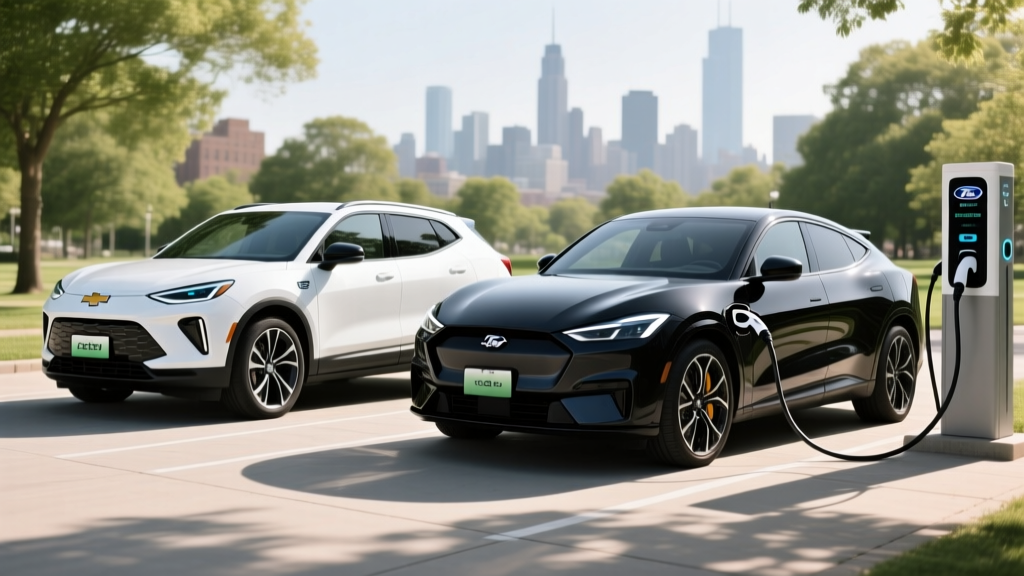
The midsize electric SUV segment has matured past early-adopter growing pains, and two of its biggest American contenders — the 2025 Chevy Blazer EV and the 2025 Ford Mustang Mach-E — now compete on very different terms. Ford has had years to refine its EV platform and charging software. Chevrolet, meanwhile, entered the Ultium arena with fresh architecture, a spacious interior, and NACS compatibility baked in. But which one actually makes more sense for your garage?
We've driven both, charged both on public DC networks, and cross-referenced every EPA figure and IRS rule. Here's the data-driven breakdown.
Side-by-Side Spec Comparison
| Spec | 2025 Chevy Blazer EV 2LT (AWD) | 2025 Ford Mustang Mach-E Select (AWD) |
|---|---|---|
| EPA Range | 279 mi | 250 mi (Std Range) / 290 mi (Ext Range) |
| Battery (Usable) | 85 kWh (NMC, Ultium) | 70 kWh (Std) / 91 kWh (Ext) — NMC |
| Peak DC Fast Charge | 190 kW | 150 kW |
| 10–80% DCFC Time | ~30 min | ~36 min (Ext Range) |
| Level 2 Charging (Home) | 11.5 kW | 10.5 kW |
| 0–60 mph | ~7.3 sec (2LT AWD) | ~5.1 sec (Select AWD) |
| Horsepower | 288 hp (2LT AWD) | 266 hp (Select AWD) |
| Efficiency (MPGe) | 103 MPGe combined | 101 MPGe combined (Ext Range AWD) |
| Cargo (Behind Rear Seats) | 25.8 cu ft | 29.7 cu ft |
| Frunk | None | 4.7 cu ft |
| Base MSRP (AWD) | $44,600 (2LT) | $41,995 (Select Std Range) |
| Battery Warranty | 8 yr / 100,000 mi | 8 yr / 100,000 mi |
Sources: fueleconomy.gov, Chevrolet Blazer EV specs, Ford Mustang Mach-E specs. Trims and prices subject to change; verify at purchase.
Range & Efficiency: Real-World Expectations
On paper, the Mach-E Extended Range AWD edges ahead with 290 miles EPA versus the Blazer EV 2LT's 279. But the Blazer's larger 85 kWh usable battery and slightly better MPGe rating (103 vs. 101) mean it extracts more distance per kilowatt-hour in mixed driving.
Real-World Range Reality Check
- Blazer EV 2LT AWD (EPA 279 mi): Expect ~230–255 mi on highway-heavy trips at 70–75 mph. In cold weather (below 30°F), plan for 200–220 mi due to cabin heating and reduced battery efficiency — even with its heat pump.
- Mach-E Ext Range AWD (EPA 290 mi): Highway driving yields ~245–265 mi in moderate temps. Cold weather drops that to roughly 210–230 mi. Ford's thermal management is competent but not class-leading.
- Mach-E Std Range AWD (EPA 250 mi): The smaller 70 kWh battery means ~210–230 mi highway, and under 190 mi in deep cold. Best for urban commuters with reliable home charging.
Neither vehicle offers LFP battery options — both rely on NMC chemistry, which provides higher energy density but requires more careful long-term state-of-charge management. If you charge daily to 80% and only go to 100% for road trips, both packs should retain 90%+ capacity at 100,000 miles based on current NMC degradation curves.
Charging Speed & Network Access
This is where the Blazer EV's newer architecture shows a clear advantage. Its 190 kW peak DC charge rate beats the Mach-E's 150 kW ceiling, shaving meaningful minutes on road trips.
| Charging Level | Blazer EV 2LT AWD | Mach-E Ext Range AWD |
|---|---|---|
| Level 1 (120V, 1.4 kW) | ~4 mi/hr | ~3 mi/hr |
| Level 2 (240V, home) | ~28 mi/hr (11.5 kW) | ~25 mi/hr (10.5 kW) |
| DC Fast (Peak) | 190 kW | 150 kW |
| DC 10–80% | ~30 min | ~36 min |
| Connector (2025) | NACS (native Tesla Supercharger access) | CCS1 (Tesla adapter included for Supercharger access) |
Charging network reality: Chevrolet's native NACS port means Blazer EV drivers plug directly into Tesla Superchargers — the most reliable DC network in the U.S. — without an adapter. Ford includes a CCS-to-NACS adapter with every 2025 Mach-E, enabling Supercharger access, but adapters introduce a failure point and occasional communication glitches at older stalls. On Electrify America and EVgo, both vehicles charge natively via CCS (the Blazer EV uses an adapter in reverse for non-Tesla CCS stations).
One critical note on the Blazer EV's charge curve: like most Ultium vehicles, it sustains peak kW only up to roughly 40–50% SoC before tapering. A 10–80% session averages closer to 120–130 kW sustained, which is still competitive but not the full 190 kW for the entire session. The Mach-E's curve is flatter but lower, averaging ~100–110 kW sustained.
Performance & Driving Dynamics
The Mach-E wins the stoplight sprint. Even in its base Select AWD trim, the 266-hp Mach-E hits 60 mph in roughly 5.1 seconds — sporty by any measure. The Blazer EV 2LT AWD, at 288 hp, runs a more relaxed 7.3 seconds. If you want the quickest version, the Mach-E GT (480 hp, 0–60 in ~3.5 sec) is in a different league entirely, though at a $59,995 starting price.
Behind the wheel, the differences are philosophical. The Mach-E drives like a lifted sports sedan — firm damping, quick steering, and a low center of gravity that belies its crossover stance. The Blazer EV rides softer, isolates road noise better, and feels more like a traditional two-row midsize SUV. If you're trading in an Equinox or CR-V, the Blazer EV will feel more familiar. If you're coming from a sport sedan, the Mach-E will feel like home.
Price, Tax Credits & Total Ownership Cost
Pricing & Federal Tax Credit (§30D) — 2025 Model Year
| Blazer EV 2LT AWD | Mach-E Select AWD (Std Range) | Mach-E Select AWD (Ext Range) | |
|---|---|---|---|
| Base MSRP | $44,600 | $41,995 | $48,995 |
| Federal Credit Eligibility (§30D) | Up to $7,500* | Up to $7,500* | Up to $7,500* |
| Effective Price (After Max Credit) | ~$37,100 | ~$34,495 | ~$41,495 |
*Per IRS §30D rules, eligibility requires: buyer AGI ≤ $150K (single) / $300K (joint), vehicle MSRP ≤ $80,000 (SUVs), and compliance with critical-mineral and battery-component sourcing thresholds. Credit may be transferred to the dealer at point of sale for an instant price reduction. Verify current sourcing requirements with your dealer and a tax professional before purchase — thresholds tighten annually.
Ownership cost differences (5-year estimate):
- Efficiency cost: Nearly identical. At the U.S. average electricity rate of ~$0.16/kWh and 12,000 mi/yr, both cost roughly $550–$620/year in home charging. Public DC fast charging at ~$0.40/kWh adds $200–$350/yr if used frequently.
- Insurance: The Mach-E carries slightly higher premiums on average (~$150–$200/yr more) due to sportier trim performance tiers and Ford's EV repair cost data. Get quotes from your carrier before deciding.
- Maintenance: Both are EVs — no oil changes, no transmission fluid. Expect tire rotations, cabin air filters, and brake fluid checks. Budget ~$300–$400/yr for both. Regen braking extends pad life to 80,000+ miles in most driving.
- Depreciation: The Mach-E has a longer market track record, giving it slightly more predictable resale. The Blazer EV is newer and depreciation is still establishing. Both will depreciate more than comparable ICE SUVs in the first three years — typical for the current EV market.
Tech, Interior & Daily Practicality
🏆 Tech Winner: Mach-E
Ford's SYNC 4A with a 15.5-inch vertical touchscreen remains one of the best EV infotainment systems. Wireless CarPlay/Android Auto, over-the-air updates that actually add features, and BlueCruise (Ford's hands-on-wheel Level 2 driver assist on pre-mapped highways) are well-executed. The Mach-E's frunk adds 4.7 cu ft of secure, drainable storage.
🏆 Interior Space Winner: Blazer EV
The Blazer EV's 17.7-inch infotainment screen and 11-inch digital cluster run Google Built-In with native Google Maps navigation — critical for EV route planning with charging stops. Rear-seat legroom is more generous, and the cabin materials in the 2LT feel a half-step above the Mach-E Select. However, the Blazer EV has no frunk, a missed opportunity for an EV-native platform.
ADAS Note — SAE Level 2 Only: Neither the Blazer EV's Super Cruise nor the Mach-E's BlueCruise is "self-driving." Both are SAE Level 2 systems requiring continuous driver supervision. Super Cruise offers hands-off driving on 400,000+ miles of pre-mapped roads with driver-monitoring cameras. BlueCruise offers hands-off on 130,000+ miles of Blue Zones. Both are excellent highway companions — neither replaces an attentive driver.
Decision Framework: Which One Should You Buy?
Choose the 2025 Chevy Blazer EV if:
- You want native NACS access to Tesla Superchargers without an adapter
- You prioritize a quieter, more comfort-oriented ride
- Faster DC charging (190 kW peak, ~30 min 10–80%) matters for road trips
- You prefer Google Built-In for native EV navigation and charging routing
- You want a traditional SUV feel with a roomy rear seat
Choose the 2025 Ford Mustang Mach-E if:
- You want a lower entry price ($41,995 vs. $44,600) and potentially lower effective cost after credit
- Performance matters — the Select AWD's 5.1-sec 0–60 is quick, and the GT is thrilling
- You value a frunk for secure, weatherproof cargo
- You want a proven platform with years of OTA refinement and established resale data
- You prefer sport-sedan driving dynamics in a crossover body
Blazer EV 2LT AWD — Pros & Cons
Pros: NACS native, faster DC charging, comfortable ride, Google Built-In, roomy interior, strong efficiency
Cons: No frunk, higher base price, newer platform (less OTA maturity), slower 0–60, limited Super Cruise availability at launch
Mach-E Select AWD — Pros & Cons
Pros: Lower starting price, quick acceleration, frunk, proven BlueCruise, sporty handling, strong OTA track record
Cons: Slower DC charging (150 kW peak), adapter required for Superchargers, firmer ride, Std Range battery limits road-trip flexibility
Frequently Asked Questions
Which has better real-world range — the Blazer EV or Mach-E?
The Mach-E Extended Range AWD holds a slight edge (EPA 290 mi vs. 279 mi). But in real-world highway driving, expect roughly 245–265 mi from the Mach-E ER and 230–255 mi from the Blazer EV. The gap narrows to near-irrelevance in mixed city/highway use. For cold climates, neither excels — plan for 15–25% range loss below freezing.
Does the Blazer EV charge faster than the Mach-E?
Yes. The Blazer EV peaks at 190 kW (10–80% in ~30 min) versus the Mach-E at 150 kW (~36 min). On a 500-mile road trip with two DC stops, that's roughly 12 minutes saved total. Meaningful, not transformative.
Do both qualify for the $7,500 federal tax credit?
Both are eligible for up to $7,500 under §30D, but your personal eligibility depends on income (≤$300K joint / ≤$150K single), and the vehicle must meet evolving battery-sourcing and critical-mineral thresholds that tighten each year. Always verify with your dealer and IRS guidance at time of purchase. Both can be applied as a point-of-sale price reduction.
Is the Mach-E GT worth the premium over the Blazer EV SS?
If raw performance is your priority, the Mach-E GT (480 hp, 0–60 ~3.5 sec, starting ~$59,995) is one of the quickest SUVs under $70K. The Blazer EV SS (expected 557 hp, ~$55,000) hasn't been widely delivered as of early 2025, so real-world comparisons remain limited. For most buyers, the base AWD trims compared here offer the best value.
Which has better cargo space?
The Mach-E wins on paper: 29.7 cu ft behind the rear seats plus a 4.7 cu ft frunk, totaling ~34.4 cu ft. The Blazer EV offers 25.8 cu ft and no frunk. For groceries and luggage, both are adequate. For bulky gear (strollers, camping equipment), the Mach-E's extra volume and frunk make a noticeable difference.
Which is cheaper to own over five years?
Nearly identical on efficiency and maintenance. The Mach-E's lower starting price and established depreciation curve give it a slight TCO edge, but insurance quotes vary by driver and zip code — the Mach-E tends to run $150–$200/yr more to insure. Get quotes for both before deciding; the insurance difference may flip the math in your case.
Bottom line: There is no universal winner between the 2025 Blazer EV and 2025 Mach-E. The Blazer EV is the better road-trip companion — faster charging, native Supercharger access, and a more relaxing cabin. The Mach-E is the better daily driver for performance-minded buyers who want a lower entry price, proven software, and sportier handling. Your priorities decide the verdict.