The Short Answer
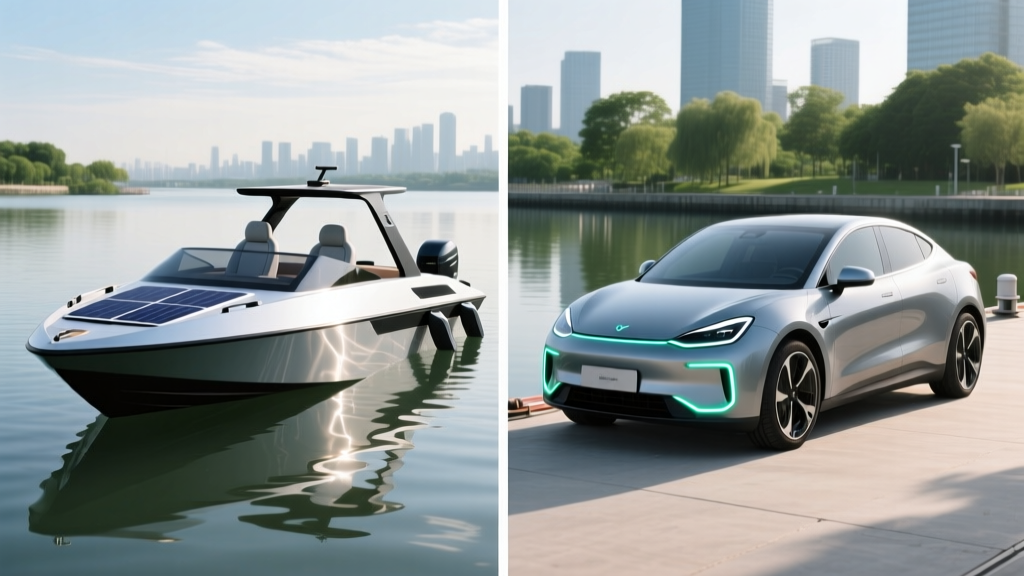
2 person electric boats (from brands like Candela, RAND, and X Shore) are niche recreational watercraft priced between $12,000 and $95,000+, offering 20–50 nautical miles of range at cruising speeds of 15–25 knots. They are not substitutes for electric cars — they serve an entirely different use case. If you're researching "2 person electric boats" because you're exploring the broader EV ecosystem, this guide breaks down how electric boat ownership compares to electric car ownership in 2026, with exact costs, charging requirements, range realities, and a decision framework to help you spend your money wisely.
What Are 2 Person Electric Boats? A 2026 Market Snapshot
Electric boats for two passengers occupy a growing but still small segment of the marine market. Unlike electric cars — where you can choose from over 60 models across every body style — the 2-person electric boat market in 2026 is dominated by a handful of premium and mid-tier options:
- Candela C-8 (2-person capable, hydrofoiling): ~$390,000 — a luxury foiling dayboat with 57 nautical mile range at 22 knots, using a 69 kWh battery pack.
- RAND Picnic 23 Electric: ~$85,000–$110,000 — a compact electric cruiser with a 40 kWh battery, roughly 30–40 nm range depending on speed.
- X Shore Eelex 8000: ~$330,000 — a larger electric dayboat (can seat more than 2 but commonly used as a couple's cruiser) with dual 63 kWh batteries and ~50 nm range.
- Budget inflatable/portable options (e.g., ePropulsion Spirit or Torqeedo-powered dinghies): $3,000–$15,000 — small tenders with 1–3 kW outboards and 1–3 kWh batteries, offering 5–15 miles at 4–6 knots.
For context, a mainstream electric car like the 2026 Hyundai Ioniq 6 SE starts at ~$38,000 MSRP, delivers 361 miles of EPA range, and charges from 10–80% in ~18 minutes at 240 kW DC fast chargers. The gap in value-per-mile is enormous, which is why the buying decision really comes down to what you need the vehicle for.
Electric Boats vs Electric Cars: The Numbers Side by Side
| Attribute | 2-Person Electric Boat (Mid-Tier) | 2026 EV Sedan (e.g., Ioniq 6 SE) | Gas-Powered Boat (Comparable 20ft) |
|---|---|---|---|
| Purchase Price | $85,000–$120,000 | $38,000–$45,000 | $35,000–$60,000 |
| Range | 30–50 nautical miles | 320–361 EPA miles | 100–200 nm (fuel tank dependent) |
| Battery / Fuel Capacity | 40–70 kWh (NMC lithium-ion) | 77.4 kWh (NMC/LFP) | 40–80 gallon gasoline |
| "Refuel" / Charge Time | 4–8 hours (Level 2 AC); no DC fast marine standard | ~18 min (10–80% at 240 kW DC) | 5–10 minutes at marina pump |
| Energy/Fuel Cost per Hour | $3–$8 (at $0.14/kWh, 20 kW avg draw) | $0.04–$0.06/mile (home charging) | $25–$50/hour (at $4.00/gal marine gas) |
| Annual Maintenance | $500–$1,500 (hull, anti-fouling, winterization) | $300–$600 (tires, cabin filter, wipers) | $1,500–$3,000 (engine, lower unit, winterization) |
| Federal Tax Credit (§30D) | Not eligible (marine vessels excluded) | Up to $7,500 (income/MSRP/sourcing rules apply) | N/A |
| Insurance (Annual) | $1,200–$3,500 | $1,400–$2,800 | $800–$2,500 |
Sources: Manufacturer spec sheets (Candela, RAND Marine), fueleconomy.gov, IRS §30D guidelines.
Real Costs of Owning a 2 Person Electric Boat in 2026
| Cost Category | Electric Boat (Year 1) | Electric Car (Year 1) |
|---|---|---|
| Purchase / Down Payment | $17,000–$24,000 (20% down on $85K–$120K) | $3,800–$7,500 (after §30D credit on ~$40K) |
| Dock / Mooring Fees | $3,000–$8,000/year (marina-dependent) | $0 (park at home) |
| Charging / Energy | $300–$800/year (seasonal use, 50–100 outings) | $500–$900/year (12,000 miles, home + public) |
| Maintenance | $500–$1,500 | $300–$600 |
| Insurance | $1,200–$3,500 | $1,400–$2,800 |
| Winterization / Storage | $800–$2,500 (haul-out, shrink-wrap, battery storage) | $0–$200 (garage or cover) |
| Total Year 1 (Excluding Purchase) | $5,800–$16,300 | $2,200–$5,100 |
The operating-cost advantage of electric boats over gas boats is real — you eliminate engine oil changes, lower-unit gear lube, fuel-system winterization, and the ~$30–$50/hour fuel burn of a 150 HP outboard. But the total cost of boat ownership dwarfs that of an electric car because of dockage, storage, and the sheer purchase price.
Charging an Electric Boat: What You Need to Know
Unlike the EV world, where NACS and CCS connectors are standardized and DC fast charging at 150–350 kW is widely available, electric boat charging in 2026 remains fragmented:
- No universal marine DC fast-charging standard. Most electric boats charge via shore-power AC connections (30A or 50A, 120V or 240V), equivalent to Level 1 or Level 2 home charging for cars.
- Typical charge rates: 3.3 kW to 11 kW AC, meaning a 40 kWh battery takes 4–12 hours to fully charge — overnight at the dock is the standard pattern.
- Marina electrical upgrades: If your slip doesn't have a dedicated 240V/50A circuit, expect to pay $2,000–$6,000 for marina-grade electrical work (marine electricians charge more than residential due to code requirements and corrosion-resistant hardware).
- Cold-water and cold-air impact: Lithium-ion marine batteries lose 15–30% effective capacity in water temperatures below 45°F, similar to the range loss EVs experience in winter. Most premium electric boats include battery thermal management, but budget options may not.
Common Misconceptions About Electric Boats (and Electric Cars)
| Myth | Fact |
|---|---|
| "Electric boats have no range limits — the water is flat!" | Water resistance is actually higher than road rolling resistance. A planing hull at 25 knots burns energy far faster than a car at 65 mph. Real-world range is often 60–75% of the marketing claim when running at higher speeds. |
| "I can charge my electric boat at any marina." | Most marinas offer 120V/15A or 30A shore power — adequate for slow overnight charging but insufficient for quick turnarounds. Confirm your slip's amperage before buying. |
| "Electric boats qualify for the $7,500 federal tax credit." | The IRS §30D clean vehicle credit applies only to on-road motor vehicles with 4 wheels. Boats, off-road vehicles, and marine craft are excluded. |
| "An electric boat battery will need replacing every 5 years." | Marine NMC batteries are typically warrantied for 8–10 years or 2,000–3,000 charge cycles to 70–80% capacity retention — similar to EV battery warranties. Replacement costs $15,000–$40,000 depending on pack size. |
| "Electric cars are just as limited as electric boats." | A 2026 Tesla Model 3 Long Range offers 363 EPA miles and 10–80% DC charging in ~15 minutes. The infrastructure and range gap between electric cars and electric boats is substantial. |
Who Should Buy a 2 Person Electric Boat — And Who Should Buy an EV Instead?
Decision Framework: Where Should Your Money Go?
Buy a 2 person electric boat if:
- You already own a reliable daily-driver vehicle (EV or gas) and have $80,000+ in discretionary spending for recreation.
- You live on or near a lake, calm bay, or protected waterway where 30–50 nm of range covers your typical outing.
- You have confirmed dock access with adequate shore power (240V/30A minimum) for overnight charging.
- You value silent, emission-free operation on the water — especially on lakes with noise restrictions or no-wake zones where electric motors excel.
- You want to eliminate the maintenance burden of marine gasoline engines (fuel stabilizer, carburetor issues, lower-unit service).
Buy an electric car first if:
- You're spending your primary transportation budget — an EV sedan or crossover replaces a $40,000–$60,000 gas car and saves $1,500–$3,000/year in fuel and maintenance.
- You commute more than 20 miles daily and need reliable, all-weather range of 250+ miles.
- You qualify for the §30D federal tax credit (income caps: $150K single / $300K joint; MSRP caps: $55K sedans / $80K SUVs/trucks).
- You have access to Level 2 home charging (a 240V/40A circuit, typically $500–$2,000 installed by a licensed electrician).
- You don't already have a boat, dock access, or a clear plan for seasonal marine use.
Consider both (sequentially) if:
- You've already optimized your daily driving with an EV, have dedicated recreation funds, and your local waterway is well-suited to electric propulsion (calm, protected, with shore power).
Real-World Ownership: What First-Time Buyers Get Wrong
For Electric Boats
The biggest shock for first-time electric boat owners is range sensitivity to speed. A 40 kWh battery might deliver 45 nautical miles at 8 knots (displacement speed) but only 15–18 nm at 22 knots (planing speed). This is analogous to an EV losing 20–30% range at 80 mph vs. 55 mph, but the magnitude is far greater on water because hydrodynamic drag increases with the cube of speed. Always plan your outings around displacement-speed range unless your boat has a hydrofoil system (like the Candela C-8) that dramatically reduces drag at speed.
Additional ownership realities:
- Anti-fouling paint: Required annually in saltwater ($400–$800) to prevent barnacle growth that increases drag and reduces range.
- Battery storage in winter: Marine batteries should be stored at 40–60% state of charge in a climate-controlled space. Leaving a fully charged or fully depleted pack in freezing temperatures accelerates degradation.
- Resale market: Electric boats have limited resale data in 2026. Expect 40–55% depreciation over 3 years, worse than mainstream EVs (which average 35–45% over the same period).
For Electric Cars
First-time EV buyers should know:
- Home charging is the backbone. Without Level 2 home access, EV ownership becomes significantly less convenient. Budget $500–$2,000 for a 240V/40A circuit installation (more if your panel needs a 200A upgrade, which can add $1,500–$4,000).
- Real-world range is 80–90% of EPA in moderate weather, 60–75% in sub-20°F cold. A 320-mile EPA car may deliver 210–240 miles on a 15°F January highway trip.
- Public charging reliability varies. Networks like Tesla Supercharger and Electrify America average 85–95% uptime, but individual station outages are common. Always have a backup charging plan on road trips.
Frequently Asked Questions
Can I use a federal EV tax credit to buy an electric boat?
No. The IRS §30D clean vehicle credit applies exclusively to four-wheeled on-road motor vehicles. Electric boats, personal watercraft, and off-road vehicles do not qualify. Some states may offer marine electrification rebates — check your state's energy or environmental agency for current programs.
How long does it take to charge a 2 person electric boat?
Using standard marina shore power (240V/30A = ~7.2 kW), a 40 kWh battery charges from empty to full in roughly 5.5–6 hours. On a 120V/15A outlet (~1.8 kW), expect 22+ hours. There is currently no widespread DC fast-charging infrastructure for recreational electric boats.
What's the real range of a mid-tier 2 person electric boat?
At displacement speeds (6–8 knots), expect 35–50 nautical miles from a 40–70 kWh pack. At planing speeds (20–25 knots), range drops to 12–22 nm. Hydrofoiling designs like the Candela C-8 achieve significantly better efficiency at speed, roughly doubling planing-hull range at equivalent speeds.
Is an electric boat cheaper to run than a gas boat?
Yes, on a per-hour basis. Electric propulsion costs $3–$8/hour in electricity vs. $25–$50/hour in marine gasoline for a comparable 150 HP outboard. You also eliminate engine oil, spark plugs, fuel filters, and lower-unit maintenance. However, the higher purchase price means the payback period is 8–15 years for typical recreational use (50–100 hours/year).
Should I buy an electric boat or an electric car first?
Almost every buyer should prioritize an electric car. A $38,000–$55,000 EV replaces your daily transportation, saves $1,500–$3,000/year in fuel and maintenance, and may qualify for up to $7,500 in federal tax credits. An electric boat is a recreational purchase best made after your daily driving is optimized and you have confirmed dock/shore-power access.