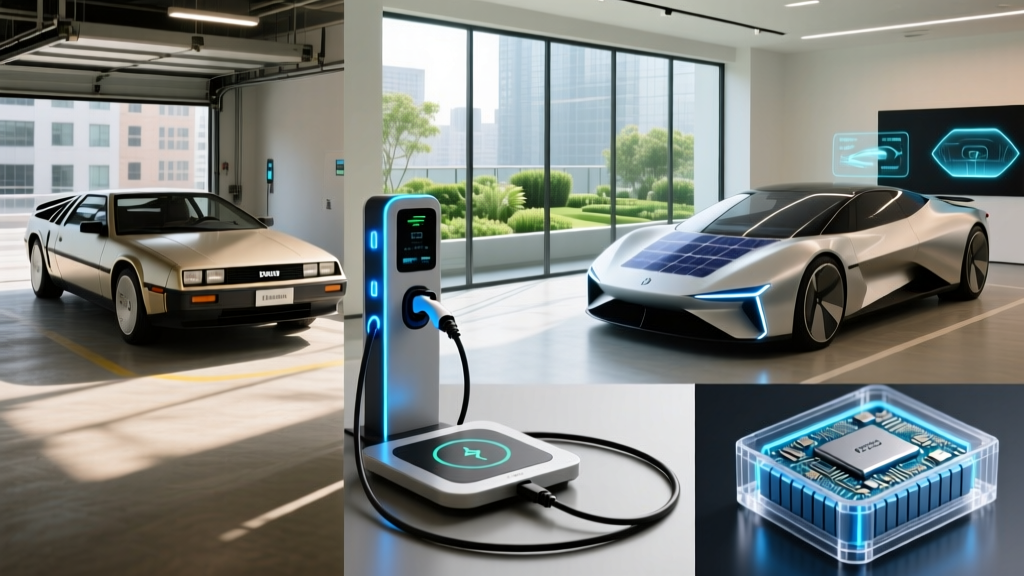
If you've ever stumbled across a photo of a boxy, golf-cart-looking 1980s electric car and wondered how anyone survived with 40 miles of lead-acid range and a 12-hour recharge, you're asking the right question. The short answer: you wouldn't want to. Early EVs like the 1985 CitiCar or the conversion vans of that era offered roughly 30–50 miles of range on heavy lead-acid batteries, topped out near 30–45 mph, and required overnight charging on standard 120V outlets. Fast-forward to 2026, and modern battery electric vehicles routinely deliver 250–400+ EPA-rated miles, charge from 10–80% in 18–25 minutes at DC fast chargers, and qualify for up to $7,500 in federal tax credits under IRS §30D rules (subject to income, MSRP caps, and battery-sourcing requirements). The ownership calculus has completely inverted — from a curiosity for hobbyists to a practical daily driver for millions.
The Bottom Line
A 1980s electric car delivered 30–50 miles of range on lead-acid batteries with 8–12 hour charge times. A 2026 EV like the Hyundai Ioniq 6 SE Long Range offers 361 EPA miles, charges 10–80% in ~18 minutes at 350 kW, and costs roughly $0.04–0.06 per mile on home electricity vs. $0.14–0.18 per mile for a comparable gas sedan. The technology gap is not incremental — it's a different category of vehicle entirely.
The 1980s Electric Car: What Buyers Actually Got
To appreciate where EVs stand in 2026, it helps to ground yourself in what "going electric" meant four decades ago. The most recognizable 1980s electric car was arguably the CitiCar (and its successor, the ComutaCar), a two-seat microcar originally built in response to the 1970s oil crisis. By the mid-1980s, production had largely ended, but surviving units and similar conversions defined the era's EV experience.
Here's what those vehicles delivered:
- Battery: 6–12 lead-acid 6V batteries (total pack roughly 3–6 kWh usable)
- Range: 30–50 miles in ideal conditions; 20–30 miles in cold weather or on hills
- Top speed: 30–45 mph (often governed; not highway-legal in many states)
- Charge time: 8–12 hours on a standard 120V household outlet
- Battery lifespan: 1–3 years before significant capacity loss
- Weight penalty: Lead-acid packs weighed 400–800 lbs in a vehicle under 1,500 lbs total
- No thermal management: No battery heating or cooling, meaning range swung wildly with ambient temperature
- Price: Roughly $3,000–$10,000 in 1980s dollars (approximately $9,000–$30,000 adjusted for inflation)
These were essentially neighborhood electric vehicles (NEVs) — useful for short errands in warm climates, completely impractical for real transportation. There was no public charging infrastructure, no regenerative braking, no heat pump, and no fast-charging capability of any kind.
2026 EV Ownership: The Numbers That Matter
Let's anchor this comparison to a specific, popular 2026 model to make the contrast concrete. The 2026 Hyundai Ioniq 6 SE Long Range (RWD) is a mainstream sedan that represents the current EV baseline well.
| Spec | 1985 CitiCar (approx.) | 2026 Hyundai Ioniq 6 SE LR (RWD) |
|---|---|---|
| Battery Chemistry | Lead-acid | NMC (nickel manganese cobalt) |
| Battery Capacity (usable) | ~3–6 kWh | 77.4 kWh |
| EPA Range | ~30–50 mi (unofficial) | 361 mi |
| Real-World Highway Range | ~20–30 mi | ~290–310 mi (75 mph, moderate temps) |
| Cold-Weather Range (20°F) | ~15–25 mi | ~250–280 mi |
| Top Speed | ~40 mph | 115 mph (electronically limited) |
| 0–60 mph | Not achievable | ~6.2 seconds |
| Horsepower | ~3–5 HP | 225 HP |
| Max DC Fast Charge Rate | None | ~240 kW peak (800V architecture) |
| 10–80% DC Fast Charge | N/A | ~18 minutes |
| Level 2 Home Charge (240V) | N/A (120V only) | ~10.9 kW; full charge in ~7.5 hours |
| Battery Warranty | None | 10 years / 100,000 miles |
| Base MSRP | ~$6,000 (1985) | $42,750 (2026) |
| After Potential §30D Credit | N/A | ~$35,250 (if eligible) |
That's not a generational improvement — it's a categorical leap. The Ioniq 6 has roughly 12–25× the usable battery energy, 7–12× the real-world range, and can replenish 70% of its battery in the time it takes to eat lunch at a rest stop.
Real-World Range Reality Check
The Ioniq 6 SE Long Range carries a 361-mile EPA rating. In real-world mixed driving at highway speeds (70–80 mph) in moderate temperatures (60–80°F), expect 290–310 miles. In sustained cold weather (below 30°F) without preconditioning, that can drop to 250–280 miles. The 1980s CitiCar had no EPA rating, but owners reported 20–30 real-world miles in warm weather — and as little as 15 miles in winter. The ratio of sticker-to-reality hasn't changed much; the absolute numbers have.
EV vs. Gas in 2026: The Cost Breakdown
The most common question from first-time EV buyers is whether switching actually saves money. The answer depends on your driving patterns, electricity rates, and whether you can charge at home. Here's a realistic 5-year cost comparison between the Ioniq 6 and a similarly sized gas sedan (the 2026 Toyota Camry LE, EPA 32 MPG combined).
| Cost Category | 2026 Ioniq 6 SE LR (EV) | 2026 Toyota Camry LE (Gas) |
|---|---|---|
| Base MSRP | $42,750 | $28,855 |
| Federal Tax Credit (§30D)* | Up to $7,500 (if eligible) | $0 |
| Effective Purchase Price | ~$35,250 | $28,855 |
| Fuel/Energy Cost (15,000 mi/yr × 5 yr) | ~$3,750 (home charging at $0.15/kWh, 3.8 mi/kWh) | ~$11,250 (gas at $3.50/gal, 32 MPG) |
| Maintenance (5 yr) | ~$1,200 (tire rotations, cabin filter, fluid top-offs) | ~$3,800 (oil changes, filters, brakes, belts) |
| Insurance (5 yr avg.) | ~$9,500 (EV premiums typically 15–25% higher) | ~$7,800 |
| 5-Year Total Cost of Ownership | ~$49,700 | ~$51,705 |
| Cost Per Mile (all-in) | ~$0.66 | ~$0.69 |
*The §30D federal EV tax credit has specific eligibility requirements: buyer income caps ($150K single / $300K joint), vehicle MSRP caps ($55K sedans / $80K SUVs and trucks), and battery critical-mineral and component sourcing rules that change annually. The credit can be transferred to the dealer as a point-of-sale discount. Always verify current eligibility on IRS.gov or consult a tax professional.
The EV wins on operating costs by a wide margin — roughly $7,500 less in fuel and $2,600 less in maintenance over five years. But higher insurance premiums and a higher starting MSRP (even after the tax credit) mean the total savings are modest: about $2,000 over five years in this scenario. The real financial case for an EV strengthens if you drive more than 15,000 miles annually, have access to cheap home electricity (under $0.12/kWh), or live in a state with additional rebates.
Charging at Home vs. Public: What First-Time Buyers Must Plan For
The single biggest factor in EV ownership satisfaction is home charging access. If you can install a Level 2 (240V) home charger, an EV becomes a "wake up full every morning" experience — no fuel stops, no range planning for daily driving. If you can't, public charging becomes a regular obligation, and the convenience advantage shrinks considerably.
| Charging Level | Voltage | Power (kW) | Miles Added Per Hour | Typical Use Case |
|---|---|---|---|---|
| Level 1 | 120V (standard outlet) | 1.0–1.4 kW | 3–5 mi/hr | Emergency/overnight top-off; PHEVs |
| Level 2 | 240V (dryer-style outlet) | 7.2–11.5 kW | 25–44 mi/hr | Home daily charging; workplace |
| DC Fast Charge | 400V–800V | 50–350 kW | 150–1,000+ mi/hr (peak) | Road trips; apartment dwellers |
Important distinction: kW (kilowatts) measures charging power — how fast energy flows into the battery. kWh (kilowatt-hours) measures battery energy capacity — how much the battery holds. A 77.4 kWh battery charged at 11 kW takes roughly 7 hours from empty to full. A 240 kW DC fast charger can refill that same battery from 10–80% in about 18 minutes — but only at peak rate. Charging slows significantly above 80% to protect battery health (this is called the charge curve taper).
Level 2 Home Charger Installation: What to Budget
| Item | Low Estimate | High Estimate |
|---|---|---|
| Level 2 Charger Hardware (e.g., ChargePoint Home Flex, Emporia Vue) | $350 | $700 |
| Electrician Labor (240V circuit, 40–50A) | $500 | $1,500 |
| Electrical Panel Upgrade (if needed: 100A → 200A) | $1,500 | $3,500 |
| Permit & Inspection | $100 | $400 |
| Total (no panel upgrade) | $950 | $2,600 |
| Total (with panel upgrade) | $2,450 | $6,100 |
Always get a quote from a licensed electrician before purchasing equipment. Some utilities and states offer rebates covering $200–$1,000 of installation costs — check your local utility's EV program page.
Common EV Misconceptions — Then and Now
Many of the objections people raise about EVs in 2026 are holdovers from the era of the 1980s electric car, when those concerns were legitimate. Here's a fact-check on the most persistent myths:
| Myth | Fact |
|---|---|
| "EVs don't have enough range for real life." | The median 2026 EV offers 250–360 EPA miles. The average American drives 37 miles per day (FHWA data). Even with 30% cold-weather loss, most EVs cover a week of commuting on one charge. |
| "Batteries need replacing every few years." | Modern NMC and LFP batteries are warrantied for 8–10 years / 100,000–150,000 miles at 70%+ capacity retention. Real-world data from fleet operators shows most packs retain 85–92% capacity at 100,000 miles. Lead-acid batteries in 1980s EVs lasted 1–3 years — that era is over. |
| "Charging takes too long." | At home on Level 2, charging happens while you sleep — effectively zero time cost. On road trips, a 10–80% DC fast charge takes 18–30 minutes for most 2026 models. The 1980s electric car required 8–12 hours on a wall outlet for 30 miles of range. |
| "EVs are worse for the environment because of battery mining." | Lifecycle analyses from the EPA and ICCT consistently show EVs produce fewer total emissions than gas cars over their lifetime, even accounting for battery manufacturing — especially as grids decarbonize. |
| "EVs are all expensive." | Several 2026 models start under $35,000 before incentives (e.g., Chevrolet Equinox EV, Nissan Leaf). The used-EV market has models under $20,000. The §30D credit and used-EV credit (§25E, up to $4,000) further reduce costs. |
| "The grid can't handle everyone driving EVs." | Most charging happens overnight during off-peak hours when grid capacity is underutilized. Studies from the DOE's National Renewable Energy Laboratory show managed charging can integrate millions of EVs without major grid upgrades. |
Who Should (and Shouldn't) Buy an EV in 2026
EVs are no longer experimental — but they're not the right choice for every driver yet. Here's a practical decision framework:
Choose an EV If:
- You have access to home or workplace Level 2 charging (this is the single biggest satisfaction predictor)
- Your daily driving is under 80 miles round-trip (covers ~95% of American commutes)
- You want to minimize maintenance (no oil changes, fewer brake replacements due to regenerative braking)
- You qualify for the §30D federal credit or state incentives, narrowing the price gap
- You take road trips 1–4 times per year and are comfortable planning DC fast-charge stops (apps like A Better Routeplanner make this straightforward)
- You live in a moderate-to-warm climate, or your EV has a heat pump for cold-weather efficiency
Choose a Hybrid (HEV) or Plug-In Hybrid (PHEV) If:
- You cannot install a home charger (apartment, street parking, no garage)
- You regularly drive 300+ miles in rural areas with sparse DC fast-charging infrastructure
- You frequently tow heavy loads (towing cuts EV range by 40–60%)
- Your budget is under $30,000 and you need maximum vehicle for the dollar
- You live in extreme cold (below 0°F regularly) and your driving exceeds 200 miles between stops
Wait or Reassess If:
- Your only vehicle needs to serve as both a daily commuter and a long-distance hauler with no flexibility
- You have zero access to any charging (home, work, or public) within a 5-minute detour of your routine
The 1980s Electric Car Legacy: Why It Still Matters
The 1980s electric car isn't just a historical curiosity — it's the reason so many buyers remain skeptical of EVs today. A generation of drivers saw or heard about vehicles like the CitiCar, the Zenn, or various lead-acid conversions, and concluded that electric cars were slow, fragile, short-ranged toys. That reputation lingered through the 1990s and 2000s, even as the GM EV1 (1996), the original Tesla Roadster (2008), and the Nissan Leaf (2011) progressively rewrote the playbook.
The lesson for 2026 buyers: don't let outdated mental models drive your purchase decision. The technology that made the 1980s electric car impractical — lead-acid chemistry, no thermal management, no fast charging, no infrastructure — has been replaced by lithium-ion packs with active liquid cooling, 800V charging architectures capable of adding 200 miles in 15 minutes, and a national DC fast-charging network exceeding 50,000 ports (and growing, with Tesla's Supercharger network now open to NACS-equipped vehicles from Ford, Rivian, GM, and others).
If you're evaluating your first EV, the comparison isn't between a 2026 model and a 1985 CitiCar. It's between a 2026 EV and a 2026 gas car — and on that playing field, the numbers increasingly favor electric for drivers with home charging access and typical commuting patterns.
Frequently Asked Questions
How much did a 1980s electric car cost, adjusted for inflation?
Vehicles like the CitiCar sold for roughly $3,000–$6,000 in the early-to-mid 1980s, which translates to approximately $9,000–$18,000 in 2026 dollars. However, these were extremely basic two-seat microcars with no highway capability, no climate control, and minimal safety equipment — not comparable to any modern passenger vehicle.
Why did 1980s electric cars fail?
Lead-acid batteries were heavy (40–60% of vehicle weight), energy-poor (~30 Wh/kg vs. ~250 Wh/kg for modern NMC cells), and degraded quickly (1–3 year lifespan). Combined with no fast-charging option, limited top speed, and cheap gasoline in the mid-1980s, there was no practical or economic case for most buyers.
What's the cheapest new EV in 2026?
The 2026 Nissan Leaf S starts around $28,140 with a 149-mile EPA range and 40 kWh battery. The Chevrolet Equinox EV LT starts near $33,600 with 315+ miles of range. Both may qualify for the §30D federal credit depending on your income, the vehicle's battery sourcing, and MSRP rules in effect at purchase. Check fueleconomy.gov for the latest credit-eligible vehicle list.
Do EV batteries really last 10+ years?
Yes, in most cases. Modern lithium-ion packs (NMC and LFP chemistries) are warrantied for 8–10 years or 100,000–150,000 miles at 70% capacity retention minimum. Real-world fleet data shows average degradation of roughly 1.5–2.5% per year under normal use. At 10 years, expect 80–90% of original capacity — not the 50% or worse that lead-acid batteries in 1980s EVs exhibited after just 2 years.
Is home charging really cheaper than gas?
At the US average residential electricity rate of ~$0.16/kWh and a typical EV efficiency of 3.5 mi/kWh, home charging costs about $0.046 per mile. At $3.50/gallon gas and 30 MPG combined, a gas car costs about $0.117 per mile. That's roughly a 60% fuel savings per mile with an EV. Public DC fast charging is more expensive ($0.30–$0.48/kWh), but most EV owners do 80–90% of their charging at home.
What should a first-time EV buyer prioritize?
In order: (1) Confirm you can install or access Level 2 charging at home or work. (2) Match the vehicle's real-world range (not just EPA sticker) to your longest regular drive plus a 20% buffer. (3) Verify §30D tax credit eligibility on IRS.gov before committing. (4) Test-drive at least two models back-to-back. (5) Get insurance quotes before purchasing — EV premiums can be 15–25% higher than comparable gas vehicles.