The Used EV Market: Why Battery Health is King
Buying a used electric vehicle is a fundamentally different experience than purchasing a used internal combustion engine car. When shopping for a gas-powered vehicle, buyers obsess over engine compression, transmission shifting, and exhaust health. In the EV world, the drivetrain is incredibly simple and largely bulletproof. Instead, the entire value proposition of a used EV hinges on a single, massive component: the high-voltage battery pack. According to the US Department of Energy, while modern EV batteries are designed to outlast the vehicles themselves, real-world degradation varies wildly based on battery chemistry, thermal management, and charging habits.
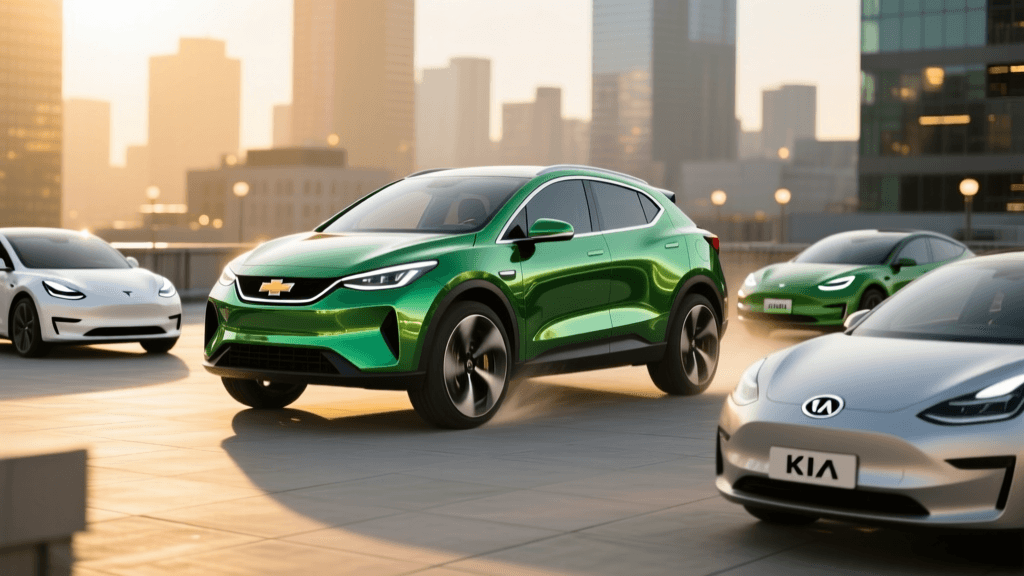
In this head-to-head product showdown, we are ranking the most popular used electric cars on the market based on two critical metrics: long-term battery State of Health (SoH) retention and overall financial value. We pitted the Chevrolet Bolt EV, Tesla Model 3, Hyundai Kona Electric, and Nissan Leaf against each other to determine which used EV offers the ultimate combination of range retention and bargain-bin pricing.
1. Chevrolet Bolt EV (2017-2022): The Depreciation Champion
The Chevrolet Bolt EV is arguably the greatest value proposition in the entire used EV market. Originally launched with a 60 kWh battery and later updated to a 65 kWh pack, the Bolt features an excellent liquid-cooled thermal management system. This active cooling prevents the battery from overheating during DC fast charging or driving in hot climates, which is the primary culprit of premature battery degradation.
Research from Recurrent Auto shows that the Bolt's NMC (Nickel Manganese Cobalt) battery pack exhibits some of the lowest degradation curves in the industry, often retaining over 90% of its original capacity after 100,000 miles. Furthermore, because GM faced massive recalls and subsequent brand hesitation, used Bolt prices have plummeted. You can routinely find 2020-2022 models with under 40,000 miles for less than $18,000. For a vehicle offering 238 to 259 miles of EPA range, the Bolt wins the value showdown by a landslide.
2. Tesla Model 3 (2018-2021): The High-Mileage Marathoner
If the Bolt is the budget king, the Tesla Model 3 is the premium marathoner. Tesla's proprietary battery management system and industry-leading thermal architecture mean that Model 3 batteries degrade at a remarkably slow, linear rate. Early Long Range models utilizing NCA (Nickel Cobalt Aluminum) chemistries regularly show less than 10% degradation after 120,000 miles. Later Standard Range models introduced LFP (Lithium Iron Phosphate) batteries, which are virtually immune to cycle degradation and can be charged to 100% daily without harm.
However, the Model 3 loses points in the 'value' category simply because of the Tesla tax. Used Model 3s hold their value better than almost any other EV on the market, meaning bargain hunters will have to work harder to find a deal. You are paying a premium for the Supercharger network and over-the-air updates, but strictly from a battery-health-per-dollar perspective, it trails the Bolt.
3. Hyundai Kona Electric (2019-2022): The Dark Horse of Longevity
The Hyundai Kona Electric is the dark horse of this showdown. Equipped with a 64 kWh liquid-cooled battery pack, the Kona offers 258 miles of range and a highly efficient powertrain. Hyundai's battery conditioning systems are robust, and real-world data indicates that the Kona's battery health remains exceptionally stable over time. Unlike the Bolt, the Kona also features a heat pump (in select markets and newer trims), which preserves range and battery health during cold-weather charging.
The Kona's main drawback in this showdown is availability. Hyundai produced significantly fewer Konas than Chevy produced Bolts or Tesla produced Model 3s. This scarcity keeps used prices artificially high. While its battery health is top-tier, its value proposition is slightly hindered by a lack of market inventory, making it a close runner-up to the Bolt.
4. Nissan Leaf (2018-2022): The Cautionary Tale
The second-generation Nissan Leaf (introduced in 2018 with 40 kWh and 62 kWh options) serves as a cautionary tale for used EV buyers. Unlike its competitors, the Leaf relies on passive air cooling rather than a liquid-cooled thermal management system. In mild climates, this is perfectly fine. However, in hot climates or when subjected to repeated DC fast charging, the Leaf's battery cells overheat, leading to accelerated, irreversible degradation.
While the Leaf is incredibly cheap on the used market—often dipping below $14,000 for a newer model—the battery health risk severely impacts its long-term value. A Leaf with a degraded battery becomes a glorified neighborhood runabout, destroying its resale value. Unless you live in a temperate climate and strictly charge at home on Level 2, the Leaf loses this showdown.
Comparison Chart: Used EV Battery Health & Value
| Vehicle Model | Avg Used Price (2020+) | Thermal Management | Est. SoH at 100k Miles | Value Rating |
|---|---|---|---|---|
| Chevrolet Bolt EV | $16,000 - $19,000 | Active Liquid Cooling | 90% - 94% | 10/10 |
| Tesla Model 3 | $24,000 - $30,000 | Active Liquid Cooling | 88% - 93% | 8/10 |
| Hyundai Kona EV | $20,000 - $24,000 | Active Liquid Cooling | 91% - 95% | 7.5/10 |
| Nissan Leaf (40/62kWh) | $13,000 - $17,000 | Passive Air Cooling | 75% - 88% (Varies) | 5/10 |
How to Check Battery State of Health (SoH) Before Buying
Never buy a used EV without verifying the battery's State of Health. Dealerships will often provide a generic battery health certificate, but these are frequently inaccurate or based on superficial voltage readings rather than true capacity testing. To win the used EV showdown, you must do your own homework.
- OBD2 Scanners: Purchase a cheap OBD2 Bluetooth dongle (like the OBDLink MX+ or Vgate iCar) and use specialized apps. For the Nissan Leaf, LeafSpy is the gold standard. For the Chevy Bolt and Hyundai Kona, apps like Car Scanner or MyChevy/MyHyundai integrations can pull raw battery cell voltage data and calculated SoH percentages.
- Tesla Service Mode: If you are test-driving a used Model 3, you can access the vehicle's native Service Mode via the touchscreen to run a quick battery health diagnostic and view the exact usable kWh capacity remaining.
- Recurrent Reports: Ask the seller if the vehicle is enrolled in Recurrent Auto. If it is, they can generate a verified, third-party battery health report that tracks the vehicle's range over time, providing a much more accurate picture than a single point-in-time test.
Final Verdict: Which Used EV Wins the Value Crown?
When ranking the best used electric cars by battery health and value, the Chevrolet Bolt EV takes the undisputed crown. It offers the perfect storm of excellent liquid-cooled battery longevity, practical hatchback utility, and rock-bottom used pricing caused by market overcorrection. The Tesla Model 3 is a superior vehicle in terms of tech and charging infrastructure, but its higher entry price keeps it in second place for pure value seekers. The Hyundai Kona is a brilliant, long-lasting alternative if you can find one at the right price, while the Nissan Leaf should only be considered by budget buyers in cool climates who understand the risks of passive battery cooling.