The Quick Answer: Can You Profitably Drive Uber in an EV?
Yes — but only if you meet three conditions: reliable home Level 2 charging, a market with strong Uber Green/Zero trip bonuses, and a vehicle with at least 250 miles of real-world range and DC fast charging above 150 kW. Drivers who meet these criteria typically save $1,200–$2,400 annually on fuel and maintenance compared to a gas sedan, while unlocking per-trip bonuses that can add $5–$15 per day. The biggest risk is relying solely on public charging, which can erase those savings and add 30–45 minutes of downtime per session.
Why Rideshare Drivers Are Switching to Electric
Uber's sustainability push has created financial incentives that make electric vehicles increasingly attractive for full-time and part-time drivers. In qualifying markets, Uber's Zero Emissions program adds a $1 surcharge per trip that goes directly to the driver, capped at a set annual amount. Combined with lower per-mile energy costs and reduced maintenance, the math can work — but it depends heavily on your driving pattern, local electricity rates, and vehicle choice.
The key metric for rideshare isn't 0-60 time or cargo space. It's cost per mile, uptime (time available to accept trips versus time spent charging), and passenger comfort. A midsize electric sedan or crossover that charges quickly and delivers consistent range across seasons is the optimal tool.
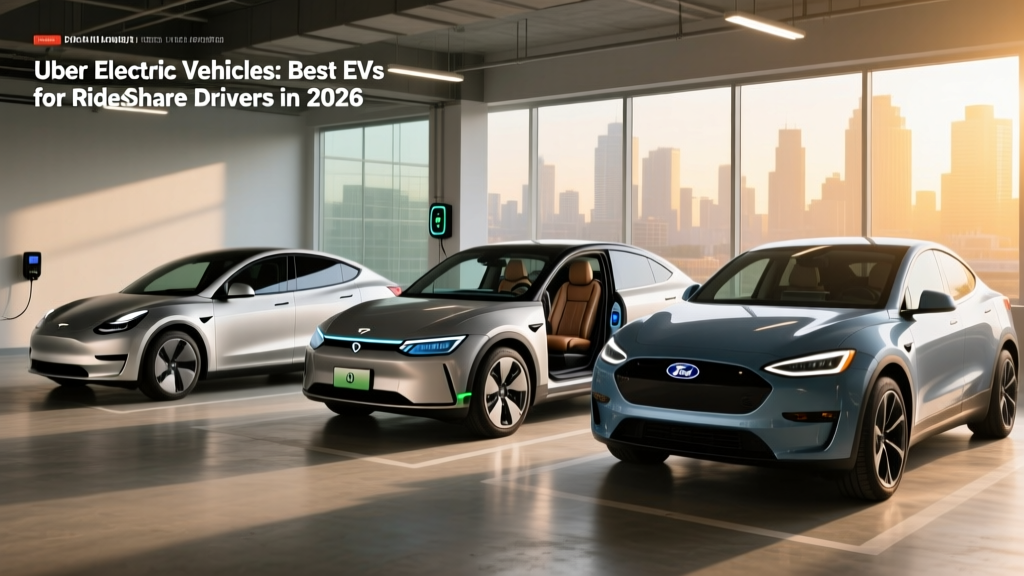
Best EVs for Uber Drivers: 2026 Lineup
| Vehicle | EPA Range | Real-World Range* | Battery (kWh) | Peak DC Charge (kW) | 10-80% Time | Base MSRP | MPGe |
|---|---|---|---|---|---|---|---|
| Tesla Model 3 RWD | 272 mi | 220-245 mi | 60 (LFP) | 170 kW | ~25 min | $38,990 | 132 |
| Hyundai Ioniq 6 SE | 361 mi | 290-320 mi | 77.4 (NMC) | 240 kW | ~18 min | $42,900 | 140 |
| Chevrolet Equinox EV 3RS | 319 mi | 260-285 mi | 85 (NMC) | 150 kW | ~30 min | $43,400 | 117 |
| Toyota bZ4X Limited | 252 mi | 200-225 mi | 71.4 (NMC) | 150 kW | ~30 min | $45,000 | 114 |
| Kia EV6 Wind RWD | 310 mi | 255-280 mi | 77.4 (NMC) | 235 kW | ~18 min | $44,900 | 134 |
*Real-world range accounts for highway driving at 70+ mph, HVAC use, and moderate climate. Expect 15-25% reduction in cold weather (below 30°F).
For rideshare, the Hyundai Ioniq 6 SE and Kia EV6 Wind stand out because of their 800V architecture, which sustains high charging speeds longer than competitors. A driver who needs a quick top-up between shifts can add 150+ miles in under 20 minutes at a functioning 350 kW charger. The Tesla Model 3 remains the volume choice due to Supercharger network reliability and lower entry price, though its LFP battery chemistry trades some cold-weather range for lower degradation over high-mileage use — a worthwhile trade for drivers covering 40,000+ miles per year.
EV vs Gas: The Real Cost Breakdown for Rideshare
Let's compare a Tesla Model 3 RWD against a Toyota Camry LE (28 city/39 hwy, ~32 combined MPG) over 40,000 miles per year — a realistic figure for a part-time-to-full-time Uber driver.
| Cost Category (Annual, 40k mi) | Tesla Model 3 EV | Toyota Camry Gas | Difference |
|---|---|---|---|
| Fuel/Energy (home L2 @ $0.14/kWh) | $1,870 | $4,375 (gas @ $3.50/gal) | EV saves $2,505 |
| Fuel/Energy (public DCFC @ $0.40/kWh) | $5,340 | $4,375 | EV costs $965 MORE |
| Maintenance (oil, filters, brakes) | $350 | $1,200 | EV saves $850 |
| Insurance (avg rideshare endorsement) | $2,400 | $2,100 | EV costs $300 MORE |
| Tire Replacement (EVs wear faster) | $600 | $400 | EV costs $200 MORE |
| Uber Zero Emissions Bonus (est.) | +$1,000 | $0 | EV earns $1,000 MORE |
| Net Annual Operating Cost | $3,220 (home charge) | $7,675 | EV saves ~$3,100/yr |
Critical takeaway: Home charging is the linchpin. If you rely primarily on public DC fast chargers at $0.35–$0.45/kWh, your energy cost can exceed gasoline. This isn't a theoretical concern — in cities with limited home-charging options (apartments, street parking), the EV cost advantage evaporates. Before buying, confirm you can install a Level 2 charger or access affordable overnight charging within 5 minutes of where you park.
Charging Infrastructure: What Rideshare Drivers Actually Need
A rideshare driver's charging strategy requires planning that a typical commuter doesn't need. You're not just charging overnight — you may need mid-shift top-ups that don't kill your earning hours.
Home Level 2 Charging: The Non-Negotiable
A 48-amp Level 2 charger on a 240V circuit adds roughly 30-44 miles of range per hour depending on the vehicle. For a driver covering 120-150 miles per shift, an overnight charge of 6-8 hours fully replenishes the battery. Installation costs range from $500 (simple outlet near the panel) to $2,500+ (panel upgrade, long conduit runs). According to Energy.gov, most homes with a 200-amp panel can accommodate a Level 2 charger without an upgrade.
Public Fast Charging: Your Backup, Not Your Primary
When you need a mid-shift charge, DC fast charging speed matters enormously. Here's where the 800V vehicles (Ioniq 6, EV6) shine: they sustain 200+ kW through most of the 10-80% window, meaning you're in and out in 18-20 minutes. A vehicle limited to 150 kW peak that tapers early might take 30-35 minutes for the same session. That's 10-15 minutes of lost fare time per charge, which adds up to $1,500-$3,000 in lost revenue annually if you fast-charge daily.
Map your regular driving territory against reliable DC fast charger locations. Electrify America, EVgo, and Tesla Superchargers (now open to non-Tesla vehicles via the built-in adapter or Magic Dock) are the primary networks. Check real-time uptime on PlugShare or the network apps — a station listed as "available" with 2 of 4 stalls down is a real-world frustration you'll encounter weekly.
Federal and Local Incentives for Rideshare EVs
The IRS §30D federal tax credit offers up to $7,500 for qualifying new EVs, but eligibility is complex and changes based on battery sourcing, MSRP caps, and buyer income. Per IRS guidelines, key requirements include:
- MSRP Cap: Sedans must be under $55,000; SUVs/trucks under $80,000
- Income Cap: Modified AGI under $150,000 (single) / $300,000 (joint)
- Battery Sourcing: Critical minerals and battery components must meet phased-in percentages from US/free-trade-agreement countries
- Point-of-Sale Transfer: As of 2024+, you can transfer the credit to the dealer for an immediate price reduction — useful if your tax liability is low
- Commercial Use Caveat: If you use the vehicle primarily for business (rideshare), consult a tax professional about whether §30D or commercial clean vehicle credit §45W applies to your situation
Many states and utilities also offer rebates for EV purchases and home charger installation. California's Clean Fuel Reward, Colorado's innovative vehicle credit, and various utility-company rebates (PG&E, ConEdison, Xcel Energy) can stack with the federal credit. Check your state energy office and utility provider for current programs — these vary by jurisdiction and change frequently.
Uber also partners with rental companies (Hertz, Avis) to offer EV rentals specifically for rideshare drivers. If you're testing whether EV rideshare works in your market before committing to a purchase, a weekly rental at $300-$400 with charging included can be a low-risk trial period.
Common Misconceptions About EVs for Rideshare
| Myth | Fact |
|---|---|
| "EV batteries won't last at rideshare mileage" | Modern LFP batteries (Tesla Model 3 RWD) are rated for 3,000+ cycles with minimal degradation. At 40k miles/year, that's 15+ years before hitting 80% capacity. All major manufacturers warrant batteries for 8 years/100,000 miles minimum — Hyundai/Kia cover 10 years/100,000 miles. |
| "You'll lose too much time charging" | With home L2 charging, you charge while sleeping — zero lost time. Mid-shift DC fast charging adds 18-30 minutes, which most drivers combine with meal breaks or rest periods they'd take anyway. |
| "Cold weather makes EVs unusable for rideshare" | Cold weather reduces range 15-30% depending on temperature and whether you precondition. A 300-mile EPA vehicle still delivers 210-255 real-world miles in freezing temps — enough for a full shift with strategic charging. Heat pumps (standard on Ioniq 6, EV6, Model 3) reduce HVAC energy draw significantly. |
| "EVs cost more to insure, wiping out savings" | Insurance premiums are typically 10-20% higher for EVs, but this is offset by fuel and maintenance savings. Some insurers (Progressive, State Farm) now offer EV-specific discounts. Shop quotes before buying. |
| "Passengers don't care about EVs" | Uber Green and Zero trips often attract higher-tipping riders who specifically request electric vehicles. The quiet, smooth ride quality also improves ratings — a meaningful factor for driver standing. |
Decision Framework: Is an EV Right for Your Uber Driving?
Choose an EV for Uber if:
- You have access to home Level 2 charging (garage, driveway, or landlord-approved installation)
- Your market offers Uber Zero Emissions bonuses or Green trip surcharges
- You drive 30,000+ miles per year (higher mileage = faster payback on EV premium)
- Your typical shift is under 200 miles, or you can identify reliable mid-shift DC fast chargers
- You live in a moderate or warm climate, OR you choose a vehicle with a heat pump and plan for cold-weather range reduction
- You qualify for the §30D tax credit or state incentives that reduce the purchase price gap
Stick with a hybrid or gas vehicle if:
- You park on the street or in an apartment with no charging access and no nearby affordable public charging
- You regularly drive 250+ miles per shift in rural areas with sparse charging infrastructure
- Your market has no Uber EV bonus programs and electricity rates exceed $0.25/kWh
- You need maximum cargo space for Uber XL or airport runs with heavy luggage (consider a PHEV minivan instead)
- Your annual mileage is under 15,000 miles — the fuel savings won't offset the higher purchase price quickly enough
First-Time EV Buyer Checklist for Rideshare
If you're switching from a gas car to an EV for Uber, here's what you need to prepare before purchase day:
- Get an electrical assessment. Have a licensed electrician evaluate your panel capacity and quote a Level 2 charger installation. Budget $500-$2,500 depending on complexity.
- Map your charging options. Identify 3-5 reliable DC fast chargers within your driving territory. Test one before buying to understand the actual experience.
- Calculate your real costs. Use your local electricity rate (check your utility bill for $/kWh) and your annual mileage to project energy costs. Compare against your current fuel spend using fueleconomy.gov efficiency data.
- Verify tax credit eligibility. Check the IRS source-seller tool for your specific vehicle and confirm your income qualifies. If your tax liability is lower than $7,500, plan to use the point-of-sale transfer option.
- Shop insurance early. Get quotes for the specific EV you're considering with a rideshare endorsement before signing a purchase agreement. The premium difference may influence your model choice.
- Understand battery care. For NMC batteries (Ioniq 6, EV6, Equinox), daily charging to 80% extends lifespan. LFP batteries (Tesla Model 3 RWD) can be charged to 100% regularly without concern — another advantage for high-mileage drivers.
- Precondition before fast charging. Use your vehicle's navigation to route to a DC fast charger — this triggers battery preconditioning, warming the pack to optimal temperature for faster charging. Skipping this can add 5-10 minutes to your session, especially in cold weather.
Frequently Asked Questions
Does Uber pay more for electric vehicle trips?
In qualifying markets, Uber's Zero Emissions program adds a per-trip bonus (typically $1 per trip, capped annually) for drivers using fully electric vehicles. Additionally, Uber Green trips — which riders can specifically request — often include a $1 surcharge that goes to the driver. Availability and amounts vary by city. Check your Uber driver app for your market's current programs.
What's the best EV for Uber if I live in a cold climate?
The Hyundai Ioniq 6 SE with its standard heat pump and 361-mile EPA range is among the best cold-climate choices. Even with a 20-25% range reduction in sub-freezing temperatures, you'll have 270+ real-world miles — enough for most full shifts. The Kia EV6 is similarly equipped. Avoid vehicles without heat pumps if you regularly drive below 30°F.
Can I use Tesla Superchargers with a non-Tesla EV for Uber?
Yes. Tesla has opened select Supercharger locations to non-Tesla vehicles via the built-in NACS connector (on newer Ford, GM, Rivian vehicles) or through Tesla's Magic Dock adapter at participating stations. Coverage is expanding, but not all Supercharger locations support non-Tesla vehicles yet. Use the Tesla app to check availability in your area.
How does EV depreciation affect rideshare economics?
EV depreciation has been steeper than gas vehicles in recent years, partly due to price cuts and rapid technology advancement. For a rideshare driver, this is a double-edged sword: your resale value may be lower, but your purchase price (especially on a used EV) may also be lower. If you plan to drive the vehicle 100,000+ miles over 3-4 years, depreciation matters less because you'll have extracted maximum value from fuel and maintenance savings.
Should I buy or lease an EV for Uber?
Buying is generally better for rideshare because most lease agreements limit mileage to 10,000-15,000 miles per year — far below what an active Uber driver accumulates. Excess mileage penalties ($0.20-$0.30/mile) would destroy your economics. If you buy, you also benefit from the §30D tax credit and can depreciate the vehicle for business tax purposes. Consult a tax professional about Section 179 or bonus depreciation eligibility for business-use vehicles.
What happens if my EV battery degrades from high rideshare mileage?
All major EV manufacturers warrant battery capacity retention (typically 70% of original capacity) for 8 years/100,000 miles or 10 years/100,000 miles. Real-world data from high-mileage fleets shows modern batteries retaining 85-90% capacity at 100,000 miles with proper charging habits. If degradation does trigger a warranty claim, replacement is covered — though the process can take weeks, during which the vehicle is unavailable for driving.