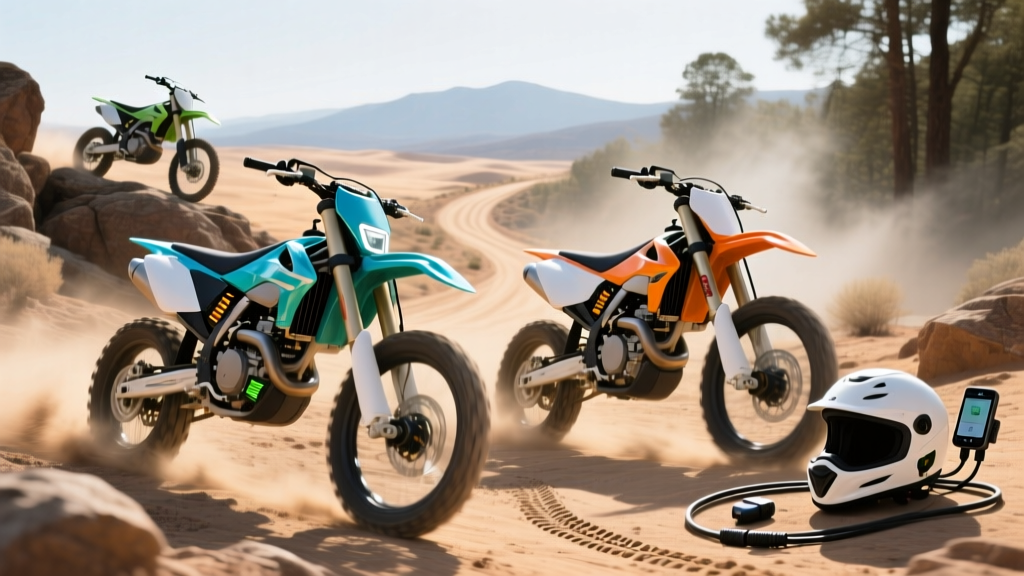
The Short Answer on the Top 10 Electric Dirt Bikes
The best electric dirt bikes in 2026 cluster into three tiers: entry-level trail riders (5–10 kW peak motor, 2–4 kWh battery, $3,000–$6,000), mid-range enduro bikes (15–25 kW, 4–6 kWh, $7,000–$12,000), and high-performance motocross machines (30–50+ kW, 5–8 kWh, $12,000–$18,000+). Unlike road-going EVs, electric dirt bikes are not EPA-rated for range — manufacturers quote ride time instead, typically 45 minutes to 2.5 hours depending on throttle intensity, terrain, and rider weight. Charging on a standard 120V outlet takes 1.5–4 hours; most models lack DC fast charging. If you ride tight singletrack and value instant torque, near-silent operation, and minimal maintenance, an electric dirt bike is compelling. If you need multi-hour desert rides or remote backcountry access without power, gas still wins.
Electric off-road motorcycles have matured considerably. What started with the KTM Freeride E-XC and a handful of boutique brands now includes serious offerings from established manufacturers and startups alike. But buying an electric dirt bike involves trade-offs that differ sharply from buying an electric car. There are no Superchargers on the trail, no EPA sticker to reference, and the federal §30D tax credit does not apply to off-road motorcycles. Below, we break down the 10 best electric dirt bikes available or shipping in 2026, with hard specs and an honest look at costs, limitations, and who should — and shouldn't — make the switch.
How We Ranked These 10 Electric Dirt Bikes
Our ranking weighs five criteria, each grounded in measurable data:
- Peak motor output (kW) and torque (Nm): Raw acceleration and hill-climbing ability.
- Usable battery capacity (kWh): Determines real ride time, which varies more with riding style than any car's range does.
- Charge time (hours on 120V): Trail-side and garage practicality.
- Weight (kg/lbs): Critical for off-road handling — every kilo counts when you're picking the bike up off the ground.
- Price and total ownership cost: Purchase price plus electricity, maintenance savings, and expected battery replacement.
We also factor in dealer support, parts availability, and whether the bike is street-legal (some riders want dual-sport capability).
The Top 10 Electric Dirt Bikes for 2026
| # | Model | Peak kW | Battery kWh | Ride Time (mix) | Charge 0–100% (120V) | Weight | MSRP (USD) |
|---|---|---|---|---|---|---|---|
| 1 | KTM SX-E 5 (2026) | 5.0 | 1.3 | ~15–25 min (race pace) | ~1.5 hr | 49 kg / 108 lbs | $5,299 |
| 2 | Stark Varg MX | 60.0 | 6.0 | ~1–2 hr (motocross) | ~2 hr (220V) | 107 kg / 236 lbs | $12,900 |
| 3 | KTM Freeride E-XC (2026) | 18.0 | 3.9 | ~1.5 hr (trail) | ~2 hr | 111 kg / 245 lbs | $9,099 |
| 4 | Sur-Ron Storm Bee | 22.5 | 4.0 (72V 56Ah) | ~1.5–2 hr | ~3 hr | 92 kg / 203 lbs | $5,400 |
| 5 | Cobra Moto ECX 5.0 | 5.0 | 1.3 | ~20–30 min (youth race) | ~1.5 hr | 47 kg / 104 lbs | $5,099 |
| 6 | Talaria Sting MX4 | 12.0 | 2.7 (60V 45Ah) | ~45–75 min | ~2.5 hr | 64 kg / 141 lbs | $4,300 |
| 7 | E-Motion MXR 450 | 35.0 | 5.5 | ~1–1.5 hr | ~2.5 hr | 102 kg / 225 lbs | $13,500 |
| 8 | Sur-Ron Light Bee X | 6.0 | 1.9 (60V 32Ah) | ~40–60 min | ~2 hr | 50 kg / 110 lbs | $3,700 |
| 9 | Alta Redshift MXR (Legacy) | 37.0 | 5.8 | ~1.5 hr | ~2 hr | 120 kg / 264 lbs | Used ~$8,000–$11,000 |
| 10 | Segway Xafari (Off-Road) | 10.0 | 2.9 | ~1–1.5 hr (light trail) | ~3 hr | 73 kg / 161 lbs | $4,200 |
Note: Ride times are manufacturer estimates under mixed-intensity riding. Aggressive motocross laps can halve these figures. Alta Motors ceased production in 2018; the Redshift MXR is included because used examples remain popular and parts are still sourced through specialty shops. All prices are MSRP or typical market price as of early 2026.
Electric Dirt Bike vs. Gas Dirt Bike: Real Cost Comparison
The purchase price of an electric dirt bike is often higher than a comparable gas 250cc or 450cc machine. But total cost of ownership tells a different story — especially when you factor in fuel, oil, air filters, and top-end rebuilds.
| Cost Factor | Electric (e.g., KTM Freeride E-XC) | Gas (e.g., KTM 250 XC-F) |
|---|---|---|
| Base MSRP | $9,099 | $10,899 |
| Fuel/Energy per ride hour | ~$0.15–$0.30 (electricity) | ~$3.50–$5.00 (premix at ~$5/gal) |
| Annual fuel (100 hrs/yr) | $15–$30 | $350–$500 |
| Oil changes | None | $15–$30 every 5–10 hrs |
| Air filter | None | $15–$25, replaced 2–5x/year |
| Top-end rebuild | N/A | $400–$800 every 100–200 hrs |
| Chain & sprockets | Same replacement interval | Same replacement interval |
| Brake pads | Longer life (regen assists) | Standard interval |
| 5-Year Total (100 hrs/yr) | ~$9,250–$9,450 | ~$13,500–$15,500 |
The electric bike saves roughly $4,000–$6,000 over five years for a rider logging 100 hours annually. The savings scale with usage: weekend warriors who ride 30 hours per year will take much longer to recoup the upfront premium, while competitive riders logging 200+ hours save dramatically.
Charging Cost Breakdown
| Scenario | Battery Size | kWh Used | Cost (@$0.16/kWh avg US) |
|---|---|---|---|
| Full charge, small (Sur-Ron Light Bee X) | 1.9 kWh | ~2.1 kWh (with losses) | $0.34 |
| Full charge, mid (KTM Freeride E-XC) | 3.9 kWh | ~4.3 kWh | $0.69 |
| Full charge, large (Stark Varg MX) | 6.0 kWh | ~6.6 kWh | $1.06 |
| 50 full charges/year (mid-range) | 3.9 kWh | ~215 kWh | $34.40/year |
Compare that to 50 refuels of a gas 250cc at $4 per gallon: roughly $400–$500/year in fuel alone.
Real-World Ownership: What First-Time Buyers Must Know
Electric dirt bikes eliminate the ritual of mixing fuel, adjusting jetting for altitude, and kick-starting a cold engine. But they introduce their own set of considerations that no marketing brochure will highlight.
Battery Degradation and Replacement
Most electric dirt bikes use NMC (nickel manganese cobalt) lithium-ion cells — the same chemistry found in most EVs. These cells degrade with charge cycles and heat. Expect 80% capacity retention after 500–800 full charge cycles, which translates to roughly 5–8 years of moderate use (100 hrs/year). A replacement battery pack costs $1,500–$4,000 depending on the model and capacity. This is a significant ownership cost that gas-bike buyers don't face.
Some manufacturers, like KTM, offer battery packs that are removable and swappable — a major advantage if you want to carry a spare or replace it without buying a new bike.
Charging Access on the Trail
This is the single biggest limitation. Unlike electric cars with 300+ mile range and a growing DC fast-charging network, electric dirt bikes rely on Level 1 (120V) charging only. At the trailhead, that means:
- A portable generator (gas or solar+battery) to recharge between motos
- Limiting your ride to the battery's capacity for the day
- Carrying a spare battery pack if the bike supports swaps
If you ride at a private property with garage power, this is a non-issue. If you ride remote BLM land or multi-day enduro events, gas still dominates.
Cold Weather Performance
Lithium-ion batteries lose capacity in cold temperatures — expect 15–25% range reduction below 40°F (4°C), and slower charging below freezing. For winter trail riders in northern states, this is a meaningful hit. Storing the battery indoors and installing it just before riding helps mitigate the loss.
Noise: A Feature, Not a Bug
Electric dirt bikes are nearly silent — a massive advantage for riding on private land near neighbors, during early-morning sessions, or in areas with noise ordinances. This single factor is driving adoption in motocross clubs that have lost access to tracks due to noise complaints.
Common Misconceptions — Myth vs. Fact
| Myth | Fact |
|---|---|
| "Electric dirt bikes have no power" | The Stark Varg MX produces 60 kW (80 hp) and 938 Nm of torque at the rear wheel — exceeding most 450cc gas motocross bikes in torque delivery. |
| "They're too heavy" | Early models were heavy. The 2026 KTM SX-E 5 weighs 49 kg — competitive with its gas 65cc peers. Full-size bikes like the Varg at 107 kg are within 5–10 kg of a gas 450. |
| "The battery will die in 2 years" | Modern NMC packs retain ~80% capacity after 500+ cycles. With proper care (avoiding storage at 100% SoC, not charging when hot), 5–8 years is realistic. |
| "You can't ride them hard" | You absolutely can — but ride time drops proportionally. A 2-hour trail battery lasts ~30 minutes at full motocross intensity. |
| "They qualify for the $7,500 EV tax credit" | The federal §30D credit applies to on-road vehicles with 4+ wheels meeting specific criteria. Electric dirt bikes and off-road motorcycles do not qualify. Some states offer separate rebates for off-road electrification — check your local programs. |
| "Charging takes all night" | Most electric dirt bike batteries charge fully in 1.5–3 hours on a standard 120V outlet due to their small capacity (1.3–6 kWh). |
Decision Framework: Which Electric Dirt Bike Is Right for You?
If X, Then Y
- If you're buying for a youth rider (ages 5–12): Choose the KTM SX-E 5 or Cobra ECX 5.0. Lightweight, adjustable power modes, and quiet enough for backyard practice. Budget: $5,000–$5,300.
- If you ride tight singletrack and want minimal maintenance: The KTM Freeride E-XC offers the best balance of trail capability, dealer support, and a removable/swappable battery. Budget: ~$9,100.
- If you want motocross-level performance: The Stark Varg MX is the only electric dirt bike that genuinely competes with 450cc gas bikes on a motocross track. Budget: $12,900 — but factor in a spare battery ($3,000+) for full-day sessions.
- If you're on a tight budget and want a fun trail/play bike: The Sur-Ron Light Bee X at $3,700 is an entry point with decent capability for light trails and backyard riding. It's not a race bike, but it's a fraction of the cost.
- If you ride multi-hour enduros or remote backcountry: Stick with gas. No current electric dirt bike can match a gas 300cc 2-stroke for all-day range and trailside refueling.
- If noise restrictions are your primary concern: Any model on this list solves the noise problem. The Sur-Ron Storm Bee offers the best power-to-price ratio for suburban-adjacent riding.
Charging and Battery Care: Maximizing Lifespan
The battery is the most expensive replaceable component on an electric dirt bike. Proper care extends its life significantly:
- Store at 40–60% State of Charge (SoC): Never store a fully charged or fully depleted battery for weeks. This accelerates degradation.
- Avoid charging a hot battery: After a hard ride, let the pack cool for 20–30 minutes before plugging in.
- Don't consistently drain to 0%: Shallow cycles (20–80% SoC) are far easier on NMC cells than full 0–100% cycles.
- Keep it dry: While most packs are IP67-rated, repeated submersion or pressure-washing can compromise seals over time.
Some bikes, like the KTM Freeride E-XC, feature a map switch that lets you select power delivery profiles — using a lower-power map extends ride time and reduces thermal stress on the battery.
Frequently Asked Questions
Can I ride an electric dirt bike on public trails?
It depends on the trail and local regulations. Many OHV areas require spark arrestors and sound-level compliance — electric bikes easily pass sound limits but may need a spark-arrestor-equivalent screen (some land managers are still updating rules for electric off-road vehicles). Check with the managing agency (USFS, BLM, or state DNR) before you go. Some electric models, like the Sur-Ron Storm Bee, can be configured for street-legal use with a lighting kit and title — but this varies by state.
How does electric dirt bike torque compare to a 450cc gas bike?
Electric motors deliver peak torque from 0 RPM — no clutch, no powerband to hit. The Stark Varg MX's 938 Nm at the rear wheel exceeds any production 450cc gas motocross bike. The sensation is immediate, linear acceleration that riders describe as "riding an elevator." Gas bikes still have an advantage in top-end speed and sustained high-RPM power for desert racing.
Do electric dirt bikes need any maintenance?
Yes, but far less than gas bikes. You'll still maintain: chain tension and lubrication, brake pads and fluid, suspension service (forks/shock), tire replacement, and bearing checks. What you eliminate: oil changes, air filter cleaning, spark plugs, fuel mixing, carburetor/throttle-body service, valve adjustments, and top-end rebuilds. Expect 60–70% less maintenance cost over the bike's life.
What happens if the battery dies on the trail?
The bike stops. There's no kick-starting or pushing it to a gas station. This is why ride planning matters: know your battery's realistic capacity for your riding intensity, and carry a spare if your bike supports swaps. The KTM Freeride E-XC and Sur-Ron models both offer quick-swap battery designs. Some riders carry a portable power station (like an EcoFlow or Jackery, 1–2 kWh) for emergency top-ups — though this adds 10–15 kg of weight.
Are there any federal or state incentives for electric dirt bikes?
The federal §30D Clean Vehicle Credit does not apply to off-road motorcycles. However, some states offer separate rebates — California's Clean Off-Road Equipment Voucher Incentive Project (CORE) has historically offered vouchers for zero-emission off-road equipment. Check your state's air-resources board or energy office for current programs, as these change annually.
How do I compare kWh between different electric dirt bikes?
Battery capacity in kWh is the most direct comparison metric for ride time — but it's not the only factor. Motor efficiency, bike weight, rider weight, and terrain all matter. As a rough guide: 1 kWh ≈ 20–30 minutes of moderate trail riding for a full-size bike. A 6 kWh bike should deliver roughly 2–3 hours of trail riding at moderate pace, or 45–60 minutes of hard motocross.
Bottom Line
Electric dirt bikes in 2026 are no longer novelties — they're serious tools that outperform gas bikes in specific scenarios: youth training, noise-sensitive riding, backyard practice, and motocross sessions where instant torque and zero maintenance matter. The Stark Varg MX has proven that electric can match a 450 on the track, while the KTM SX-E 5 and Cobra ECX have transformed youth motocross practice. But for all-day enduros, remote exploration, and riders without reliable charging access, gas remains the pragmatic choice. Match the bike to your riding pattern, budget for a future battery replacement, and you'll know exactly what you're signing up for.