The Short Answer: Which Three-Row EV Should You Buy?
If you need a three-row EV today, the Kia EV9 offers the best balance of price ($54,900 base), range (EPA 304 miles), and DC fast charging (10–80% in ~24 minutes on a 350 kW charger). The Tesla Model X remains the range king (EPA 335 miles) but starts at $79,990. The Rivian R1S is the off-road-capable pick (EPA 352 miles with Max Pack, $84,900+). For budget buyers, the upcoming Hyundai Ioniq 9 (announced, expected late 2026) targets a sub-$50,000 starting price. All current three-row EVs qualify for partial or full §30D federal tax credits depending on trim, battery sourcing, and buyer income — check the details below before committing.
The Current Three-Row EV Landscape
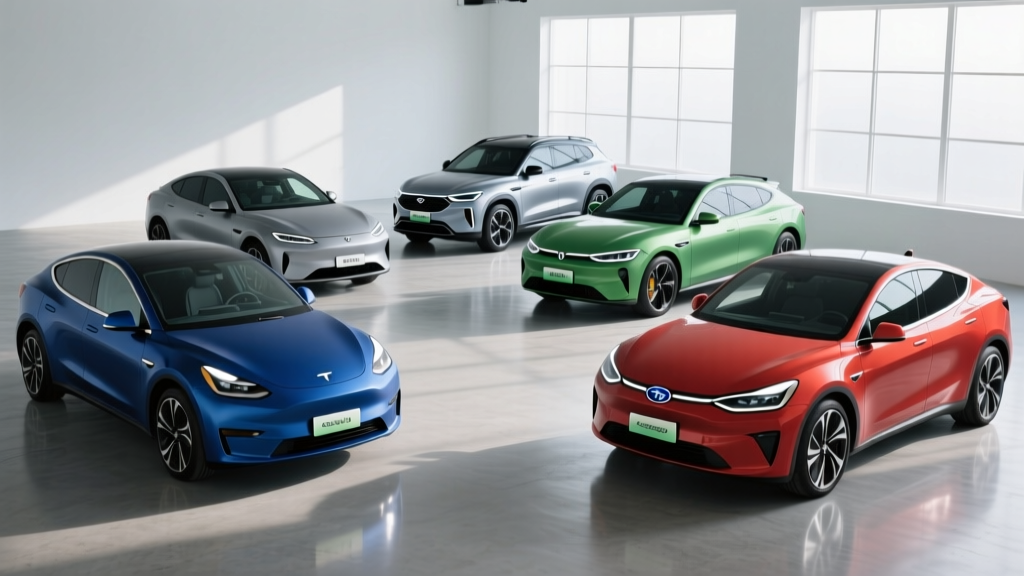
The three-row EV segment has grown from essentially one option (the Tesla Model X) to a legitimate competitive field. As of early 2026, buyers can choose from four production models, with two more announced. Here is what is actually available to order or buy right now:
| Model | EPA Range | Battery (kWh) | Peak DC Charge | 10–80% Time | 0–60 mph | Base MSRP |
|---|---|---|---|---|---|---|
| Kia EV9 (LR RWD) | 304 mi | 100.0 kWh (NMC) | 240 kW | ~24 min | 8.2 sec | $54,900 |
| Kia EV9 (LR AWD) | 270 mi | 100.0 kWh (NMC) | 240 kW | ~24 min | 5.0 sec | $59,900 |
| Tesla Model X (LR) | 335 mi | 100 kWh (NMC) | 250 kW | ~30 min | 3.8 sec | $79,990 |
| Rivian R1S (Dual) | 270 mi | 95 kWh (NMC) | 200 kW | ~32 min | 4.5 sec | $79,900 |
| Rivian R1S (Max Pack) | 352 mi | 141 kWh (NMC) | 200 kW | ~45 min | 4.5 sec | $94,400 |
| Cadillac Escalade IQ | 300+ mi (est.) | 200+ kWh (NMC) | 350 kW | ~20 min | <4.0 sec | $129,990 |
Sources: EPA fueleconomy.gov, manufacturer spec pages. Range figures are EPA estimates; real-world results vary. Cadillac Escalade IQ specs are preliminary as of early 2026.
Real-World Range Reality Check
EPA range numbers are tested under controlled conditions. For three-row EVs — which are heavy, boxy, and often loaded with passengers and cargo — expect real-world highway range to be 15–20% lower than the EPA sticker at 70+ mph. In cold weather (below 30°F), range can drop an additional 20–30% due to battery chemistry and cabin heating demands. A Kia EV9 LR RWD rated at 304 miles EPA may deliver 240–260 miles on a flat, temperate highway trip, and as little as 180–210 miles on a sub-freezing winter road trip. Plan your charging stops accordingly.
Three-Row EV vs. Gas SUV: The Real Cost Comparison
The upfront price of a three-row EV is undeniably higher than a comparable gas SUV. A Toyota Highlander starts around $39,000, while a Kia Telluride (the EV9's gas sibling) starts near $37,000. But total cost of ownership tells a different story over five years. Here is a breakdown comparing the Kia EV9 LR RWD ($54,900 MSRP) against the Kia Telluride SX ($44,000 MSRP) — two vehicles with similar size and features:
| Cost Category | Kia EV9 LR RWD | Kia Telluride SX (Gas) |
|---|---|---|
| Base MSRP | $54,900 | $44,000 |
| Estimated §30D Tax Credit | Up to $7,500* | $0 |
| Effective Purchase Price | ~$47,400 | $44,000 |
| Fuel/Energy (5 yr, 15k mi/yr) | ~$3,750 (home charging)** | ~$10,500 (gas at $3.50/gal, 23 MPG) |
| Maintenance (5 yr) | ~$1,200 | ~$3,500 |
| Insurance (5 yr avg) | ~$11,500 | ~$8,500 |
| 5-Year Total Cost | ~$63,850 | ~$66,500 |
*§30D credit eligibility depends on battery sourcing, buyer income caps ($150k single / $300k joint), and MSRP caps ($80k for SUVs). Verify at IRS.gov. **Assumes 80% home Level 2 charging at $0.14/kWh national average and 2.0 kWh/mile efficiency.
The EV9 reaches cost parity within roughly 3–4 years for a typical family driving 15,000 miles annually, primarily because of the fuel savings and the federal tax credit. However, insurance premiums on EVs run 15–30% higher than gas equivalents, so factor that into your monthly budget.
Charging a Three-Row EV: What Families Need to Know
Three-row EVs carry large battery packs (95–141 kWh), which means charging them takes longer than smaller EVs — and requires planning.
| Charging Level | Power | Miles Added/Hour | Full Charge Time (100 kWh) | Best For |
|---|---|---|---|---|
| Level 1 (120V outlet) | 1.4 kW | 3–4 mi/hr | ~70 hours | Emergency / trickle only |
| Level 2 (240V, 48A) | 11.5 kW | 30–35 mi/hr | ~9 hours | Daily home charging |
| DC Fast (150 kW station) | 150 kW | ~400 mi/hr (peak) | 10–80% in ~35 min | Road trips |
| DC Fast (350 kW station) | 240–250 kW* | ~600 mi/hr (peak) | 10–80% in ~24 min | Road trips (fastest) |
*Peak charge rate is limited by the vehicle's onboard capability. The Kia EV9 peaks at 240 kW even on a 350 kW charger; the Tesla Model X peaks at 250 kW. Sustained rates taper significantly above 80% State of Charge to protect battery health — the "charge curve" means the last 20% can take as long as the first 60%.
Home Charging Is Nearly Mandatory
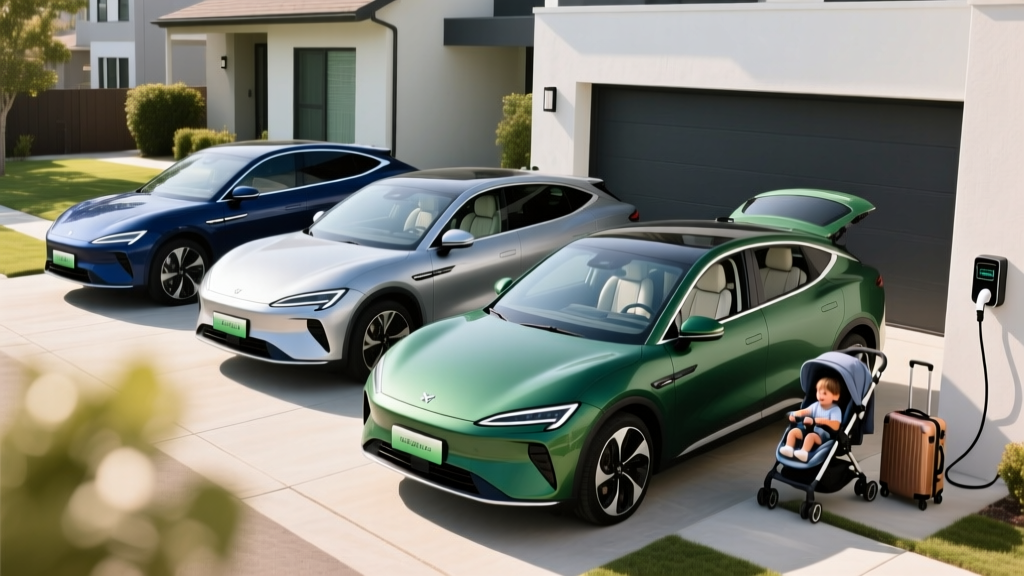
With a 100 kWh battery, relying on Level 1 (standard 120V outlet) is impractical — you would add only 3–4 miles of range per hour, meaning a full charge takes nearly three days. A Level 2 home charger (240V, hardwired 48-amp circuit) is effectively required for three-row EV ownership. Expect to pay $800–$2,500 for a quality Level 2 charger and professional installation, depending on your electrical panel's capacity. Older homes with 100-amp service may need a panel upgrade ($1,500–$3,000 additional) — get a licensed electrician's quote before purchasing the vehicle.
Road Trip Charging Logistics
On a family road trip, a three-row EV will need a DC fast charging stop roughly every 200–250 miles (real-world). The Kia EV9's 800V architecture allows it to charge from 10% to 80% in about 24 minutes at a compatible 350 kW station — but these stations are not uniformly available. Electrify America, EVgo, and Tesla Superchargers (now open to non-Tesla EVs via NACS adapter or built-in NACS ports on newer models) form the backbone of the US fast-charging network. Plan routes using A Better Routeplanner or PlugShare, and always have a backup station identified.
Federal Tax Credits and Incentives for Three-Row EVs
The §30D Clean Vehicle Credit can reduce your effective purchase price by up to $7,500, but the rules are specific and change frequently. Here is the eligibility checklist for 2026:
- MSRP Cap: Vehicle must have an MSRP at or below $80,000 (SUVs/vans) or $55,000 (sedans). Most three-row EV SUVs qualify; the Cadillac Escalade IQ does not.
- Buyer Income Cap: Modified adjusted gross income must not exceed $150,000 (single), $225,000 (head of household), or $300,000 (married filing jointly).
- Battery Sourcing: The battery must meet critical mineral and component sourcing requirements that tighten annually. As of 2026, vehicles with battery components from a "foreign entity of concern" (FEOC) are disqualified. Check the fueleconomy.gov tax credit lookup for model-specific eligibility.
- Point-of-Sale Transfer: You can transfer the credit to the dealer at purchase, reducing your out-of-pocket cost immediately rather than waiting for a tax refund.
- US Assembly: The vehicle must undergo final assembly in North America.
Tax rules are complex and subject to change. Consult a tax professional and verify current eligibility at IRS.gov before purchasing.
Common Misconceptions About Three-Row EVs
| Myth | Fact |
|---|---|
| "Third-row EVs don't have enough range for road trips." | The Rivian R1S Max Pack delivers 352 miles EPA, and the Tesla Model X achieves 335 miles. With DC fast charging adding ~200 miles in 20 minutes, 500-mile trips require just one stop. |
| "I'll save money on fuel immediately." | Only if you can charge at home. Public DC fast charging costs $0.30–$0.50/kWh in many areas, which can equal or exceed gas costs per mile for heavy SUVs. Home charging at $0.14/kWh is where the savings live. |
| "EV batteries need replacing every few years." | Modern NMC batteries in these vehicles are warranted for 8 years/100,000 miles (10 years/100,000 miles in California and CARB states) against dropping below 70% capacity. Data from Tesla and Kia show typical degradation of 10–15% over 150,000 miles. |
| "All three-row EVs qualify for the $7,500 tax credit." | Eligibility depends on MSRP, buyer income, battery sourcing, and final assembly. Some trims and models do not qualify. Always verify before purchasing. |
| "Towing won't affect range." | Towing a trailer can reduce EV range by 40–50%. The Rivian R1S is rated to tow 7,700 lbs, but expect real-world range to drop to 150–180 miles when towing near max capacity. |
Decision Framework: Which Three-Row EV Fits Your Family?
If X, Then Y
- If your budget is under $60,000 and you want the best value: Choose the Kia EV9 LR RWD ($54,900). It offers 304 miles of range, the fastest charging in the segment, usable third-row space for adults on short trips, and likely qualifies for the full §30D credit, bringing effective price to ~$47,400.
- If maximum range is your top priority: Choose the Rivian R1S with Max Pack (352 miles EPA) or the Tesla Model X Long Range (335 miles EPA). Both exceed $79,000 before credits, but eliminate range anxiety on long trips.
- If you need serious off-road or towing capability: Choose the Rivian R1S Dual Motor. It offers 7,700-lb towing, quad-motor availability, air suspension with 14.9 inches of ground clearance, and a dedicated off-road driving mode. No other three-row EV matches its adventure capability.
- If you rely on Tesla's Supercharger network: Choose the Tesla Model X. While other EVs are gaining Supercharger access via NACS adapters, Tesla owners still get the most seamless plug-and-charge experience with the largest proprietary fast-charging network.
- If you cannot install a home charger: Reconsider a three-row EV for now, or look at a three-row PHEV like the Toyota Grand Highlander Hybrid (36 MPG combined, no range anxiety, ~$42,000). Public charging a 100 kWh battery is expensive and time-consuming as a daily routine.
- If you want to wait for a more affordable option: Watch for the Hyundai Ioniq 9 (announced, expected late 2026), which targets a sub-$50,000 starting price with similar dimensions to the EV9 (they share the E-GMP platform).
What First-Time Three-Row EV Buyers Should Know
Buying your first EV — especially a large family hauler — involves adjustments beyond the dealership. Here are the ownership realities that catch new EV buyers off guard:
Preconditioning matters. If your EV9 or Model X is plugged in at home, set a scheduled departure time. The car will warm (or cool) the battery to optimal temperature before you leave, improving efficiency and enabling faster DC charging on the road. Skipping preconditioning in cold weather can add 10+ minutes to your first fast-charge stop.
Tire costs are higher. Three-row EVs are heavy (5,500–6,500 lbs) and produce instant torque. Expect to replace tires every 25,000–35,000 miles rather than the 50,000+ miles typical of gas SUVs. Budget $1,200–$2,000 for a set of EV-rated touring tires.
Regenerative braking changes how you drive. Most three-row EVs offer adjustable regen, and some (like the EV9) support one-pedal driving via paddle shifters or settings. In stop-and-go traffic, this reduces brake wear dramatically — many EV owners report original brake pads lasting 100,000+ miles.
Cargo space trade-offs. The third row in most EV SUVs is best suited for children or adults on short trips. With all three rows up, cargo space is limited (the EV9 offers 20.2 cu ft behind the third row; the Model X offers 14.2 cu ft). If you regularly need six passengers plus luggage, consider a roof box or verify that the vehicle meets your specific cargo needs.
Frequently Asked Questions
Are there any three-row EVs under $50,000?
As of early 2026, no production three-row BEV starts below $50,000 before incentives. The Kia EV9 at $54,900 comes closest, and after the §30D credit (if eligible), the effective price drops to ~$47,400. The Hyundai Ioniq 9, expected late 2026, may break the $50,000 barrier at launch.
How does a three-row EV compare to a three-row hybrid?
A Toyota Grand Highlander Hybrid delivers 36 MPG combined, a 550+ mile total range, and starts at ~$42,000 — with no charging required. The trade-off: you still pay for gas (~$1,750/year at 15k miles) and perform oil changes and engine maintenance. A three-row EV eliminates fuel and engine maintenance costs but requires home charging infrastructure and has a higher purchase price. If you drive mostly in the city and can charge at home, the EV wins on operating cost. If you take frequent long road trips through areas with sparse charging, the hybrid is more practical.
What happens to the battery after the warranty expires?
All three-row EVs sold in 2026 carry a minimum battery warranty of 8 years/100,000 miles (federally mandated), with some manufacturers offering 10 years/100,000 miles. The warranty covers capacity loss below 70%. Real-world data from high-mileage Tesla and Kia EVs shows batteries retaining 85–90% capacity at 100,000 miles. A full battery replacement for a 100 kWh pack costs $12,000–$20,000 out of warranty, but complete failures before 150,000 miles are rare.
Can I tow with a three-row EV?
Yes, but range drops significantly. The Rivian R1S tows up to 7,700 lbs, the Kia EV9 tows up to 5,000 lbs (with the tow package), and the Tesla Model X tows up to 5,000 lbs. When towing near maximum capacity, expect range to decrease by 40–50%. A 304-mile EV9 might deliver only 150–180 miles while towing a 4,000-lb trailer at highway speeds.
Do three-row EVs cost more to insure?
Yes. EV insurance premiums run 15–30% higher than equivalent gas vehicles due to higher repair costs, specialized parts, and elevated vehicle prices. For a Kia EV9, expect annual premiums of $2,100–$2,800 depending on your state, driving record, and coverage level, compared to ~$1,600–$2,000 for a Kia Telluride. Shop quotes from multiple insurers — some now offer EV-specific discounts.
Data sourced from EPA fueleconomy.gov, IRS.gov §30D guidance, and manufacturer specifications. Prices, credit eligibility, and specs reflect 2026 model year information available at time of publication. Always verify current figures before purchasing.