The Tesla Model X in 2026: Performance Meets Practicality
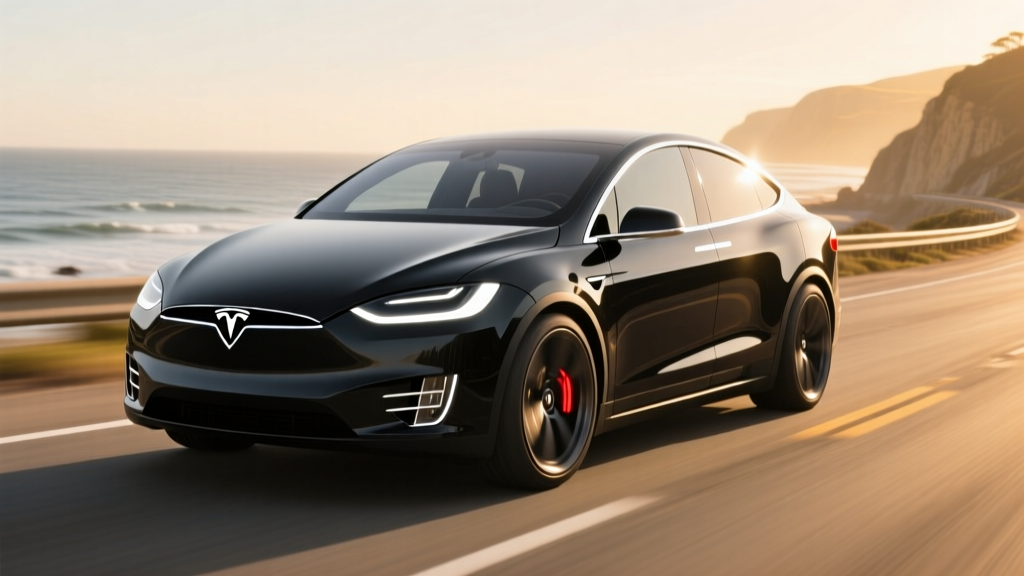
The Tesla Model X has long occupied a unique position in the electric SUV market: a three-row family hauler that can out-accelerate most sports cars. For 2026, Tesla continues to offer the Model X in two primary configurations — Long Range and Plaid — each targeting a different buyer profile while sharing the same 100 kWh battery architecture and all-wheel-drive dual- or tri-motor setups.
If you're researching the top speed of a Tesla Model X, the answer depends on which variant you choose. The Long Range model is electronically limited to 155 mph, while the tri-motor Plaid variant reaches a governed top speed of 163 mph. But top speed is only one data point. This review covers every spec that matters for a real purchase decision — EPA range, charging speeds, tax credit eligibility, and how the Model X stacks up against the Rivian R1S, BMW iX, and Mercedes EQS SUV.
Full Performance and Specification Breakdown
| Spec | Model X Long Range | Model X Plaid |
|---|---|---|
| Top Speed (governed) | 155 mph | 163 mph |
| 0-60 mph | 3.8 sec | 2.5 sec |
| Horsepower | 670 hp | 1,020 hp |
| Drivetrain | Dual-Motor AWD | Tri-Motor AWD |
| Battery (usable) | ~100 kWh (NMC) | ~100 kWh (NMC) |
| EPA Range | 348 mi | 326 mi |
| MPGe (combined) | 102 MPGe | 98 MPGe |
| Efficiency | 33 kWh/100 mi | 35 kWh/100 mi |
| Max DC Fast Charge | 250 kW | 250 kW |
| 10-80% DC Charge | ~30 min | ~30 min |
| Level 2 (11.5 kW) | ~36 mi/hr | ~36 mi/hr |
| Cargo (behind 3rd row) | 15.1 cu ft | 15.1 cu ft |
| Cargo (all seats folded) | 77.5 cu ft | 77.5 cu ft |
| Seating | 5, 6, or 7 | 5 or 6 |
| Base MSRP | $79,990 | $94,990 |
Source: EPA / fueleconomy.gov, Tesla.com specifications (2026 model year).
Real-World Range: What the EPA Number Doesn't Tell You
Model X Long Range: EPA 348 miles — expect approximately 280-310 miles on sustained highway driving at 70-75 mph; approximately 240-270 miles in cold weather (below 32°F) with cabin heating.
Model X Plaid: EPA 326 miles — expect approximately 260-285 miles highway; approximately 220-250 miles in cold conditions.
The Model X's large frontal area and 5,185-lb curb weight penalize highway efficiency more than city driving, where regenerative braking recovers energy. Cold weather compounds this: battery resistance increases, and the heat pump (standard on 2026 models) still draws significant energy at extreme temperatures.
Tesla's NMC (nickel manganese cobalt) battery chemistry provides high energy density, which is necessary to push a heavy three-row SUV past 300 miles. However, NMC cells degrade somewhat faster than LFP (lithium iron phosphate) chemistry over thousands of cycles. Tesla recommends daily charging to 80-90% for NMC batteries and only charging to 100% for long trips — a practice that preserves long-term State of Health (SoH).
Charging Speed and Infrastructure
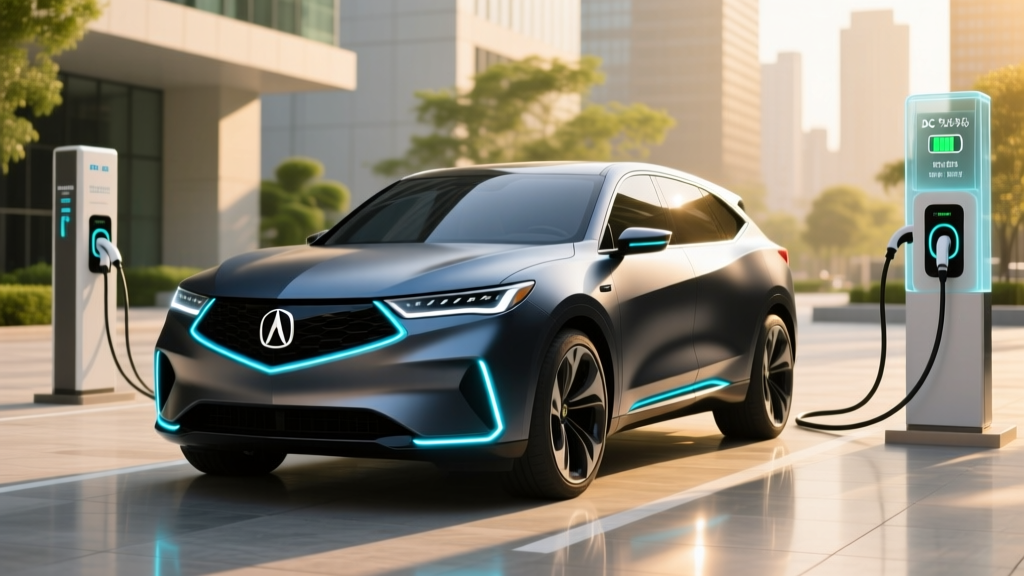
Charging speed is where the Model X shows its age relative to newer 800V-architecture competitors like the Hyundai Ioniq 9 or Kia EV9, which can accept 350+ kW. The Model X still uses Tesla's 400V electrical architecture, capping DC fast-charging at 250 kW on V3 Superchargers.
| Charging Level | Power (kW) | Speed | Typical Use Case |
|---|---|---|---|
| Level 1 (120V) | ~1.4 kW | ~4 mi/hr | Emergency / trickle |
| Level 2 (240V, 48A) | 11.5 kW | ~36 mi/hr | Home overnight charging |
| DC Fast (V3 Supercharger) | 250 kW peak | ~200 mi in 15 min | Road trips |
| DC Fast (CCS adapter) | Up to 250 kW | Varies by station | Non-Tesla networks |
Charging curve reality: The Model X hits peak 250 kW only between roughly 10-30% State of Charge. Above 50%, the rate tapers significantly, dropping below 100 kW past 70%. A 10-80% session takes approximately 30 minutes at a V3 Supercharger. Preconditioning the battery by navigating to a Supercharger in the Tesla app activates thermal management and is essential to achieving peak charge rates — arriving at a Supercharger without preconditioning can add 10+ minutes to your session.
Tesla's Supercharger network remains the most reliable public charging infrastructure in the US, with over 6,000 stations and 99.9% uptime. The included CCS adapter (standard since 2024) opens up Electrify America, EVgo, and other networks, though real-world CCS reliability varies by provider.
Pricing, Tax Credits, and Total Cost
The 2026 Tesla Model X starts at $79,990 for Long Range and $94,990 for Plaid, before destination fees ($1,390) and options. Adding Full Self-Driving (Supervised) costs $8,000; premium paint colors add $1,500-$2,500.
| Item | Long Range | Plaid |
|---|---|---|
| Base MSRP | $79,990 | $94,990 |
| Destination | $1,390 | $1,390 |
| Federal §30D Credit Eligible? | Yes (if income/sourcing met) | No (exceeds MSRP cap) |
| MSRP Cap (§30D SUV limit) | $80,000 | $80,000 |
| Adjusted Price (with $7,500 credit) | ~$73,880* | $96,380 |
*Long Range credit eligibility requires the as-configured MSRP to remain at or below the $80,000 SUV/van cap. Adding FSD or premium paint pushes the MSRP over the cap, eliminating credit eligibility. Consult IRS §30D guidelines and a tax professional before purchasing.
- MSRP Cap: SUVs/vans must be ≤ $80,000 (Model X Long Range barely qualifies at base)
- Income Cap: AGI ≤ $300,000 (MFJ), $225,000 (HoH), $150,000 (single)
- Battery Sourcing: Critical minerals and battery components must meet phased-in domestic/free-trade sourcing thresholds (2026: 80% critical minerals, 100% battery components from US/FTA countries)
- Point-of-Sale Transfer: Eligible buyers can transfer the credit to the dealer for an upfront price reduction
- Assembly: Vehicle must undergo final assembly in North America (Model X: Fremont, CA — qualifies)
Important caveat: The Plaid's $94,990 base MSRP exceeds the $80,000 SUV cap, making it ineligible for the federal credit regardless of buyer income. This is a significant cost differentiator between the two trims.
Interior, Cargo, and Daily Practicality
The Model X offers three seating configurations: 5-seat (two rows), 6-seat (captain's chairs in the second row with a center console), and 7-seat (bench second row with a third-row bench). The 6-seat layout is the most popular for family use, providing walk-through access to the third row and individual seat comfort.
Cargo volume: 15.1 cubic feet behind the third row — tight for a vehicle this size. Fold the third row and you gain 41.1 cu ft; fold everything flat and the Model X offers 77.5 cu ft. The front trunk (frunk) adds 6.6 cu ft, useful for charging cables and groceries.
Legroom: 41.2 inches (front), 38.4 inches (second row), 32.7 inches (third row). The third row is best suited for children or short trips — adults will find it cramped on longer drives.
Standout tech: The 17-inch center touchscreen with AMD Ryzen processor handles navigation, media, and vehicle controls with minimal lag. The yoke steering wheel (optional) offers unobstructed screen visibility but remains polarizing. Rear-seat passengers get their own 8-inch touchscreen for climate and entertainment. The Model X also features a HEPA air filtration system with "Bioweapon Defense Mode" — genuinely effective for allergy sufferers and wildfire smoke regions.
Falcon Wing doors: The signature rear gullwing doors provide excellent overhead clearance when loading children into car seats and offer a dramatic visual. However, they operate more slowly than conventional doors, require overhead clearance (they have ultrasonic sensors to adjust opening arc), and can be problematic in heavy rain as water drips into the cabin during the opening cycle.
Driver Assistance and Autonomous Capability
Tesla Autopilot and Full Self-Driving (Supervised) are SAE Level 2 driver-assistance systems. The driver must remain fully attentive, keep hands on the wheel (or demonstrate engagement via the cabin camera), and be prepared to take over at any moment. These systems are not self-driving. Level 4 autonomous driving — where the vehicle handles all driving tasks without human input in defined conditions — is currently limited to geofenced robotaxi services like Waymo.
The Model X comes standard with Tesla's basic Autopilot (traffic-aware cruise control and lane centering). The optional FSD (Supervised) package ($8,000) adds automatic lane changes, navigation-on-autopilot (highway on/off-ramp handling), traffic light and stop sign recognition, and Autopark. As of 2026, FSD remains a supervised system requiring constant driver attention — Tesla's naming has drawn scrutiny from the NHTSA, and buyers should evaluate it as an advanced convenience feature, not a replacement for an engaged driver.
- Drive without an attentive, licensed driver in the seat
- Reliably handle construction zones, unmapped roads, or severe weather
- Replace driver judgment at complex intersections or with emergency vehicles
- Qualify as "autonomous" under SAE definitions — you are legally responsible at all times
Model X vs. Key Competitors
| Spec | Tesla Model X LR | Rivian R1S (Dual) | BMW iX xDrive50 |
|---|---|---|---|
| Base MSRP | $79,990 | $79,900 | $87,250 |
| EPA Range | 348 mi | 321 mi | 324 mi |
| 0-60 mph | 3.8 sec | 4.5 sec | 4.4 sec |
| Max DC Charge | 250 kW | 220 kW | 200 kW |
| Seating | 5/6/7 | 7 | 5 |
| Top Speed | 155 mph | 120 mph | 124 mph |
| Towing Capacity | 5,000 lbs | 7,700 lbs | 3,500 lbs |
| Off-Road Capability | Limited | Excellent | Limited |
| Federal Credit | Yes (base) | Yes | No (MSRP cap) |
Choose the Tesla Model X if: You want the fastest acceleration in a three-row EV, access to the Supercharger network, the highest top speed (155 mph), and cutting-edge software/OTA updates. The Model X excels as a performance-oriented family vehicle with strong range.
Choose the Rivian R1S if: You need serious off-road capability, higher towing capacity (7,700 lbs), a more traditional SUV driving feel, and genuine seven-seat practicality with better third-row space. The R1S trades some range and charging speed for adventure versatility.
Choose the BMW iX if: You prioritize luxury interior quality, ride comfort, and brand prestige over third-row seating. The iX seats only five but offers a quieter cabin, superior materials, and a more refined driving experience — though at a premium price that exceeds the tax credit cap.
Warranty, Longevity, and Ownership Costs
Tesla provides the following warranty coverage for the 2026 Model X:
- Basic Vehicle: 4 years / 50,000 miles
- Battery & Drive Unit: 8 years / 150,000 miles (whichever comes first), with a minimum 70% capacity retention threshold over the warranty period
The 150,000-mile battery warranty on the Model X (compared to 120,000 on the Model 3/Y) reflects Tesla's expectation that larger, premium vehicles accumulate higher mileage. NMC battery degradation in Tesla vehicles typically follows a curve: approximately 5-8% loss in the first 30,000 miles, then a slower, more linear decline. Real-world data from high-mileage Tesla owners suggests 85-90% State of Health at 100,000 miles is common when following recommended charging practices (80-90% daily, avoiding prolonged 100% or near-0% storage).
Insurance: Model X insurance premiums run 30-50% higher than comparable ICE SUVs due to repair costs, aluminum body panels, and sensor-dense bodywork. Expect $3,500-$5,000+ annually depending on your driving record and location. Tesla Insurance is available in select states and can be competitive, though claims processing has drawn mixed reviews.
Depreciation: The Model X has historically experienced steeper depreciation than the Model 3 or Model Y, partly due to its premium price point and the niche market for six-figure electric SUVs. Expect approximately 45-55% value retention at 3 years / 36,000 miles, though this fluctuates with Tesla's pricing changes and market demand.
Pros, Cons, and Final Verdict
- Class-leading acceleration (2.5 sec Plaid, 3.8 sec LR)
- 348-mile EPA range (Long Range) is among the best for three-row EVs
- Supercharger network access with 250 kW peak charging
- Falcon Wing doors ease child-seat loading
- Continuous OTA software updates add features post-purchase
- HEPA air filtration genuinely improves cabin air quality
- Frunk + cargo versatility with fold-flat seating
- 400V architecture limits charging to 250 kW (competitors offer 350 kW+)
- Third row is cramped for adults (32.7" legroom)
- Falcon Wing doors are slow and problematic in rain
- Plaid trim exceeds $80K MSRP cap — no federal tax credit
- Insurance costs significantly above average
- Build quality inconsistencies (panel gaps, interior rattles) persist in some units
- Yoke steering is not universally preferred; conventional wheel availability varies
Frequently Asked Questions
What is the top speed of a Tesla Model X?
The 2026 Model X Long Range has a governed top speed of 155 mph. The Model X Plaid is limited to 163 mph. Both figures are electronically governed — the powertrain is capable of higher speeds, but Tesla limits them for tire safety and efficiency.
What is the real-world range of the Model X?
The Long Range model's EPA estimate is 348 miles. In real-world highway driving at 70-75 mph, expect 280-310 miles. In cold weather (below freezing), range drops to approximately 240-270 miles due to battery resistance and cabin heating demand. The Plaid variant delivers 326 miles EPA, with real-world highway figures around 260-285 miles.
How fast does the Model X charge?
At a V3 Supercharger (250 kW peak), the Model X charges from 10-80% in approximately 30 minutes. Peak charge rate is sustained only between 10-30% SoC; above 50%, the rate tapers significantly. At home on a Level 2 Wall Connector (11.5 kW / 48A), the Model X gains approximately 36 miles of range per hour, fully charging overnight in about 9-10 hours.
Does the Tesla Model X qualify for the federal EV tax credit?
The Model X Long Range can qualify for the full $7,500 §30D credit at base MSRP ($79,990), as it sits just under the $80,000 SUV cap. However, adding options like FSD ($8,000) or premium paint pushes the MSRP over the cap, eliminating eligibility. The Plaid ($94,990) does not qualify. All buyers must also meet income caps (≤ $300K MFJ) and the vehicle must satisfy battery-sourcing requirements. Always verify current eligibility at IRS.gov before purchasing.
Is the Model X worth buying vs. the Rivian R1S or BMW iX?
The Model X is the best choice if you prioritize acceleration, top speed, Supercharger access, and software features. Choose the Rivian R1S for off-road capability, towing (7,700 lbs), and better third-row space. Choose the BMW iX for luxury and refinement if you only need two rows. None of these competitors match the Model X's combination of 348-mile range and sub-4-second 0-60 in a three-row package.
What battery chemistry does the Model X use?
The 2026 Model X uses NMC (nickel manganese cobalt) lithium-ion cells in a ~100 kWh usable pack. NMC offers higher energy density than LFP, which is necessary for the Model X's range targets given its heavy curb weight. Tesla recommends charging to 80-90% daily and reserving 100% charges for trips to maximize long-term battery health.
Can the Model X tow?
Yes. The Model X is rated to tow up to 5,000 lbs when properly equipped with the factory tow package. Expect a significant range reduction when towing — typically 35-50% depending on trailer weight, aerodynamics, and terrain. A 348-mile range drops to roughly 180-220 miles with a loaded 4,000-lb trailer.
Specifications reflect the 2026 model year as published by Tesla and the EPA. Pricing, tax credit rules, and feature availability are subject to change. Verify all details with Tesla, fueleconomy.gov, and a qualified tax professional before making a purchase decision.