The Quick Answer: Is a Small Electric Van Right for You?
Bottom line: A small electric van makes financial and practical sense if you drive under 200 miles per day, have access to Level 2 home or depot charging, and operate primarily in urban or suburban routes. The 2026 Ford E-Transit (126-mile EPA range, $46,895 MSRP) and the upcoming Ram ProMaster EV (estimated 162-mile range) are the leading options in the US market. Expect fuel and maintenance savings of $3,000–$5,500 over five years compared to a gas equivalent, but plan for higher upfront cost and reduced range in cold weather or heavy-load conditions.
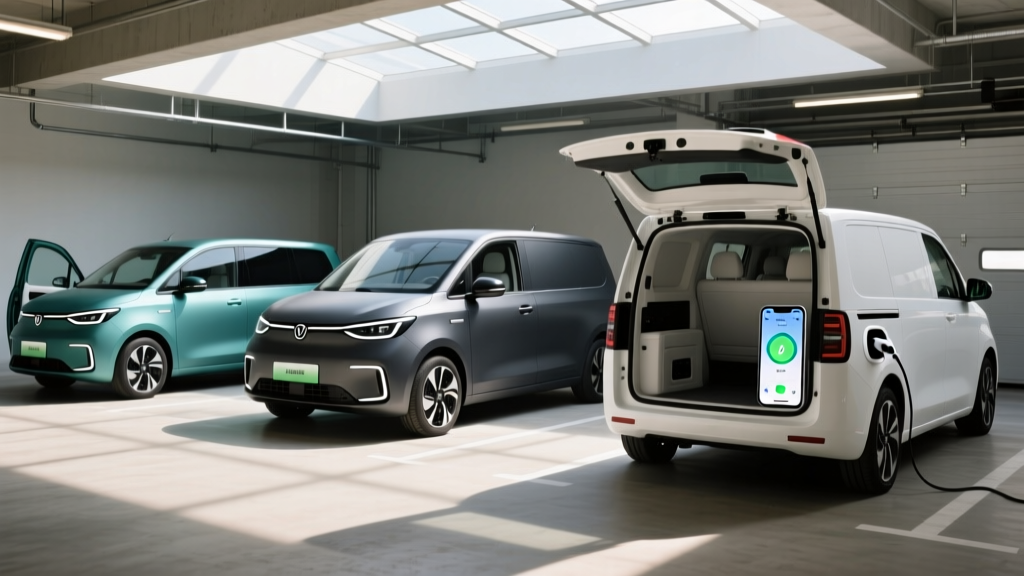
The small electric van segment remains narrow in 2026, but the vehicles available are purpose-built for last-mile delivery, tradesperson use, and small-business logistics. Unlike passenger EVs, these vans prioritize cargo volume, upfit flexibility, and predictable daily routes over long-distance range. That makes them an excellent match for electrification — if your duty cycle fits the battery.
What Small Electric Vans Are Available in 2026?
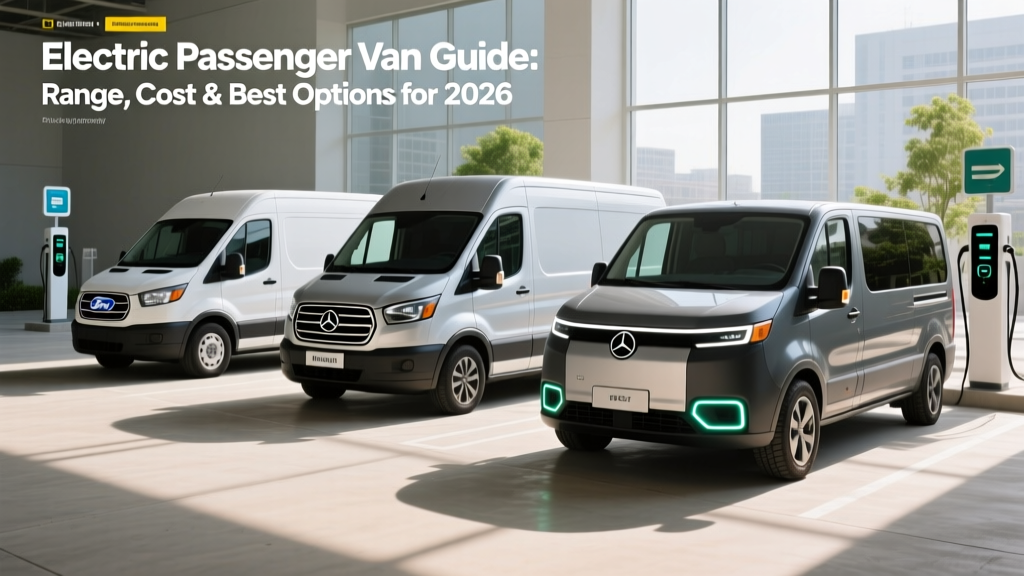
Buyers shopping for a small electric van in the US currently have limited but viable choices. Here's how the main contenders stack up on the specs that matter most for commercial and personal use:
| Spec | 2026 Ford E-Transit | 2026 BrightDrop Zevo 400 | Ram ProMaster EV (Announced) |
|---|---|---|---|
| EPA Range | 126 mi (low-roof, short wheelbase) | ~160 mi (est.) | ~162 mi (est.) |
| Battery (usable) | 68 kWh, NMC | ~80 kWh, NMC | ~90 kWh (est.), NMC |
| Peak DC Fast Charge | 115 kW | ~120 kW (est.) | ~150 kW (est.) |
| 10–80% Charge Time | ~45 min | ~50 min (est.) | ~40 min (est.) |
| Level 2 Rate | 10.5 kW (AC) | 11.5 kW (AC) | 11 kW (est.) |
| Horsepower / Torque | 266 hp / 317 lb-ft | ~250 hp (est.) | ~270 hp (est.) |
| Max Cargo Volume | 487.3 cu ft (extended high-roof) | 412 cu ft | 463 cu ft (est.) |
| Payload Capacity | ~3,300 lbs | ~2,500 lbs (est.) | ~3,100 lbs (est.) |
| Base MSRP | $46,895 | ~$55,000 (fleet pricing) | TBA |
| Powertrain Warranty | 8 yr / 100,000 mi | 8 yr / 100,000 mi | TBA |
Real-world range caveat: The EPA range figures above assume moderate temperatures, flat terrain, and partial loads. In our experience and consistent with EPA data from fueleconomy.gov, expect a loaded E-Transit on a mixed highway/city route to deliver roughly 95–110 miles in 70°F weather and as low as 75–90 miles in 20°F cold. Battery chemistry in these vans is predominantly NMC (nickel manganese cobalt), which is more sensitive to cold-weather capacity loss than LFP — a factor fleet buyers in northern climates must plan for.
EV Van vs. Gas Van: Real Cost Comparison
The purchase price of a small electric van is meaningfully higher than a gas equivalent, but operating costs tell a different story. Here's a five-year, 75,000-mile total cost of ownership comparison between the Ford E-Transit and the gasoline Ford Transit T-150 (the closest gas counterpart):
| Cost Category (5 yr / 75k mi) | Ford E-Transit (EV) | Ford Transit T-150 (Gas) |
|---|---|---|
| Purchase Price (base MSRP) | $46,895 | $38,500 |
| Federal Tax Credit (§30D) | Up to $7,500* | $0 |
| Effective Purchase Price | ~$39,395 | $38,500 |
| Fuel / Electricity | ~$3,750 (at $0.14/kWh avg) | ~$11,250 (at $3.50/gal, 16 MPG) |
| Maintenance | ~$1,200 | ~$4,500 |
| Insurance (est. avg) | ~$9,500 | ~$8,200 |
| Depreciation (est.) | ~$18,000 | ~$14,500 |
| Estimated 5-Year Total | ~$71,845 | ~$76,950 |
*The §30D federal tax credit of up to $7,500 is subject to battery-component and critical-mineral sourcing requirements, buyer income caps ($150k single / $300k joint for new vehicles), and MSRP limits ($80,000 for vans). Commercial-vehicle credits under §45W may apply instead for fleet purchases. Always verify current eligibility at IRS.gov and consult a tax professional.
The EV van pulls ahead primarily through fuel and maintenance savings — roughly $10,800 combined over five years. Electric motors don't need oil changes, transmission fluid, spark plugs, or exhaust repairs. Regenerative braking extends brake-pad life significantly. However, EV insurance premiums currently run 10–20% higher than gas equivalents due to repair-cost data, and depreciation remains steeper for commercial EVs with uncertain long-term residual values.
Real-World Ownership: What First-Time EV Van Buyers Must Know
Buying a small electric van is not the same as buying a passenger EV. The duty cycles, charging logistics, and operational constraints are distinct. Here's what matters:
Home and Depot Charging Is Non-Negotiable
Public DC fast charging is not a viable daily strategy for a commercial van. At $0.35–$0.55/kWh on networks like Electrify America or EVgo, your "fuel" cost nearly triples compared to depot Level 2 charging at commercial electricity rates ($0.10–$0.18/kWh). You need a reliable Level 2 (240V) charging solution — either at home or at your business location.
A typical Level 2 installation for a commercial van requires a 60-amp dedicated circuit. Expect costs of $2,000–$5,000 for a single charger installation (panel permitting, wiring, and hardware), scaling to $8,000–$20,000+ for a multi-bay depot setup. If your building has a 200-amp panel already near capacity, a panel upgrade to 400 amps can add $3,000–$7,000. Always get a load calculation from a licensed electrician before committing.
At 10.5 kW (the E-Transit's Level 2 rate), a full 68 kWh battery charges from empty to full in roughly 7 hours — adequate for overnight turnaround on a day shift.
Route Planning Around the Battery
With 95–126 miles of real-world range, a small electric van fits routes under 80–100 miles with a comfortable buffer. Beyond that, you're planning mid-day charging stops, which add 30–50 minutes to your schedule. For delivery businesses, this means electric vans work best for:
- Last-mile parcel delivery in metro areas
- HVAC, plumbing, and electrical service calls within a 40-mile radius
- Catering and event logistics in a single city
- Mobile retail or food-service operations with a fixed daily location
If your daily route regularly exceeds 150 miles or involves sustained highway speeds above 65 mph (where aerodynamic drag crushes van efficiency), a gas or diesel van remains the practical choice.
Cold-Weather Range Loss Is Real
NMC batteries in commercial vans lose roughly 20–35% of their rated range in sustained freezing temperatures, based on fleet data and cold-climate testing. A 126-mile E-Transit may deliver only 85–95 miles at 15°F with cabin heat running and a moderate payload. If you operate in Minnesota, Maine, or Colorado winters, size your route to the worst-case range, not the EPA sticker. Preconditioning the battery while plugged in (a feature the E-Transit supports via Ford Pro software) helps recover some charging speed and efficiency, but it doesn't eliminate cold loss on the road.
Common Misconceptions About Small Electric Vans
| Myth | Fact |
|---|---|
| "Electric vans can't handle heavy loads." | The E-Transit's 3,300-lb payload matches many gas Transit trims. Electric motors deliver full torque at zero RPM, making them strong off the line even loaded. However, heavy loads do reduce range by 10–20%. |
| "The battery will need replacing in a few years." | Ford warrants the E-Transit battery at 8 years / 100,000 miles for retention above 70% capacity. NMC batteries in commercial duty cycles (moderate depth-of-discharge, regular Level 2 charging) typically retain 80–85% capacity at 100,000 miles based on current fleet data. |
| "You can charge at any public station." | Most public DC fast chargers are designed for passenger cars. Van-length vehicles may not fit in standard charging stalls, and CCS1 connector placement on vans can make cable reach an issue. Depot charging is the correct solution, not public infrastructure. |
| "Federal tax credits make EVs cheaper upfront." | The §30D credit can reduce effective cost by up to $7,500, but eligibility depends on battery sourcing, buyer income, and MSRP caps. Many commercial buyers instead qualify for the §45W commercial clean vehicle credit (up to $7,500 for vehicles under 14,000 lbs GVWR). The credit reduces — but rarely eliminates — the EV price premium. |
| "Electric vans are slower and less capable." | The E-Transit's 266 hp and 317 lb-ft of instant torque gives it brisk acceleration for a commercial vehicle (0–60 mph in roughly 8 seconds loaded). Top speed is electronically limited to 75 mph, appropriate for commercial use. |
Decision Framework: Should You Buy a Small Electric Van?
Choose a small electric van if:
- Your daily route is under 100 miles with a predictable pattern
- You have access to overnight Level 2 charging at home or your business
- You operate primarily in urban or suburban areas with low average speeds (regenerative braking maximizes efficiency)
- You want to reduce operating costs and your local electricity rates are under $0.20/kWh
- You qualify for federal (§30D or §45W) and/or state commercial EV incentives
- Noise restrictions or zero-emission zones in your city favor electric operation
Stick with a gas or diesel van if:
- Your daily routes regularly exceed 150 miles
- You operate in extreme cold climates where 30%+ range loss creates operational risk
- You lack access to reliable overnight charging and cannot install it
- You tow heavy trailers (electric van towing capacity is limited and towing crushes range)
- Your business is in a rural area with no DC fast-charging infrastructure for contingency top-ups
- Your budget cannot absorb the higher upfront cost even after incentives
Frequently Asked Questions
Can I get a federal tax credit for buying a small electric van?
Possibly. Under IRS §30D, new clean vehicles with MSRP under $80,000 (the van/truck cap) may qualify for up to $7,500, split between battery-component ($3,750) and critical-mineral ($3,750) requirements. Buyer income must not exceed $150,000 (single) or $300,000 (joint). For business/fleet purchases, the §45W commercial clean vehicle credit may be more applicable — it has different sourcing rules and no income cap. Check current requirements at IRS.gov before purchasing, as sourcing rules tighten annually.
How much does it cost to charge an electric van at home vs. a gas fill-up?
Charging a 68 kWh E-Transit battery from empty to full at the national average residential rate of $0.16/kWh costs roughly $10.88 for 100–126 miles of range. A comparable gas Transit at 16 MPG combined needs about 7 gallons for the same distance — roughly $24.50 at $3.50/gallon. That's a per-fill savings of $13–$14, which adds up to $5,000–$7,500 over five years of daily use.
What happens if the battery degrades past the warranty threshold?
If your van's battery falls below 70% of original capacity within 8 years or 100,000 miles (Ford's warranty threshold), the manufacturer is obligated to repair or replace it at no cost. Out-of-warranty battery replacement for a van-class NMC pack currently runs $15,000–$25,000 including labor. However, real-world fleet data suggests most NMC packs retain 75–85% capacity at 100,000 miles under normal use, meaning outright replacement is uncommon in the first decade.
Are there any small electric vans with over 200 miles of range?
Not currently in the US market for 2026. The longest-range options top out around 160 miles (estimated). If you need 200+ miles of daily range in a van form factor, you'll need to look at larger platforms like the BrightDrop Zevo 600 (estimated 250 miles, but significantly larger and more expensive) or wait for next-generation models with higher-density battery packs. For now, 100–130 real-world miles is the practical ceiling for the small van class.
Can I install a Level 2 charger myself?
No. A 240V / 48-amp (or higher) circuit for commercial van charging requires a licensed electrician, proper permitting, and potentially a panel upgrade. DIY electrical work at this amperage is dangerous and will void equipment warranties and potentially your property insurance. Budget $2,000–$5,000 for a professional installation and get at least three quotes.