The Quick Answer
If you need a truck bed for weekend projects but drive mostly in the city or suburbs, a small electric pickup can save you $1,200–$2,000 annually in fuel and maintenance versus a gas compact truck—provided you can charge at home. The segment in 2026 is still narrow: the Ford Maverick EV (starting ~$34,995, EPA-est. 270 mi range) is the only volume player currently on sale, while the Hyundai Santa Cruz EV and refreshed Rivian R2T are announced for late-2026/2027 delivery. Expect real-world highway range of 220–240 miles, 10–80% DC fast charging in roughly 25–30 minutes at 150 kW+ chargers, and payload/tow ratings of 1,500 lbs / 2,000–4,000 lbs respectively. If you regularly tow over 3,000 lbs or drive 300+ miles between charges in rural areas, a hybrid compact truck (Maverick Hybrid at 42 MPG combined) remains the more practical choice today.
What Qualifies as a Small Electric Pickup in 2026?
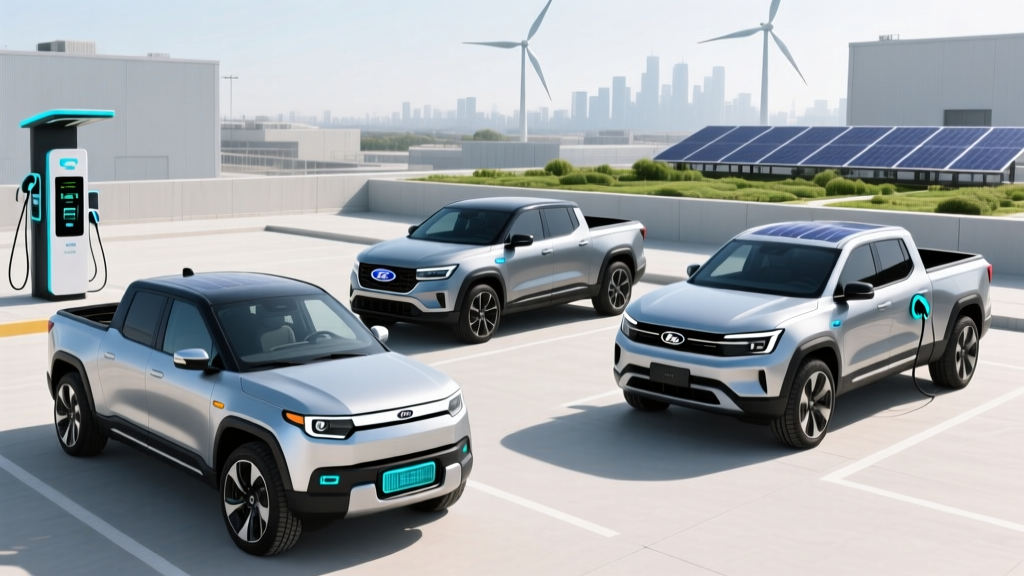
The "small electric pickup" category covers unibody compact trucks under 200 inches in length with a 4.5-foot bed, targeting buyers who want truck utility without full-size dimensions or pricing. Unlike the Ford F-150 Lightning or Rivian R1T—which start above $55,000 and stretch over 220 inches—these trucks aim for the $30,000–$45,000 bracket and prioritize daily drivability over maximum towing.
As of early 2026, the landscape looks like this:
| Model | Status | Est. Base MSRP | EPA Range | Battery (kWh) | Max DC Charge (kW) | Tow Rating |
|---|---|---|---|---|---|---|
| Ford Maverick EV | On sale | $34,995 | ~270 mi | ~74 kWh (NMC) | 150 kW | 2,000 lbs |
| Hyundai Santa Cruz EV | Announced (late 2026) | $36,500 (est.) | ~260 mi (prelim.) | ~77 kWh (NMC) | 175 kW | ~2,500 lbs (est.) |
| Rivian R2T (Standard) | Announced (2027) | $45,000 (est.) | ~300 mi (prelim.) | ~90 kWh (NMC) | 200+ kW | ~4,000 lbs (est.) |
| Ford Maverick Hybrid (AWD) | On sale (gas baseline) | $29,495 | N/A (42 MPG comb.) | 1.1 kWh (HEV) | N/A | 2,000 lbs |
Sources: EPA fueleconomy.gov, manufacturer press releases. Announced-model specs are preliminary and subject to change at production.
Real-World Range vs. the EPA Sticker
The EPA range figure on the window sticker assumes a mix of city and highway driving at moderate temperatures. In practice, small electric pickups face the same physics as every other EV:
- Highway driving at 75 mph: Expect 15–20% range reduction. A Maverick EV rated at 270 miles EPA will deliver roughly 220–230 miles on a flat interstate in 70°F weather.
- Cold weather (below 30°F): Battery chemistry slows and cabin heating draws significant power. Plan for 25–35% loss. That same 270-mile truck may show 180–200 miles of usable range on a January morning in Chicago.
- Towing or heavy payload: Pulling even a 1,500-lb trailer can cut range by 40–50%. This is the single biggest limitation of small electric pickups versus their hybrid counterparts.
If your typical week involves a 40-mile round-trip commute, grocery runs, and the occasional hardware-store trip, a small electric pickup covers 95% of your driving without a second thought. The friction appears on road trips exceeding 200 miles one-way and any scenario involving sustained towing.
Charging at Home and on the Road
Charging access determines whether an EV pickup is a convenience or a burden. Here is the realistic breakdown:
| Level | Power | Miles Added per Hour | Typical Use Case | Cost to Install / Use |
|---|---|---|---|---|
| Level 1 (120V) | 1.4 kW | ~4–5 mi/hr | Overnight top-up, low-mileage drivers | $0 (included cord) |
| Level 2 (240V, home) | 7.2–11.5 kW | ~25–40 mi/hr | Daily charging, full overnight refill | $800–$2,500 installed |
| DC Fast Charge | 50–150+ kW | ~150–400 mi/hr | Road trips, quick top-ups | $0.30–$0.55/kWh public |
Home Level 2 is the linchpin. A 240-volt, 48-amp Level 2 charger (like a ChargePoint Home Flex or Wallbox Pulsar Plus) will fully recharge a 74 kWh Maverick EV battery in roughly 8–9 hours—perfect for overnight. Installation costs vary wildly depending on your electrical panel:
| Item | Typical Cost Range | Notes |
|---|---|---|
| Level 2 charger unit | $350–$700 | Hardwired 48A models recommended |
| Electrician labor (standard install) | $400–$1,200 | If panel is near garage, 240V run is short |
| Electrical panel upgrade (if needed) | $1,500–$3,500 | Required if you have a 100A panel or no spare slots |
| Permit & inspection | $50–$250 | Varies by municipality |
| Total (no panel upgrade) | $800–$2,150 | |
| Total (with panel upgrade) | $2,300–$5,650 |
On the road, the Maverick EV's 150 kW peak DC charge rate means a 10–80% session takes roughly 28–32 minutes at a capable station (Electrify America 150+ kW units, Tesla Superchargers with NACS adapter). Note that charge speed tapers significantly above 80% SoC—this is normal battery-management behavior, not a defect.
Key point: kW (kilowatts) measures charging power—how fast energy flows. kWh (kilowatt-hours) measures battery capacity—how much energy the pack holds. A 150 kW charger filling a 74 kWh battery is analogous to a high-flow hose filling a 74-gallon tank.
Cost of Ownership: EV Pickup vs. Gas Compact Truck
Let's compare a 2026 Ford Maverick EV (AWD, ~$38,000 as-equipped) against the gas Maverick AWD EcoBoost (~$32,000 as-equipped) over five years and 75,000 miles, assuming home charging at $0.14/kWh and gas at $3.40/gallon.
| Category | Maverick EV | Maverick Gas (AWD EcoBoost) | 5-Year Difference |
|---|---|---|---|
| Purchase price (before incentives) | $38,000 | $32,000 | EV +$6,000 |
| Federal tax credit (§30D) | –$3,750 to $7,500* | $0 | EV saves $3,750–$7,500 |
| Home charger install | $1,500 | $0 | EV +$1,500 |
| Fuel / electricity (75k mi) | $3,150 | $7,500 | EV saves $4,350 |
| Maintenance (oil, filters, brakes) | $800 | $2,800 | EV saves $2,000 |
| Insurance (avg. premium) | $9,250 | $7,500 | EV +$1,750 |
| Net 5-Year Cost | ~$48,950 | ~$49,800 | EV breaks even to saves ~$1,000–$4,000 |
*§30D credit eligibility depends on MSRP caps (trucks: $80,000), buyer income limits ($150K single / $300K joint AGI), battery critical-mineral and component sourcing requirements, and point-of-sale transfer availability. Verify current-year rules at IRS.gov. The Maverick EV's partial-to-full credit eligibility depends on Ford's battery sourcing for the specific model year—confirm with your dealer before purchase.
The EV wins on operating costs but pays more upfront and in insurance. The breakeven point typically arrives around year 3–4 if you charge at home. If you rely solely on public DC fast charging at $0.45/kWh, the fuel-cost advantage narrows significantly—your "fuel" cost could approach $6,500 over five years, erasing much of the savings.
Federal Tax Credit: What Actually Applies to Small Electric Pickups
The §30D Clean Vehicle Credit can reduce your tax burden by up to $7,500, but qualifying is not automatic. Here is the checklist for 2026:
- MSRP cap: Vehicle base price + options must not exceed $80,000 for trucks (small pickups easily clear this).
- Buyer income cap: Modified AGI must not exceed $150,000 (single), $225,000 (head of household), or $300,000 (married filing jointly).
- Final assembly: Vehicle must be assembled in North America (VIN check required).
- Battery components: A percentage of battery components must be manufactured or assembled in North America (threshold increases annually).
- Critical minerals: A percentage of critical minerals must be sourced from the U.S. or free-trade-agreement partners (threshold increases annually).
- Point-of-sale transfer: You may transfer the credit to the dealer at purchase, reducing your out-of-pocket cost immediately—this functions like a down-payment reduction.
The Maverick EV's battery sourcing determines whether it qualifies for the full $7,500, a partial $3,750, or no credit at all. Hyundai's upcoming Santa Cruz EV, assembled in Georgia, will likely meet North American assembly requirements, but critical-mineral sourcing will depend on the specific battery cell supplier. Always verify the exact VIN's eligibility on fueleconomy.gov before signing.
Common Misconceptions About Small Electric Pickups
| Myth | Fact |
|---|---|
| "Electric trucks can't tow anything useful." | The Maverick EV is rated for 2,000 lbs—enough for a small utility trailer, a pair of dirt bikes, or a light camper. It's not a heavy-hauler, but neither is a gas Maverick. |
| "The battery will need replacing in 5 years and cost $20,000." | Federal law mandates an 8-year/100,000-mile battery warranty with a capacity-retention threshold (typically 70%). NMC batteries in liquid-cooled packs degrade roughly 1.5–2.5% per year under normal use. A full replacement is rare and usually covered under warranty during the coverage period. |
| "I can't charge in an apartment or without a garage." | This is a real limitation—not a myth. If you lack access to a dedicated 240V outlet or workplace charging, EV ownership becomes significantly harder. Public-charging-only ownership is feasible but costs more and requires planning. |
| "A small EV pickup is just as capable as an F-150 Lightning." | It is not. Full-size electric trucks offer 5,000–10,000-lb towing, 7–8 foot beds, and 300+ mile range. Small electric pickups trade maximum capability for affordability, efficiency, and daily-driver comfort. |
| "Regenerative braking means I never need brake pads." | Regen dramatically reduces brake wear—many EV owners report original pads at 80,000+ miles. But brake fluid still needs flushing every 2–3 years, and pads/rotors will eventually need service, especially if you drive in hilly terrain or tow frequently. |
Decision Framework: Is a Small Electric Pickup Right for You?
Choose a small electric pickup (Maverick EV, upcoming Santa Cruz EV) if:
- Your daily driving is under 120 miles round-trip
- You can install a Level 2 charger at home (garage or driveway with 240V access)
- Your towing needs stay under 2,000 lbs
- You live in a moderate or warm climate (or can accept 25–30% winter range loss)
- You qualify for at least a partial §30D tax credit
- You value low operating costs and minimal maintenance over maximum range flexibility
Choose a compact hybrid truck (Maverick Hybrid) or wait if:
- You regularly drive 250+ miles between stops in areas with sparse DC fast charging
- You tow 3,000+ lbs even occasionally
- You live in an apartment or street-park without charging access
- Your budget is strictly under $30,000
- You live in extreme cold (regularly below 10°F) and cannot garage the vehicle
- You need a truck today and the EV model you want has a long waitlist
Choose a full-size EV pickup (F-150 Lightning, R1T, Silverado EV) if:
- You need 5,000+ lbs of towing capacity
- You want 300+ miles of range and a full-size bed
- Your budget exceeds $55,000
What First-Time EV Pickup Buyers Should Know
Beyond the spec sheet, here are the ownership realities that no brochure mentions:
Preconditioning matters. If your EV pickup supports it, use the "navigate to charger" feature or manual battery preconditioning before arriving at a DC fast charger. A cold battery may accept only 40–50 kW even at a 150 kW station; a preconditioned battery will ramp to peak speed within minutes. This alone can shave 10–15 minutes off a road-trip charge stop.
Tire costs are higher. EVs are heavier and produce instant torque. Expect to replace tires every 30,000–40,000 miles instead of 50,000+. Budget $800–$1,400 for a set of EV-rated all-season or all-terrain tires.
Insurance premiums run 15–25% higher than equivalent gas trucks, driven by higher repair costs and battery-replacement risk. Get quotes from at least three insurers before purchase—some carriers now offer EV-specific discounts.
One-pedal driving changes your habits fast. Strong regenerative braking lets you drive mostly without touching the brake pedal. Most owners adapt within a week and prefer it, but it takes practice in stop-and-go traffic.
Bed utility is real but modest. A 4.5-foot bed fits two dirt bikes (angled), roughly 20 bags of mulch, or a week's worth of lumber for a deck project. It does not fit a standard sheet of plywood flat between the wheel wells—that requires a full-size 6.5-foot bed.
Frequently Asked Questions
Can I tow a small camper with a small electric pickup?
A Maverick EV rated at 2,000 lbs can handle a lightweight teardrop trailer or pop-up camper (typically 1,200–1,800 lbs loaded). However, towing cuts range by 40–50%, so plan for charging every 120–150 miles on the highway. A hybrid Maverick can tow the same weight without range anxiety, though at 20–25 MPG while towing.
What happens if the battery degrades significantly?
Federal law requires 8-year/100,000-mile battery coverage. If your pack drops below the manufacturer's stated retention threshold (typically 70% of original capacity) within that period, the dealer must repair or replace it at no cost. Real-world data from older EVs shows liquid-cooled NMC packs losing 10–15% capacity over 8 years with normal use.
Is a small electric pickup good in snow and cold?
AWD electric trucks perform well in snow thanks to instant torque and a low center of gravity (battery pack under the floor). The challenge is range loss: plan for 25–35% less range in sustained sub-30°F temperatures. Using seat heaters and a heated steering wheel instead of cranking cabin heat can recover 5–10% of range. Preconditioning while plugged in is essential.
How does the Maverick EV compare to the Rivian R1T?
They serve different buyers. The Maverick EV is a compact, $35,000–$42,000 daily-driver truck with modest towing and a 4.5-foot bed. The R1T is a $70,000+ adventure-oriented mid-size truck with 300+ mile range, 5,000+ lb towing, and a bed extender option. They are not direct competitors.
Can I charge a small electric pickup from a standard household outlet?
Yes, using the included Level 1 cord at 120V/12A. You will gain roughly 4–5 miles of range per hour—enough for drivers covering 30–40 miles daily who can plug in for 10+ hours overnight. For anything beyond that, a 240V Level 2 installation is strongly recommended.
Will the Hyundai Santa Cruz EV qualify for the federal tax credit?
It is too early to confirm. The Santa Cruz EV will be assembled in Georgia (meeting the North American assembly requirement), but the battery's critical-mineral and component sourcing will determine partial ($3,750) or full ($7,500) eligibility. Check fueleconomy.gov closer to the on-sale date for the specific VIN's credit status.