Quick Answer: Are Small Electric Fishing Boats Worth It?
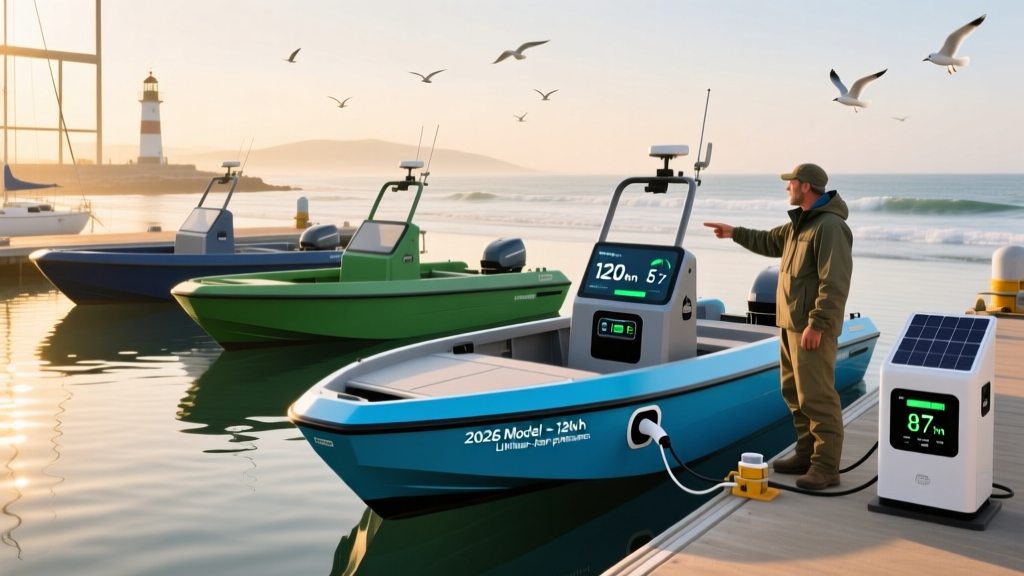
Small electric fishing boats (typically 12–18 feet with 3–15 kW electric outboards) offer 4–10 hours of runtime on a single charge, cost $8,000–$35,000 depending on the package, and eliminate fuel, oil changes, and winterization. They excel for lake, pond, and calm river fishing where silence and zero local emissions matter. However, range is limited to roughly 15–40 miles depending on speed and battery capacity, and they are not suitable for open water, strong currents, or multi-day trips without shore-power access.
Why Anglers Are Switching to Electric Outboards
The shift toward small electric fishing boats is driven by three practical advantages that compound over years of ownership:
- Silence on the water: Electric motors produce near-zero noise at trolling speeds (1–3 mph), reducing fish disturbance. Gas outboards at idle still generate low-frequency vibration that travels through the hull.
- Instant torque: Electric outboards deliver full torque from 0 RPM, giving precise speed control for drift fishing and bait presentation.
- Minimal maintenance: No fuel stabilizer, no impeller replacements, no lower-unit gear oil, no carburetor cleaning. Annual ownership cost drops significantly.
The trade-off is upfront cost and range ceiling. A 5 kW electric outboard with a 5 kWh lithium battery pack costs roughly $6,000–$9,000 (motor + battery), while a comparable 10 HP gas outboard runs $2,500–$3,500. The payback period depends on how often you boat and local fuel prices.
Electric vs Gas Outboard: The Real Cost Breakdown
Let's compare a typical 14-foot aluminum fishing boat used 40 days per year on a freshwater lake. The gas option is a 9.9 HP four-stroke outboard; the electric option is a 5 kW (roughly equivalent to 8–10 HP at the prop) electric outboard with a 5 kWh LFP battery.
| Cost Category | Gas Outboard (9.9 HP) | Electric Outboard (5 kW) |
|---|---|---|
| Motor purchase price | $3,000 | $7,500 |
| Battery pack (included or separate) | N/A | Included (5 kWh LFP) |
| Annual fuel / electricity | $480 (60 gal/yr × $8/gal marine gas) | $60 (200 kWh/yr × $0.30/kWh avg) |
| Annual maintenance (oil, impeller, filters) | $200 | $0 |
| Winterization per year | $75 | $0 |
| 5-year fuel/energy total | $2,400 | $300 |
| 5-year maintenance total | $1,375 | $0 |
| 5-year total cost of ownership | $6,775 | $7,800 |
The electric setup costs roughly $1,025 more over five years in this scenario. However, if fuel prices rise, you boat more frequently, or you value the silence and instant response, the gap narrows or inverts. At 80 days per year, the electric option breaks even by year four.
Understanding Electric Boat Batteries: kWh, Chemistry & Runtime
Just like EVs, the battery is the single most important spec on an electric fishing boat. Here's what matters:
kWh = Your Fuel Tank Size
Kilowatt-hours (kWh) measure stored energy — the bigger the number, the longer you can run. A 5 kWh battery at a sustained 1 kW draw (slow trolling, ~2 mph) gives roughly 5 hours of runtime. At 3 kW (cruising speed, ~5 mph), that drops to about 1.5 hours.
LFP vs NMC Chemistry
| Factor | LFP (Lithium Iron Phosphate) | NMC (Nickel Manganese Cobalt) |
|---|---|---|
| Cycle life | 3,000–5,000 cycles | 1,000–2,000 cycles |
| Energy density | Lower (heavier per kWh) | Higher (lighter per kWh) |
| Safety (thermal runaway risk) | Very low | Moderate |
| Cost per kWh | $400–$600 | $500–$800 |
| Best for | Frequent use, long ownership | Weight-sensitive hulls |
Most quality electric fishing boat systems in 2026 use LFP chemistry because the marine environment demands safety and longevity. LFP batteries tolerate full discharges and partial charges better than NMC, and they won't go into thermal runaway if punctured — a meaningful safety advantage on the water.
Real-World Runtime Expectations
Manufacturer claims of "all-day runtime" assume minimal throttle use. In practice:
- Trolling only (1–2 mph, 0.5–1 kW draw): 5–8 hours on a 5 kWh pack
- Mixed use (trolling + cruising between spots): 3–5 hours
- Full-speed cruising (5–6 mph, 4–5 kW draw): 1–1.5 hours
Charging Your Electric Fishing Boat at Home
Unlike electric cars, small electric fishing boats typically charge from standard 120V household outlets using an included charger. Here's what to expect:
| Battery Size | 120V Charger (Included) | 240V Charger (Optional) | Time to Full from 20% |
|---|---|---|---|
| 3 kWh | 0.5–0.8 kW | 1.5–2 kW | 3–5 hours (120V) / 1–1.5 hours (240V) |
| 5 kWh | 0.5–0.8 kW | 2–3 kW | 5–8 hours (120V) / 1.5–2 hours (240V) |
| 10 kWh | 0.8–1.2 kW | 3–5 kW | 8–12 hours (120V) / 2–3 hours (240V) |
For most anglers fishing day trips, overnight charging on a standard 120V outlet is sufficient. Charge the battery after each outing and it's ready by morning. If you fish multiple sessions in one day or need fast turnaround, a 240V Level 2 charger (similar to an EV home charger, requiring a 240V circuit installed by a licensed electrician for $500–$1,500) cuts charge time dramatically.
Key consideration: If you store your boat at a marina or dock without shore power, you'll need to remove the battery and charge it at home, or arrange marina electrical access. Plan this logistics chain before purchasing.
Leading Electric Outboard Brands in 2026
The market for small electric fishing boat motors has matured. Here are the main players and what they offer:
- Torqeedo (Germany): Pioneer in electric marine propulsion. The Cruise 5.0 (5 kW) and Travel 1103 (1.1 kW integrated battery) are popular for small fishing boats. Battery packs sold separately. Pricing: $2,500–$8,000 depending on model and battery.
- ePropulsion (China/Global): Strong value proposition. The Navy 6.0 Evo (6 kW) includes hydrogeneration (charges the battery while under sail or tow). Spirit Plus (3 kW) is an all-in-one with integrated battery. Pricing: $2,000–$6,500.
- Minn Kota / Lowrance (trolling motors): While these are bow-mount or transom-mount trolling motors (not primary propulsion), they're worth noting for anglers who trailer to the lake and use a gas kicker for transit. 36V systems with lithium batteries offer 8–12 hours of trolling. Pricing: $1,500–$3,500.
- Flux Marine (US): Newer entrant with the Flux 150 (150 HP equivalent) aimed at larger boats, but their smaller models target the fishing boat segment. Pricing is premium but US-built.
Common Misconceptions About Electric Fishing Boats
| Myth | Fact |
|---|---|
| "Electric boats can't go fast enough" | A 5 kW motor pushes a 14-foot aluminum boat to 5–7 mph — sufficient for most lake fishing. They won't plane like a 40 HP gas motor, but fishing boats rarely need to. |
| "Batteries die after 2 years" | LFP marine batteries are rated for 3,000+ cycles. At 50 outings per year, that's 60+ years of cycle life. Calendar aging limits them to roughly 10–15 years. |
| "You'll get stranded with no charge" | Most systems include a reserve buffer (10–15% of capacity held back) and low-battery warnings at 20% and 10%. Always carry a paddle and know your return distance. |
| "Electric outboards are silent underwater too" | They're much quieter than gas, but propeller cavitation and water displacement still produce sound. The advantage is the absence of engine vibration transmitted through the hull. |
| "You need solar panels to make it worthwhile" | Grid charging at $0.12–$0.30/kWh already costs $0.60–$3.00 per outing — far cheaper than gas. Solar is a bonus for off-grid cabins, not a requirement. |
Decision Framework: Is an Electric Fishing Boat Right for You?
Choose Electric If:
- You fish primarily on lakes, ponds, or slow rivers (no strong currents or open water)
- Your typical outing is 4–6 hours or less
- You have access to shore power (home garage, dock outlet, or marina electricity)
- Silence on the water is a priority (fly fishing, shallow-water species, photography)
- You want to eliminate fuel storage, winterization, and engine maintenance
- You boat in areas with gas-motor restrictions (many drinking-water reservoirs allow electric only)
Stick With Gas If:
- You need to plane the boat or cruise above 10 mph regularly
- You fish large reservoirs, rivers with current, or coastal bays where quick repositioning matters
- Your outings regularly exceed 8 hours without shore-power access
- You trailer long distances and need maximum range flexibility
- Your budget is under $4,000 for the entire propulsion system
Tax Credits and Incentives for Electric Boats
As of 2026, the federal §30D Clean Vehicle Credit applies to road-going EVs and does not cover marine vessels. However, some states and local utility districts offer rebates for electric marine equipment:
- California's CARB programs occasionally include off-road and marine electrification incentives
- Some municipal water authorities offer discounts on electric-only lakes for permit fees
- Utility companies in regions like the Pacific Northwest and Northeast occasionally run marine-electrification rebate pilots
Check with your state energy office and local utility for current programs. These change annually and are often first-come, first-served.
Frequently Asked Questions
How far can a small electric fishing boat go on one charge?
With a 5 kWh battery at mixed-use speeds (trolling + short cruises), expect 15–25 miles of total range. At pure trolling speed (2 mph), you can cover 8–12 miles over 4–6 hours. Always plan to use no more than 70–80% of capacity to preserve battery life and keep a safety reserve.
Can I use a car EV charger for my electric boat battery?
Not directly. Most electric boat batteries use proprietary connectors and charge protocols (typically simple DC charging via an included AC-to-DC power supply). However, the electrical circuit requirements are similar — a 240V/30A circuit installed by an electrician can serve both your EV and a high-power boat battery charger.
What happens to the battery in winter?
LFP batteries lose roughly 10–20% of usable capacity in freezing temperatures. Store the battery indoors (above 32°F) when not in use, and never charge a lithium battery below freezing — this can cause permanent damage. Most quality marine BMS (battery management systems) include low-temperature charge protection that prevents charging when cells are too cold.
Do electric fishing boats qualify for any federal tax credits?
No. The IRS §30D credit applies to qualified plug-in electric drive motor vehicles for road use. Boats are not eligible. Some state and utility programs may offer incentives — check local resources.
How long do electric outboard motors last?
The electric motor itself (brushless DC) has very few wear parts and can last 15–20+ years with basic care (flush after saltwater use, inspect wiring). The battery is the consumable component — expect 10–15 years of service life from an LFP pack before capacity drops below 80% of original.
Can I add a second battery for more range?
Yes, if your motor controller supports the voltage and your boat has the weight capacity. Adding a second 5 kWh pack doubles runtime to 8–12 hours mixed use but adds 80–120 lbs. Check your boat's maximum weight capacity plate and transom rating before adding batteries.