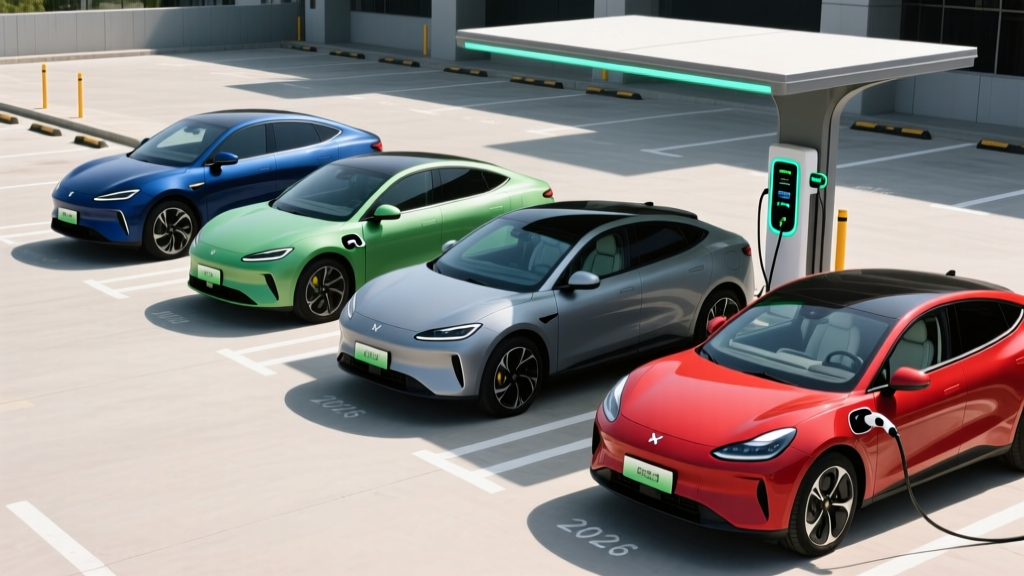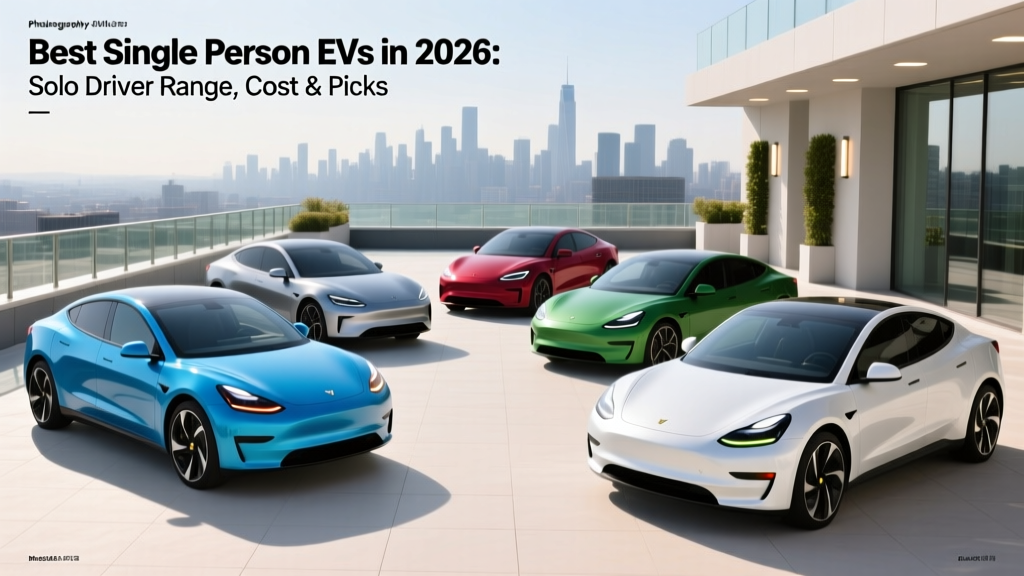
Quick Answer: The best single person EVs in 2026 prioritize low running costs, compact footprints for city parking, and enough range to eliminate daily charging anxiety — without paying for passenger space you'll rarely use. Top picks include the Chevrolet Equinox EV (319 mi EPA, from ~$33,600), Hyundai Kona Electric (261 mi EPA, from ~$32,975), and Volvo EX30 (275 mi EPA, from ~$36,950). Solo drivers typically need 200–300 miles of real-world range, home Level 2 charging, and a total 5-year cost below a comparable gas crossover to come out ahead.
When you're buying a car for one, the calculus changes. You don't need three rows of seats, you don't need 150 cubic feet of cargo space, and you certainly don't need to pay for them. What you do need is a vehicle that's affordable to run, easy to park, quick off the line for merging, and capable of handling a weekend road trip without turning into a charging-station crawl. That's exactly where a compact or subcompact EV excels for solo drivers in 2026.
This guide breaks down the best single person EVs by real-world ownership data — not brochure claims — with exact range figures, charging speeds, cost-per-mile calculations, and the tax-credit realities that can shave thousands off your purchase price.
What Solo Drivers Actually Need From an EV
Before comparing models, it's worth defining what "single person EVs" should optimize for. Solo drivers typically log between 10,000 and 14,000 miles per year, with the vast majority being commutes under 40 miles round-trip. That means your daily energy draw is roughly 10–15 kWh — easily replenished overnight on a Level 2 home charger.
Here's what matters most when you're the only one in the car:
- Real-world range of 200+ miles: Enough for a week of commuting plus an unexpected detour. EPA estimates are a starting point, but expect 10–20% loss in cold weather or sustained highway driving above 70 mph.
- Compact exterior dimensions: Easier curb parking, tighter turning radius, and lower insurance premiums in most states.
- DC fast charging above 100 kW: For road trips, a 10–80% charge in under 30 minutes keeps stops short.
- Low total cost of ownership: Purchase price, electricity, insurance, and maintenance should beat a comparable gas car over 5 years.
- Peppy acceleration: Without a heavy passenger load, a 200+ HP electric motor makes merging effortless — a genuine safety advantage.
What you can skip: all-wheel drive (unless you live in heavy snow country), towing packages, premium audio upgrades, and extended-range battery packs that add $5,000+ to the price for range you won't use daily.
Top Single Person EVs Compared: Specs & Real-World Range
| Spec | Chevy Equinox EV 3RS | Hyundai Kona Electric SEL | Volvo EX30 Plus | Tesla Model 3 RWD |
|---|---|---|---|---|
| Base MSRP (2026) | $33,600 | $32,975 | $36,950 | $38,990 |
| EPA Range | 319 mi | 261 mi | 275 mi | 272 mi |
| Battery (usable kWh) | 85 kWh (NMC) | 65.4 kWh (NMC) | 69 kWh (NMC) | 60 kWh (LFP) |
| Max DC Fast Charge | 150 kW | 105 kW | 153 kW | 170 kW |
| 10–80% DCFC Time | ~32 min | ~43 min | ~26 min | ~25 min |
| Level 2 Charge Rate | 11.5 kW | 10.9 kW | 11 kW | 11.5 kW |
| Horsepower | 213 HP | 201 HP | 272 HP | 271 HP |
| 0–60 mph | 7.8 sec | 7.6 sec | 6.2 sec | 5.8 sec |
| MPGe (combined) | 115 MPGe | 118 MPGe | 110 MPGe | 132 MPGe |
| Battery Warranty | 8 yr / 100,000 mi | 10 yr / 100,000 mi | 8 yr / 100,000 mi | 8 yr / 120,000 mi |
Real-World Range Reality Check: EPA estimates assume mixed driving at moderate temperatures. In our experience, expect roughly 270–290 highway miles from the Equinox EV at 75 mph, 220–235 miles from the Kona Electric, and around 230–250 miles from both the EX30 and Model 3 RWD. In sub-freezing temperatures, subtract another 15–25% unless the vehicle has an active heat pump (all four models here do). For solo commuters doing 30 miles round-trip, even the Kona Electric requires charging only twice a week on Level 2.
EV vs Gas for a Single Driver: The Cost Math
The most common question from first-time EV buyers is whether the savings actually materialize. Let's compare the Chevy Equinox EV 3RS against a closely matched gas alternative — the Honda CR-V EX (MSRP ~$33,850, 30 MPG combined) — over 5 years and 60,000 miles for a solo driver.
| Cost Category (5 yr / 60K mi) | Chevy Equinox EV 3RS | Honda CR-V EX (Gas) |
|---|---|---|
| Purchase Price (MSRP) | $33,600 | $33,850 |
| Federal Tax Credit (§30D) | –$7,500* | $0 |
| Effective Purchase Price | $26,100 | $33,850 |
| Fuel / Electricity (60K mi) | $3,120** | $6,600*** |
| Maintenance | $1,200 | $2,800 |
| Insurance (avg) | $6,500 | $5,800 |
| Estimated Depreciation | $11,500 | $12,200 |
| 5-Year Total Cost | $48,420 | $61,250 |
*§30D credit eligibility requires meeting income caps ($150K single / $300K joint), MSRP caps ($55K for SUVs), and battery sourcing requirements. Verify at IRS.gov and confirm the specific VIN qualifies on fueleconomy.gov. Credit can be transferred to the dealer at point of sale as of 2024+.
**Based on $0.13/kWh national average home electricity rate and 3.0 mi/kWh efficiency.
***Based on $3.30/gal average gas price and 30 MPG combined.
The numbers are stark: even before factoring in state incentives or utility off-peak charging discounts, the Equinox EV saves a solo driver roughly $12,830 over five years. The primary driver is the federal tax credit, which effectively drops the purchase price below the gas competition. Even without the credit, the EV still wins on fuel and maintenance — by about $5,080 over five years — though the gap narrows considerably.
Charging as a Solo Owner: What You Actually Need
Single-person households have a distinct charging advantage: you only need one vehicle to charge, which simplifies electrical panel requirements and eliminates scheduling conflicts. Here's what the infrastructure looks like:
| Charging Level | Power (kW) | Miles Added per Hour | Best Use Case |
|---|---|---|---|
| Level 1 (120V outlet) | 1.4 kW | 3–5 mi/hr | Low-mileage commuters (<30 mi/day) |
| Level 2 (240V home) | 7.7–11.5 kW | 25–40 mi/hr | Daily overnight charging (recommended) |
| DC Fast Charging | 50–250 kW | 150–600 mi/hr | Road trips and quick top-ups |
Home Level 2 installation for a single-person household typically runs $800–$2,500 if your electrical panel has spare capacity (a 240V/40A circuit). If you need a panel upgrade from 100A to 200A, add $1,500–$3,000. Solo owners living in apartments or condos face the real barrier: you'll need landlord approval and potentially shared charging infrastructure. In those cases, look for EVs with reliable public DC fast-charge networks (Tesla Superchargers or Electrify America) and plan for 20–30 minute weekly stops.
Understanding kW vs kWh is critical: kW (kilowatts) measures the rate of charging — like water pressure from a hose. kWh (kilowatt-hours) measures the total energy stored in the battery — like the size of the bucket. A 65 kWh battery charged at 10 kW takes roughly 6.5 hours from empty. A 150 kW DC fast charger can push that same battery from 10–80% in about 25–30 minutes, though charging speed tapers significantly above 80% to protect battery chemistry.
Tax Credits, Incentives, and What Solo Buyers Should Know
The federal §30D clean vehicle credit offers up to $7,500 for qualifying new EVs, but eligibility hinges on three factors that trip up many first-time buyers:
- Income caps: Adjusted gross income must not exceed $150,000 (single filers), $225,000 (head of household), or $300,000 (joint filers). Solo earners in high-cost metro areas should check this carefully.
- MSRP caps: Vans, SUVs, and trucks are capped at $80,000 MSRP; sedans at $55,000. All models in this guide qualify.
- Battery sourcing requirements: The vehicle must meet critical-mineral and battery-component sourcing thresholds that tighten annually. A vehicle that qualified in 2024 may not qualify in 2026. Always verify the specific VIN on the DOE's tax credit lookup tool.
- Point-of-sale transfer: As of 2024, you can transfer the credit to the dealer at purchase, reducing your out-of-pocket cost immediately rather than waiting until tax filing.
For solo buyers with moderate incomes, the credit can be transformative. A single person earning $75,000 buying a $33,600 Equinox EV effectively pays $26,100 — below many gas-powered compact SUVs. However, if your income exceeds $150,000, the credit disappears entirely, and the cost equation shifts. In that scenario, consider whether the fuel and maintenance savings alone justify the purchase over 5 years (they typically do, by $4,000–$5,500).
State incentives vary widely and change frequently. States like California, Colorado, and Massachusetts offer additional rebates of $1,000–$5,000, while others offer nothing. Check your state's energy office or AFDC state incentive database for current programs.
Common Misconceptions Solo EV Buyers Face
| Myth | Fact |
|---|---|
| "I need 400+ miles of range to avoid anxiety." | A solo commuter driving 35 miles/day needs roughly 175 miles of real range with a 2x buffer. A 261-mile EPA Kona Electric provides over 4x your daily need. |
| "EV batteries need replacing every 5 years." | Modern NMC and LFP batteries are warrantied for 8–10 years/100,000+ miles. Average degradation after 5 years is 8–12%, not catastrophic failure. Replacement costs $5,000–$15,000 but is rarely needed within typical ownership. |
| "Public charging is unreliable everywhere." | Tesla Superchargers consistently deliver 95%+ uptime. Electrify America and EVgo have improved significantly, though rural routes still require planning via PlugShare or A Better Routeplanner. |
| "EVs are more expensive to insure." | Partially true — EV insurance averages 10–15% higher than gas equivalents due to repair costs. But the fuel savings ($700+/year) typically exceed the insurance premium increase ($150–$250/year). |
| "I can't take road trips in a compact EV." | The Equinox EV's 319-mile EPA range handles 4–5 hours of driving before a 25-minute DC fast-charge stop. Solo road trips are arguably easier — you set the pace and the stops. |
Decision Framework: Which Single Person EV Is Right for You?
Choose the Chevrolet Equinox EV if: You want the longest range for the lowest price, qualify for the full $7,500 tax credit, and plan to keep the vehicle 5+ years. Best for budget-conscious solo drivers who road-trip 2–3 times per year.
Choose the Hyundai Kona Electric if: You want the lowest entry price, the longest battery warranty (10 years), and you mostly drive in urban or suburban settings. The 261-mile range is plenty for city commuters, and the 105 kW charging speed is acceptable if you rarely road-trip.
Choose the Volvo EX30 if: You value premium interior quality, strong acceleration (272 HP, 6.2-sec 0–60), and Scandinavian design. It's the most expensive option here, but the 153 kW DC fast charging and compact dimensions make it ideal for urban solo professionals.
Choose the Tesla Model 3 RWD if: You want access to the Supercharger network (the most reliable in North America), the highest MPGe efficiency (132 MPGe), and the best software/ADAS experience. The LFP battery chemistry also supports daily 100% charging without degradation concerns — a genuine advantage for solo drivers who want maximum daily range.
Skip the EV and consider a PHEV (like the Toyota RAV4 Prime) if: You live in an apartment without charging access, regularly drive 400+ miles in rural areas with sparse charging infrastructure, or live in extreme cold climates (below 0°F regularly) where range loss exceeds 30%.
Frequently Asked Questions
Is an EV practical for a single person who lives in an apartment?
It can be, but it depends on your charging access. If your building has or plans to install EV chargers, absolutely. If not, you'll rely on public DC fast charging (weekly 25–30 minute stops) or workplace charging. Check PlugShare for chargers near your home and office before committing. Some states now require landlords to allow tenant-installed chargers — check your local regulations.
How much does home Level 2 charging installation cost for a single-person household?
Typically $800–$2,500 for the charger unit and electrician labor on an existing 200A panel with spare breaker slots. If your home has an older 100A panel, a panel upgrade adds $1,500–$3,000. Many utility companies offer rebates of $200–$500 for Level 2 installations — check with your provider. A licensed electrician should perform a load calculation before installation.
Do single person EVs hold their resale value?
EV depreciation has stabilized significantly since 2023's steep drops. Compact EVs like the Model 3 and Kona Electric now retain roughly 45–55% of their value after 5 years, comparable to gas crossovers. The key variables are battery health (check via OBD2 scanner or dealer diagnostic), mileage, and whether the model is still in production. LFP battery models (like the Model 3 RWD) may hold value slightly better due to longer cycle life.
What's the cheapest single person EV available in 2026?
The Nissan LEAF S starts around $28,140 with 149 miles of EPA range — adequate for city-only commuters but limiting for road trips due to its CHAdeMO connector (a shrinking network). The Hyundai Kona Electric at $32,975 with 261 miles and CCS/NACS compatibility is the better value for most solo buyers. With the $7,500 federal credit, the Kona Electric effectively drops to ~$25,475.
Should I get all-wheel drive as a solo EV driver?
Only if you regularly drive in snow or on unpaved roads. AWD adds $2,000–$4,000 to the purchase price, reduces range by 5–10%, and increases tire wear. For most solo drivers in moderate climates, front-wheel drive with quality all-season or winter tires is the more cost-effective choice. The weight distribution of EVs (low center of gravity from the battery pack) already provides better traction than most gas cars in slippery conditions.