Quick Answer: The Safest EVs Right Now
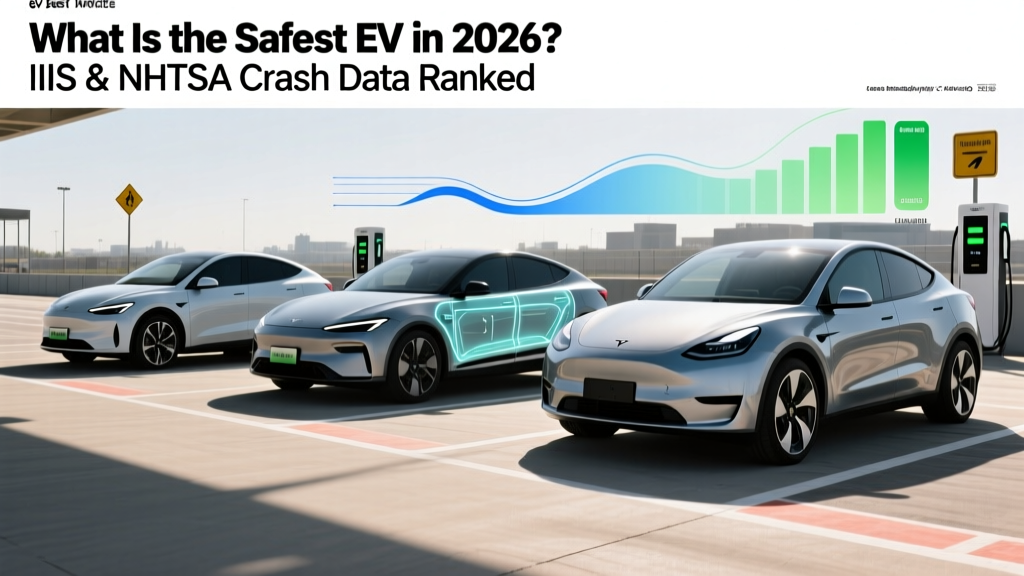
If you need a direct answer: the Volvo EX90, Tesla Model Y (2026 refresh), and Genesis Electrified GV70 consistently earn the highest combined crash-test scores from both the Insurance Institute for Highway Safety (IIHS) and National Highway Traffic Safety Administration (NHTSA). The Model Y remains the volume leader with an IIHS Top Safety Pick+ rating and a NHTSA 5-Star Overall score, while the EX90 brings Volvo's next-generation LiDAR-assisted safety suite. For sedan buyers, the Hyundai Ioniq 6 and Tesla Model 3 Highland also hold top honors across both agencies. Safety isn't just about crashworthiness—it's also crash avoidance, battery protection, and ADAS reliability. Below we break down the data, the costs, and how to choose.
Why EVs Are Inherently Safer in Crash Tests
Electric vehicles carry structural advantages that translate directly into crash-test performance. The battery pack sits low in the chassis, creating a wide, rigid floor pan that resists deformation. Without a heavy engine block in the front crumple zone, engineers can design longer, more progressive crush structures that absorb impact energy before it reaches the cabin.
According to NHTSA data, EVs as a class have shown lower rollover risk due to that low center of gravity. The battery enclosures on modern platforms like Hyundai's E-GMP, Tesla's structural pack, and Volvo's SPA2 architecture are engineered to withstand severe side impacts without cell penetration—a critical safety concern unique to electrified vehicles.
However, EVs are also heavier. A Tesla Model Y Long Range weighs approximately 4,400 lbs, and a Rivian R1S can exceed 7,000 lbs. That mass means more kinetic energy in a collision with a lighter vehicle. The IIHS has noted that compatibility between heavy EVs and lighter gas cars remains an evolving concern in multi-vehicle crashes.
Top-Rated Safe EVs: Crash Scores & Key Specs
| Model | IIHS Rating | NHTSA Overall | EPA Range | Battery (kWh) | Peak DC Charge | 0-60 mph | Base MSRP |
|---|---|---|---|---|---|---|---|
| Tesla Model Y LR (2026) | Top Safety Pick+ | 5 Stars | 330 mi | 75 kWh (NMC) | 250 kW / 10-80% ~15 min | 4.8s | $46,990 |
| Volvo EX90 Twin Motor | Top Safety Pick+* | Pending | 310 mi | 111 kWh (NMC) | 250 kW / 10-80% ~30 min | 4.7s | $76,695 |
| Genesis Electrified GV70 | Top Safety Pick+ | 5 Stars | 236 mi | 77.4 kWh (NMC) | 240 kW / 10-80% ~18 min | 4.2s | $68,050 |
| Hyundai Ioniq 6 SEL | Top Safety Pick+ | 5 Stars | 361 mi | 77.4 kWh (NMC) | 240 kW / 10-80% ~18 min | 5.1s | $42,700 |
| Tesla Model 3 LR | Top Safety Pick+ | 5 Stars | 341 mi | 75 kWh (NMC) | 250 kW / 10-80% ~15 min | 4.2s | $42,490 |
| Mercedes-Benz EQE Sedan | Top Safety Pick | Pending | 305 mi | 90.6 kWh (NMC) | 170 kW / 10-80% ~32 min | 4.5s | $71,900 |
*Volvo EX90 IIHS testing ongoing as of early 2026; Top Safety Pick+ projected based on preliminary moderate overlap and side results. Always verify current ratings at iihs.org.
Real-World Range vs. EPA Sticker
EPA range figures assume mixed driving at moderate temperatures. Expect 10-15% less range on sustained highway trips at 75+ mph, and 20-30% reduction in sub-freezing winter conditions. The Ioniq 6's 361-mile EPA rating, for example, may deliver closer to 260-290 miles in cold highway driving. The Model Y's 330-mile EPA figure typically yields 270-290 miles in real-world highway use.
Crash Avoidance Tech: ADAS Compared
Crashworthiness gets the headlines, but crash avoidance prevents accidents from happening. Every top-rated EV above comes standard with automatic emergency braking (AEB), lane-keeping assist, and blind-spot monitoring. The differences emerge in sophistication and reliability.
SAE Automation Level Reminder
All consumer ADAS systems—Tesla Autopilot/FSD Supervised, GM Super Cruise, Ford BlueCruise, Hyundai Highway Driving Assist 2—are SAE Level 2. The driver must remain fully engaged with hands on or near the wheel and eyes on the road. Only robotaxi services like Waymo operate at SAE Level 4 in geofenced areas. No consumer vehicle sold in 2026 is "self-driving."
| System | Brand | Hands-Free? | Eye Monitoring | Cost |
|---|---|---|---|---|
| Autopilot / FSD Supervised | Tesla | Supervised only | Camera-based | $8,000 (FSD) / Std (Autopilot) |
| Super Cruise | GM (Cadillac/Chevy) | Yes (mapped roads) | Driver camera | $2,200 / included on select trims |
| BlueCruise | Ford/Lincoln | Yes (mapped roads) | Driver camera | $2,100 or subscription |
| Highway Driving Assist 2 | Hyundai/Kia/Genesis | No | Steering wheel torque | Standard on most trims |
| Pilot Assist + LiDAR | Volvo (EX90) | No | Camera + LiDAR fusion | Standard |
Volvo's EX90 stands apart with a standard roof-mounted LiDAR sensor from Luminar, providing 3D object detection up to 250 meters ahead—far beyond camera-only range. Tesla's vision-only approach relies on eight cameras and neural networks, which has proven effective but has drawn NHTSA scrutiny over phantom braking incidents. GM's Super Cruise remains the most mature hands-free system with excellent driver monitoring, though it only works on pre-mapped divided highways (~400,000 miles of coverage in North America).
EV vs. Gas Vehicle: Safety & Cost Comparison
| Factor | Tesla Model Y LR (EV) | Toyota RAV4 XLE (Gas) |
|---|---|---|
| NHTSA Overall Rating | 5 Stars | 5 Stars |
| IIHS Rating | Top Safety Pick+ | Top Safety Pick |
| Rollover Risk | 7.9% | 14.5% |
| Base MSRP | $46,990 | $32,695 |
| Est. Federal Tax Credit (§30D) | Up to $7,500* | $0 |
| Fuel/Energy Cost per Mile | $0.04-$0.06 (home L2) | $0.14-$0.16 (gas) |
| Annual Maintenance | ~$300-$500 | ~$800-$1,200 |
| 5-Year Insurance (avg.) | ~$12,000-$14,500 | ~$8,500-$10,000 |
*§30D credit eligibility depends on buyer income (≤$150K single / ≤$300K joint), vehicle MSRP caps ($55K sedans / $80K SUVs), and battery mineral sourcing rules. Verify at IRS.gov. Point-of-sale transfer available at participating dealers.
Real Ownership Costs: 5-Year Breakdown
| Cost Category | Tesla Model Y LR | Hyundai Ioniq 6 SEL | Toyota RAV4 XLE (Gas) |
|---|---|---|---|
| Purchase Price | $46,990 | $42,700 | $32,695 |
| Federal Tax Credit | -$7,500* | -$7,500* | $0 |
| Home Charger Install (Level 2) | $1,200-$2,500 | $1,200-$2,500 | $0 |
| 5-Year Fuel/Energy | $3,000-$4,200 | $3,200-$4,500 | $9,500-$11,000 |
| 5-Year Maintenance | $1,800-$2,500 | $1,500-$2,200 | $4,500-$6,000 |
| 5-Year Insurance | $12,500-$14,500 | $9,000-$11,000 | $8,500-$10,000 |
| Est. 5-Year Net Cost | $58,000-$63,200 | $50,100-$55,400 | $55,195-$60,195 |
Assumes 12,000 miles/year, $0.13/kWh home electricity, $3.40/gallon gas. Actual costs vary by region, utility rate, and driving pattern. State/local incentives not included—check AFDC for your area.
EV insurance premiums run 15-30% higher than comparable gas vehicles due to expensive battery replacement costs and specialized repair requirements. However, the fuel and maintenance savings typically offset the insurance premium within 3-4 years of average driving. Home charging is essential for cost savings; relying exclusively on public DC fast charging ($0.30-$0.55/kWh) can erode much of the fuel-cost advantage.
Common Safety Misconceptions: Myth vs. Fact
| Myth | Fact |
|---|---|
| "EV batteries explode in crashes" | Thermal runaway is extremely rare in collisions. NHTSA data shows EV fire rates are significantly lower than ICE vehicles per 100K vehicles sold. Battery enclosures are tested to withstand severe intrusion. |
| "Heavy EVs are unsafe for other drivers" | EVs do weigh more, but modern crumple zones and compatibility engineering mitigate this. The occupants of the EV itself benefit from the mass advantage in two-vehicle collisions. |
| "Autopilot/Super Cruise drives itself" | All consumer ADAS is SAE Level 2. You are the driver. NHTSA has issued standing orders requiring crash reporting for Level 2+ systems. Eyes on road, always. |
| "EVs are unsafe in floods" | Battery packs are sealed to IP67 or higher. EVs can handle brief water submersion comparable to gas cars. However, saltwater submersion can cause delayed corrosion—any flood-damaged EV should be inspected before recharging. |
| "Charging an EV in the rain is dangerous" | All EVSE (charging equipment) is weather-rated. Connectors are designed to prevent current flow until a secure, sealed connection is confirmed. Charging in rain is safe. |
First-Time Buyer Safety Checklist
If you're buying your first EV and safety is the priority, work through this framework:
Choose Based on Your Situation
- Choose the Tesla Model Y if you want the best combination of crash ratings, Supercharger network access, range efficiency (3.5 mi/kWh), and over-the-air safety updates—at a mainstream price point after the §30D credit.
- Choose the Hyundai Ioniq 6 if you want top safety honors at the lowest entry price ($42,700 before credit), class-leading EPA range (361 mi), and Hyundai's strong 10-year/100,000-mile battery warranty.
- Choose the Volvo EX90 if you need three-row family hauling, want the most advanced crash-avoidance hardware (LiDAR standard), and budget is secondary ($76,695+). Note: it exceeds the §30D SUV MSRP cap of $80,000 only in higher trims.
- Choose the Genesis Electrified GV70 if you want a luxury compact SUV with excellent safety ratings, premium materials, and 800V fast charging—but accept the lower 236-mile EPA range as a trade-off.
- Choose the Tesla Model 3 if you prefer a sedan, want the lowest cost of entry with top safety ratings ($42,490), and prioritize efficiency and charging speed over cargo space.
Before You Buy: Verify These Items
- Check current IIHS ratings at iihs.org—ratings update throughout the year as new tests are completed.
- Confirm §30D eligibility for your specific VIN at the IRS Clean Vehicle portal or through a participating dealer's point-of-sale system.
- Assess home charging feasibility. A Level 2 (240V) home charger is critical for daily convenience and battery longevity. Installation runs $1,200-$2,500 for most homes with a 200-amp panel; older homes may need a panel upgrade ($2,000-$5,000 additional).
- Consider your climate. If you live where winters regularly drop below 25°F, factor in 20-30% range loss and prioritize models with a heat pump (standard on Tesla, Hyundai, Volvo).
- Get insurance quotes before purchasing. EV premiums vary wildly by insurer and zip code. Some carriers now offer specific EV policies with battery coverage.
Battery Safety & Longevity
The traction battery is the most expensive component in any EV, and its safety over time matters. All manufacturers warranty the battery for a minimum of 8 years/100,000 miles (10 years/100,000 in California Air Resources Board states), guaranteeing at least 70% capacity retention.
Modern NMC (nickel manganese cobalt) and LFP (lithium iron phosphate) chemistries have proven durable. Tesla's 2024 impact report showed Model 3/Y batteries retaining approximately 85% capacity after 200,000 miles. LFP batteries, used in the standard-range Model 3 and some Rivian configurations, offer even longer cycle life and greater thermal stability, though with slightly lower energy density.
Battery replacement costs remain high: $12,000-$22,000 depending on the pack. This is why the warranty matters—and why purchasing from a manufacturer with a proven reliability track record is a safety decision in the financial sense.
Frequently Asked Questions
Are EVs safer than gas cars in a crash?
On average, yes. EVs earn top crash-test scores at higher rates, benefit from a lower center of gravity (reducing rollover risk), and have longer front crumple zones. The IIHS Top Safety Pick+ list is disproportionately populated by EVs. However, the weight advantage that protects EV occupants can increase risk to occupants of lighter vehicles in multi-car collisions.
What is the safest EV under $50,000?
The Tesla Model 3 Long Range ($42,490) and Hyundai Ioniq 6 SEL ($42,700) both hold IIHS Top Safety Pick+ and NHTSA 5-Star ratings under $50K. After the §30D federal tax credit, effective pricing can drop below $35,000 for qualifying buyers.
Do EV batteries catch fire easily?
No. NHTSA and NFPA data indicate EV battery fires are far less common than gasoline vehicle fires on a per-vehicle basis. When thermal events do occur, they typically happen during charging of a damaged battery, not during normal driving. Battery enclosures are extensively tested for crash intrusion resistance.
Is Tesla Autopilot the safest ADAS system?
Tesla's Autopilot and FSD Supervised are effective Level 2 systems with strong AEB and collision avoidance capabilities, but they have drawn NHTSA investigations over phantom braking and driver engagement monitoring. GM's Super Cruise and Ford's BlueCruise use driver-facing cameras for more robust eye tracking and are limited to mapped highways, which some safety researchers consider a more conservative, safer approach. No Level 2 system eliminates the need for driver attention.
How does cold weather affect EV safety?
Cold weather does not compromise crash safety—structural ratings hold regardless of temperature. However, cold reduces battery efficiency and range by 20-30% below freezing due to increased internal resistance and cabin heating demand. EVs with heat pumps (standard on most 2026 models) mitigate this. Preconditioning the battery while plugged in preserves range and ensures optimal regenerative braking performance on cold mornings.
What's the safest EV for a family with young children?
For families needing three rows, the Volvo EX90 offers the most comprehensive safety hardware (standard LiDAR, rear-seat occupant detection). For two-row family use, the Tesla Model Y provides excellent rear-seat space, top crash scores, and the lowest cost of ownership in its class. Always check IIHS LATCH ease-of-use ratings for child seat installation specifics.