Quick Answer: Do EV Owners Need a Portable Electric Air Compressor?
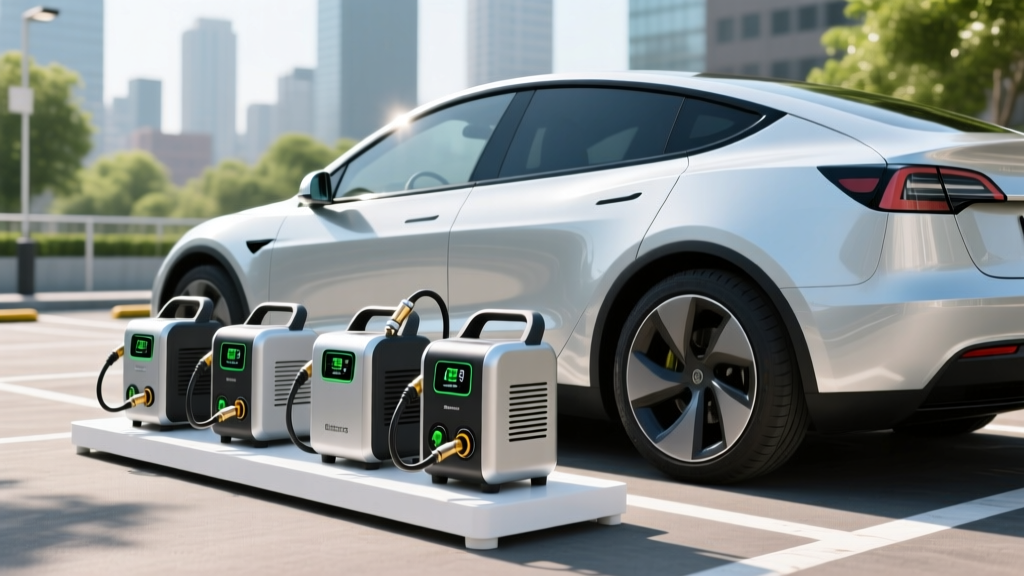
Yes — and arguably more than gas-car owners do. Electric vehicles are typically 500–1,500 lbs heavier than equivalent ICE vehicles and deliver instant torque, both of which accelerate tire wear and make correct tire pressure critical. A drop of just 1 PSI below the manufacturer's recommended pressure can reduce EV range by 0.2–0.5%. For a vehicle with an EPA-estimated 320-mile range, that's a loss of up to 1.6 miles per PSI deficit — compounded across four tires. A quality portable electric air compressor ($30–$90) lets you maintain optimal pressure anywhere, protecting both your range and your tire investment. For EV owners without easy access to a gas-station air pump, it's an essential piece of onboard kit.
Why Tire Pressure Matters More on an EV Than a Gas Car
Electric vehicles place unique demands on tires. Consider the numbers: a 2026 Tesla Model Y Long Range weighs approximately 4,400 lbs, while a comparably sized gas-powered Toyota RAV4 sits around 3,600 lbs — an 800-lb difference concentrated over four contact patches. That extra mass, combined with the instantaneous torque delivery of electric motors (the Model Y Long Range produces 384 lb-ft available from 0 RPM), generates significantly more heat and sidewall stress in tires during acceleration, cornering, and braking.
The efficiency penalty for underinflation is measurable. According to fueleconomy.gov, underinflated tires can lower fuel economy by 0.2% per 1 PSI drop across all four tires in conventional vehicles. For EVs — where every watt-hour counts and rolling resistance constitutes a larger share of total energy consumption at moderate speeds — the impact is at least as significant, and often greater due to the heavier vehicle mass.
Here's the real-world math: if your 2026 Hyundai Ioniq 5 (EPA-estimated 305 miles range, 77.4 kWh usable battery) is running 4 PSI low across all four tires, you could be sacrificing roughly 2.5–5% of your range. That's 7–15 miles lost on a full charge — enough to turn a comfortable trip to the charger into a range-anxiety event.
EV vs Gas: Tire Maintenance Cost Comparison
Tire costs represent a larger share of EV maintenance spending than most new owners anticipate. Here's how the numbers stack up over a typical 60,000-mile ownership period:
| Category | EV (e.g., 2026 Model Y) | Gas (e.g., 2026 RAV4) |
|---|---|---|
| Vehicle curb weight | ~4,400 lbs | ~3,600 lbs |
| OEM tire type | EV-specific low-rolling-resistance | Standard all-season touring |
| OEM tire cost (set of 4) | $900–$1,400 | $600–$900 |
| Expected tire life (proper inflation) | 30,000–45,000 mi | 45,000–65,000 mi |
| Tire replacements over 60k mi | 1–2 sets | 0–1 sets |
| 60k-mile tire cost (est.) | $1,800–$3,200 | $600–$1,500 |
| Rotation interval | Every 5,000–7,500 mi | Every 5,000–7,500 mi |
| Pressure check frequency (recommended) | Monthly + before road trips | Monthly |
The takeaway: EV tires cost more and wear faster. Maintaining correct pressure is the single cheapest way to extend their life and protect the range you paid for. A $50 portable compressor can easily save hundreds in premature tire replacement.
What to Look for in a Portable Electric Air Compressor for EV Use
Not every compressor is well-suited to EV ownership. Here are the specifications that matter, with the reasoning behind each:
Power Source and Charging
Look for a unit that charges via USB-C (ideally PD 60W or higher) so you can top it up from your EV's cabin USB-C port or any household charger. Some premium models offer a 12V accessory-port option as a backup. Battery capacity of 2,000–4,000 mAh is sufficient for topping off all four tires from 28 to 36 PSI in a single session.
Max Pressure and Flow Rate
Most EVs specify tire pressures between 36–45 PSI (check your driver's-door jamb sticker). You need a compressor rated to at least 100 PSI maximum to ensure it can reach EV-spec pressures quickly without laboring. Flow rate matters too: a unit delivering 30–40 liters per minute will fill a typical EV tire from 30 to 40 PSI in roughly 2–3 minutes. Cheaper units at 15–20 L/min can take 5–7 minutes per tire and may overheat on heavier-duty EV tires with larger air volumes (e.g., the 255/45R20 tires on a Rivian R1S).
Accuracy and Auto-Shutoff
Digital pressure gauges with ±1 PSI accuracy and programmable auto-shutoff are non-negotiable. EV range is sensitive enough that guessing by an analog dial defeats the purpose. Units with backlit displays are essential for nighttime or garage use.
Noise Level
Expect 70–85 dB from most portable compressors. If you're inflating in an apartment garage at 10 PM, look for models specifically marketed as "quiet" (sub-70 dB). Your neighbors will thank you.
Size, Weight, and Storage
Your compressor will live in the frunk or cargo area. Target units under 2 lbs and roughly the size of a large water bottle. Many EVs have compact frunks (the Model Y frunk holds about 4.1 cu ft), so space-efficient design matters.
Cost Breakdown: Portable Compressor vs. Alternatives
Here's what the options actually cost over a year of ownership:
| Method | Upfront Cost | Per-Use Cost | Convenience | Annual Cost (12 checks) |
|---|---|---|---|---|
| Portable electric compressor | $35–$90 | $0 (rechargeable) | Anywhere, anytime | $0 (after purchase) |
| Gas station air pump | $0 | $0–$1.50 per use | Requires detour; often broken | $0–$18 |
| Home garage compressor (pancake/portable 120V) | $100–$250 | $0 (grid power) | Home only, bulky | $0 (after purchase) |
| Tire shop top-off | $0 | $0–$5 per visit | Requires appointment/detour | $0–$60 |
The portable unit pays for itself within the first year if you were previously relying on paid air pumps or tire-shop visits. The real value, though, is the range protection: recovering even 5 miles of range per charge by maintaining correct pressure translates to roughly 1,800 recovered miles per year for a daily driver — the equivalent of 5–6 free fast-charging sessions.
Common Misconceptions About EV Tire Care
| Myth | Fact |
|---|---|
| "EVs don't need tire maintenance because they have fewer moving parts." | EVs are heavier and produce instant torque, making tire care more critical, not less. Tire wear is one of the largest recurring maintenance costs of EV ownership. |
| "TPMS will alert me before pressure matters." | TPMS typically triggers only at 25% below recommended pressure (per NHTSA mandate). A tire at 30 PSI when 38 PSI is specified has already lost 21% — that's well past the point where range and wear are affected, but below the alert threshold. |
| "I can just use the gas-station air pump." | Many gas-station compressors are poorly maintained, have inaccurate gauges, or require exact change. As stations add chargers, air pumps are sometimes removed. You need a self-contained solution. |
| "Nitrogen-filled tires don't need pressure checks." | Nitrogen leaks more slowly than air, but it still leaks. Temperature changes (10°F swing ≈ 1 PSI change) affect nitrogen identically. Monthly checks are still required. |
| "All portable compressors are the same." | Cheap units with analog gauges, slow flow rates (<15 L/min), and no auto-shutoff are frustrating and inaccurate. The $30–$50 premium for a quality digital unit saves time and protects range. |
Real-World EV Ownership Considerations for Tire Pressure
Climate and Seasonal Swings
For every 10°F drop in ambient temperature, tire pressure falls approximately 1 PSI. EV owners in northern climates (Minnesota, New England, the Mountain West) can see 4–6 PSI swings between summer highs and winter lows. If you set your tires to 42 PSI in July, they could read 36–38 PSI by January — enough to meaningfully reduce your already cold-diminished range. Cold weather can reduce EV range by 20–30% on its own (per AAA testing); underinflated tires compound this loss. A portable compressor in your winter kit is essential.
Home Charging and Garage Access
If you charge at home with a Level 2 wall connector, you likely have garage or driveway access — making a quick monthly pressure check convenient. But for the roughly 30% of EV owners who rely on public or workplace charging (apartment dwellers, street-parkers), a portable compressor is the only practical way to maintain pressure without scheduling a trip to a tire shop. Keep it charged in your vehicle at all times.
Road Trips and Charging-Desert Contingency
On long EV road trips, you're already planning charging stops. Add a 2-minute tire-pressure check at each stop — it takes less time than preconditioning your battery for the next DC fast-charge session. If you hit a stretch with sparse chargers (western US, rural corridors), maximizing range through proper inflation is one of the few variables you can actively control.
Driving Patterns and Load
If you regularly tow with your EV (the 2026 Ford F-150 Lightning is rated for up to 10,000 lbs towing), you'll need to increase rear tire pressure per the manufacturer's load-inflation table. A portable compressor lets you adjust on the fly — inflate before hitching up, deflate when running empty for a smoother ride and reduced center-tread wear.
Decision Framework: Which Compressor Setup Is Right for You?
If you own an EV and have a garage with a 120V outlet:
→ Buy a compact 120V pancake compressor ($100–$150) for home and add a $40 USB-C portable unit for the car. Best of both worlds: fast inflation at home, emergency capability on the road.
If you charge at home but park on the street or in an open lot:
→ A quality portable compressor ($50–$80) is your primary tool. Look for USB-C rechargeable, 40+ L/min flow, digital gauge with auto-shutoff. Check pressure monthly at your charging spot.
If you rely entirely on public/workplace charging (no home charging):
→ A portable compressor is mandatory, not optional. Budget $60–$90 for a premium unit with a large battery (3,000+ mAh), bright backlit display, and fast flow rate. You have no backup option.
If you road-trip frequently or live in a region with extreme temperature swings:
→ Invest in a higher-end portable unit ($70–$90) with a wide operating temperature range (-4°F to 140°F), a carrying case, and multiple nozzle adapters. Pair with a quality digital tire-pressure gauge for cross-verification.
If you drive an EV with an OEM tire-repair kit (no spare tire):
→ Your OEM kit likely includes a sealant-and-inflator combo designed for temporary puncture repair only. These are not substitutes for a dedicated compressor — they inject sealant into the tire that can ruin TPMS sensors and make professional repair harder. Carry a standalone portable compressor for routine pressure maintenance and reserve the OEM kit for actual emergencies.
EV Tire Care FAQ
How often should I check tire pressure on my EV?
At minimum once per month and before any road trip exceeding 100 miles. Check when tires are cold (before driving or at least 3 hours after driving) for an accurate reading. EVs' heavier weight and instant torque make pressure drift more consequential than on gas cars.
What tire pressure should I use for my EV?
Always follow the pressure listed on the driver's-door jamb sticker — not the "Max Press" molded on the tire sidewall. Most 2026 EVs specify between 36–45 PSI depending on the model and tire size. The door-jamb figure accounts for the vehicle's weight distribution and is calibrated for optimal range, handling, and tire wear.
Can I use my EV's 12V accessory port to power a compressor?
Most portable compressors draw 10–15 amps at 12V. Many EV 12V accessory ports are fused at 10–15 amps, making this borderline. A USB-C rechargeable compressor avoids this issue entirely — charge it from the cabin USB port or at home, and use it cordlessly at the tire.
Does correct tire pressure really affect EV range that much?
Yes. Testing by multiple EV publications and tire manufacturers shows a 2–5% range loss at 4–6 PSI below specification. For a 300-mile EPA-rated EV, that's 6–15 miles — meaningful on a long trip or in cold weather when range is already compressed. Proper inflation is the cheapest "range upgrade" available.
Should I inflate my EV tires to a higher pressure for maximum range?
Some hypermilers overinflate by 2–4 PSI above the door-jamb spec to reduce rolling resistance. This can recover a small amount of range but degrades ride comfort, increases center-tread wear, and reduces wet-weather grip. We recommend staying within ±2 PSI of the manufacturer's specification. The range gain from slight overinflation (typically 1–2%) isn't worth the trade-offs for most drivers.
My EV has a tire-pressure monitoring system — isn't that enough?
TPMS is a safety backstop, not a maintenance tool. Per NHTSA regulations, the warning light activates only when pressure drops 25% or more below the recommended level. By that point, you've already lost meaningful range and accelerated tire wear. Use your compressor proactively; let TPMS catch emergencies.