The Evolution of Electric Performance: Beyond Straight-Line Speed
The narrative surrounding electric vehicles has fundamentally shifted. In the early days of the EV revolution, performance was measured almost exclusively by straight-line acceleration. The instant torque of electric motors made achieving sub-three-second 0-60 mph times relatively easy, leading to a horsepower arms race. However, as the industry matures, the definition of a true performance EV has expanded. Today, the best performance electric vehicles are ranked not just by their brutal acceleration, but by their handling dynamics, thermal endurance, and chassis sophistication.
From an industry outlook perspective, we are entering the era of the software-defined chassis and advanced torque vectoring. The heavy battery packs that once made EVs feel ponderous on a winding track are now being managed by AI-driven suspension systems and ultra-high-voltage architectures that prevent power derating. As we look toward the future of automotive engineering, the line between a luxury grand tourer and a dedicated track weapon is blurring. Here is our ranking of the best performance EVs on the market today, evaluated through the lens of acceleration, handling, and future technological relevance.
How We Rank Performance EVs: Methodology & Future Metrics
To rank the top performance EVs, we look beyond the manufacturer's claimed 0-60 mph times. Our methodology incorporates four critical pillars that define the future of electric performance:
- Acceleration & Power Delivery: Not just peak horsepower, but the ability to sustain power delivery without thermal throttling.
- Handling & Chassis Dynamics: Lateral grip, steering feel, torque vectoring capabilities, and how well the vehicle manages its inherent curb weight.
- Thermal Management: The efficiency of the cooling systems (such as 800-volt architectures and advanced heat pumps) during repeated high-load track use.
- Future-Proofing: Over-the-air (OTA) update capabilities, software-defined drivetrain adjustments, and integration of next-generation hardware.
1. Porsche Taycan Turbo GT: The Handling Benchmark
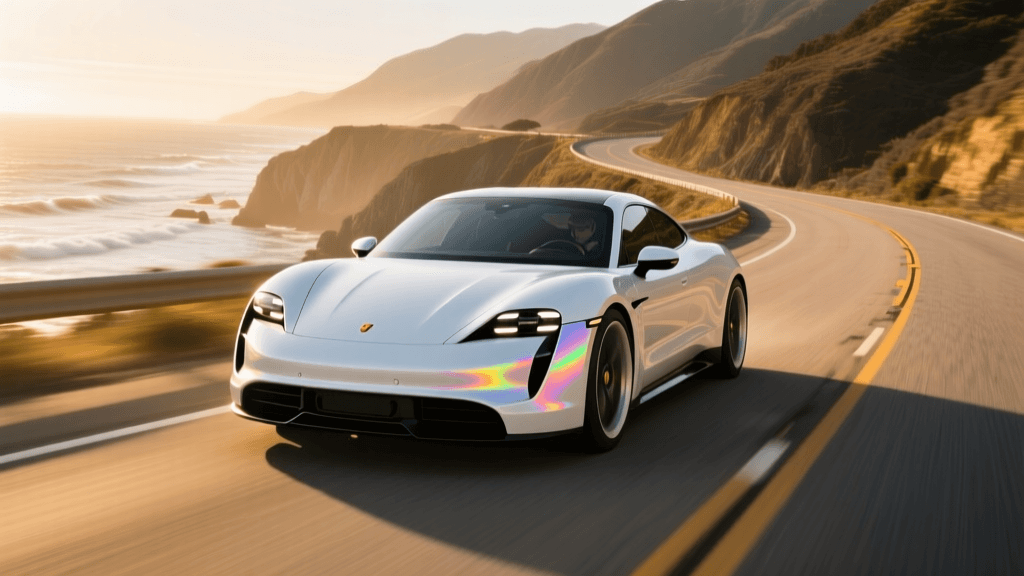
The Porsche Taycan Turbo GT represents the absolute zenith of electric vehicle handling. While its acceleration is terrifyingly quick—achieving 0-60 mph in just 2.1 seconds with the Weissach Package—its true party trick is how it attacks a corner. Porsche has leveraged decades of motorsport experience to create an EV that communicates with the driver in a way no other electric car currently can.
The Turbo GT features Porsche Active Ride, a highly advanced suspension system that uses high-voltage electric motors at each damper to actively control body roll, pitch, and dive. This means the car can remain virtually flat through high-G corners, completely neutralizing the weight transfer issues that plague heavy EVs. Furthermore, the rear-axle steering system makes the long wheelbase feel incredibly agile. According to official specifications from the Porsche Taycan Turbo GT lineup, the vehicle generates up to 1,019 horsepower via its 'Attack Mode' function, which optimizes the powertrain and chassis for track use. As the industry moves toward active, predictive suspensions, the Taycan Turbo GT is the blueprint.
2. Lucid Air Sapphire: The Masterclass in Efficiency and Dynamics
If the Porsche is the track king, the Lucid Air Sapphire is the ultimate high-performance grand tourer. Generating a staggering 1,234 horsepower from its tri-motor setup, the Sapphire hits 60 mph in an astonishing 1.89 seconds. Yet, what secures its number two spot is its unprecedented power-to-weight ratio and handling finesse.
Lucid Motors achieved this by miniaturizing its electric motors and optimizing the battery pack layout, resulting in a sedan that weighs significantly less than its German and American rivals. The Sapphire utilizes a specialized torque-vectoring algorithm that can send up to 100% of the rear axle's power to a single wheel, effectively pulling the car through the apex of a corner. The inclusion of standard carbon-ceramic brakes with 10-piston front calipers ensures that the Sapphire can shed speed repeatedly without fade. The Sapphire proves that future performance EVs will rely on motor miniaturization and high-density battery packaging rather than simply adding larger, heavier components.
3. Tesla Model S Plaid: The Raw Acceleration Pioneer
The Tesla Model S Plaid remains the benchmark for accessible, mind-bending straight-line speed. Its tri-motor powertrain produces 1,020 horsepower, and its carbon-sleeved rotors allow the motors to spin up to 20,000 RPM without expanding and tearing apart. This engineering feat enables a verified 1.99-second 0-60 mph time, a figure that still dominates the hypercar landscape.
However, when it comes to handling, the Plaid sits at number three. While Tesla has vastly improved the adaptive dampers and introduced a track mode that allows drivers to customize torque distribution and stability control, the vehicle's steering feedback and brake pedal feel still lag behind Porsche and Lucid. The controversial yoke steering wheel, while offering an unobstructed view of the digital dash, requires a learning curve on tight, technical circuits. Nevertheless, the Plaid's continuous OTA updates and unmatched Supercharger network integration keep it highly relevant in the performance EV conversation.
4. Hyundai Ioniq 5 N: The Engagement Innovator
The Hyundai Ioniq 5 N takes a radically different approach to performance. Instead of chasing sub-two-second 0-60 times, Hyundai's N division focused on driver engagement and solving the 'numbness' often associated with EVs. Producing 640 horsepower with N Grin Boost, it is down on power compared to the hyper-sedans above, but its handling and software integration are revolutionary.
The Ioniq 5 N introduces 'N e-Shift,' a software simulation that mimics the torque interruptions and rev-matching of an 8-speed dual-clutch transmission. Combined with synthetic engine notes and active sound design, it tricks the brain into feeling a mechanical connection to the drivetrain. Furthermore, its 800-volt architecture allows for blistering fast charging and excellent thermal management, meaning you can do a lap, charge for 15 minutes, and go back out. The Ioniq 5 N signals a major industry trend: the future of EV performance isn't just about hardware; it's about using software to artificially recreate the emotional engagement of internal combustion.
Performance EV Comparison Chart
| Vehicle Model | 0-60 mph (sec) | Peak Horsepower | Curb Weight (lbs) | Key Handling Technology |
|---|---|---|---|---|
| Porsche Taycan Turbo GT | 2.1 | 1,019 hp | 4,936 | Porsche Active Ride, Rear-Axle Steering |
| Lucid Air Sapphire | 1.89 | 1,234 hp | 5,236 | Tri-Motor Torque Vectoring, Carbon Ceramics |
| Tesla Model S Plaid | 1.99 | 1,020 hp | 4,766 | Carbon-Sleeved Rotors, Track Mode V2 |
| Hyundai Ioniq 5 N | 3.25 | 640 hp | 4,861 | N e-Shift, 800V Thermal Management |
Future Trends: What is Next for EV Handling and Speed?
As we analyze the current leaders in the performance EV space, several emerging technologies are poised to redefine the industry outlook over the next five to ten years. The primary enemy of EV handling is mass, and the industry is attacking this problem from multiple angles.
The Solid-State Battery Revolution
Current lithium-ion battery packs are heavy and voluminous. The transition to solid-state batteries promises a massive leap forward. According to research tracked by the Alternative Fuels Data Center, solid-state batteries replace the liquid electrolyte with a solid material, offering higher energy density, faster charging, and improved safety. For performance EVs, this means manufacturers can either maintain current range while shaving hundreds of pounds off the curb weight, or keep the weight the same while drastically lowering the vehicle's center of gravity. A lighter EV will inherently suffer less from tire degradation and brake fade, bringing electric lap times closer to those of dedicated, lightweight internal-combustion track cars.
Axial Flux Motors
While most current EVs use radial flux motors, the industry is pivoting toward axial flux motor technology (championed by companies like YASA, now owned by Mercedes-Benz). Axial flux motors are significantly lighter, more compact, and produce a higher torque density. By reducing the unsprung and overall mass of the powertrain, engineers can package these motors directly inside the wheels or closer to the center of the chassis, vastly improving the polar moment of inertia and making the car more eager to change direction.
AI-Driven Predictive Aerodynamics and Suspensions
Active aerodynamics are already present on cars like the Porsche Taycan and Lucid Air, but the future lies in AI-driven predictive systems. By utilizing LiDAR, forward-facing cameras, and GPS mapping, the vehicle's central computer will 'read' the road ahead and pre-adjust the suspension damping, ride height, and active aero flaps milliseconds before the car enters a corner. This software-defined chassis approach will allow a single vehicle to offer the ride comfort of a luxury sedan on the highway and the razor-sharp turn-in of a GT3 race car on the track.
Conclusion: The Track-Ready EV Era
The ranking of the best performance EVs by acceleration and handling highlights a clear industry trajectory. We are moving past the novelty of instant torque and entering an era of deep, sophisticated engineering. The Porsche Taycan Turbo GT and Lucid Air Sapphire prove that heavy EVs can be coaxed into world-class handling through active suspensions and intelligent torque vectoring. Meanwhile, the Hyundai Ioniq 5 N demonstrates that software can successfully bridge the emotional gap between electric and gas-powered sports cars.
As solid-state batteries and axial flux motors transition from the laboratory to the production line, the next generation of performance EVs will be lighter, sharper, and more enduring. For automotive enthusiasts, the future of electric speed is not just about going fast in a straight line; it is about the relentless pursuit of the perfect corner.